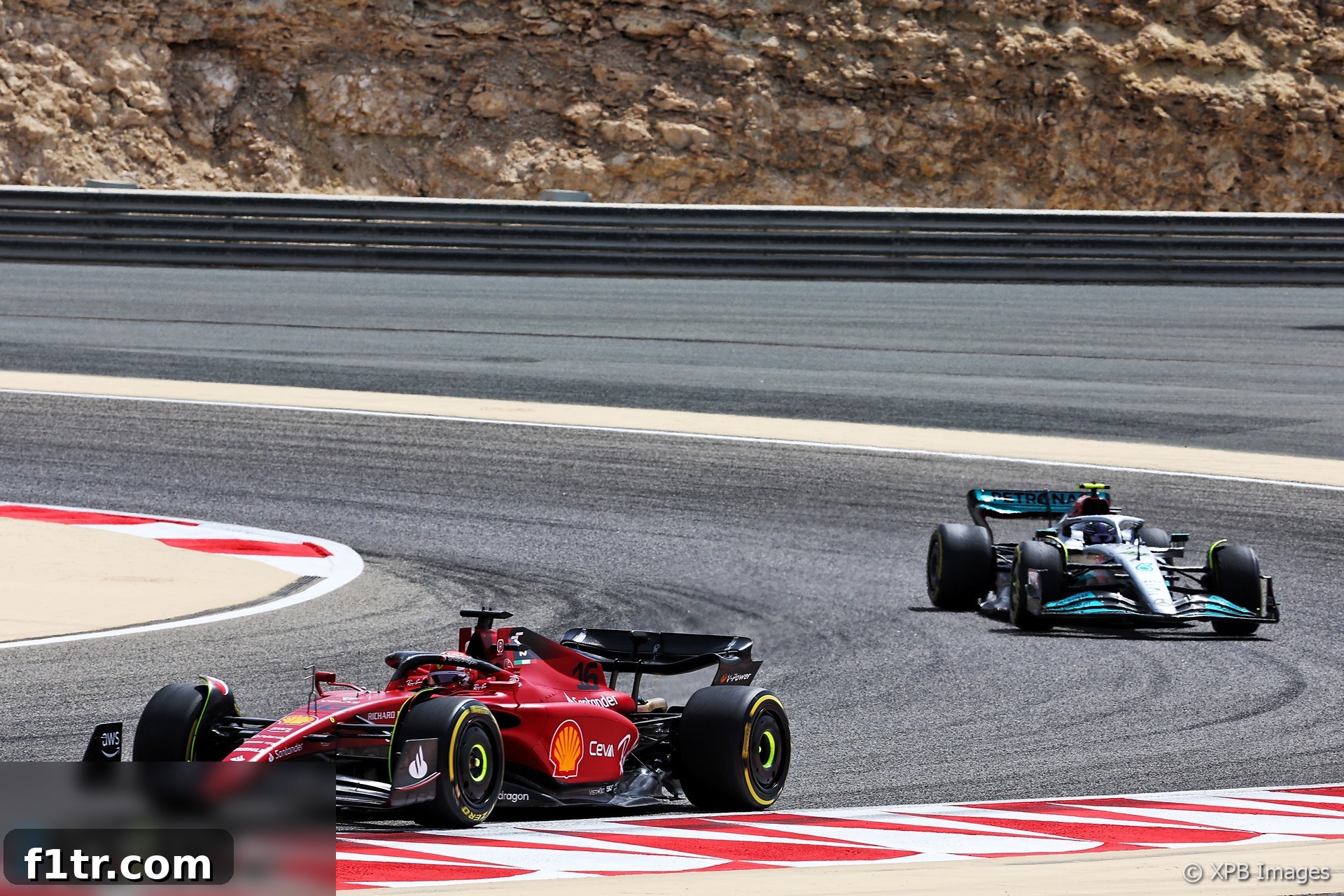
The dawn of the 2022 F1 season brought with it a comprehensive overhaul of technical regulations, designed specifically to shake up the competitive landscape and foster closer racing. However, as teams gathered for the opening race weekend at the iconic Bahrain International Circuit, a largely unforeseen phenomenon emerged to significantly influence their initial performance: ‘porpoising’. This peculiar bouncing motion, reminiscent of a porpoise surfacing for air, quickly became the dominant talking point, catching many teams off guard during pre-season testing and threatening to redefine early-season fortunes.
The reintroduction of ‘ground effect’ aerodynamics lies at the heart of this challenge. While groundbreaking for the sport in the late 1970s, ground effect has returned to Formula 1 with a vengeance, compelling designers to sculpt their cars’ floors to generate immense levels of downforce. This isn’t the first time F1 has grappled with such a phenomenon; its initial appearance coincided with the first widespread application of ground effect in the sport’s history.
Pioneering teams like Lotus masterfully harnessed ground effect with their revolutionary 79 chassis in 1978, a car that dominated the season and secured championship glory. The principle was simple yet profound: by creating a sealed channel under the car, air velocity was increased, lowering pressure and effectively sucking the car to the track. However, the subsequent, more aggressive iteration, the Lotus 80, suffered terribly from porpoising. Its advanced ground effect design pushed the boundaries too far, leading to unstable aerodynamics and a crippling lack of consistency. The car was quickly abandoned, serving as a stark historical lesson in the perils of unchecked aerodynamic ambition.
Modern F1 teams are now all too familiar with the mechanics behind porpoising. As their cars generate greater downforce, they are pressed more firmly onto their suspension. The delicate balance is disrupted when the airflow underneath the car becomes unstable and ‘stalls’. This sudden loss of airflow dramatically reduces downforce, causing the car to momentarily lift. As the car rises, the airflow reattaches, downforce is rapidly restored, and the car is pushed back down. This cyclical process of rising and falling creates the characteristic violent bouncing motion. The consequences extend beyond mere discomfort; the erratic movement impacts driver visibility, concentration, and the car’s overall stability, particularly under heavy braking.
Charles Leclerc, a prominent voice among the drivers, openly expressed his concerns about the physical toll. “I’m pretty sure that I can expect to have a sore back after Sunday’s race,” he admitted, highlighting the intensity of the bouncing. “It’s quite bumpy.” While Leclerc primarily described porpoising as a comfort issue, he also acknowledged its detrimental effect on car control, especially during critical braking zones. The unpredictable nature of the bounces makes precise braking inputs significantly more challenging, forcing drivers to adapt their technique and potentially compromising their ability to attack corners.
“It doesn’t disturb me personally to drive apart from probably the big braking, [which] is a bit trickier with these big bumps in the straights,” he elaborated. “But overall it just hurts. After 10 laps in the same conditions having these bumps, it gets quite tricky.” This statement underscores the cumulative effect of porpoising; what might be an annoyance for a few laps quickly escalates into a genuine physical and mental strain over a race distance, impacting performance and driver endurance. The phenomenon is also highly dependent on track conditions, car setup, and even ambient factors, making it difficult to predict or eliminate entirely.
Advert | Become a RaceFans supporter andgo ad-free
Towards the conclusion of the pre-season testing, Leclerc revealed the inherent unpredictability of porpoising, even for the most seasoned engineers. “It depends a lot, it’s really condition-dependent. Even on the same track, sometimes you can have it, sometimes you don’t have it. So it’s very difficult also to predict it. I think we all need to be ready to have it at some point during the race.” This unpredictability presents a significant strategic hurdle for teams, as finding a consistent solution becomes an elusive target. It implies that drivers and engineers must remain adaptable, constantly seeking a delicate balance that mitigates the effect without severely compromising outright performance.
The degree to which porpoising affects each team largely hinges on their foresight and preparedness. Some teams, like Alpine, appeared to make considerable progress in managing the issue. Esteban Ocon expressed satisfaction with his team’s efforts during testing. “On my side in Barcelona it was not a big issue, for example,” he noted. “Of course, there was a bit of porpoising which we managed to get under control on my days in Bahrain.” This suggests that some teams may have entered the season with a better understanding or more effective mitigation strategies, potentially gaining an early competitive edge.
Ocon further highlighted the increased stiffness of the new generation cars, a factor that exacerbates the impact of track bumps and, by extension, porpoising. “For sure, yes, the cars are much stiffer and you can really feel the bumps. So on a full day of testing, you might need to take a bit of Paracetemol on the afternoon. But otherwise you will be fine.” His optimistic tone about Alpine’s progress indicated that diligent engineering work can yield promising results. “The team is working hard to fix the issue and to make it driveable and we’ve managed to come into some good solutions already so on our side it’s okay.”
In stark contrast, Mercedes, a dominant force in previous seasons, openly acknowledged their struggles with porpoising on their W13 chassis towards the end of testing. “Lewis Hamilton admitted, “At the moment, for us, this is one of our weaknesses. But I’ve seen other people also experiencing it.” This candid assessment from a seven-time world champion underscored the widespread nature of the problem, suggesting that even the most well-resourced teams were not immune. Mercedes’ difficulties with porpoising hinted at a potential disruption to the established pecking order, creating an intriguing storyline for the start of the season.
Advert | Become a RaceFans supporter andgo ad-free
One of the most straightforward methods to alleviate porpoising involves increasing the car’s ride height. By raising the car further off the ground, teams can reduce the intensity of the ground effect, thereby mitigating the bouncing. However, this solution comes with a significant performance penalty. A higher ride height inevitably reduces the overall downforce a car can generate, forcing teams to sacrifice speed and grip for stability. This presents a critical setup conundrum: how far dare teams go in compromising performance to combat porpoising? It’s a delicate balancing act that could define success or failure in the early races of the season.
Kevin Magnussen of Haas illustrated this dilemma, stating his team was still heavily limited by the problem. He noted that other drivers seemed capable of more aggressive kerb usage, indicating a potential ride height disadvantage for Haas. “There’s certainly a limitation, still,” he confirmed. “It was interesting to hear the drivers commenting on kerb usage, how much they can use.” Magnussen’s observations suggested that teams able to run lower and exploit the kerbs more effectively would inherently gain a competitive advantage. “There’s quite a big difference, I think some guys are running quite high still. We’re certainly still high compared to where we’d like to be, so it is a big issue.” This highlights the visible differences in how teams are managing the aerodynamic tightrope.
Compounding the problem are F1’s restrictive technical regulations for 2022. Not only have the new rules drastically altered car aerodynamics, but they also mandate the use of much simpler suspension systems. The highly sophisticated hydraulic suspension systems, common in previous seasons and potentially capable of mitigating porpoising through active damping, are now prohibited. This limitation forces engineers to seek passive solutions, making the challenge of taming the bounce even more formidable. The simplified suspension means less control over the car’s dynamic behaviour, leaving teams with fewer tools in their arsenal to combat the physical oscillations caused by ground effect.
Adding another layer of complexity are the ever-present parc ferme rules. Once qualifying begins, teams must lock their cars into a specific setup, which then carries over to the race. This restriction forces teams to make difficult compromises. A setup optimized for a single qualifying lap, where fuel loads are minimal, might not perform optimally over a full race distance with a much heavier fuel load. The additional weight can alter the car’s ride height and aerodynamic characteristics, potentially exacerbating porpoising and impacting tyre wear or overall stability. Finding a setup that balances outright pace with race-long consistency is a strategic masterclass.
Ocon was upbeat about Alpine’s solution to porpoising”It will be about managing, trying to find the right set-up going into qualifying and then race. Hopefully, you find the right compromise,” Vettel concluded, reiterating the complexity of the challenge. Despite the initial difficulties, he remained optimistic that porpoising would not overshadow the core objective of the new regulations: to enhance the spectacle of racing and facilitate more overtaking. “The big hope is that we are racing each other every weekend and it’s a lot closer than it has been in the past. Then I think that would make up for the cars being a bit unpleasant when it comes to stiffness levels or the tyres maybe falling off or the cars generally being very, very heavy.” The competitive benefits of closer racing, he argued, would ultimately justify the uncomfortable ride.Some optimistic predictions suggest that the porpoising problem will largely be solved within a couple of races. Teams had the advantage of three days of pre-season testing at the Bahrain International Circuit, providing valuable data. However, the next venue, the high-speedJeddah Corniche Circuit, presents a fresh and more formidable challenge. As the second-fastest track on the calendar, Jeddah’s long straights and fast, flowing corners could exacerbate porpoising, pushing cars and drivers to their limits. Teams will have to identify and address any new or magnified porpoising issues within a compressed single race weekend, without the luxury of dedicated test sessions.Other tracks may pose a greater challengeMick Schumacherechoed a more cautious outlook, predicting that porpoising “will be a part of this year’s campaign” beyond just the initial events. “I think Formula 1 won’t really manage to reduce it completely or remove it completely.” This suggests that rather than a quick fix, porpoising might become an inherent characteristic of the 2022 ground-effect cars, requiring continuous management and adaptation throughout the season. “It’s a matter of getting to learn how to drive it and having it as little as possible. You don’t want to initiate it in any way or go over to the point where it is too aggressive because then reliability will become an issue.”Schumacher’s warning about reliability is particularly pertinent. The constant, violent bouncing can place immense stress on chassis components, suspension elements, and even power unit mounts, potentially leading to mechanical failures and retirements. “It’ll be interesting to see on tracks that maybe it comes in heavier like Baku, also Jeddah is a track where it might happen, to see how the cars react. Maybe at the beginning of the season, we’ll see a few more [retirements] because of it.” This highlights the potential for porpoising to significantly impact race outcomes, not just through performance compromises but through increased attrition. The 2022 season promises a compelling blend of speed, strategy, and the ongoing battle against this bouncing phenomenon, keeping fans on the edge of their seats as teams strive to master the intricacies of ground effect.Become a RaceFans SupporterRaceFans is run thanks in part to the generous support of its readers. By contributing £1 per month or £12 per year (or the same in whichever currency you use) you can help cover the costs of creating, hosting and developing RaceFans today and in the future.Become an RaceFans Supporter today and browse the site ad-free. Sign up or find out more via the links below:Become a RaceFans SupporterRaceFans Supporter FAQ2022 F1 seasonMercedes told me “you’re wrong” about 2022 car’s problems – HamiltonFIA confirms all 10 F1 teams complied with 2022 cost capSteiner “not ashamed” of panning “slow” Schumacher in Drive to SurviveAlbon believes year out of F1 improved him as a driverHamilton sees diversity gains in F1 years on from his ‘traumatising’ experience of racismBrowse all 2022 F1 season articles