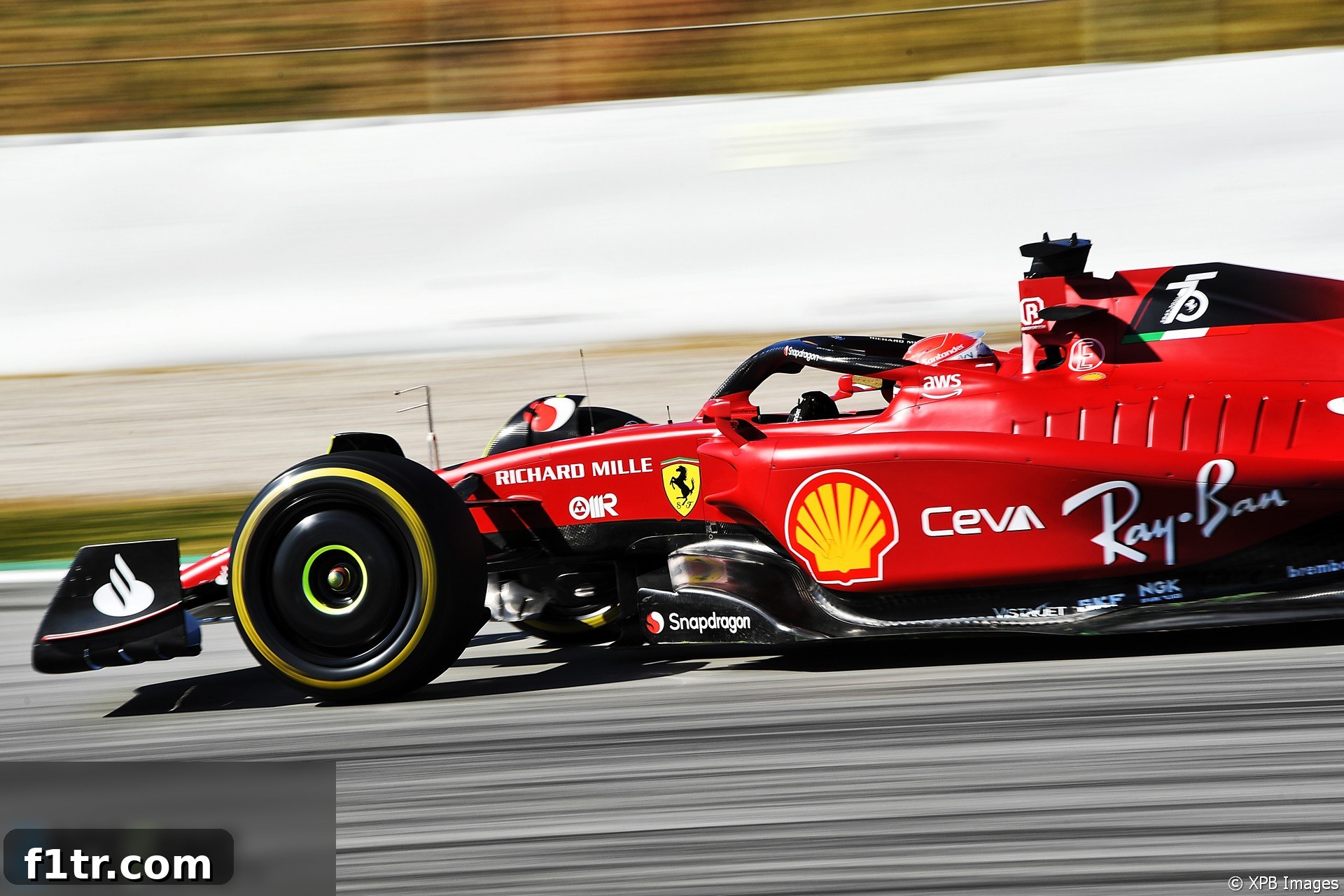
The dawn of Formula 1’s 2022 season ushered in a radical overhaul of technical regulations, promising a new era of closer racing and reinvigorated competition. However, this ambitious redesign also brought with it an unexpected and formidable challenge: the return of “porpoising.” This aerodynamic phenomenon, reminiscent of the sport’s past, quickly emerged as a central theme in pre-season testing, catching many teams, including Scuderia Ferrari, off guard. Ferrari team principal Mattia Binotto candidly admitted that most teams had “underestimated the problem on track,” finding their new cars “bouncing more than expected.”
Porpoising is a complex aerodynamic oscillation where the car rapidly and repeatedly gains and loses downforce, causing it to bounce violently on its suspension. The 2022 regulations were designed to promote ground effect aerodynamics, allowing cars to generate a significant portion of their downforce from the underside of the vehicle through Venturi tunnels. This design aims to create a low-pressure area beneath the car, effectively sucking it towards the tarmac. Ideally, this provides immense grip and stability, particularly in high-speed corners.
However, the pursuit of maximum ground effect also brought back its inherent instability. As the car gains speed, the downforce increases, pulling the car closer to the ground. If the car gets too low, the crucial airflow beneath the floor can “stall.” This means the air can no longer flow smoothly, and the low-pressure area collapses, causing an abrupt and substantial loss of downforce. With the loss of downforce, the car’s ride height increases, allowing the airflow to reattach and the ground effect to return. This renewed downforce then pulls the car back down, restarting the cycle. This rapid, rhythmic bouncing, often at frequencies drivers likened to a porpoise leaping in and out of the water, became a prevalent issue.
The historical context of porpoising harks back to the late 1970s and early 1980s when ground effect aerodynamics were last dominant in Formula 1. Iconic cars like the Lotus 79 harnessed this technology to devastating effect. However, the phenomenon was eventually banned due to significant safety concerns. The sudden and unpredictable loss of downforce made cars extremely challenging to control, especially at high speeds or over uneven track surfaces, leading to potentially dangerous situations for drivers. The return of these regulations in 2022, intended to foster better racing by making cars less sensitive to turbulent air from cars ahead, inadvertently resurrected this old foe.
For the drivers, porpoising presents a multitude of issues beyond mere discomfort. The violent oscillations can lead to blurred vision, severe headaches, back pain, and general physical fatigue over a race distance. More critically, it compromises car control and confidence. A driver needs a stable platform to accurately judge braking points, apexes, and throttle application. When the car is constantly bouncing and unpredictably varying its grip levels, pushing to the absolute limit becomes incredibly difficult and inherently risky. This transforms a purely aerodynamic problem into a critical performance and safety dilemma for both teams and the sport’s governing body.
Mattia Binotto’s admission that the problem was underestimated on track underlines the complexities of modern F1 development. While teams spend countless hours in wind tunnels and advanced simulators, these environments sometimes struggle to fully replicate the dynamic, real-world interactions between the car’s intricate aerodynamics, the track surface, and varying speeds. He acknowledged that while porpoising wasn’t entirely unforeseen conceptually, its severity in practice proved greater than anticipated, emphasizing that it’s “a learning process” for everyone involved in adapting to the new rules.
Binotto further articulated a crucial distinction that will define the early stages of the 2022 championship: the difference between simply “solving” porpoising and “optimizing performance” while simultaneously eliminating it. As he explained, “solving it can be quite straightforward” – for instance, raising the car’s ride height or stiffening the suspension can reduce or eliminate the bouncing. However, these solutions often come at the expense of performance, as a higher ride height typically reduces the effectiveness of the ground effect, thus sacrificing valuable downforce and lap time. The true engineering challenge lies in finding an aerodynamic and mechanical setup that allows the car to run as low as possible, generating maximum downforce, without triggering the porpoising cycle. This delicate balance, where teams must avoid any bouncing while extracting the most performance from the car, is a “less easy exercise” and represents the key performance differentiator.
This pursuit of optimal performance without compromise will undoubtedly dictate the competitive landscape in the initial races of the season. Binotto expressed confidence that “at some stage each single team will get to the solution.” The critical question, however, is “How long it will take?” The teams that manage to crack this complex puzzle sooner will undoubtedly “have an advantage at the start of the season,” potentially building a crucial points buffer that could prove decisive over the course of the championship.
Frederic Vasseur, team principal of Alfa Romeo, echoed Binotto’s sentiments regarding the difficulty of simulating the phenomenon. He highlighted that “some aero elements are not easy to duplicate in the wind tunnel or simulator,” reinforcing why the on-track experience provided such a stark revelation. Vasseur concurred that while fixing the underlying problem of bouncing might not be the biggest hurdle, achieving efficiency in that fix – ensuring it doesn’t detrimentally affect other critical aspects of the car’s performance such as tire wear, overall balance, or top speed – will be paramount. The pace at which each team’s engineering department can react, analyze data, develop solutions, and implement them will be a determining factor for their success in the opening events.
Despite the initial challenges, Vasseur maintains an optimistic outlook, believing that the inherent ingenuity and rapid development cycles characteristic of Formula 1 will see the problem contained relatively quickly. He boldly predicted, “I’m sure that in three or four events at the press conference we won’t speak any more about bouncing.” This reflects the immense resources, brainpower, and dedication within F1 teams, which are accustomed to overcoming complex technical hurdles under immense pressure. Engineers will be working tirelessly, scrutinizing every data point from accelerometers, pressure sensors, and high-speed cameras to understand the precise aerodynamic interactions and develop effective countermeasures.
Potential solutions could involve a combination of aerodynamic tweaks to the floor edges, changes to suspension components to manage ride height more dynamically, or even subtle adjustments to diffuser geometry. Each team will be exploring various avenues, seeking that elusive sweet spot that unlocks maximum downforce without the dreaded oscillation. The early races will thus become a fascinating real-time laboratory, showcasing different philosophies and engineering approaches to a shared problem. The team that masters this challenge first will not only gain a competitive edge but also demonstrate superior understanding of the new regulations, setting a precedent for car development throughout the rest of the 2022 Formula 1 season and potentially influencing future design directions.
2022 F1 season
- Mercedes told me “you’re wrong” about 2022 car’s problems – Hamilton
- FIA confirms all 10 F1 teams complied with 2022 cost cap
- Steiner “not ashamed” of panning “slow” Schumacher in Drive to Survive
- Albon believes year out of F1 improved him as a driver
- Hamilton sees diversity gains in F1 years on from his ‘traumatising’ experience of racism
Browse all 2022 F1 season articles