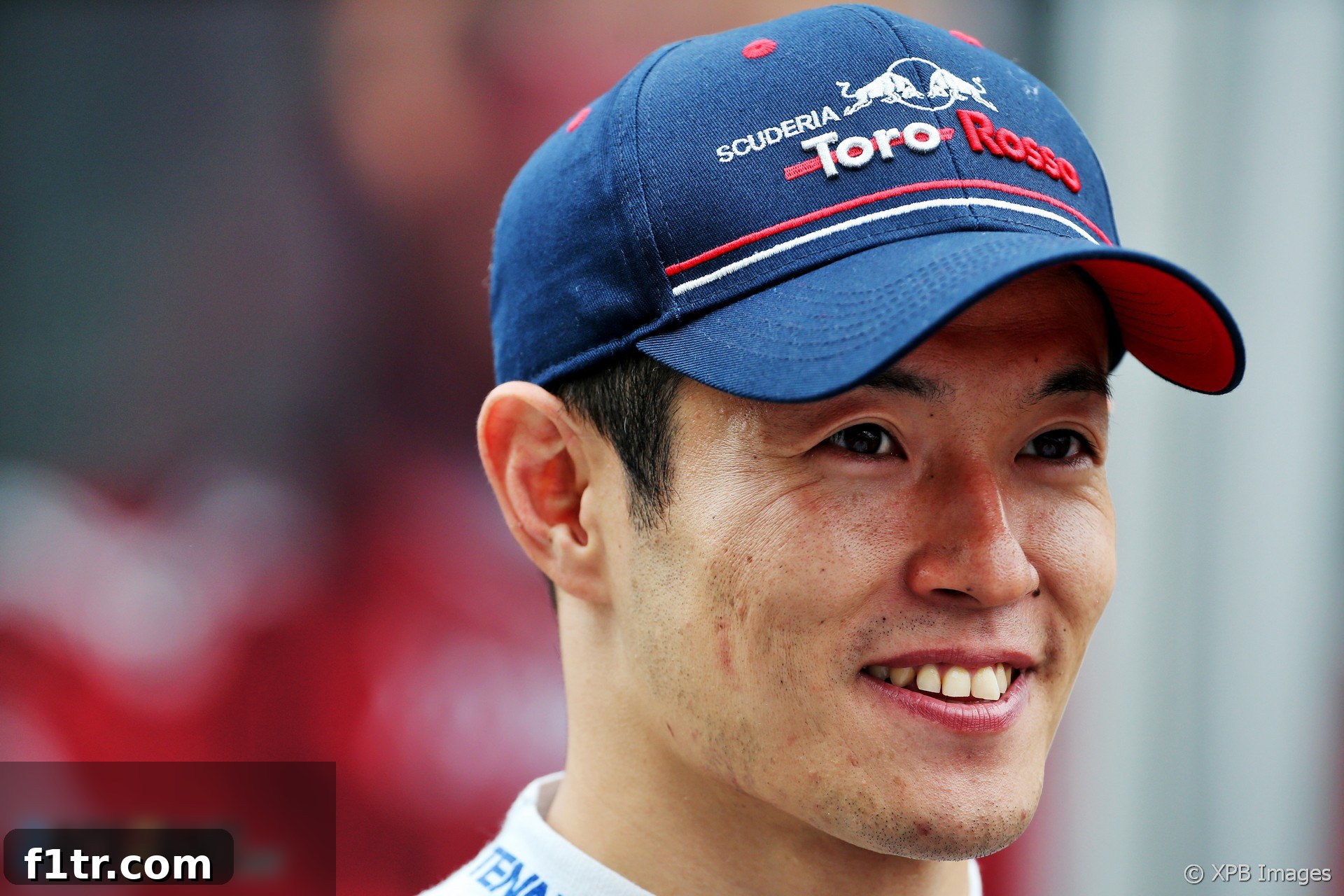
Naoki Yamamoto’s Impressive F1 Debut with Toro Rosso
Japanese motorsport hero Naoki Yamamoto marked a significant milestone in his illustrious career, making his Formula 1 debut in the first free practice session for Toro Rosso at the 2019 Japanese Grand Prix. Stepping into the cockpit of the Honda-powered STR14, Yamamoto, a celebrated champion in both Super Formula and Super GT, quickly demonstrated his capability, delivering crucial data that proved highly beneficial for the team. His performance, characterized by a rapid adaptation to the pinnacle of motorsport, underscored his talent and the depth of his racing experience, even as he found himself in an unfamiliar position lower down the timesheets.
A Champion’s Mindset Meets Formula 1 Reality
Despite his undeniable pace and ability to quickly extract performance from the F1 machine, Yamamoto’s competitive spirit as a seasoned racing driver meant that finishing 17th in the session, behind his more experienced teammate Daniil Kvyat, wasn’t a source of complete satisfaction. “I’m not too much satisfied because I’m a racing driver,” he candidly stated. “This position is not good. My target every time is [the] top, but Formula 1 is difficult because each car is different performance.” This honest assessment highlighted the immense challenge of Formula 1, where every team operates with varying levels of machinery and development.
However, beyond the raw lap times, Yamamoto’s debut was a resounding success in terms of its primary objective: providing valuable data to the team. The crucial metric for a test driver in such a session is often not outright pace, but consistency and the ability to closely match the pace of a regular driver, thereby offering comparable and usable feedback. Yamamoto achieved this with flying colors. “Finally I think [the] gap was close between Danny and me,” he observed. “This is a positive point for me and also the team because if too big [a] gap compared to the team mate my information is not good information for the team.” His ability to stay within a narrow margin of Kvyat’s pace meant that the data gathered from his run was directly applicable to the team’s setup and development strategies for the weekend and beyond.
Rapid Adaptation and Data Correlation
The significance of Yamamoto’s performance extended beyond the initial practice session. His ability to closely shadow Kvyat’s times was particularly evident, providing invaluable direct comparisons for the engineers. Even though he might have been a tenth of a second slower than his teammate, this minimal difference is often considered negligible in the context of a debutant’s first outing. This close proximity in lap times allowed Toro Rosso to effectively correlate data across both cars, validating experimental setups or understanding nuances of the circuit and tire behavior. For a team striving for every incremental gain, such consistent and comparable data from a new driver is a goldmine, allowing them to fine-tune their approach for the competitive sessions ahead. Yamamoto’s quick adaptation meant his feedback was immediately relevant and actionable, directly contributing to the team’s ongoing development.
The Astonishing Power of Honda’s F1 Engine
One of the most striking aspects of Yamamoto’s Formula 1 experience was the immense power delivered by the Honda V6 turbo-hybrid engine. Having competed in high-level Japanese motorsport for years, driving powerful machinery in both Super Formula and Super GT, Yamamoto was no stranger to speed. Yet, the F1 power unit left a profound impression. “The power is amazing,” he exclaimed. “I’m very surprised. I never felt power [like it]. So this is the biggest different point between Super Formula and Super GT.” This statement speaks volumes about the advanced engineering and sheer output of modern Formula 1 engines.
Hybrid Technology vs. Conventional Powerplants
The dramatic difference Yamamoto experienced can be attributed to several factors. Unlike the naturally aspirated V8s of Super GT or the V6 turbo engines of Super Formula, Formula 1 power units are sophisticated V6 turbo-hybrid systems. These units combine a turbocharged internal combustion engine with highly advanced energy recovery systems (ERS), specifically the MGU-H (Motor Generator Unit – Heat) and MGU-K (Motor Generator Unit – Kinetic). These ERS components harvest energy from the exhaust gases and braking, storing it in a battery and deploying it to provide an instantaneous and significant power boost. This complex integration of electrical and combustion power results in unparalleled torque and acceleration, particularly out of corners and on straights, far exceeding what is experienced in other racing categories. The seamless delivery of this immense power, combined with the sophisticated aerodynamics of an F1 car, creates a driving sensation that is truly unique to the sport.
For Honda, having a prominent Japanese driver like Yamamoto test their F1 engine at their home race, Suzuka, was a moment of immense pride. It not only showcased the capabilities of their power unit but also served as a powerful symbol of their commitment to Japanese motorsport and their aspirations in Formula 1 with both Toro Rosso and Red Bull Racing.
Navigating the Nuances of F1 Chassis Dynamics
Beyond the brute force of the engine, Yamamoto also offered insightful feedback on the handling characteristics of the Toro Rosso STR14, demonstrating his keen understanding of chassis dynamics. His observations provided the engineering team with valuable qualitative data that complemented the quantitative telemetry. “The car balance is a little bit understeer, especially the middle of high-speed corners,” Yamamoto noted. This type of feedback is crucial for fine-tuning the car’s setup, especially at a demanding circuit like Suzuka, known for its iconic high-speed esses and challenging sequences.
He further elaborated on a specific handling trait: “But [on] the other hand low-speed corners was a little bit tricky here on rear grip.” This indicates a potential trade-off in the car’s balance, where efforts to combat understeer in high-speed sections might compromise rear grip in slower corners. Such detailed feedback helps engineers understand the car’s behavior across different speed ranges and track conditions, guiding them towards optimal aerodynamic and mechanical setups. For a driver making his debut, providing such nuanced and articulate feedback is highly commendable and underscores his experience and sensitivity as a driver. It directly aids the team in their quest for improved performance, allowing them to make targeted adjustments to the car’s suspension, differential, and aerodynamic elements.
The Broader Significance of an F1 Test Outing
Naoki Yamamoto’s F1 free practice debut was more than just a single session; it carried significant weight for several reasons. For the driver himself, it was a rare opportunity to showcase his talent on the world stage, potentially opening doors for future F1 involvement, whether as a test driver, simulator driver, or even a shot at a race seat should circumstances align. Such outings are also crucial for accumulating Super License points, a prerequisite for competing in Formula 1. For Honda, it was a chance to put a national hero in one of their powered cars at their home Grand Prix, deepening the connection between their F1 project and the Japanese motorsport fanbase.
From the team’s perspective, running a highly experienced and successful driver like Yamamoto in FP1 offers a fresh perspective. While full-time drivers are invaluable, a new pair of hands can sometimes identify characteristics or nuances in the car that long-term drivers might have grown accustomed to. This objective feedback can be particularly useful for identifying underlying issues or validating new development parts. Moreover, for a junior team like Toro Rosso (now AlphaTauri/RB), these sessions are vital for evaluating potential talent, strengthening ties with engine suppliers like Honda, and expanding their pool of experienced personnel who understand the demands of F1.
A Positive Outlook for Yamamoto and Toro Rosso
In conclusion, Naoki Yamamoto’s Formula 1 debut with Toro Rosso at the Japanese Grand Prix was an unequivocal success. Despite the understandable competitiveness that left him wanting more in terms of position, his performance delivered precisely what the team needed: valuable data, insightful feedback, and a seamless integration into the F1 environment. His remarks on the Honda engine’s immense power highlighted the pinnacle of motorsport engineering, while his detailed feedback on the chassis balance demonstrated his expertise. This outing solidified Yamamoto’s reputation as a top-tier driver capable of performing on the global stage and provided Toro Rosso with crucial information to optimize their STR14. It was a proud moment for Japanese motorsport and a testament to the talent that exists beyond the immediate F1 grid.
Related Articles: Exploring the 2019 F1 Season and Beyond
Stay informed and dive deeper into the events and stories from the 2019 Formula 1 season and other compelling motorsport narratives. These articles offer further insights into driver experiences, team developments, and significant moments that shaped the F1 landscape.
- Crying in the Melbourne car park at 2019 grand prix was my career low – Ocon
- McLaren Racing reports reduced £71 million loss in 2019
- Kvyat: Hockenheim podium last year was “my biggest achievement” so far
- How the FIA’s new new encrypted fuel flow meter targets Ferrari’s suspected ‘aliasing’ trick
- “He smashed my office door”: 23 must-see moments from ‘Drive to Survive’ season two
Browse all 2019 F1 season articles