Red Bull’s Engine Dilemma: Mercedes Rules Out, Ferrari Open, and the Road Ahead for F1
The landscape of Formula 1 power unit supply has been significantly reshaped by the announcement of Honda’s departure at the end of the 2021 season. This monumental decision leaves both Red Bull Racing and its sister team, AlphaTauri, in a critical search for a new engine partner from 2022 onwards. The stakes are incredibly high, as securing a competitive and reliable power unit is paramount to success in modern Formula 1.
In the wake of Honda’s exit, two of F1’s three remaining engine manufacturers have clearly stated their positions regarding a potential supply deal for Red Bull. Mercedes-AMG High Performance Powertrains has firmly ruled out any possibility of supplying power units to its fiercest rival, citing capacity constraints and strategic concerns. On the other hand, Ferrari, though cautious, has indicated a willingness to consider such a partnership, opening a complex new chapter in the Red Bull engine saga.
Mercedes Closes the Door: Capacity and Competition
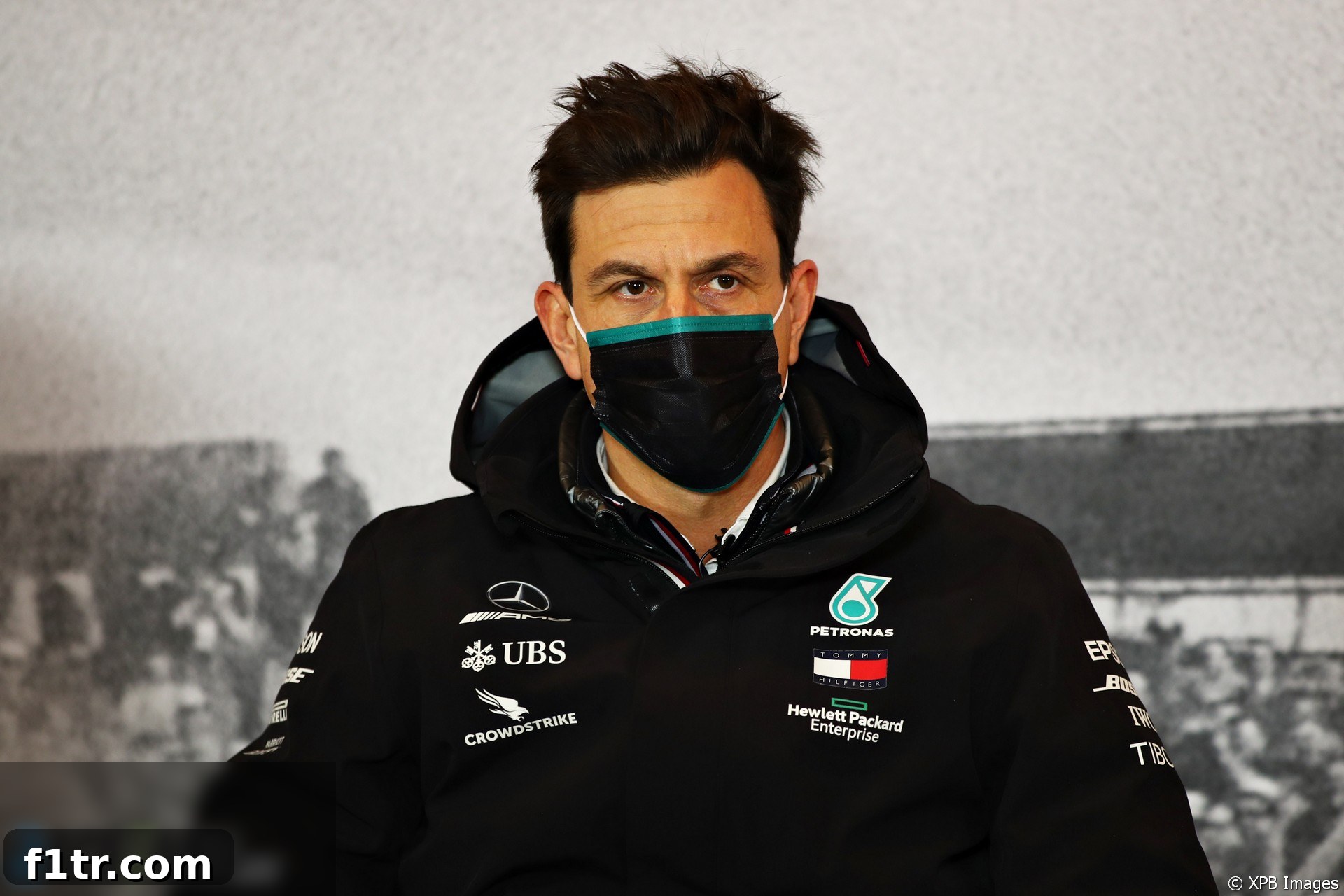
Mercedes team principal Toto Wolff was unequivocal in his stance, suggesting there were “various reasons” why the reigning champions would not provide engines to Red Bull. Chief among these reasons is the significant expansion of Mercedes’ customer engine program. From the 2021 season, Mercedes is set to supply power units to four teams: the factory Mercedes-AMG Petronas F1 Team, Williams Racing, Aston Martin Cognizant F1 Team (formerly Racing Point), and McLaren F1 Team. This extensive commitment stretches their manufacturing and technical resources to the limit.
“We are supplying four teams, including us,” Wolff stated, emphasizing the logistical challenges. “We are almost in a state that we can’t make power units for all of us. So there is no capacity.” This capacity crunch is not merely about physical manufacturing; it also encompasses the intricate development, testing, and support required for cutting-edge Formula 1 engines. Diverting resources to an additional, highly demanding customer like Red Bull would undoubtedly strain their operations, potentially compromising the performance of their existing partners or even their own factory team.
Beyond the logistical constraints, competitive considerations play a crucial role. Mercedes and Red Bull have been locked in intense rivalry for championships, and supplying a direct competitor with their meticulously developed power units presents a significant strategic disadvantage. Sharing proprietary technology, even under strict contractual terms, carries inherent risks. A Red Bull team powered by Mercedes could potentially gain insights into their design philosophy, engine maps, and operational strategies, which would be anathema to Mercedes’ competitive edge.
Despite closing the door, Wolff hinted that Red Bull may find an alternative beyond seeking engines from F1’s current suppliers. “I have no doubt that Helmut [Marko, Red Bull motorsport consultant] will have a plan B, and probably doesn’t need to rely on any of the current power unit suppliers,” he remarked, alluding to Red Bull’s renowned resourcefulness and ambition. This cryptic suggestion points towards a more independent solution for the Milton Keynes-based squad, a possibility that is gaining traction within the paddock.
Ferrari’s Cautious Openness: A Strategic Consideration
In stark contrast to Mercedes’ firm refusal, Ferrari’s team principal Mattia Binotto expressed a degree of openness to the idea of supplying Red Bull. However, his comments were tinged with realism about the complexities involved. “Obviously, we were not considering it. It’s something on which we need to start considering now,” Binotto conceded, highlighting that Honda’s decision caught many by surprise and forced a re-evaluation of long-term strategies. He further added, “I think we have not decided as far as I think it will be down to Red Bull eventually to look at us and to ask for a supply.”
The relationship between Ferrari and Red Bull is not without precedent. Ferrari previously supplied engines to Red Bull Racing in 2006, and to their junior team, then known as Toro Rosso (now AlphaTauri), on several occasions throughout its history. This past association means there is a foundational understanding, even if the current competitive landscape is vastly different. While Ferrari’s power unit has faced performance challenges in recent seasons, the team is investing heavily in its development, aiming for significant gains in the coming years. A partnership with Red Bull could potentially bring additional revenue and data, which might aid in development, but it also carries substantial risks.
Binotto acknowledged the considerable effort such a partnership would entail. “They are a great team, no doubt. I think that supplying them is, as well, lot of energy somehow, which is required, but something on which we need to consider, on which we have no position yet, on which we need certainly to take our time to think about and have a decision,” he explained. Supplying a top-tier team like Red Bull demands not only manufacturing capacity but also dedicated technical support, continuous development, and a delicate balancing act to ensure both customer and factory teams receive optimal performance without one undermining the other. The prospect of Red Bull, a team known for its aggressive chassis development, potentially outperforming the factory Ferrari team with a Ferrari engine is a significant competitive consideration.
Red Bull’s Path Forward: Renault Mandate or Honda IP Takeover?
With Mercedes out of the picture and Ferrari only cautiously considering a deal, Red Bull’s options appear to narrow, yet they remain strategically diverse. Under Formula 1’s sporting regulations, if a team is unable to secure a power unit supply, the FIA can mandate an existing manufacturer to provide engines. Given that Renault is currently without any customer teams after 2021, they would likely be the manufacturer compelled to supply Red Red Bull and AlphaTauri.
A return to Renault would be a familiar, albeit potentially uncomfortable, scenario for Red Bull. The two parties enjoyed immense success together, securing four consecutive double world championships from 2010 to 2013. However, their relationship deteriorated significantly during the V6 hybrid era due to reliability issues and performance deficits from Renault, leading to a public and often acrimonious split. While F1 rules would enforce the supply, it remains to be seen how a partnership, likely strained by past grievances, would function competitively.
However, the “plan B” hinted at by Toto Wolff, and discussed extensively behind the scenes, involves Red Bull taking over the production and development of Honda’s engines. This audacious move would see Red Bull acquire Honda’s intellectual property (IP) for the power unit and establish its own engine division in Milton Keynes. This independent pathway would offer Red Bull unprecedented control over its entire car package, integrating chassis and engine development seamlessly. It would require substantial investment in facilities, personnel, and a steep learning curve, but it aligns with Red Bull’s long-term ambition to become a fully self-sufficient constructor.
Christian Horner, Red Bull Racing’s team principal, has indicated that Honda’s early notice of departure provided them with sufficient time to explore and solidify a new supply solution. “The early notice of Honda’s exit gave them time to find a new supply,” he stated, highlighting the importance of the lead time. Conversely, Mattia Binotto viewed the timing as very short for a manufacturer to organize a new supply deal, especially with the 2022 season rapidly approaching. “I think timing-wise, it’s very little time because we need to organize ourselves,” Binotto commented. “2022 is just here behind, it is tomorrow, somehow. And we said, it was sudden news from Honda and I think that now we need really to consider something which wasn’t even considered a few days ago.” This difference in perspective underscores the logistical complexities involved for both potential suppliers and the searching team.
The Implications for Formula 1’s Future
Red Bull’s engine decision will have far-reaching implications for the entire Formula 1 grid. Should they opt for the Honda IP takeover, it would mark a significant shift, creating a fourth independent engine manufacturer in the sport, alongside Mercedes, Ferrari, and Renault. This would not only enhance Red Bull’s long-term strategic position but also potentially influence future engine regulations, particularly concerning cost caps and standardization, which are already under discussion for the post-2025 era.
If Red Bull were to reluctantly accept a mandated Renault supply, the competitive dynamics could become fascinating. The history between the two suggests a relationship built on necessity rather than mutual enthusiasm, potentially leading to an interesting internal battle within the F1 paddock. And if, against the odds, Ferrari were to agree to supply Red Bull, it would create an intriguing situation where two fierce rivals are linked by core technology, demanding unprecedented levels of trust and cooperation, or leading to an even more intense rivalry.
The decision facing Red Bull is arguably one of the most critical in its history. It will define their competitiveness for years to come and undoubtedly reshape the power balance within Formula 1. As the clock ticks towards the 2022 season, the motorsport world watches with bated breath to see which path Red Bull Racing and AlphaTauri will ultimately choose to power their championship ambitions.
2020 Eifel Grand Prix
- Renault “not scared of anywhere” in remaining races
- Bottas “needs a miracle” to overturn Hamilton’s 69-point lead
- 2020 Eifel Grand Prix Star Performers
- Leclerc sees ‘quite a few positives’ in Ferrari’s Nurburgring weekend
- Mercedes relied on DAS “more than ever” at cold Nurburgring
Browse all 2020 Eifel Grand Prix articles