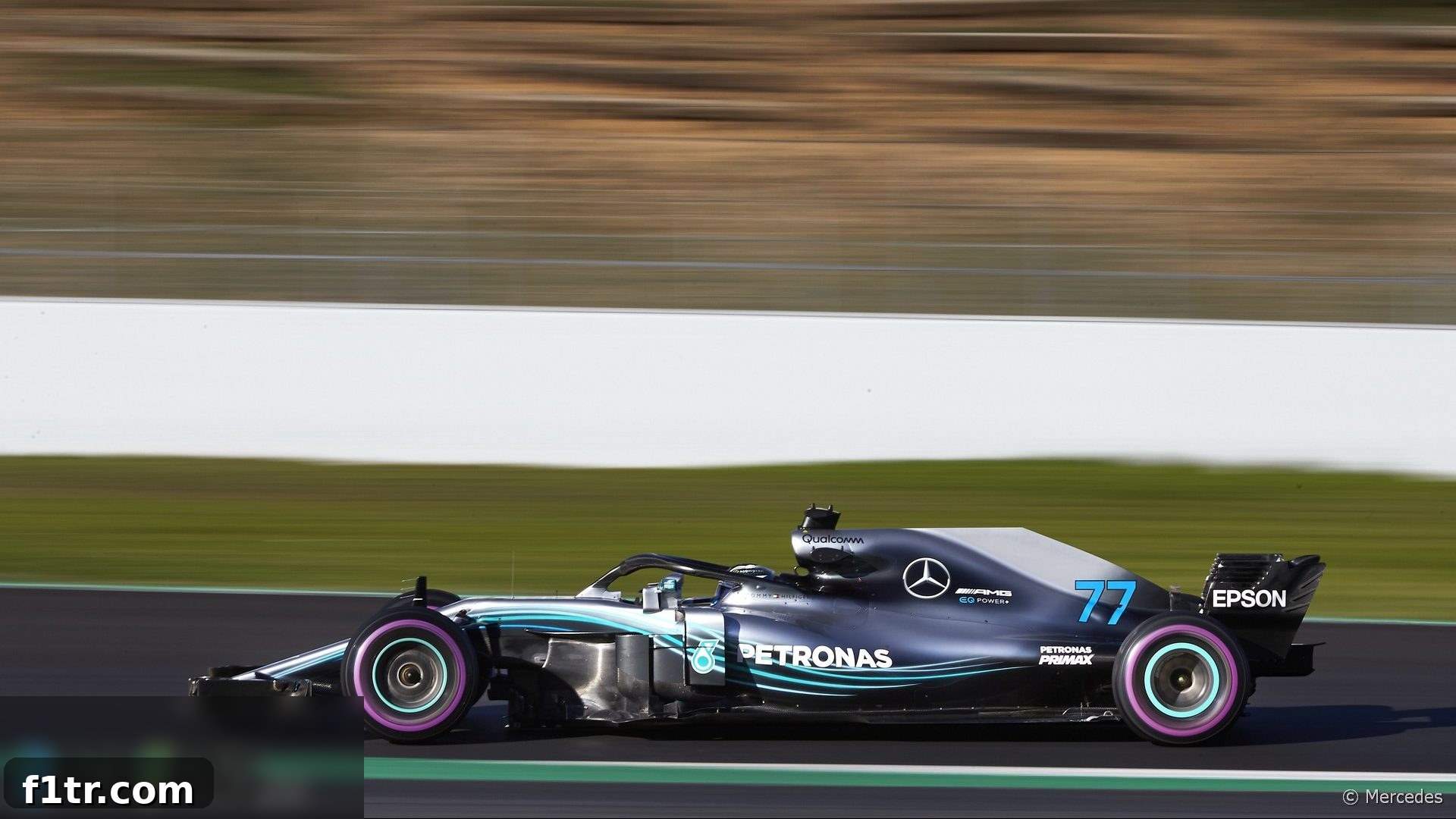
Mercedes’ 2018 F1 Season: Toto Wolff on Reliability, Rivalry, and the Road Ahead
As the highly anticipated 2018 Formula 1 season approached, Mercedes-AMG Petronas Motorsport, the reigning champions, found themselves navigating a precarious balance between their relentless pursuit of performance and the ever-present specter of reliability. Despite a seemingly strong showing during pre-season testing, Mercedes’ Head of Motorsport, Toto Wolff, expressed a notably cautious outlook. He emphasized that the team was far from taking the durability of its new W09 challenger for granted, a sentiment rooted in the fundamental challenge posed by revised regulations: not all crucial components of the car’s intricate power unit had yet undergone a complete lifespan validation. This lingering element of uncertainty loomed large as the season opener in Melbourne drew near, underscoring the immense pressure on all teams to deliver flawless machinery under increasingly stringent technical directives, where reliability could undeniably become a championship-deciding factor.
The Critical Role of Reliability in Modern F1 Regulations
The 2018 Formula 1 season ushered in significant changes to the power unit component allocation, drastically reducing the number of elements each driver could utilize without incurring grid penalties. For the majority of the power unit’s sophisticated components – including the Internal Combustion Engine (ICE), Turbocharger (TC), Motor Generator Unit-Heat (MGU-H), Energy Store (ES), and Control Electronics (CE) – drivers were permitted to use only three complete units over the course of the gruelling 21-race calendar. This translated into an unprecedented average lifespan requirement of seven races per power unit, a substantial increase compared to previous seasons. The challenge became even more acute for specific, highly stressed components like the Motor Generator Unit-Kinetic (MGU-K), for which drivers were allowed only two examples per season. This meant that each MGU-K unit, a vital component for energy recovery and deployment, would theoretically need to complete up to eleven races flawlessly without replacement. Such stringent limitations placed unprecedented demands on engineering precision and manufacturing quality, making mechanical integrity as paramount as outright speed. A single, untimely failure could not only cost invaluable race points but also trigger a cascade of grid penalties that could severely derail an entire championship campaign, thereby validating Wolff’s profound reliability concerns.
Navigating the Unknown: Pre-Season Testing Limitations and Unforeseen Challenges
The pre-season testing period, traditionally the ultimate crucible for proving new designs and validating component longevity, was noticeably condensed for the 2018 season. Teams were afforded a mere eight days of running at the Circuit de Barcelona-Catalunya before packing up for the season opener. This already limited schedule was further hampered by adverse weather conditions, including unseasonably cold temperatures and even snow, which severely disrupted valuable track time and prevented teams from conducting comprehensive, representative running at optimal temperatures. Such interruptions meant that many of the new car’s components, despite accumulating respectable mileage and showing promising signs, simply couldn’t be subjected to the rigorous, full-life testing required to guarantee their durability over an entire demanding F1 season. Toto Wolff candidly addressed this predicament, stating, “Our reliability in testing looked good but we need to be careful to draw any conclusions from that – despite getting some good mileage with the new car in Barcelona, many of its components have not even come close to the life they need to complete during the season.” This stark admission highlighted the inherent gamble every team faced, heading into the unknown of a competitive season with an incompletely proven hardware package. The challenge was not merely to be fast, but to be reliably fast, a feat much harder to confirm within a truncated and weather-affected testing window.
Mercedes’ Engineering Challenge: Balancing Performance with Unyielding Durability
The modern Formula 1 power unit stands as a marvel of engineering, a complex hybrid system comprising thousands of individual components, each operating at the very limits of material science and design. It meticulously integrates the Internal Combustion Engine (ICE), two Motor Generator Units (MGU-K and MGU-H), a high-efficiency Turbocharger (TC), a sophisticated Energy Store (ES), and cutting-edge Control Electronics (CE). Every single element must not only perform with peak efficiency but also endure extreme forces, temperatures, and vibrations for extended periods, far beyond the lifespan of conventional automotive components. Mercedes-AMG High Performance Powertrains (HPP) in Brixworth is globally renowned for its engineering prowess, consistently producing benchmark power units that have powered Mercedes to multiple championships. However, the 2018 regulations demanded an even greater leap in reliability without compromising the crucial performance gains necessary to stay ahead of formidable rivals. Engineers faced the unenviable task of optimizing every gram and every millisecond, acutely aware that any over-optimization in the name of performance could potentially lead to catastrophic failures on track. The dramatically reduced component allocation meant that the margin for error was virtually non-existent, placing immense pressure on every design decision, every material choice, and every manufacturing process. The ‘good mileage’ observed in testing, as Wolff noted, was a promising indicator of fundamental soundness, but it represented only a fraction of the actual stress cycles and operational hours a component would experience over an 11-race lifespan. The true test of Mercedes’ engineering acumen would unfold only when the cars were pushed to their absolute limits, race after race, under varying track conditions and intense strategic demands, making reliability an ongoing battle.
The Thrill of Competition: A Three-Way Championship Battle on the Horizon
Beyond the intricate technicalities of reliability, Toto Wolff also expressed his palpable anticipation for a thrilling and fiercely contested championship season. The 2017 campaign had already delivered a gripping spectacle, witnessing a captivating head-to-head battle between Mercedes and Ferrari that kept fans on the edge of their seats until the latter stages. Wolff reflected on this intensity, stating, “Last year, the competition was very close and there was no moment where we could afford to relax. Ferrari put up a very tough fight and we had a proper battle between silver and red.” Building on this competitive foundation, he enthusiastically predicted an even more exhilarating scenario for 2018: “This year promises to bring an exciting three-way fight between us, Ferrari and Red Bull.” The inclusion of Red Bull Racing, consistently a threat and often innovators, would undoubtedly elevate the championship stakes to unprecedented levels. With Daniel Ricciardo and Max Verstappen forming one of the most dynamic and aggressive driver pairings on the grid, backed by a chassis team known for its aerodynamic brilliance, their anticipated entry into the front-running battle promised an unparalleled level of strategic depth and on-track drama. A three-way contest among three iconic teams would not only be a tremendous boon for global motorsport and its burgeoning fanbase but would also push each team, including Mercedes, to new heights of performance and operational excellence, ensuring that complacency would be the most dangerous opponent of all. This intense rivalry would compel every department, from engine development to race strategy, to perform flawlessly under immense pressure, making every point and every reliability run absolutely critical.
The prospect of a three-way championship battle underscored the paramount importance of every minute detail, from individual driver performance to seamless pit stop execution, but none more so than the foundational reliability of the machinery. In such a tightly contested and unforgiving environment, even minor mechanical issues, unexpected component failures, or resultant grid penalties for exceeding allocation limits could have disproportionate consequences, dramatically swinging the momentum of the season. Mercedes, while undoubtedly confident in their overall package and formidable driver pairing of Lewis Hamilton and Valtteri Bottas, understood implicitly that their quest for another Constructors’ and Drivers’ title would hinge not just on raw speed and talent, but on an impeccable blend of performance, strategic acumen, and above all, bulletproof reliability. The team’s meticulously calculated approach, as articulated by Wolff, reflected a deep understanding of the championship’s multifaceted demands: anticipating challenges, rigorously mitigating risks, and relentlessly pursuing perfection in every facet of their operation. As the cars lined up on the grid in Melbourne, the unspoken question permeating the paddock would be whether Mercedes had truly conquered the longevity test during the limited pre-season, or if the unseen stresses of competitive racing would reveal vulnerabilities when it mattered most. The 2018 season was poised to be a true test of engineering mettle and strategic brilliance, with reliability serving as the silent, yet ultimately most powerful, determinant of success.
This forward-looking assessment from Toto Wolff served as a compelling reminder that in the high-stakes world of Formula 1, success is never guaranteed, even for a dominant force like Mercedes. The relentless pursuit of technological advancement, coupled with ever-evolving technical regulations, constantly reshapes the competitive landscape, demanding continuous adaptation and innovation. His comments weren’t merely a statement of caution; they were a profound declaration of Mercedes’ unwavering commitment to meticulous preparation, a strategic acknowledgment of the inherent risks, and a testament to the immense respect they held for their formidable rivals. The candid acknowledgment of untested components and the thrilling prediction of a multi-team battle for supremacy set the stage for what promised to be an electrifying year of racing, where every race, every championship point, and indeed, every single component’s longevity would contribute significantly to the ultimate narrative of the 2018 Formula 1 World Championship.
2018 F1 season
- F1 feared “death knell” for Drive to Survive after Ferrari and Mercedes snub
- McLaren staff told us we were “totally crazy” to take Honda engines in 2018 – Tost
- ‘It doesn’t matter if we start last’: How Red Bull’s junior team aided Honda’s leap forward
- Honda’s jet division helped F1 engineers solve power unit problem
- McLaren Racing losses rise after Honda split
Browse all 2018 F1 season articles