Toto Wolff Defends Mercedes’ Controversial Hungarian GP Strategy for Lewis Hamilton
In the thrilling and often unpredictable world of Formula 1, split-second decisions can dictate the outcome of a race and, sometimes, an entire championship. One such moment of high drama unfolded at the 2021 Hungarian Grand Prix, where Mercedes’ strategic call regarding Lewis Hamilton sparked intense debate. Following a chaotic initial start and subsequent red flag, Hamilton found himself in a unique and ultimately challenging position. Mercedes team principal Toto Wolff, however, remained resolute in his defense of the team’s decision not to switch Hamilton to slick tyres immediately before the race restart, a move that momentarily left the seven-time world champion isolated on the grid.
The Pivotal Race Restart: A High-Stakes Gamble
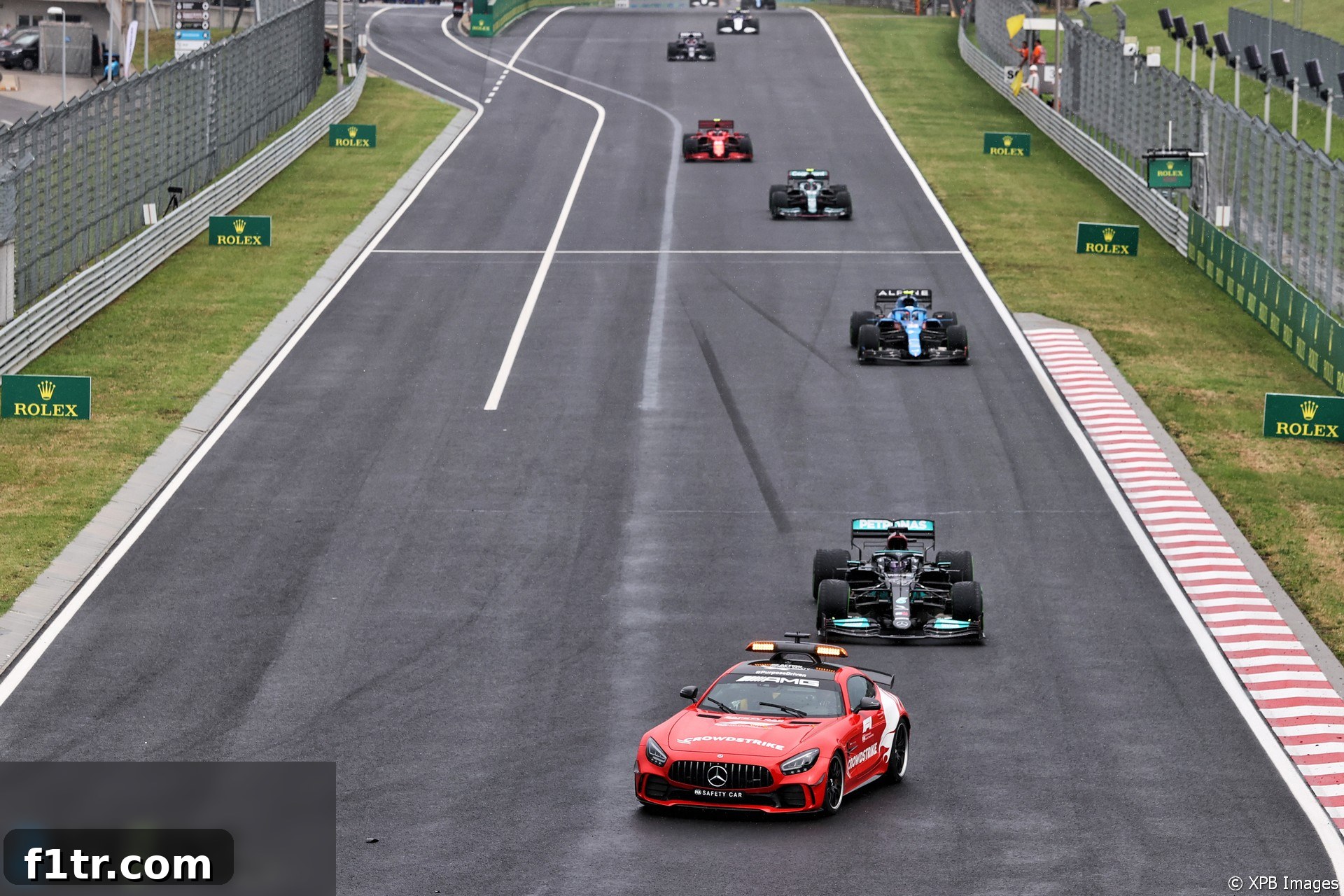
The 2021 Hungarian Grand Prix began under treacherous conditions, with rain making the track slick and reducing visibility. A multi-car pile-up on the opening lap, triggered by Valtteri Bottas, brought out the red flag, necessitating a complete restart of the race. As the remaining cars regrouped in the pit lane, a crucial decision loomed for every team: whether to stick with the intermediate wet tyres or brave a switch to dry-weather slicks. The track, while still damp, was visibly drying, creating a strategic dilemma of monumental proportions.
When the grid formed for the standing restart, an astonishing sight greeted fans and competitors alike: every single driver, bar one, headed into the pits to swap their intermediate tyres for slicks. The lone car remaining on the starting grid, poised for the restart, was Lewis Hamilton’s Mercedes. This audacious move by the Mercedes strategists left Hamilton facing an empty grid behind him, a stark visual representation of the calculated risk they had taken. The decision was based on internal simulations and an assessment of the track conditions at that precise moment, suggesting that despite the delay, Hamilton would only fall as low as sixth position by pitting a lap later.
The Rapid Track Evolution and Its Consequences
Mercedes’ simulations, while meticulously prepared, could not fully account for the extraordinary pace at which the Hungaroring circuit dried out. As Hamilton took the lonely restart, navigating the increasingly dry tarmac on his intermediate tyres, the drivers who had opted for slicks immediately showcased their superior grip and speed. The track dried at an unprecedented rate, making the intermediate tyres utterly unsuited for the conditions within a single lap. This meant that by the time Hamilton completed his lone lap and eventually dived into the pits for his own set of slick tyres, the damage was already done.
The consequence of this timing misjudgment was severe. Hamilton rejoined the race at the absolute rear of the field, a dramatic fall from his leading position just moments earlier. What Mercedes’ simulations had projected as a drop to P6 turned into a complete strategic nightmare, relegating the championship contender to the unenviable task of fighting his way through the entire grid. This incident underscored the incredible unpredictability of Formula 1, where even the most advanced data and experienced strategists can be caught out by rapidly evolving track conditions and the volatile nature of racing.
Toto Wolff’s Unwavering Defense
Despite the adverse outcome, Mercedes team principal Toto Wolff remained steadfast in his conviction that the initial decision was sound. Speaking after the race, Wolff articulated his unwavering belief: “I think 100 percent [it was] the right decision and I stand by it.” His defense highlighted the critical distinction between a well-reasoned decision based on available information and the eventual outcome, which can often be influenced by unforeseen variables.
Wolff elaborated on the team’s reasoning, explaining the real-time judgment required in such high-pressure scenarios. “At the end you need to make the call out there and judge whether it’s dry enough or not and I thought that within one lap it couldn’t possibly dry up like it did,” he stated. This perspective emphasizes that strategists operate within a window of perceived reality. While hindsight makes the “wrong outcome” clear, the decision itself was made on the best available intelligence at that specific moment. It’s a harsh reality of motorsport that even scientifically calculated risks can sometimes fall victim to the inherent randomness and dynamic nature of track conditions, forcing teams to “take it on the chin.”
Lewis Hamilton’s Remarkable Recovery Drive
Following the strategic blunder, Lewis Hamilton embarked on one of the most compelling recovery drives of his illustrious career. From the very back of the pack, he launched a relentless assault on his rivals, showcasing his unparalleled skill, race craft, and determination. Lap after lap, Hamilton meticulously carved his way through the field, executing daring overtakes and demonstrating why he is considered one of the sport’s all-time greats. His incredible pace and strategic use of the clear air he found allowed him to regain significant ground.
In a testament to his resilience and the raw performance of his Mercedes car, Hamilton managed to climb all the way back to a remarkable third-place finish. This podium position, achieved after navigating heavy traffic and engaging in numerous wheel-to-wheel battles, was a heroic effort that salvaged valuable points for his championship campaign. It also served as a powerful reminder that even when strategy falters, a driver of Hamilton’s calibre can often mitigate the damage through sheer driving prowess.
Post-Race Health Concerns for Hamilton
The physical toll of such an intense recovery drive, compounded by the hot and humid conditions at the Hungaroring, became evident after the race. During the podium ceremony, Hamilton visibly appeared unwell, struggling with fatigue and potentially heat exhaustion. His condition necessitated attention from the team’s doctor, leading him to miss parts of the mandatory post-race press conference. This raised concerns among fans and the media about the driver’s well-being.
Toto Wolff addressed Hamilton’s health, attributing his discomfort to the demanding circumstances of the race. “I think you can just relate to it with the heat out there and the race like he had, with tons of overtaking, that is exhausting,” Wolff explained. He assured everyone that Hamilton should be “all right,” but stressed the importance of caution: “better to be safe than sorry.” This incident highlighted the extreme physical demands placed on Formula 1 drivers, especially after an exceptionally challenging race involving extensive overtaking and high G-forces under strenuous environmental conditions. Driver safety and health remain paramount, and teams are always vigilant in monitoring their athletes.
Strategic Lessons and the Unpredictability of F1
The 2021 Hungarian Grand Prix served as a powerful reminder of Formula 1’s inherent unpredictability and the razor-thin margins that separate triumph from tribulation. Mercedes’ strategic misstep, though defended by Wolff as a logical decision at the time, illustrated how quickly track conditions can change and render even the most advanced simulations obsolete. This event sparked widespread discussion within the F1 community about the balance between relying on data-driven strategy and making intuitive, real-time calls in rapidly evolving environments.
Every team learns from such experiences, refining their models and decision-making processes. The incident underscored the critical role of the entire pit wall – from strategists to engineers – in assessing a myriad of factors, including tyre wear, competitor positions, weather forecasts, and the subtle nuances of track grip. While Mercedes faced criticism for their initial call, Hamilton’s incredible drive showcased the team’s overall strength and their ability to fight back from adversity. It’s these moments of intense strategic pressure and heroic driver performance that define the excitement and drama of Formula 1, keeping fans on the edge of their seats and reminding us that the outcome is never truly certain until the chequered flag falls.
Conclusion
The 2021 Hungarian Grand Prix will be remembered as a race of unexpected turns, strategic gambles, and an unforgettable recovery drive. Toto Wolff’s unwavering defense of Mercedes’ controversial strategy for Lewis Hamilton, despite its immediate negative consequences, speaks to the complex nature of decision-making at the pinnacle of motorsport. While the initial call might have been a calculated risk that didn’t pay off, Hamilton’s heroic charge from the back to a podium finish demonstrated the extraordinary talent and resilience that defines a true champion. This race encapsulated the essence of Formula 1: a relentless pursuit of perfection, punctuated by moments where human judgment and the unpredictable forces of nature collide, making every grand prix a unique and compelling spectacle.