In a candid admission that highlights a pivotal shift in perspective, Mercedes team principal Toto Wolff has openly stated that the harrowing Charles Leclerc crash at the 2018 Belgian Grand Prix at Spa Francorchamps was the definitive moment that transformed his view on the necessity of Formula 1’s controversial Halo device. Once a vocal critic, Wolff now firmly believes in its life-saving efficacy, even as he continues to advocate for aesthetic improvements to the driver protection system.
The introduction of the Halo at the beginning of the 2018 Formula 1 season was met with a storm of debate and widespread skepticism. Many, including prominent figures within the sport, expressed strong reservations about its appearance, arguing that it marred the sleek, open-cockpit aesthetic that had long defined F1. Toto Wolff himself famously articulated his disdain, suggesting in February 2018 that he “wanted to take a chainsaw to it.” This vivid expression underscored the significant aesthetic objections held by many passionate fans, drivers, and team personnel who felt the device compromised the very essence of Formula 1’s visual appeal. The concerns ranged from its perceived bulkiness to its visual obstruction for drivers, sparking a significant conversation about the trade-off between safety and tradition.
However, the dramatic events of the 2018 Belgian Grand Prix provided a stark and undeniable demonstration of the Halo’s critical function. On the opening lap, a multi-car collision saw Fernando Alonso’s McLaren launched over Charles Leclerc’s Sauber. The impact was violent, with Alonso’s car making direct contact with the Halo structure of Leclerc’s cockpit. The titanium hoop bore the brunt of the collision, deflecting Alonso’s wheel and car chassis away from Leclerc’s head. Images of the incident clearly showed tyre marks on the Halo itself, serving as irrefutable evidence of the device’s protective intervention. This single, high-profile incident was a watershed moment, silencing many of the Halo’s detractors and providing a sobering reminder of the extreme dangers inherent in motorsport.
Speaking at the FIA Gala later that year, Wolff, reflecting on the Spa incident, made a public confession that resonated throughout the motorsport community. He admitted, “I’ve changed my mind.” This was a powerful statement from one of Formula 1’s most influential figures, signifying a collective understanding that while the Halo might not be universally loved for its looks, its contribution to driver safety was undeniable and paramount. Wolff emphasized his personal admiration for Charles Leclerc, acknowledging the young driver’s immense talent and potential. “I really like Charles, he’s a young, upcoming racer that deserves to be in Formula 1,” Wolff stated, “and I would not have forgiven myself if we had voted against the Halo and we would have had a severe incident with a potentially catastrophic outcome.”
Wolff’s change of heart, while profound, did not entirely extinguish his aesthetic concerns. He candidly added, “But I still don’t like the aesthetics of it. I hope we find a solution for the future that looks good.” This sentiment perfectly encapsulates the ongoing tension between safety innovation and Formula 1’s traditional identity. Despite his reservations about its appearance, Wolff unequivocally praised the Halo’s effectiveness. “Even though aesthetically it’s not what I like, I think it’s a super initiative that has shown us its merits and I’m happy that [then-FIA President] Jean [Todt] pushed it through and they didn’t take a chainsaw [to it] at the beginning of this season.” This acknowledgement highlighted the crucial role played by the FIA leadership in implementing the device despite initial widespread opposition, prioritizing driver protection above all else.
The conversation around driver head protection in Formula 1 has always been complex, balancing the inherent risks of high-speed racing with continuous innovation. Before the Halo, discussions often revolved around open-cockpit safety, with various concepts like transparent screens and partially enclosed designs being explored. The Halo, ultimately chosen for its robust structural integrity and tested ability to withstand significant impacts, represented a significant leap. Wolff’s renewed focus on aesthetics, while maintaining a staunch commitment to safety, points to the next phase of this evolution: finding solutions that are both supremely safe and visually integrated into the sport’s futuristic appeal.
Looking ahead, Wolff suggested that more radical solutions, such as a fully enclosed cockpit, could be considered for future introduction. “I think we need to get the right balance between aesthetics and safety,” he asserted. “I personally like the closed canopies like fighter jets.” This vision of a fighter-jet style canopy presents an intriguing prospect for Formula 1, potentially offering even greater protection from debris while also presenting an opportunity for a more streamlined and aesthetically pleasing design than the current Halo. Such a design could address both impact protection and the penetration of smaller, high-velocity objects, which remains a challenge even with the Halo.
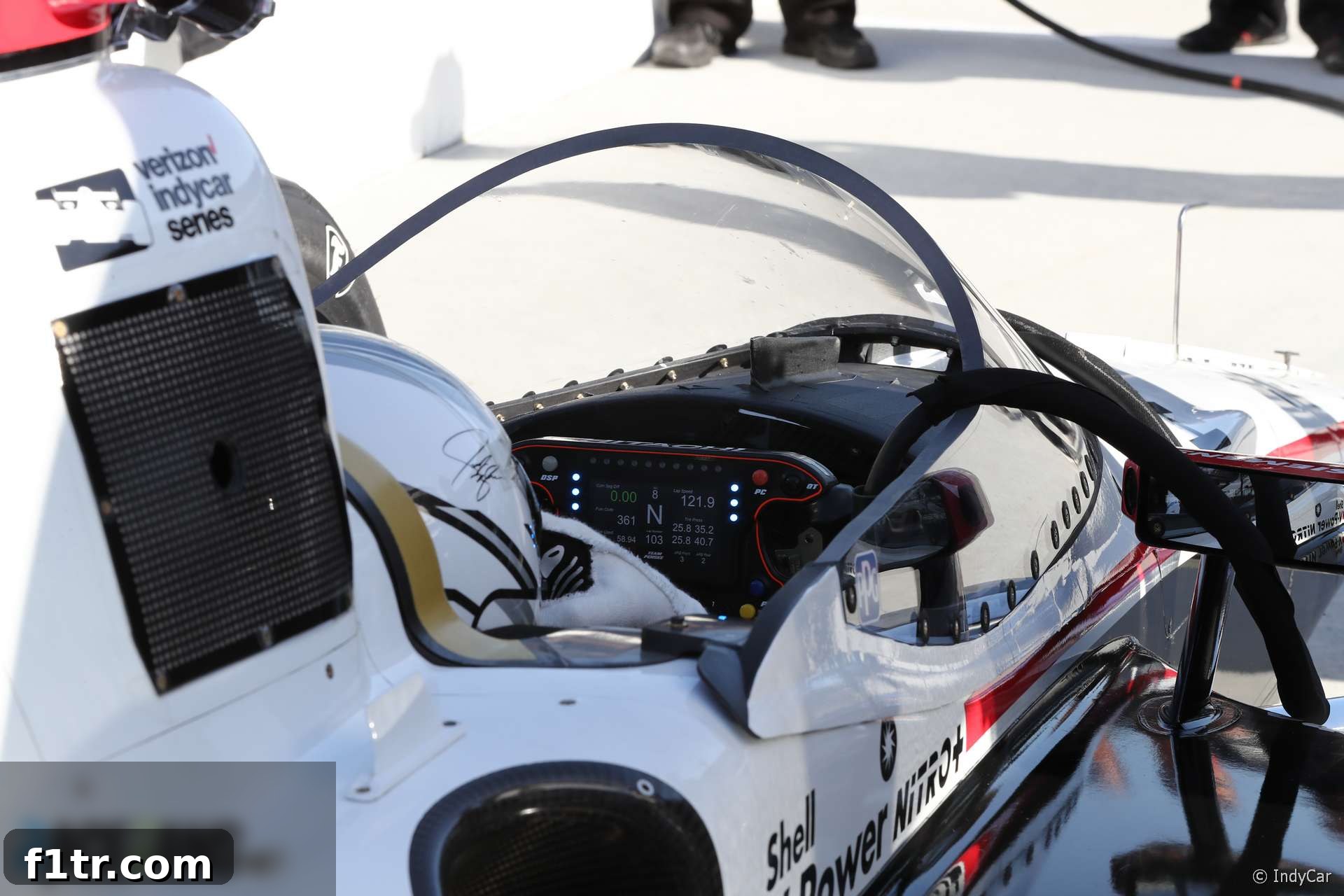
While the concept of a closed canopy might seem like a natural progression, it comes with its own set of challenges and considerations. IndyCar, for example, tested a canopy solution known as the ‘windscreen’ earlier in the year. However, FIA Race Director Charlie Whiting provided a crucial assessment in September, stating that the IndyCar-style windscreens would only be “10% as effective as the Halo in a crash such as Leclerc’s.” This significant disparity in protective capability underscores the complex engineering and design requirements for effective head protection in F1, where forces and speeds are exceptionally high. Factors such as structural integrity, visibility in varying conditions (rain, glare), emergency egress in the event of an accident, and heat management within a closed environment all require meticulous research and development. The Halo, despite its aesthetic drawbacks, proved its unparalleled strength and effectiveness in a real-world scenario, setting a very high bar for any alternative solution.
Wolff believes that comprehensive and collaborative discussions are essential to pave the way for future advancements in safety without compromising the sport’s identity. “We just need to, between the teams and the FIA [and] the commercial rights holder, work proactively in a collaborative manner on solutions that look great and save lives,” he emphasized. This collaborative approach is vital, bringing together the technical expertise of the teams, the regulatory authority of the FIA, and the commercial interests of the sport to ensure that innovations are not only effective but also integrate seamlessly into the Formula 1 experience. The ultimate goal remains to push the boundaries of safety while maintaining the excitement and visual spectacle that define Grand Prix racing. The journey from the initial resistance to the Halo to its undeniable acceptance after Leclerc’s crash serves as a powerful testament to Formula 1’s unwavering commitment to driver well-being, paving the way for even safer and potentially more aesthetically integrated solutions in the future.
2018 F1 season
- F1 feared “death knell” for Drive to Survive after Ferrari and Mercedes snub
- McLaren staff told us we were “totally crazy” to take Honda engines in 2018 – Tost
- ‘It doesn’t matter if we start last’: How Red Bull’s junior team aided Honda’s leap forward
- Honda’s jet division helped F1 engineers solve power unit problem
- McLaren Racing losses rise after Honda split
Browse all 2018 F1 season articles