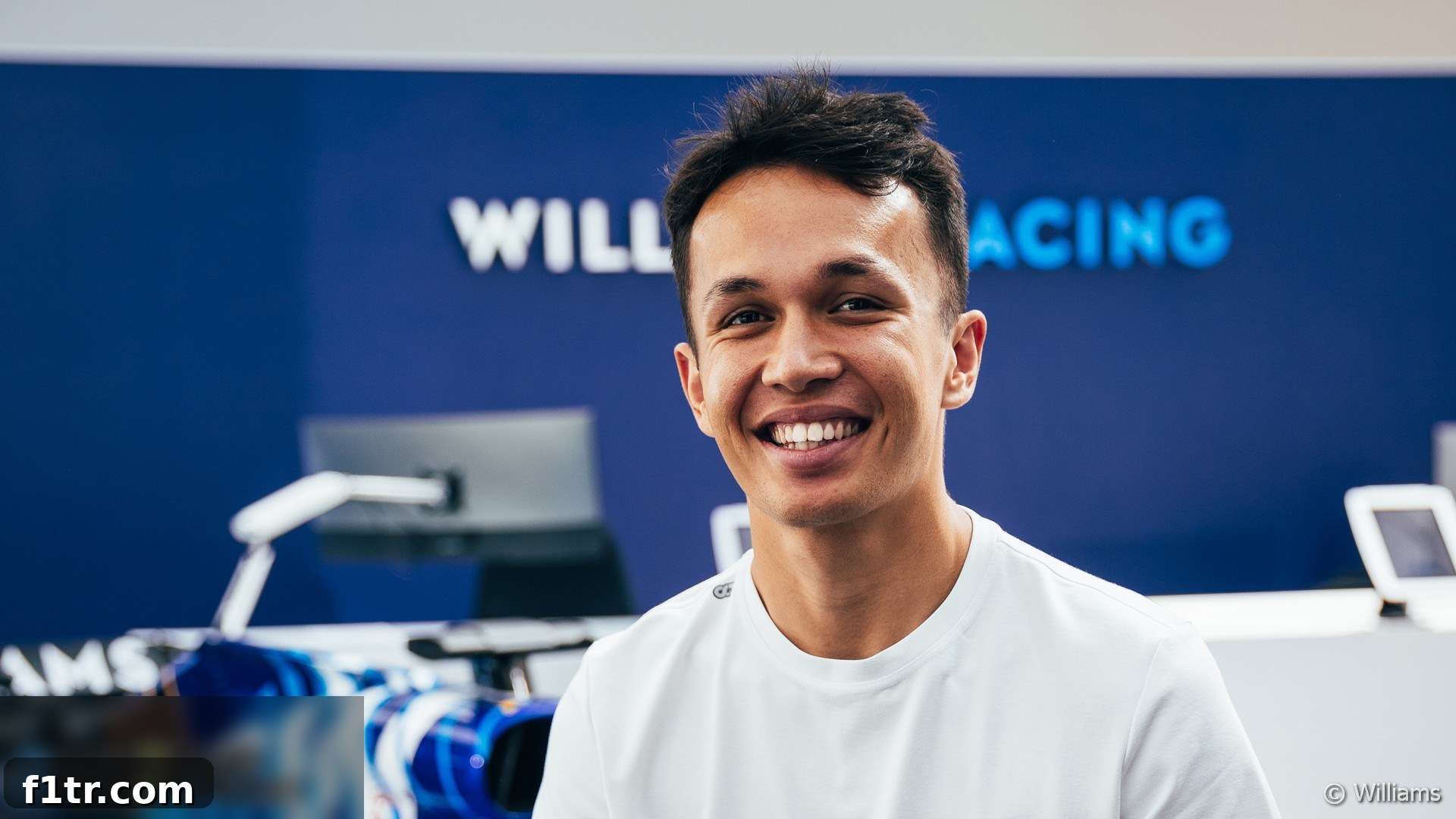
Williams F1’s Strategic Driver Choice: Why Alexander Albon Replaced George Russell
In a pivotal moment for Williams Racing, the team embarked on an early and decisive search for a successor to their burgeoning star driver, George Russell. The impending move of Russell to the formidable Mercedes-AMG Petronas F1 Team was considered “obvious,” prompting Williams to proactively secure their future in the highly competitive world of Formula 1.
Advert | Become a Supporter & go ad-free
Jost Capito, the astute CEO of Williams, revealed that this foresight granted the team ample time to meticulously evaluate and ultimately select former Red Bull and Toro Rosso driver Alexander Albon as Russell’s replacement. This crucial decision was the culmination of a comprehensive assessment of numerous alternatives, a process reflecting Williams’ strategic and forward-thinking approach to talent acquisition in modern Formula 1.
The Foresight Behind Russell’s Departure and the Extensive Driver Search
The writing had been on the wall for some time regarding George Russell’s inevitable progression to a top-tier team. His exceptional performances at Williams, often extracting results that significantly exceeded the car’s inherent capabilities, had firmly placed him on Mercedes’ radar. As Capito elaborated, “At an early stage, we looked at, if it would happen, who would be the right driver to replace George.” This proactive stance allowed Williams to navigate the complex and often frenetic driver market without undue pressure, ensuring they could make a well-considered choice rather than a rushed, reactive one.
The search itself was described as dynamic and extensive, with a wide array of options continuously emerging and receding. Capito highlighted the broad spectrum of candidates considered: “There were quite a number of options. It’s difficult to name a number [of drivers] because the options came and went.” This fluidity underscores the intense competition for a Formula 1 seat and the ever-shifting landscape of talent availability, where circumstances can change rapidly.
Williams faced a classic dilemma in driver selection: balancing the allure of seasoned experience with the raw potential of youth. “At the end there were quite a good number of options where you can choose between long experience, experience and youth, or just youth and no experience in Formula 1,” Capito explained. He candidly acknowledged the difficulty of this decision, recognizing that “there are quite a couple of really good drivers around who would all deserve a seat in Formula 1.” The team’s task was not merely to find a competent driver, but specifically the *right* driver who aligned with Williams’ long-term strategic vision and ambitious rebuilding phase.
George Russell’s Impact and Legacy at Williams
George Russell’s tenure at Williams, though devoid of consistent points, was undeniably impactful. He consistently demonstrated raw speed, qualifying prowess – earning him the nickname “Mr. Saturday” – and an exceptional ability to extract maximum performance from challenging machinery. His breakthrough performance at the 2020 Sakhir Grand Prix, deputizing for Lewis Hamilton at Mercedes, served as a powerful testament to his world-class potential, solidifying his status as a future champion. It was this undeniable talent and consistent over-delivery that made his eventual move to Mercedes not just probable, but a matter of time. Williams understood this, and their proactive planning was a testament to their respect for his career trajectory and their pragmatic approach to team management.
Alexander Albon: A Calculated Choice for Williams’ Future Ambitions
Alexander Albon’s return to a full-time race seat with Williams marks a significant and highly anticipated chapter in his Formula 1 career. After a challenging period that saw him transition into a reserve driver role following his demanding campaign alongside three-time world champion Max Verstappen at Red Bull, Albon’s selection by Williams was based on a thorough and empathetic evaluation of his career.
“He’s done a great job,” Capito affirmed, offering a nuanced and insightful perspective on Albon’s time at Red Bull. The Williams CEO insightfully remarked on the immense pressure of being a top driver’s teammate: “Being the teammate of Max is something very difficult, as much as difficult to be the teammate of Hamilton. And you see it in McLaren how difficult it is for Danny [Ricciardo] to come into a new car as well.” This contextual understanding highlights Williams’ mature approach to driver evaluation, recognizing that a single season, especially under the intense scrutiny and specific dynamics of a front-running team, does not define a driver’s true capability or potential.
Capito emphasized the critical importance of a holistic assessment, looking beyond immediate past results: “So I think it’s very difficult to judge somebody just on one season. You have to see the whole career and what he has done. And there are always different circumstances. You can’t just judge in a single race results.” This philosophy guided Williams in looking beyond Albon’s difficult stint at Red Bull, focusing instead on his broader trajectory, his demonstrable talent across various junior categories, and his earlier impressive performances in Formula 1. They saw a driver who had learned, grown, and was ready for a fresh challenge with renewed motivation.
Advert | Become a RaceFans supporter andgo ad-free
The decision to sign Albon was multifaceted, taking into account not just raw speed and race craft but also his character, work ethic, and ability to integrate into a team environment. “So when I look at the whole career of Alex, what he has done and how he works and his character and also the comments of people having worked with him, we came to the conclusion that he is the right guy for us for next year,” Capito concluded. This comprehensive vetting process, including valuable feedback from previous collaborators, painted a clear picture of a dedicated, resilient, and skilled driver perfectly suited to Williams’ ongoing rebuilding phase and their ambitions to climb the grid.
Williams’ Unwavering Commitment to Meritocracy Over Nationality
A notable and progressive aspect of Williams’ driver selection policy, as clearly articulated by Jost Capito, is its staunch commitment to meritocracy, unequivocally prioritizing talent over nationality. Despite George Russell being a prominent British driver, Capito firmly stated that the team was not actively seeking another British driver as his replacement. “Not at all,” he asserted, dispelling any notions of a nationalistic bias or preference in their hiring process.
Capito proudly underscored Williams’ international identity and open-minded ethos: “I think we are very international, we are very open, and we don’t choose anybody – if it’s in the factory or if it is in whatever position – based on the nationality or race or whatever.” This fundamental philosophy, deeply ingrained within the team’s culture, extends across all levels of the organization, from the highly skilled engineers in the factory to the elite drivers in the cockpit. “We choose the best person and we don’t pay any attention to the nationality,” he concluded. This principle ensures that Williams remains focused solely on attracting and retaining the highest caliber of talent from around the globe, fostering a diverse, inclusive, and performance-driven environment that mirrors the global nature of Formula 1 itself.
Supporting Driver Ambition: A Unique and Enlightened Perspective on Russell’s Mercedes Move
Perhaps one of the most revealing and genuinely progressive insights from Jost Capito was Williams’ refreshingly enlightened stance on George Russell’s inevitable move to Mercedes. Far from attempting to obstruct his progression, a common tactic in competitive sports, the team actively supported it. This demonstrated a remarkably driver-centric approach, a rarity in the fiercely competitive and often ruthless world of Formula 1, where team interests typically reign supreme.
“The discussion about Mercedes and George was an ongoing process,” Capito explained, indicating a transparent and continuous dialogue between Williams, Mercedes, and Russell himself. The team was fully aware of the high probability of losing Russell due to his contract expiry and his undeniable, escalating talent. “Of course we knew all year that we could lose him to Mercedes because that contract ran out and he’s done a brilliant job last year when he’s been in the Mercedes. So it was obvious that they would consider taking George and they had the right to do so.” This acknowledgment of Mercedes’ rightful claim on such a talent highlights a realistic, pragmatic, and sportsmanlike understanding of the F1 ecosystem and the natural career progression of exceptional drivers.
Critically, Williams viewed supporting Russell’s aspirations as ultimately beneficial, even if it meant losing their star driver. “When it got more clear, we were very supportive of that as well. I’m very much in favour of supporting drivers even if it’s not the best for the team,” Capito stated. This profound perspective is rooted in a deep understanding of driver psychology and its direct impact on performance. An unhappy driver, constrained from realizing their full potential and unable to pursue their ultimate career goals, ultimately serves neither themselves nor the team they are driving for effectively.
“You don’t benefit as a team if you have a driver who is not happy. If George could be in a Mercedes but had to stay at Williams, he wouldn’t be a happy driver and wouldn’t deliver what he can deliver,” Capito elaborated. This philosophy underscores a core belief that fostering a driver’s happiness and career progression, even when it leads to their departure, ultimately contributes to a positive reputation for the team and a more harmonious, productive working environment. It also implicitly suggests that such an empathetic approach might attract future talent, who would see Williams as a team that genuinely cares about its drivers’ long-term welfare and aspirations, rather than merely using them as assets.
“So this is why we support him with his talent and with his experience to be in the car that is the championship-winning car and the championship-winning team of the last how-many years,” Capito concluded. This endorsement of Russell’s move to a championship-contending team not only speaks volumes about Williams’ integrity and sporting spirit but also cements their position as a team committed to excellence, even when it means sacrificing short-term gain for the greater good of a driver’s career and the sport itself.
Advert | Become a RaceFans supporter andgo ad-free
Williams’ Vision for the Future with Alexander Albon
The strategic decisions made by Williams, particularly the early identification of George Russell’s likely departure and the meticulous process of selecting Alexander Albon, speak volumes about the focused leadership under Jost Capito. The team is clearly focused on building a sustainable and competitive future, rather than simply reacting to circumstances. Alexander Albon, with his blend of valuable F1 experience, renewed motivation, and a more refined understanding of the sport, is expected to play a crucial role in this ongoing journey of resurgence for the Grove-based squad.
His time away from a full-time F1 seat, serving as a reserve driver and simulator expert for Red Bull, offered him a unique opportunity for introspection, skill refinement, and a fresh perspective on car development. This period, often perceived as a career setback, could well be the making of a more complete, resilient, and strategically minded driver. Williams’ decision to back Albon reflects their profound confidence in his ability not just to perform on track, but crucially, to integrate seamlessly into the team’s culture and contribute significantly to its technical development, much like George Russell did during his impactful tenure. The partnership aims to consistently push Williams further up the grid, continuing their commendable resurgence in Formula 1 and laying robust foundations for future success.
Related Articles on the 2022 F1 Season and Driver Insights
- Mercedes told me “you’re wrong” about 2022 car’s problems – Hamilton
- FIA confirms all 10 F1 teams complied with 2022 cost cap
- Steiner “not ashamed” of panning “slow” Schumacher in Drive to Survive
- Albon believes year out of F1 improved him as a driver
- Hamilton sees diversity gains in F1 years on from his ‘traumatising’ experience of racism
Browse all 2022 F1 season articles