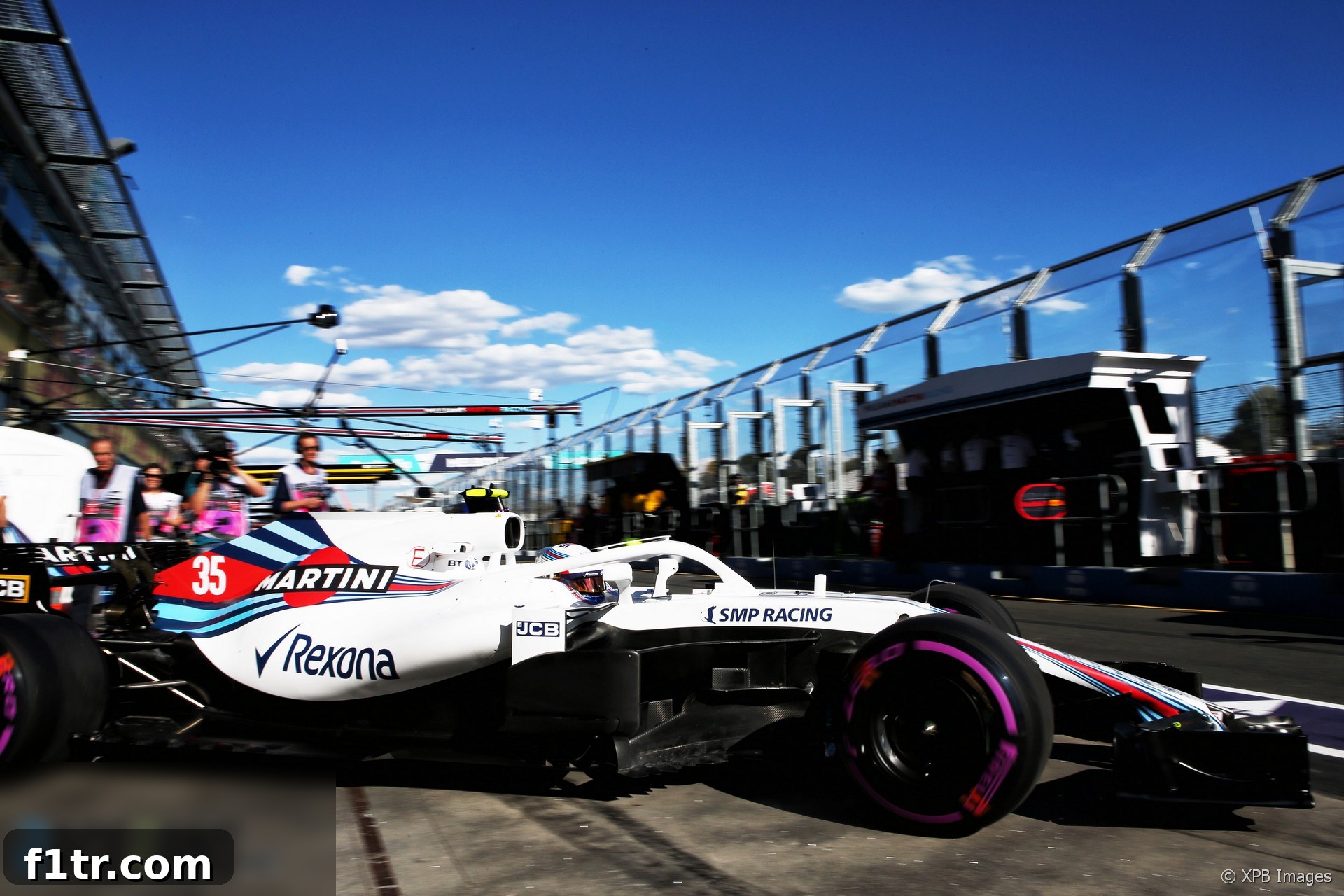
Williams F1 Eyes Barcelona for Vital FW41 Upgrade After Challenging Season Start
Williams Racing is gearing up for a pivotal moment in their 2018 Formula 1 campaign, with a substantial upgrade package slated for introduction at the Spanish Grand Prix in Barcelona. This strategic move comes on the heels of a particularly tough opening weekend in Australia, prompting a renewed focus on performance and development for the iconic British team.
Crucial Upgrades on the Horizon: Barcelona GP Awaits Williams
The fifth race of the 2018 Formula 1 season in Spain is circled on Williams Racing’s calendar as a critical juncture. The team is poised to unveil a “huge development package” for their FW41 car, an initiative that was meticulously planned well in advance of the season’s official start. While the timing aligns with traditional F1 development cycles, the urgency has been amplified by the team’s struggles during the Australian Grand Prix.
The Circuit de Barcelona-Catalunya is renowned as a primary testing ground for Formula 1 teams, making it the ideal venue for introducing significant aerodynamic and mechanical revisions. Its diverse characteristics, including high-speed corners, a demanding final sector, and a long main straight, provide a comprehensive test of a car’s overall balance and efficiency. For Williams, the upcoming upgrades represent more than just incremental improvements; they are a vital step in understanding and unlocking the full potential of the FW41 chassis and, crucially, addressing the fundamental weaknesses that hampered their early-season performance.
Australia’s Disappointing Debut and Claire Williams’ Candid Assessment
The 2018 Australian Grand Prix proved to be a sobering reality check for Williams. Despite hopes for a competitive start, the team found itself significantly off the pace, with both drivers struggling to make an impact. Lance Stroll, in his second F1 season, qualified 13th and managed to finish 14th in the race. However, the greater disappointment was reserved for rookie Sergey Sirotkin, who qualified 19th and was forced into an early retirement, denying him the valuable experience of completing his maiden F1 race.
Deputy Team Principal Claire Williams openly acknowledged the team’s challenging start and the inherent difficulties in their current competitive standing. “Any ambitions that we may have had – I’m not saying that we did – to be fighting in the top three are probably a little bit far off from us,” Williams stated candidly, emphasizing the gap between their aspirations and their current performance. This realistic appraisal underscores the immense pressure on the team to rectify their issues swiftly.
Williams further stressed the team’s responsibility and the immediate need for action: “We need to make sure we very quickly get on top of the weaknesses in the race car that we have and bring developments over the coming races. We’ve got a huge development package for Barcelona and we’ll have to wait and see where that puts us.” Her comments highlight a clear understanding of the challenges ahead and a determination to address them through aggressive development, with the Barcelona package representing the first major salvo in this ongoing battle.
Paddy Lowe on Early Season Judgments and Sirotkin’s Unfortunate Debut
Chief Technical Officer Paddy Lowe offered a more tempered perspective following the Australian Grand Prix, suggesting that early-season performance can be misleading. “Australia is a little bit of an outlier in quite a few ways,” he explained, noting that the unique characteristics of the Albert Park circuit, coupled with it being the first race of the year, often make it an unrepresentative indicator of the true pecking order. “Probably better to see where we sit after another race or two. And that applies to our own performance as well.” Lowe’s comments reflect a common sentiment in F1, where teams often reserve judgment until a few races have passed on more conventional tracks.
However, Lowe also expressed profound regret over Sergey Sirotkin’s premature retirement, which denied the young Russian a crucial opportunity to complete his first Formula 1 race. “One of the most unfortunate things for me was Sergey not getting to finish a race. From what appears to be a freak bit of bad luck. And therefore he’s not got the one race under the belt that you would want as a rookie driver to launch your Formula One career.” A full race distance provides invaluable data for both the driver and the engineers, allowing a rookie to gain confidence and a deeper understanding of the car under race conditions. Sirotkin’s missed opportunity was a significant setback for his personal development and the team’s data collection efforts.
Unraveling the Mystery: The Plastic Bag Incident and Its Consequences
The cause of Sergey Sirotkin’s retirement in Australia was initially shrouded in mystery, but subsequent analysis by Williams revealed a remarkably unusual culprit: a melted plastic bag. The team suspected the plastic debris became lodged in Sirotkin’s brake duct, leading to catastrophic overheating. The forensic investigation painted a clear picture of the incident’s progression and its devastating impact on the FW41.
According to Paddy Lowe, evidence pointed towards a complete blockage. “We have residue, it looks like a melted plastic bag,” he confirmed. The theory was supported by observations from Lance Stroll, who reported seeing plastic bags on track at Turn 1 very early in the race. This critical observation aligned perfectly with the telemetry data from Sirotkin’s car, which showed a dramatic and rapid increase in disc temperatures at precisely that section of the circuit.
Lowe elaborated on the cascade of failures initiated by the blockage: “All the temperatures going through the roof, eventually catching fire, and then we lost all the sensors from that corner progressively as they got burned and eventually the seal has gone on the caliper, probably, because there’s fluid leak and the pedal went to the floor.” This detailed explanation illustrates the severe consequences of even seemingly innocuous track debris. A plastic bag, by blocking the vital cooling airflow to the brake system, caused the brake components to reach extreme temperatures, leading to a fire, the destruction of critical sensors, a compromised brake caliper seal, and ultimately, a loss of brake pressure, forcing Sirotkin’s retirement.
This “freak bit of bad luck” not only cost Williams a valuable finish but also highlighted the intricate and delicate nature of modern F1 machinery, where a small piece of foreign object debris can have such a profound and destructive effect on critical systems. The incident underscored the need for extreme vigilance and robust design, even against unlikely scenarios.
The Road Ahead: Hopes and Pressures for Williams F1
As Williams Racing looks towards Barcelona, the stakes are undeniably high. The “huge development package” represents not just an attempt to improve the FW41 but a statement of intent from a team determined to claw its way back up the competitive order. The pressure is immense on both the technical team, led by Paddy Lowe, and the drivers, Lance Stroll and Sergey Sirotkin, to demonstrate progress and translate these upgrades into tangible on-track performance.
The initial feedback from the Barcelona upgrades will be crucial in defining the trajectory of Williams’ 2018 season. A positive outcome could provide the momentum needed to regain confidence and challenge for points more consistently. Conversely, if the upgrades fail to deliver the anticipated improvements, the team could face even greater scrutiny and a prolonged struggle in the midfield. The storied history of Williams demands competitive performance, and while the path ahead is challenging, the team remains committed to addressing its weaknesses and striving for a more positive future in Formula 1.
Related: 2018 F1 Season Articles
- F1 feared “death knell” for Drive to Survive after Ferrari and Mercedes snub
- McLaren staff told us we were “totally crazy” to take Honda engines in 2018 – Tost
- ‘It doesn’t matter if we start last’: How Red Bull’s junior team aided Honda’s leap forward
- Honda’s jet division helped F1 engineers solve power unit problem
- McLaren Racing losses rise after Honda split
Browse all 2018 F1 season articles