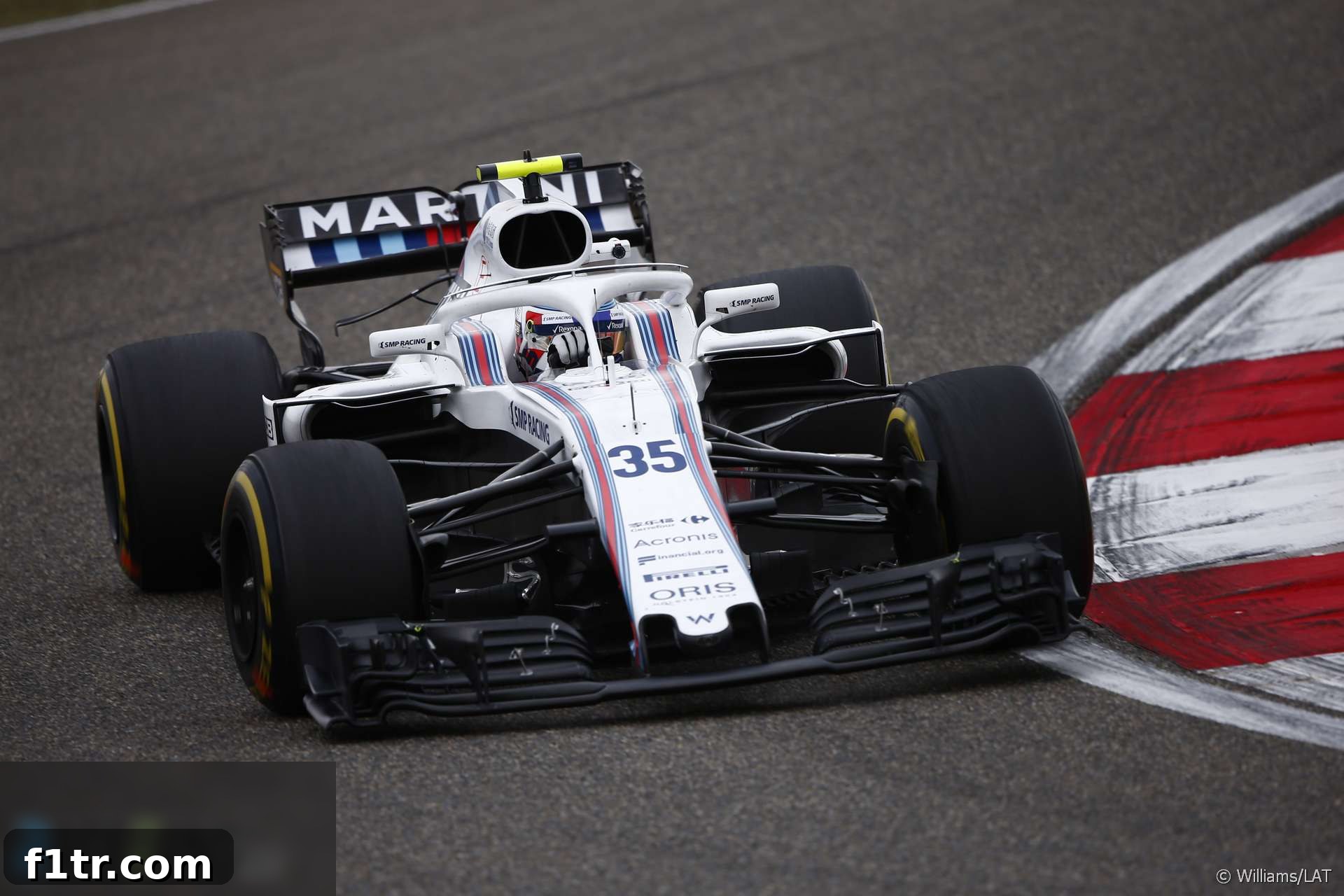
Williams F1’s Concerning Dip: A Deep Dive into Their 2018 Chinese Grand Prix Performance
The 2018 Formula 1 season presented a stern challenge for many teams, but for Williams Racing, the early races brought an alarming and undeniable reality check. Heading into the Chinese Grand Prix, the team was already reeling from a significant performance deficit witnessed in Bahrain. Shanghai, a track known for its demanding layout and varying conditions, unfortunately, served as further confirmation of their struggles, revealing a car demonstrably slower than its 2017 predecessor for the second consecutive race weekend.
In the preceding Bahrain Grand Prix, Williams’ FW41 was a concerning 1.3 seconds off their 2017 pace. While hopes might have lingered for a swift turnaround or a track-specific anomaly, the Chinese Grand Prix qualifying session painted an even bleaker picture. On the Shanghai International Circuit, the iconic British team found themselves more than half a second slower than their lap times from just twelve months prior. This regression was not merely relative to the rapidly evolving grid; it was an absolute step backward in performance, raising serious questions about the FW41’s fundamental design and aerodynamic characteristics.
Advert | Become a Supporter & go ad-free
Sirotkin’s Struggle and the FW41’s Enduring Tyre Conundrums
Rookie driver Sergey Sirotkin, tasked with extracting the maximum from the recalcitrant FW41, managed to set the team’s quickest time in qualifying. However, his effort still placed him over half a second slower than what Felipe Massa achieved in the Williams car at the same track just last year. This stark comparison underscored the car’s inherent lack of pace, rather than any deficiency in the driver’s ability to adapt.
Sirotkin himself offered insights into the car’s behaviour, noting that the Shanghai track felt “a little bit more like Australia or Barcelona” in terms of “the warm-up, the tyre behaviour, the long run, the warm-ups, overheating and so on.” This observation points to a deep-seated issue with how the FW41 interacts with its Pirelli tyres, particularly concerning their optimal operating window. Consistent tyre warm-up, management of degradation over long runs, and mitigating overheating are critical factors for performance in modern Formula 1. If a car struggles fundamentally with these aspects across different tracks, it implies a significant design flaw that goes beyond minor setup adjustments.
With minimal time between the Bahrain and Chinese Grands Prix, the Williams team had very little opportunity to diagnose and rectify the core problems plaguing the FW41. Sirotkin acknowledged the continuous effort: “Of course we are improving we are working but after one week, OK it’s a different track and conditions but the fundamentals are still there.” This statement perfectly encapsulates the team’s predicament: despite diligent work and adaptation to new conditions, the underlying issues that render the car uncompetitive remained stubbornly persistent. The phrase “fundamentals are still there” suggests deep-rooted aerodynamic or mechanical challenges that require a comprehensive solution, not just a quick fix, pointing towards a challenging season ahead for the Grove-based outfit.
Stroll’s Defiant Stance Amidst Team Woes
Lance Stroll, the team’s more experienced driver in his second season, qualified 18th in China. While this position was far from ideal, he remarkably posted a quicker lap time than he had managed at the Shanghai circuit the previous year. This personal improvement, despite the car’s overall regression, speaks volumes about Stroll’s development as a driver, even as he navigated increasingly difficult machinery.
Stroll’s candour and frustration were palpable as he reflected on the situation: “12 months ago I was in Q3 and I beat my lap time now by three-tenths. And I know I’m a much better driver today than I was 12 months ago.” This self-assessment is not born of arrogance but a testament to the steep learning curve Formula 1 drivers undergo. His ability to shave three-tenths off his personal best lap from 2017, even in a significantly slower car, highlights the irony of his predicament. He clearly believes in his enhanced capabilities, further emphasizing the FW41’s shortcomings.
Drawing on past successes, Stroll reminded observers of his potential when the machinery is capable: “I know I can do it when everything’s in place, I proved that in Baku when I was on the podium, here in my second race I was in Q3. Now we’re just going through a hard time and we need to get back to where we want to be.” His reference to the 2017 Azerbaijan Grand Prix podium finish and his Q3 appearance in China that same year serves as a powerful reminder of what was achievable with a more competitive Williams package. The current struggle, therefore, is not a reflection of a driver losing form, but rather a team grappling with a car that simply isn’t delivering on its expectations. Stroll’s determination to “get back to where we want to be” echoes the fighting spirit within the team, despite the daunting challenges they faced.
Go ad-free for just £1 per month>> Find out more and sign up
A Wider Grid Perspective: Toro Rosso’s Parallel Dip and Overall F1 Progress
While Williams’ struggles were the most pronounced, they were not entirely alone in experiencing a year-on-year performance dip in Shanghai. Toro Rosso also failed to lap any quicker than they had managed in 2017. As observed in Melbourne, the Italian team found themselves a few hundredths slower than their 2017 qualifying times. This shared regression, albeit on a much smaller scale for Toro Rosso, highlights the relentless and often brutal nature of Formula 1 development. Even small missteps in car design or development can lead to falling behind in a sport where progress is measured in milliseconds.
The general trend across the rest of the grid typically sees cars improving year on year, driven by continuous aerodynamic refinement, engine development, and tyre evolution. For the 2018 Chinese Grand Prix, the average year-on-year lap time gain for the majority of the field was a little over half a second. This figure, while respectable, was actually even less than the average gain observed in Bahrain. This slightly slower overall progression might be attributed to specific track characteristics, tyre compounds, or the evolving regulatory landscape, but it makes the outright regression of Williams – exceeding half a second slower – all the more stark and concerning.
The disparity between the average grid improvement and Williams’ decline underscores the severity of their situation. While most teams were successfully extracting more performance from their new machinery, Williams was fighting an uphill battle to regain even their previous year’s pace. This meant they were not only falling behind their rivals in terms of relative performance but were also losing ground in an absolute sense. The data presented a clear picture: Williams had a fundamental issue that required significant, strategic intervention to avoid being permanently relegated to the back of the grid.
The Road Ahead: Challenges and Aspirations for Williams in 2018
The early season struggles highlighted in China set a challenging tone for Williams’ 2018 campaign. The team faced immense pressure to understand the FW41’s limitations and implement effective development solutions rapidly. Such a significant performance deficit can have a cascading effect, impacting morale, sponsorship opportunities, and long-term planning. For the drivers, it demanded exceptional resilience and the ability to maintain focus and motivation despite driving a car that couldn’t consistently compete for points.
Addressing fundamental issues in Formula 1 requires substantial resources, expertise, and time. Williams needed to embark on a comprehensive analysis, potentially re-evaluating their aerodynamic philosophy and mechanical setup. The goal was not merely to catch up but to close the gap to the mid-field pack, which itself was becoming increasingly competitive. The determination voiced by Lance Stroll, coupled with the tireless efforts of Sergey Sirotkin and the entire team, represented a glimmer of hope amidst the adversity. However, the path back to competitiveness was undoubtedly steep, with every race weekend serving as a test of their resolve and engineering prowess.
Quotes: Dieter Rencken
Further Reading: 2018 Chinese Grand Prix
- Top ten pictures from the 2018 Chinese Grand Prix
- Ricciardo denies Bottas a badly-needed win
- 2018 Chinese Grand Prix Star Performers
- Hamilton breaks Raikkonen’s record for consecutive points finishes
- Paddock Diary: Chinese Grand Prix day four
Browse all 2018 Chinese Grand Prix articles