Unveiling the Mercedes W13: A Deep Dive into F1’s Most Radical Redesign for 2022
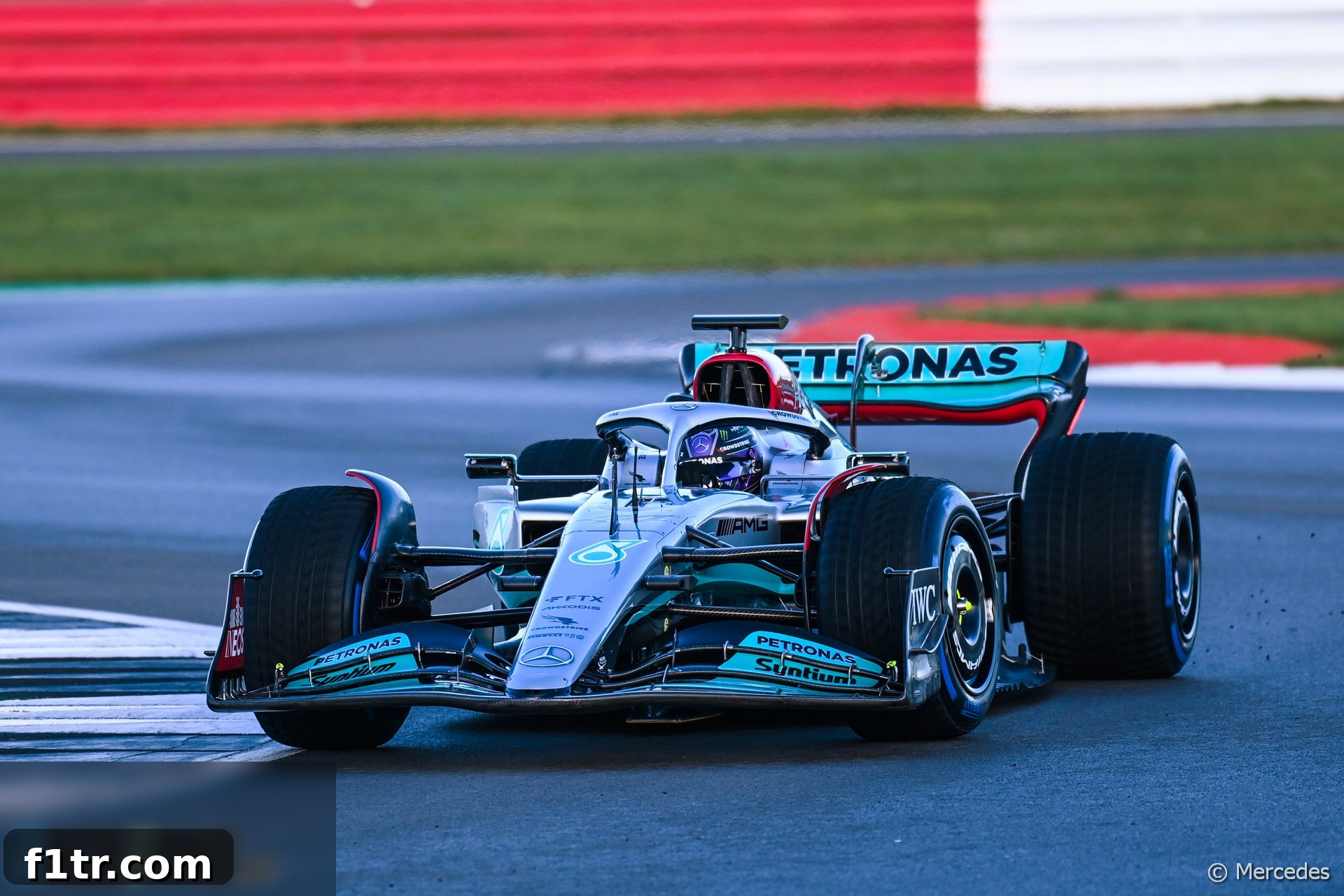
The dawn of the 2022 Formula 1 season heralded an era of unprecedented technical change, compelling teams to rethink every aspect of their car design. For reigning constructors’ champions Mercedes-AMG Petronas Formula 1 Team, this meant a “massive” and intricate repackaging of their new challenger, the W13. Unveiled on a Friday and promptly put through its initial shakedown at Silverstone, the W13 represented not just an evolution, but a wholesale revolution in engineering philosophy.
The sweeping regulatory overhaul for 2022 dramatically transformed the aesthetics of the cars and, more critically, the fundamental mechanisms by which they generate crucial downforce. Mercedes’ technical director, Mike Elliott, underscored the monumental scale of these changes, describing them as the most significant shift he had witnessed throughout his distinguished career in Formula 1.
The Dawn of a New Era: F1’s Revolutionary 2022 Regulations
“On the chassis side, the changes are truly immense,” Elliott stated, emphasizing the sheer magnitude of the task. “We haven’t encountered a regulatory shift of this scale in my entire career. While much discussion has rightly focused on the visible aerodynamic changes, designed primarily to enhance overtaking and improve the spectacle of racing, the reality is that nearly every component of the car demanded reinvention. This presented an extraordinary challenge for every single department within our team, from the drawing board to the manufacturing floor.”
The core objective of the 2022 regulations was to foster closer racing by promoting ground effect aerodynamics and simplifying complex wing structures. This paradigm shift necessitated entirely new chassis designs, mandating a complete departure from the design philosophies of previous generations. For Mercedes, renowned for their meticulous engineering and innovative solutions, this meant pushing the boundaries of what was previously thought possible within a tight development timeline.
Chassis Overhaul: A Challenge of Unseen Proportions with Mike Elliott
While the revised aerodynamics and striking new body shapes were the most immediately apparent alterations, Elliott revealed that the true Everest of the design process lay deeper within the car. The biggest hurdle, he explained, was ingeniously figuring out how to precisely integrate the W13’s myriad internal components into its radically new, aerodynamically optimized shell. This wasn’t merely a puzzle; it was an intricate, high-stakes game of three-dimensional chess.
“Achieving the desired aerodynamic profiles necessitated a complete internal repackaging,” Elliott elaborated. “This extended to the most granular details, from the electrical layout that routes hundreds of kilometers of wiring to the precise placement of critical systems such as the Electronic Control Unit (ECU). Every millimeter counted, every component’s position was scrutinized and redesigned.” The suspension system, a cornerstone of performance, also underwent a fundamental overhaul. The new regulations banned sophisticated hydraulic systems and remote springs, forcing engineers to develop entirely new mechanical solutions that could still deliver optimal handling and tire management.
Furthermore, Elliott highlighted the team’s relentless pursuit of aerodynamic efficiency, evident in the W13’s incredibly tightly packaged sidepods and engine cover. “Hopefully, observers will notice that we’ve taken yet another significant step forward in the compactness of our sidepods and engine cover,” he remarked. “Achieving this level of integration is far more complex than a simple ‘shrink-wrapping’ exercise. It demands an immense amount of iterative redesign, exhaustive computational fluid dynamics (CFD) simulations, and rigorous testing to ensure both performance and reliability. In essence, it has been nothing short of a gargantuan undertaking for the entire technical team at Brackley.” This intricate process involved not just fitting parts, but optimizing their interaction, thermal management, and structural integrity within extremely confined spaces.
The Power Unit Puzzle: Hywel Thomas on E10 Fuel and the Engine Freeze
Beyond the chassis, the power unit (PU) department at Brixworth also faced its own unique set of demanding challenges. Despite the carry-over of the existing 1.6L V6 turbo hybrid power units from the 2021 season, two critical factors introduced significant complexity: the introduction of E10 fuel and a comprehensive engine development freeze effective from the 2022 season until 2026. This freeze meant that any performance or reliability issues identified would be locked in for the foreseeable future, placing immense pressure on the High Performance Powertrains team.
Hywel Thomas, Managing Director of Mercedes-AMG High Performance Powertrains, articulated the team’s meticulous approach. “As we navigated this development cycle, there were clearly monumental changes on both the chassis and the PU sides,” Thomas explained. “These combined factors created a wealth of opportunities, but also presented formidable challenges for an engineering team as dedicated and enthusiastic as ours here in Brixworth.”
While the most visible and lap-time-defining alterations were indeed on the chassis, Thomas emphasized the strategic importance of other elements. “Crucially, aspects like the new E10 fuel and the long-term engine freeze until 2026 are exceptionally vital elements that we absolutely had to get right,” he stressed. The switch to E10 fuel, containing 10% ethanol, required extensive re-calibration and component redesign to maintain performance, efficiency, and reliability. This change impacts combustion, cooling, and material compatibility, demanding a deep understanding of thermodynamics and material science.
This confluence of factors generated a palpable sense of apprehension within the team. “That familiar bubble of apprehension is even larger than usual this time,” Thomas confessed. “Questions like ‘Have we done enough?’ and ‘Have we left no stone unturned?’ are constantly at the forefront of our minds. It’s a feeling that is simultaneously exciting and daunting. But ultimately, this is precisely why we commit ourselves to the pinnacle of motorsport that is Formula 1 – for these intense, high-stakes engineering battles.” The long-term freeze meant that any suboptimal design choice or slight performance deficit would have repercussions for years, necessitating an unparalleled level of precision and foresight during the development phase.
From Factory Floor to Track: The Critical Role of Pre-Season Testing
With the initial shakedown complete, the immediate focus shifted to the crucial pre-season testing sessions slated for Barcelona and Bahrain. Mike Elliott underscored the unprecedented importance of these limited track days for the team’s learning curve with their radically new car.
“Given the restricted amount of testing available, it is always paramount to extract the absolute maximum learning from those precious few days,” Elliott stated. “This invaluable data can then be analyzed, refined, and applied throughout the entire season to continuously improve performance. However, the sheer degree of difference in these new cars means that the potential for learning is exponentially greater than ever before. Consequently, there is far more to gain from these testing sessions than in any previous era of Formula 1.”
The unknowns surrounding the performance characteristics of the 2022 cars, combined with the new regulations, fueled a unique blend of excitement and anticipation within the Mercedes camp. “All these uncertainties leading up to testing and the inaugural race are incredibly exciting,” Elliott admitted. “No one truly knows how the pecking order will shake out or how different cars will perform under race conditions. It’s a challenge we are not only relishing but have thoroughly enjoyed immersing ourselves in. However, the ultimate verdict on our efforts and how good we truly are will only be delivered when the checkered flag drops at the season opener in Bahrain.” The testing sessions would not only validate design choices but also provide critical data for tire degradation, setup optimization, and understanding the complex ground-effect aerodynamics in real-world conditions.
Mercedes-AMG Petronas F1 Team: Ready for the Unknown
The journey to develop the Mercedes W13 for the 2022 Formula 1 season was a testament to the team’s engineering prowess, resilience, and unwavering commitment to excellence. Facing the biggest regulatory overhaul in decades, Mercedes tackled every aspect, from the minute internal repackaging to the critical power unit adjustments, with meticulous detail. The collective efforts of the Brackley and Brixworth teams have culminated in a machine designed to conquer the unknown and compete at the very pinnacle of motorsport.
As the team prepares for the lights out in Bahrain, the blend of apprehension and excitement is palpable. The W13 represents not just a racing car, but a symbol of radical innovation and a bold step into a new chapter of Formula 1. The world watches with bated breath to see how this engineering marvel will perform and redefine the landscape of grand prix racing.
2022 F1 Season Insights
- Mercedes told me “you’re wrong” about 2022 car’s problems – Hamilton
- FIA confirms all 10 F1 teams complied with 2022 cost cap
- Steiner “not ashamed” of panning “slow” Schumacher in Drive to Survive
- Albon believes year out of F1 improved him as a driver
- Hamilton sees diversity gains in F1 years on from his ‘traumatising’ experience of racism
Browse all 2022 F1 season articles