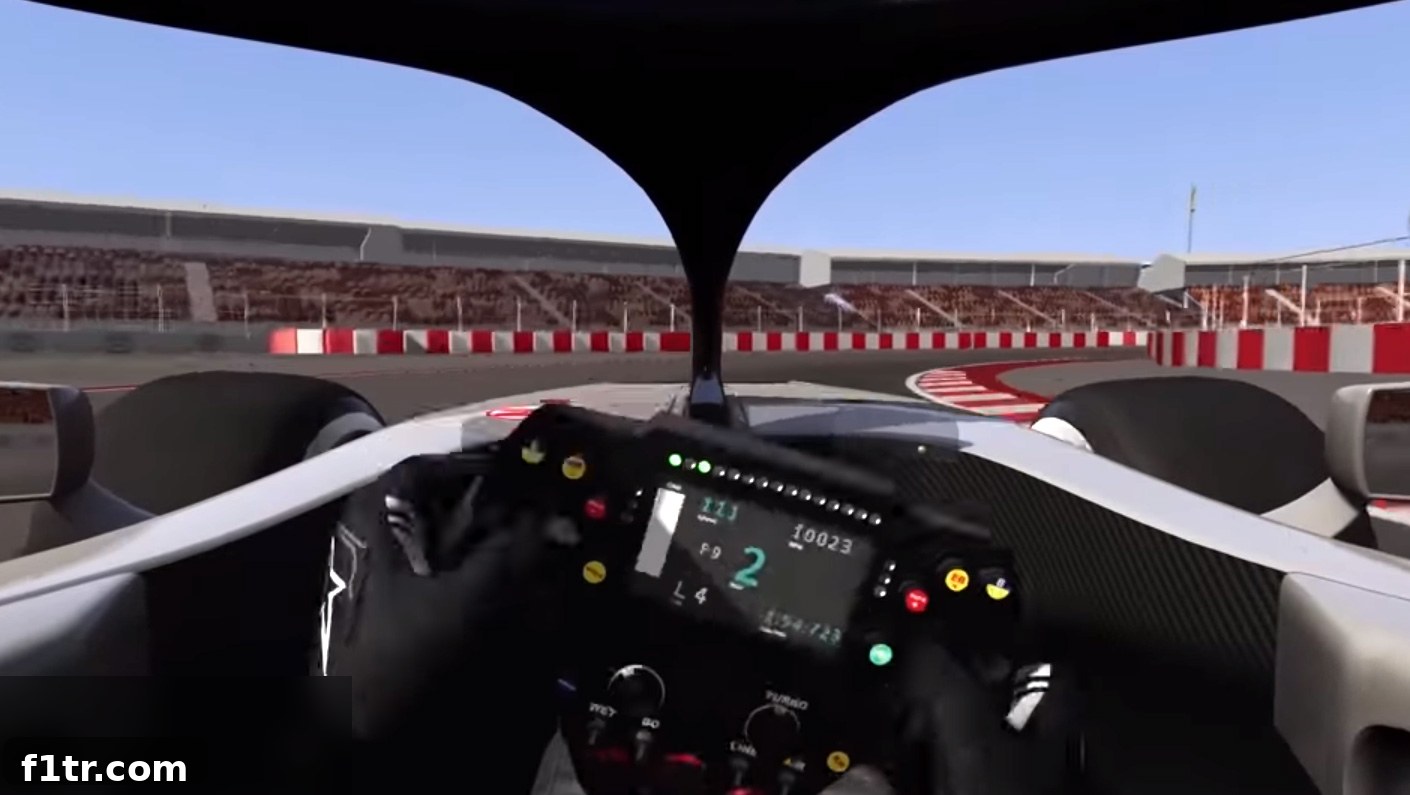
The thrilling anticipation surrounding the debut of a new Formula 1 circuit reached a crescendo with the release of the first official rendering of an onboard lap of the Vietnam Street Circuit. This pivotal reveal offers motorsport enthusiasts and competitors an early glimpse into the challenging layout set to join the highly anticipated 2020 F1 calendar. The circuit in Hanoi represents a significant stride for Formula 1 into new territories, promising a unique blend of high-speed action and technical demands characteristic of a world-class street racing venue.
The immersive video embedded above, originally shared with RaceFans by Motorsport-Magazin.com, showcases the meticulously crafted configuration of the 5.6-kilometre track. Located in Vietnam’s bustling capital, Hanoi, this circuit is the brainchild of the acclaimed circuit design firm Tilke GmbH, led by the renowned Hermann Tilke. Known for his distinctive architectural style and ability to integrate challenging sections with exciting overtaking opportunities, Tilke’s involvement immediately elevated expectations for the quality and competitive nature of the new Vietnam Grand Prix.
Carsten Tilke, CEO of Tilke GmbH, provided invaluable insights into the design philosophy that shaped the Hanoi Street Circuit. He highlighted the track’s diverse character, stating, “The first section reminds me of the Mercedes Arena at the Nurburgring.” This comparison immediately conjures images of a demanding, intricate sequence of corners, requiring absolute precision and expert throttle control. Such an opening segment is designed to test drivers from the outset, where subtle elevation changes and complex corner radii can significantly impact lap times and race strategy. It sets a precedent for a track that values technical prowess as much as raw speed.
Elaborating on the circuit’s multifaceted layout, Tilke continued, “Also, the track has very varied passages with high-speed turns, modelled to some extent on the Esses at Suzuka, and long straights that provide good overtaking opportunities with hard braking points.” The reference to Suzuka’s iconic Esses suggests a flowing, rhythmic section where drivers must maintain momentum through a series of rapid direction changes. This type of high-commitment sector rewards bravery and a perfectly balanced car, promising breathtaking visuals as F1 machines carve through the urban landscape. Crucially, the integration of extensive straights followed by aggressive braking zones directly addresses one of modern F1’s core desires: promoting genuine, wheel-to-wheel overtaking. These strategic points are engineered to create prime opportunities for drivers to outmanoeuvre their rivals, ensuring that races are not merely processional but filled with dynamic action.
Carsten Tilke concluded his assessment by emphasizing the track’s overall challenge and entertainment value. “Overall, it is a very challenging track, on which to race and will certainly produce plenty of racing action. It will not be easy to post a perfect lap on this track.” This statement encapsulates the essence of the Hanoi Street Circuit: a demanding environment where driver skill, strategic acumen, and mechanical reliability will be pushed to their limits. A circuit that is difficult to master guarantees that even the most accomplished drivers will face a stern test, and the promise of “plenty of racing action” signals a commitment to exciting, unpredictable races that will captivate audiences worldwide. This intricate blend of technical sections and high-speed elements ensures that every lap will be a spectacle of precision and power.
The vision behind the Hanoi Street Circuit extends beyond just a complex layout; it embodies Formula 1’s broader objective to enhance the on-track spectacle. Sean Bratches, F1’s former commercial managing director, previously articulated this ambition, stating that the circuit was specifically designed to maximize the potential for close racing and to prevent “another processional race.” This direct approach to circuit design reflects a proactive effort by Formula 1 to address criticisms sometimes leveled at modern tracks, particularly certain street circuits, for not facilitating sufficient overtaking.
Bratches’ commitment to this philosophy was unwavering: “We want true racing,” he asserted, “wheel-to-wheel, livery-to-livery – on street circuits where there is actually the possibility of overtaking.” This bold declaration highlights a pivotal shift in F1’s approach to expanding its global footprint. Rather than simply adding new locations, there is a concerted effort to ensure these new venues actively contribute to the sport’s entertainment value. The Hanoi Street Circuit, with its blend of Tilke’s design expertise and F1’s clear mandate for aggressive racing, aims to set a new benchmark for urban motorsport. It seeks to prove that street circuits can indeed be the stage for thrilling, unpredictable battles for position, captivating both seasoned fans and newcomers alike.
The introduction of the Vietnam Grand Prix is a strategic move for Formula 1, opening up a lucrative and rapidly growing market in Southeast Asia. The inaugural race is firmly set for April next year, positioning it as an early highlight on the 2020 F1 calendar. Construction work at the designated site, approximately 12 kilometres west of Hanoi’s vibrant city centre, commenced with earnest just last month. This rapid development underscores Vietnam’s strong commitment and readiness to host a major international sporting event, signaling its ambition on the global stage. The choice of Hanoi not only taps into a vast potential fanbase but also offers a stunning backdrop for the high-octane drama of Formula 1.
Building an F1 street circuit presents unique logistical and engineering challenges, transforming existing urban infrastructure and new developments into a high-performance racing arena. This intricate process involves laying down a perfectly smooth racing surface, erecting advanced safety barriers, constructing state-of-the-art pit and paddock facilities, and integrating complex timing and data systems, all while adhering to the stringent safety and operational standards set by the FIA. The swift progress in construction highlights the dedication of the Vietnamese authorities and international partners to deliver a world-class facility capable of hosting a truly memorable Grand Prix. Beyond the sporting spectacle, the event is expected to bring significant economic benefits to Hanoi and Vietnam, boosting tourism and global visibility, and solidifying the nation’s place as a dynamic and welcoming host for major international events.
In conclusion, the Hanoi Street Circuit is poised to become a standout fixture on the Formula 1 calendar, promising a fresh and formidable challenge for the sport’s elite drivers. Its intelligent design, integrating technical sectors reminiscent of classic F1 tracks with long straights for prime overtaking, aligns perfectly with Formula 1’s drive for more authentic and engaging races. As the countdown to April’s inaugural event continues, the excitement builds for what is destined to be a defining moment for both Vietnam and the future of Formula 1. This new venue not only expands F1’s global reach but also reinforces its commitment to delivering “true racing” – a spectacle of speed, skill, and thrilling competition on the vibrant streets of Hanoi.
Stay Connected with RaceFans for the Latest F1 Updates
To ensure you don’t miss any breaking news, in-depth analysis, or exclusive content from RaceFans, connect with us on our social media channels. We are committed to bringing you the most comprehensive coverage of Formula 1, from race weekends to paddock insights and technical developments.
- Join RaceFans on Facebook for community discussions and updates
- Follow RaceFans on Twitter for real-time news and instant reactions
- Subscribe to our daily email updates to get the latest from F1 directly in your inbox
Archived Articles: Exploring the 2020 F1 Season
Delve deeper into the events and discussions that shaped the 2020 Formula 1 season. From pivotal race moments to significant team announcements and driver performances, our archive offers a rich resource for understanding the context and developments of that year.
- Grosjean to make F1 test return tomorrow for first time since Bahrain horror crash
- Pictures: Wrecked chassis from Grosjean’s Bahrain fireball crash to go on display
- Bottas vs Rosberg: Hamilton’s Mercedes team mates compared after 78 races each
- F1 revenues fell by $877 million in Covid-struck 2020 season
- Hamilton and Mercedes finally announce new deal for 2021 season
Browse all 2020 F1 season articles