Sebastian Vettel Explains Spanish GP Qualifying Tyre Gamble: A Strategic Deep Dive
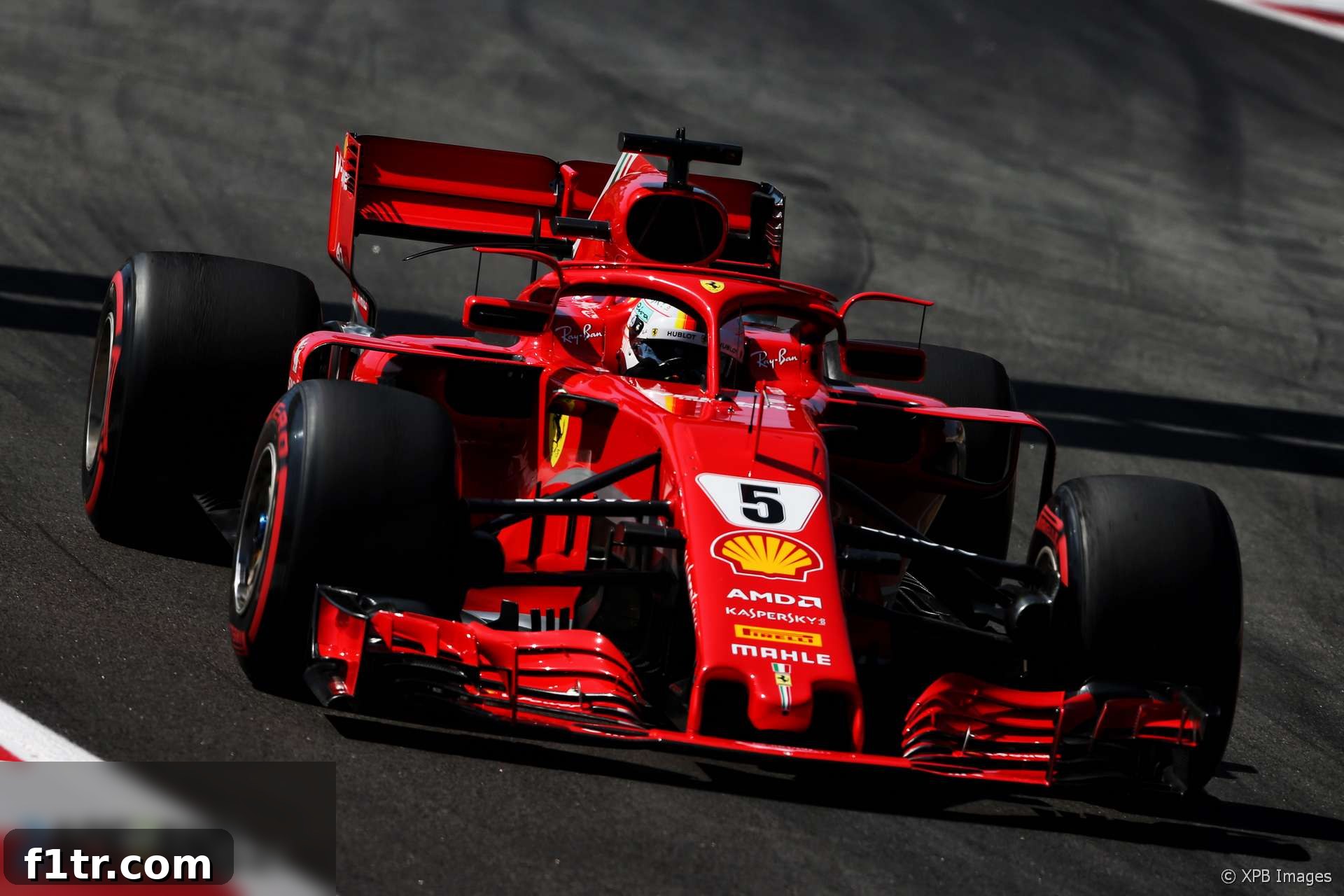
The exhilarating world of Formula 1 often boils down to split-second decisions and bold strategic calls, especially during the high-stakes qualifying sessions. At the Spanish Grand Prix, Sebastian Vettel, the formidable Ferrari driver, found himself at the heart of such a pivotal moment, taking an unexpected gamble with his tyre choice for the crucial final run in Q3. This decision, made by Vettel himself, saw him switch from super-soft to soft compound tyres, ultimately placing him third on the grid and ending his impressive streak of three consecutive pole positions.
Advert | Become a Supporter & Go Ad-Free
Vettel’s journey through the earlier stages of qualifying had been nothing short of dominant. He topped the timings in both Q1 and Q2, showcasing the raw pace of his Ferrari SF71H and building considerable anticipation for a potential pole position. His performance suggested a comfortable margin over his competitors, particularly on the soft compound tyres. However, Q3 brought an unforeseen twist, prompting a strategic reassessment that would ultimately define his starting position for the race.
The Q3 Dilemma: Vettel’s Decisive Tyre Switch
Recounting the session, Vettel expressed his satisfaction with his final lap but admitted to being perplexed by his initial run in Q3 on the super-soft tyres. “It was a bit confusing because Q2 was really plain sailing,” he explained. “The car was pretty good on the soft tyres; I had a couple of tenths in hand. I knew coming into Q3 we had something in the pocket, which was good.” This initial confidence, however, quickly dissipated during his first attempt on the theoretically faster super-soft compound.
During that first Q3 run, Vettel encountered an issue that would prove costly: “But then on the super-soft first lap, it just didn’t happen. I locked up into Turn 1, and I never got the grip that I was looking for.” A lock-up at such a critical point, especially in the opening corner of a flying lap, can have a domino effect, compromising the tyre temperature, balance, and ultimately, the driver’s confidence for the rest of the lap. The lack of expected grip further exacerbated the problem, leaving Vettel with a subpar time that was far from his potential. This immediate feedback from the car, coupled with the frustration of not extracting performance from the softer compound, was the catalyst for his audacious decision.
Rationalizing the Tyre Compound Change
The decision to switch back to the harder soft compound for his final attempt was not impulsive but rooted in his strong performance and clear feedback from Q2. “It was straightforward because I had such a good feeling in Q2,” Vettel stated. This prior success on the soft tyres provided a crucial baseline and confidence. In the high-pressure environment of Q3, where every millisecond counts, reverting to a known quantity—a tyre compound that had previously delivered optimal performance—became a logical, albeit unconventional, choice.
He consulted with his team, and the mutual decision was made. “I asked, and we decided to go back to the softs, and I think that was the right call. The lap was good. Maybe there was a tiny bit more, but not enough to get to the first row.” This candid assessment highlights the fine margins in Formula 1. While the switch yielded a strong lap, it wasn’t sufficient to dislodge the dominant Mercedes duo who ultimately locked out the front row of the grid for the first time that season. This strategic move, while ultimately placing him third, underscored Vettel’s decisive leadership and his profound understanding of his car’s behaviour and the tyre characteristics.
Mercedes’ Resurgence and the Championship Picture
The Spanish Grand Prix qualifying session marked a significant shift in the championship narrative, with Mercedes demonstrating a return to their formidable pace. Vettel was quick to acknowledge their superior performance on the day: “I think we need to admit that they were just a bit quicker today.” This admission, however, was tempered with optimism for the race. “For tomorrow though, I think we should be in the mix.”
Vettel elaborated on his belief that Mercedes had recaptured the form they exhibited at the beginning of the season. “Looking back, you have to admit that the last two qualifying sessions, they lost something,” he observed. “If they got that back, it doesn’t necessarily mean that they found something; it’s just that they were back to normal.” This perspective suggests that Mercedes might have simply ironed out any temporary issues that had hampered their qualifying performance in previous rounds, rather than discovering a significant new performance upgrade. The early season had seen Mercedes strong in Australia before Ferrari and Vettel took the lead, making this resurgence in Spain a crucial moment in the ongoing constructors’ and drivers’ battle.
The Race Day Outlook and Rival Expectations
Despite starting from the second row, Vettel remained confident about Ferrari’s prospects in the race. The SF71H had often shown strong race pace, especially in managing tyre degradation, which is a critical factor at the Circuit de Barcelona-Catalunya. His assertion that Ferrari would be “in the mix” hinted at a potential strategic battle and the possibility of converting his starting position into a victory or a strong podium finish.
Beyond the immediate rivalry with Mercedes, Vettel also touched upon the performance of Red Bull Racing. “Tomorrow, it will be very close between the top three teams. I expected Red Bull actually today would be faster in qualifying. I don’t know what happened to them, but for sure tomorrow it will be tight.” This comment highlighted the intensity of the competition among the top teams. Red Bull, known for their race-day prowess and often showing strong long-run pace, was expected to be a more formidable threat in qualifying. Their slightly subdued performance opened up the possibility of an even more unpredictable and thrilling race, with all three top teams potentially vying for podium places and strategic advantages.
The Spanish Grand Prix often serves as a barometer for car development and overall team performance due to its demanding and technically challenging layout. Vettel’s qualifying performance, his strategic call, and his insights into the competitive landscape set the stage for a compelling race, underscoring the tight margins and fierce competition that define the pinnacle of motorsport.
Advert | Become a RaceFans Supporter andGo Ad-Free
2018 F1 Season Highlights and Related Content
- F1 feared “death knell” for Drive to Survive after Ferrari and Mercedes snub
- McLaren staff told us we were “totally crazy” to take Honda engines in 2018 – Tost
- ‘It doesn’t matter if we start last’: How Red Bull’s junior team aided Honda’s leap forward
- Honda’s jet division helped F1 engineers solve power unit problem
- McLaren Racing losses rise after Honda split
Browse all 2018 F1 season articles