F1 Track Limits Debate: Drivers Criticize Modern Circuit Design Amidst Penalty Surge
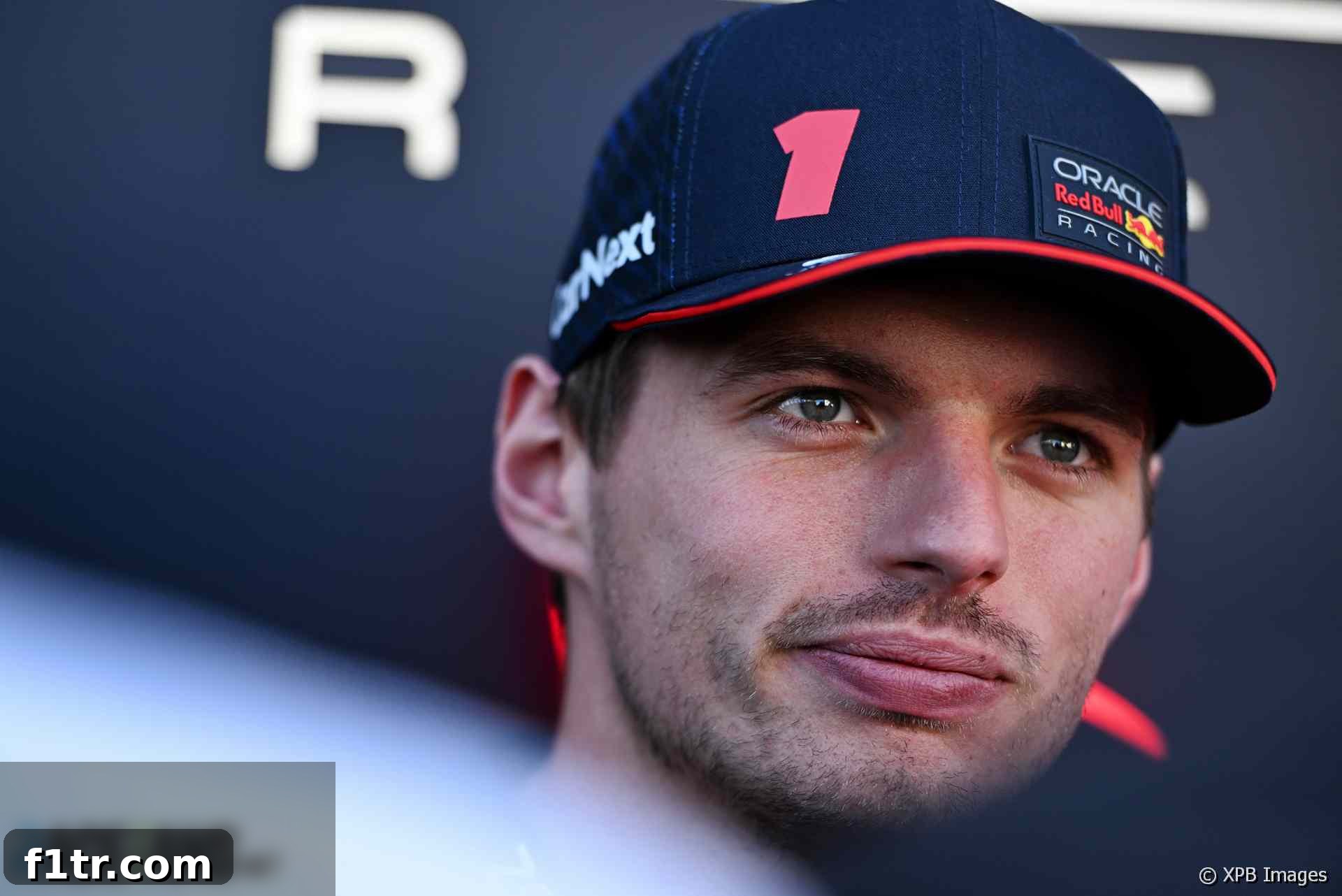
The persistent issue of track limits infringements continues to cast a shadow over Formula 1 Grand Prix weekends, with drivers increasingly vocal in their frustration. Following a particularly contentious round in Qatar, where a staggering number of penalties marred the competition, reigning world champion Max Verstappen expressed his dismay, labelling the situation a “shame” directly attributable to contemporary circuit design principles.
The Losail International Circuit in Qatar, having undergone significant refurbishment prior to the event, became the epicentre of the latest track limits controversy. Over 50 lap times were invalidated for drivers exceeding the track boundaries, leading to an unprecedented 10 time penalties being issued during and after the race itself. The combination of wide, flat kerbs at corner exits and the high speeds at which many of these turns were navigated made it exceptionally challenging for drivers to consistently stay within the track’s defined confines throughout qualifying and the races.
Verstappen’s Scrutiny: The Flaws of Modern Circuitry
Max Verstappen, a driver known for his candid assessments, pinpointed the widespread use of extensive asphalt run-offs on modern and recently upgraded circuits as a core contributor to the track limits dilemma. He argues that these generous run-off areas inadvertently encourage drivers to push beyond the defined white lines, as the consequences of doing so are minimal compared to traditional deterrents.
“At some tracks there’s just a lot of run-off, so naturally you find the limits a bit easier,” Verstappen explained. He drew a clear contrast with what he considers “old-school” circuits. “We never really talk about track limits for example in Suzuka, and that’s probably a bit more of an old-school track.” Suzuka, with its combination of grass verges and gravel traps immediately beyond the kerbs, provides a much more tactile and unforgiving penalty for exceeding track limits, naturally compelling drivers to respect the boundaries. The very real risk of losing time or even crashing on such tracks means drivers instinctively operate within safer margins.
The Red Bull Racing star did not mince words when assigning blame for F1’s escalating track limits issues. “For sure the latest track standards, they have a thing to do with it,” he stated. He elaborated on the psychological impact these designs have on a driver’s approach: “It’s a bit of a shame because I feel like with some of these new tracks that you’re more focussed on a quali lap not to go over a white line than actually finding the limit or just the pure enjoyment of pushing. It’s more like you’re looking ‘oh, did I make it or not?’ and then ‘ah yeah, I made it’. So it’s a bit odd.” This emphasis on micro-managing white lines, rather than solely focusing on extracting maximum performance, detracts from the purity of racing, in Verstappen’s view. He further predicted that without changes, upcoming races would likely face “the same story.”
The Rising Tide of Penalties: Qatar GP’s Stark Reality
The sheer volume of penalties at the Qatar Grand Prix highlighted the extent of the problem. With 51 lap times deleted and 10 time penalties issued, the race’s integrity and the drivers’ ability to compete fairly were significantly impacted. The refurbishment of the Losail International Circuit, while aiming to enhance safety, inadvertently created conditions ripe for track limits breaches. The track’s design, featuring wide and relatively flat kerbs, provided little physical deterrent for drivers to run wide, especially at high-speed corners where the natural instinct is to use every inch of available asphalt to carry momentum.
Verstappen firmly dismissed any suggestion that drivers could simply manage to stay within track limits by consciously reducing their speed. Such a notion, he implied, misunderstands the fundamental nature of Formula 1 racing, where milliseconds separate success from failure. “I will happily let anyone else drive my car and see if they can do better with track limits,” he challenged, underscoring the immense difficulty and precision required to extract peak performance while adhering strictly to the white lines.
Leclerc’s Plea: The Case for Tactile References
Charles Leclerc, another prominent voice in the paddock who personally suffered the consequences of track limits infringements – losing a points finish in the Losail sprint race – echoed Verstappen’s sentiment that the problem is highly circuit-specific. “There are some tracks that are much more difficult to manage than others,” the Ferrari driver conceded. “I think Qatar was one of those, here it probably will be one of those, too.”
Leclerc’s critique centred on the visual difficulty of judging the white line from the low-slung cockpit of a Formula 1 car. He advocated for a return to a system where drivers could use the tactile feedback of the “red-and-white kerb” as their primary reference point. “I’ve always preferred in the past to use the red-and-white kerb [as the limit] because this is a reference that we can actually feel inside the car,” Leclerc explained. “Whereas the white line, we are so low in the car that it is very difficult to see exactly where we are.”
He articulated the challenge with remarkable clarity: “If we are two centimetres out or exactly on the line is very difficult, whereas with the kerb you can feel it much more what’s going on and it’s a better reference.” The distinction between a purely visual boundary and a boundary that offers sensory feedback is crucial for drivers operating at the extreme limits of grip and speed. A kerb provides an immediate, physical warning, allowing for more consistent and intuitive judgment of track boundaries than a mere painted line. Leclerc concluded by stressing the need for collective effort to mitigate the issue: “We just need to try and find a way, especially with the way the kerbs are done and the tracks are made in order to help each other for it to become less of an issue in the future.”
Evolving Regulations: From Varied Systems to Strict White Lines
The current strict enforcement of track limits, where drivers must remain within the white lines at all corners at all times, represents a simplification introduced at the beginning of 2022. Prior to this, Formula 1 operated a more varied and, arguably, complex system. In that era, different track limits applied at different circuits, and even at specific corners on the same track, or from one session to another. This nuanced approach allowed for flexibility, acknowledging that certain corners might have unique safety profiles or natural racing lines that justified a slightly different approach to limits. For instance, a corner leading onto a long straight might have allowed a slightly wider exit over a specific kerb without penalty, whereas a high-speed entry to another corner might have been more strictly policed for safety reasons.
The FIA’s move to a universally applied white-line rule was intended to bring greater consistency and clarity to enforcement, reducing the ambiguity that sometimes arose from the previous, more varied system. The aim was to eliminate subjective interpretations and provide a clear, unambiguous boundary for all drivers at all times. However, as the experiences of drivers like Verstappen and Leclerc demonstrate, this simplification has introduced its own set of challenges, leading to increased frustration and a surge in penalties. What was designed for consistency has, in practice, become a source of contention, forcing drivers into an almost impossible balancing act between pushing the absolute limits of their machinery and meticulously adhering to a visually challenging boundary.
The Broader Implications and Future of Track Limits
The sentiment expressed by Verstappen and Leclerc is not isolated. Aston Martin driver Lance Stroll also felt the sting of track limits penalties in Qatar, which cost him his first points score since the summer break. He too anticipates similar challenges at subsequent events. “There’s a few corners here you’ve got to watch out for,” said Stroll, indicating a pervasive problem that transcends individual tracks. “So I think it’s something to think about at a lot of tracks now with the track limits being a challenge.”
The constant threat of penalties for marginal infringements has significant implications not just for individual drivers and their championship standings, but also for team strategies and the overall spectacle of the sport. Teams must dedicate valuable time and resources to monitoring track limits, and drivers are forced to compromise their natural racing lines, potentially leading to less aggressive and less thrilling on-track action. The debate transcends mere rule adherence; it touches upon the very essence of racing – pushing boundaries, finding the ultimate limit, and demonstrating exceptional car control.
Finding a sustainable solution requires a collaborative effort from all stakeholders: the drivers, the teams, the FIA, and track designers. Potential alternatives could include a re-evaluation of track layouts to incorporate more natural deterrents like strategically placed gravel traps or high-profile kerbs that penalize mistakes without immediately triggering a time penalty. Investing in advanced technological solutions for more precise and immediate detection could also be part of the solution, but ultimately, the human element of driving at the limit needs to be respected.
Ultimately, the challenge lies in striking a delicate balance: ensuring driver safety, maintaining sporting fairness, and preserving the exhilarating spectacle of Formula 1. As the sport continues to evolve, the ongoing dialogue around track limits will undoubtedly shape the future design of circuits and the very nature of competition for generations of drivers to come.