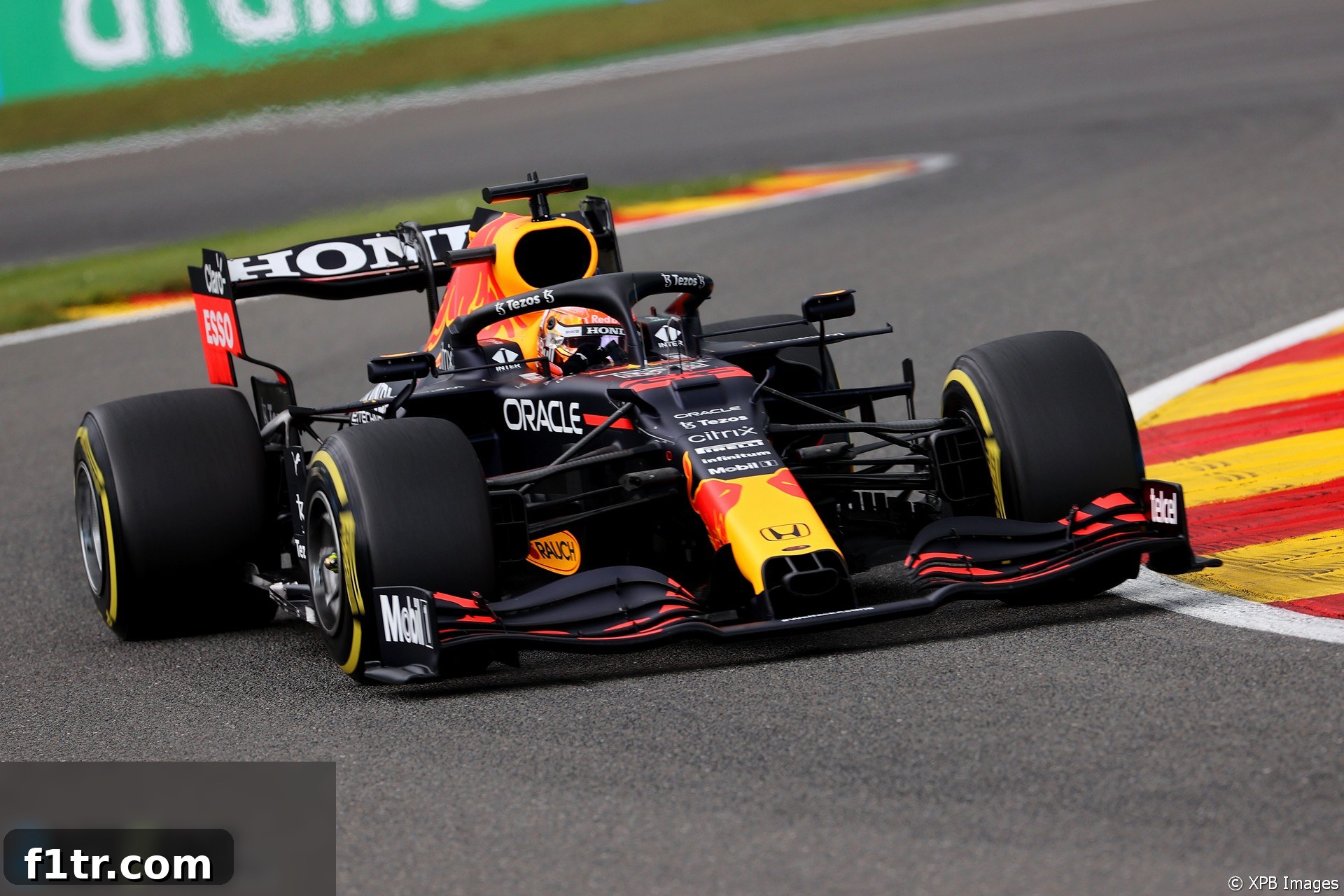
Honda’s Strategic Power Unit Upgrade Fuels Max Verstappen’s F1 Championship Bid
In a pivotal moment for the intensely competitive 2021 Formula 1 season, Honda unveiled crucial details surrounding the significant power unit upgrade provided to Max Verstappen at the Belgian Grand Prix. This strategic enhancement, particularly focused on a new specification of energy store, marked a critical juncture in the thrilling championship battle between Verstappen and his rivals.
The Technical Breakthrough: Honda’s Advanced Energy Store
Red Bull’s esteemed power unit supplier, Honda, officially confirmed the deployment of a cutting-edge energy store (ES) in Verstappen’s car at the iconic Spa-Francorchamps circuit. Under current Formula 1 regulations, manufacturers are permitted to upgrade each distinct element of their power units from their initial 2020 specification only once within a season. Honda strategically chose to delay the introduction of this vital component until after the summer break, maximizing its impact during the crucial latter half of the season.
Yasuaki Asaki, Honda F1’s Head of Power Unit Development, shed light on the profound significance of this latest upgrade. He revealed that this advanced energy store was the culmination of an arduous, multi-year development project. The core objective behind this ambitious undertaking was a dual pursuit: to dramatically improve energy efficiency while simultaneously achieving substantial reductions in weight. This innovative approach reflects Honda’s commitment to pushing the boundaries of hybrid powertrain technology in motorsport.
“This new ES has been developed in a project that has taken several years, with an aim to combine improvements in energy efficiency with significant reductions in weight,” Asaki articulated in a statement from Honda. “In what will be the company’s final season in the sport, Honda F1 has managed to introduce the new ES – fitted with a lighter, low-resistance, highly efficient and ultra-high power battery cell – just in time for the start of the second half of the season.” This statement underscored the precision engineering and strategic timing involved in bringing such a crucial component to the track.
Accelerated Development: Honda’s Championship Imperative
The motivation behind accelerating the development timeline for this advanced energy store was unequivocally linked to Honda’s overarching ambition: securing the world championship in their farewell season from Formula 1. Asaki emphasized, “In order to achieve the ultimate goal of defeating Mercedes and winning the championship before leaving F1 at the end of the 2021 season, we recognised the need to enhance performance. As such, the development plan for the new ES was brought forward substantially from the original goal of 2022 to introduction during the 2021 season.” This aggressive timeline showcased Honda’s determination to leave the sport at its pinnacle.
The development of an F1 energy store is an incredibly complex undertaking, primarily due to the high-voltage components involved. These components demand meticulous development, stringent safety protocols during shipping, and rigorous testing to guarantee their reliability and safety within the extreme environment of a Formula 1 race. The extensive lead time required for such an upgrade highlights the challenges faced by manufacturers. Notably, Honda’s own road car battery development team played an integral role in this project, contributing invaluable expertise and resources to bring this cutting-edge technology to the racetrack.
Strategic Implications for Red Bull and the 2021 Season
The introduction of new power unit components throughout an F1 season is governed by strict regulations, allowing drivers a limited number of elements. For Red Bull Racing, managing this intricate allocation for both Max Verstappen and Sergio Perez proved particularly challenging during the 2021 season. The team’s strategy was significantly complicated by incidents of damage incurred in high-profile crashes: Verstappen’s collision at Silverstone and Sergio Perez’s incident at the Hungaroring.
These crashes forced Red Bull to make difficult decisions regarding component usage, leading to the fitting of a completely new power unit for Perez at the race following Verstappen’s upgrade. This necessitated a grid penalty for Perez, a common consequence of exceeding the allocated number of power unit elements. Red Bull had also previously hinted that Verstappen’s power unit might require additional replacement parts later in the season, raising the specter of a potential grid penalty for the championship contender himself, adding another layer of strategic complexity to their title pursuit.
The 2021 season was characterized by an unrelenting development race among all power unit manufacturers. Ferrari, a formidable competitor, confirmed during the summer break its own intentions to introduce a significant power unit upgrade in the subsequent races. This ongoing technical arms race underscores the critical importance of continuous innovation and strategic timing in the pursuit of performance gains on the Formula 1 grid.
The Future of F1 Power Units: Attracting New Manufacturers
Beyond the immediate impact on the 2021 championship, Honda’s sophisticated energy store upgrade also shines a light on the broader trajectory of Formula 1’s technical regulations. A paramount question facing the sport is whether its forthcoming changes in power unit regulations will succeed in enticing new manufacturers to join the elite ranks of F1. The sport is constantly evolving, and a key aspect of its long-term health lies in attracting more significant players to contribute to its technological arms race.
Formula 1 aims to introduce a new generation of power unit regulations in 2026, designed to be more sustainable, cost-effective, and relevant to road car technology. The goal is to make the sport more appealing to potential new entrants by simplifying certain aspects of the power unit, reducing development costs, and incorporating a greater focus on sustainable fuels. These changes seek to strike a balance between maintaining F1’s status as a pinnacle of motorsport engineering and ensuring its commercial viability and environmental responsibility.
The success of these future rules in attracting new manufacturers will be crucial for the continued growth and diversity of the sport. A wider array of engine suppliers can lead to greater competition, more innovation, and a richer narrative for fans globally. Understanding the nuances of these future plans, as discussed in various expert analyses, is essential for comprehending the long-term vision of Formula 1. For a deeper dive into the latest on future rules and their potential impact, regular features like the RacingLines column often provide invaluable insights.
Conclusion: A Legacy Defined by Innovation and Ambition
Honda’s strategic power unit upgrade for Max Verstappen at the Belgian Grand Prix was far more than a mere technical enhancement; it was a potent symbol of their unwavering commitment to winning the Formula 1 World Championship in their final season. The advanced energy store, a product of years of dedicated research and development, exemplifies Honda’s engineering prowess and their determination to leave a lasting legacy in the sport. By accelerating its introduction, Honda provided Red Bull and Max Verstappen with a crucial performance advantage at a critical stage of the 2021 season, further intensifying one of the most memorable championship battles in recent memory. This move not only showcased immediate gains but also highlighted the strategic chess game played out between manufacturers, constantly balancing performance needs with regulatory constraints and the ever-present threat of penalties. As the sport looks to its future, the lessons from Honda’s aggressive development and strategic timing will undoubtedly resonate, shaping the competitive landscape for years to come.
Related Articles and the 2021 F1 Season
Dive deeper into the dramatic events and ongoing narratives of the 2021 Formula 1 season with these related articles:
- Masi ‘basically gifted the championship’ to Verstappen says 2021 FIA steward Sullivan
- Las Vegas race backers looking to extend F1 deal beyond 2025
- Why Mercedes put ‘a reminder of joy and pain’ on display in their factory lobby
- Verdict on error in GT race suggests Mercedes would have lost 2021 Abu Dhabi GP appeal
- Title ‘stolen’ from Mercedes made us ‘underdogs people cheer for’ – Wolff
Browse all 2021 F1 season articles