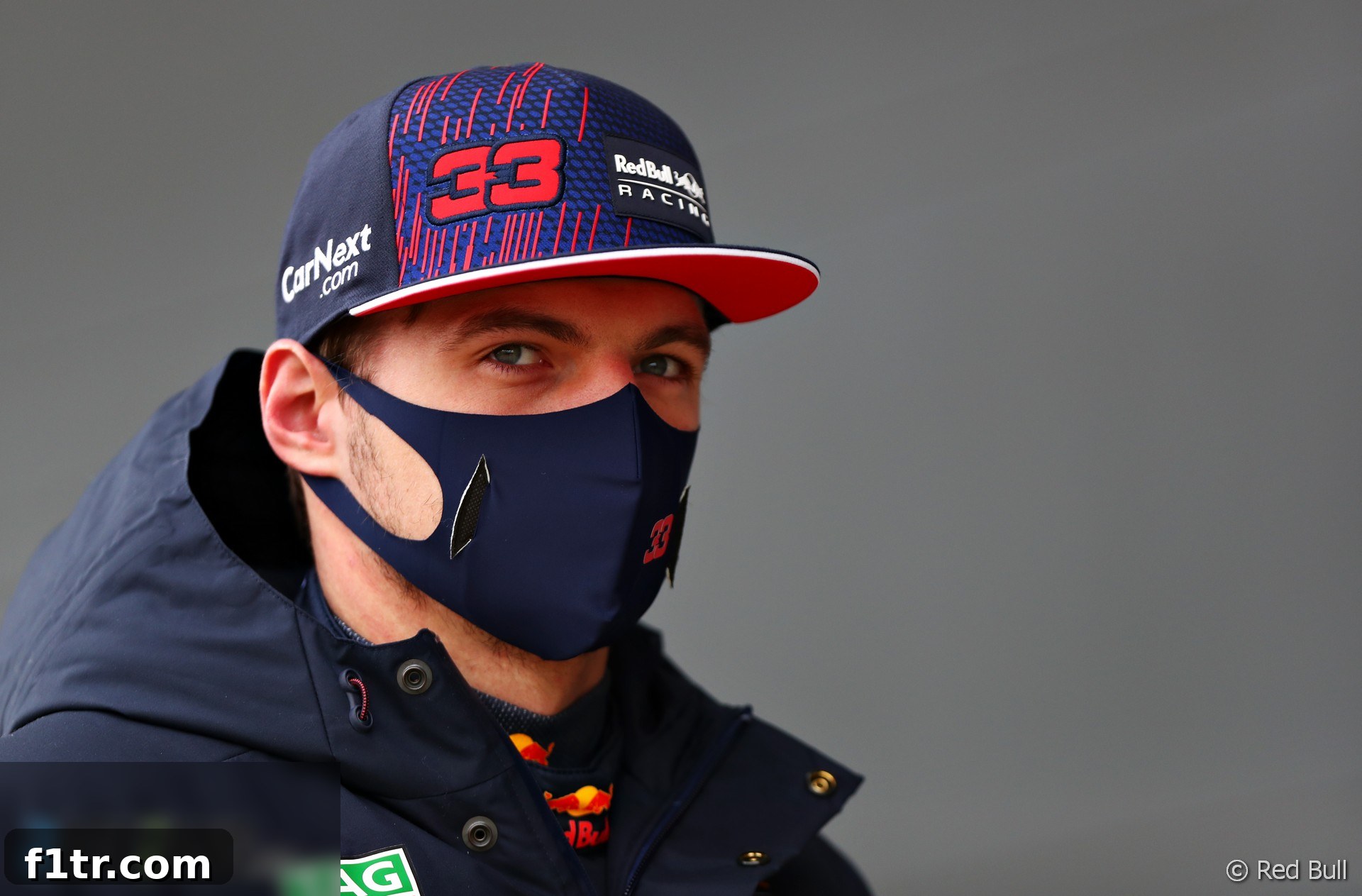
As the anticipation for the new Formula 1 season builds, Max Verstappen offered his initial, albeit limited, insights into Red Bull Racing’s new challenger, the RB16B. Following a brief shakedown run at Silverstone, the Dutchman expressed cautious optimism, emphasizing that the true test of the car’s potential and the team’s progress would only come during pre-season testing in Bahrain next month. His comments underscore the inherent complexities of early season car evaluations and the strategic secrecy surrounding new F1 machinery.
Advert | Become a Supporter & go ad-free
Red Bull’s RB16B, an evolution of last year’s RB16, made its track debut at Silverstone during a designated filming day. These events, crucial for marketing and promotional content, come with strict limitations. Both Verstappen and his new teammate, Sergio Perez, were restricted to a maximum distance of 100 kilometers and were required to use demonstration tyre compounds, which are far from representative of the performance-oriented Pirelli tyres used in competition. This setup inherently limits the depth of any meaningful performance analysis.
“We drive on demo tyres, so it will never feel how it’s going to feel on real tyres,” Verstappen explained to the media, including RaceFans, today. “I never really base a lot of my findings on this small run. You just get the car out and run a few laps to ensure everything functions as expected.” His candid assessment highlights the gap between a promotional run and genuine performance evaluation. “It all felt a bit normal to me. I think we just have to wait and see what’s happening in Bahrain once we have proper tyres under the car and can truly push the limits.”
The RB16B: Evolution Under Strict Regulations
The 2021 Formula 1 season operates under a unique set of technical regulations, primarily driven by cost-saving measures in response to the global pandemic. Teams were largely required to carry over their 2020 chassis, with only a limited number of “tokens” available for significant developmental changes. Despite these constraints, Red Bull has been notably secretive about the RB16B, initially releasing only stylized renderings and no photographs of its actual track debut. This guarded approach reflects the competitive nature of F1, where even minor details can offer rivals a glimpse into development directions.
“It’s a bit of a carry-over from last year for all teams,” Verstappen acknowledged, downplaying expectations of radical design departures. “I don’t think it’s going to be a completely different car anyway.” His pragmatic view prioritizes performance above all else: “As long as it’s fast, that’s the most important, even if it would look pink, purple, or any other colour or shape that doesn’t matter. Even if it has the weirdest shape on the car possible, and it’s fast, I’m happy with that.” This sentiment underlines the engineering-first mentality prevalent in top-tier motorsport, where aesthetic appeal is secondary to lap time.
Navigating the Aerodynamic Overhaul: The Impact of the New Floor
One of the few areas where teams were mandated to make significant changes for 2021 was the rear floor of the car. The dimensions of the floor have been reduced, specifically trimmed in front of the rear wheels, with the explicit goal of cutting the amount of downforce the cars can generate. This regulation change was implemented as a safety measure to manage the ever-increasing speeds of Formula 1 cars without requiring a complete redesign.
Verstappen noted this change had a substantial impact. “The floor is still a big change,” he confirmed. “To try to recover all that downforce loss is going to be important, and it’s going to be interesting to see who did that the best.” The challenge for engineers is to recoup as much of that lost downforce as possible through innovative aerodynamic solutions elsewhere on the car, without incurring additional drag. This technical puzzle is expected to be a key differentiator in the early stages of the season. “At the moment, I don’t know, of course, where we are. But there’s still a few things we have to be on top of. Mercedes was still the dominant car towards the end of the season, so we know we have to keep improving.”
The Dutchman’s statement serves as a stark reminder of the benchmark set by Mercedes in previous seasons. Red Bull began the 2020 campaign approximately a second per lap slower than their German rivals, a significant deficit in the hyper-competitive world of F1. However, through diligent development and a deeper understanding of the RB16, they progressively narrowed that gap, transforming the car into a more stable and quicker machine by the season’s close. This late-season surge has fueled optimism within the Red Bull camp, suggesting they have a strong foundation upon which to build the RB16B.
Advert | Become a RaceFans supporter andgo ad-free
Verstappen’s Driving Philosophy: The Edge of Performance
Verstappen has consistently articulated a preference for a car that offers outright performance, even if it’s challenging to drive, over one that is overly forgiving. “The car is always on the edge,” he stated. “A fast car is never super-easy to drive. If it becomes super-easy to drive, most of the time it’s too understeery anyway.” This philosophy aligns with his aggressive and highly responsive driving style, where he thrives on extracting the absolute maximum from a car, even if it demands precise inputs and quick reactions.
“I just wanted more grip,” he clarified, reflecting on the RB16’s development. “It didn’t mean that it was very tricky to drive because you adapt to the situation you’re in.” This adaptability is a hallmark of elite drivers. Red Bull’s continuous development through 2020, even as Mercedes shifted focus to their 2021 car, was a strategic move to address fundamental issues and lay a stronger groundwork for the carry-over season. “At the end of the season, Mercedes, of course, stopped developing that car from whenever – June, July – because you couldn’t really see a lot of updates. We just kept learning. We know we had a few issues with that car and we wanted to improve it.”
Given the limited regulatory changes for 2021, particularly beyond the floor, Red Bull’s focus on understanding and optimizing the RB16 was paramount. “Also knowing that the regulations wouldn’t change that much – of course the floor changed a bit, but in general the cars stayed pretty much the same – for us it was important to just get on top of that.” The team’s hope is that these lessons and improvements have translated directly into the RB16B. “Let’s see this year if we improved it even more and even better and hopefully it’s more competitive compared to Mercedes.”
“People always talked about the rear end being so twitchy,” he added, addressing a common criticism of the RB16’s early handling characteristics. “I think it’s just general grip that we were still lacking a bit.” Beyond aerodynamics, the power unit has historically been a significant area of focus for Red Bull. “But then also we were a bit down on power. We know that, that is no secret, you can see it.”
Advert | Become a RaceFans supporter andgo ad-free
The Crucial Partnership with Honda
The collaboration with Honda has been a cornerstone of Red Bull’s recent resurgence. The Japanese manufacturer, despite its impending departure from F1 at the end of 2021, has been working intensively with Red Bull to deliver a powerful and reliable engine for their final season. Verstappen’s comments confirm this ongoing effort: “So we worked a lot with Honda, of course, also throughout the winter.” The performance of the Honda power unit will be critical in challenging Mercedes, whose engine has consistently been a benchmark in the hybrid era.
Despite the inherent optimism that comes with a new season and a developed car, Verstappen maintains a measured approach. “It’s all looking promising, but it doesn’t make sense now to hype everything up. First, it’s more important to get to the track in Bahrain and try to do the best amount of learning we can on the car and the engine to optimise everything.” This pragmatic outlook emphasizes the critical role of pre-season testing. The compressed three-day schedule in Bahrain will be invaluable for gathering data, validating simulations, and fine-tuning the RB16B for the competitive demands of the season ahead. The true performance hierarchy of the 2021 F1 grid remains an exciting mystery, soon to be unveiled under the lights of Sakhir.
Join the RaceFans Supporters Drive!
If you’ve enjoyed RaceFans’ motor sport coverage during 2020 and wish to support independent journalism, please take a moment to find out more about our Supporter Drive.
We’re aiming to welcome 3,000 new Supporters to help fund RaceFans so we can continue to produce quality, original, independent motorsport coverage. Your support helps us deliver in-depth analysis and exclusive insights into the world of Formula 1 and beyond. Here’s what we’re asking for and why – and how you can sign up:
- Join the RaceFans Supporters Drive!
Related Articles: 2021 F1 Season Insights
- Masi ‘basically gifted the championship’ to Verstappen says 2021 FIA steward Sullivan
- Las Vegas race backers looking to extend F1 deal beyond 2025
- Why Mercedes put ‘a reminder of joy and pain’ on display in their factory lobby
- Verdict on error in GT race suggests Mercedes would have lost 2021 Abu Dhabi GP appeal
- Title ‘stolen’ from Mercedes made us ‘underdogs people cheer for’ – Wolff
Browse all 2021 F1 season articles