Verstappen’s Interlagos Challenge: Red Bull Grapples with Bumpy Track as McLaren Shines in Sprint Qualifying
The atmospheric Interlagos circuit, a revered battleground in Formula 1 history, presented an unexpected hurdle for championship leader Max Verstappen and his Red Bull Racing team during Saturday’s sprint qualifying session. Verstappen voiced significant concerns that his team’s performance deficit against McLaren, starkly evident in qualifying, might persist into the crucial sprint race. This revelation has injected an element of unpredictability into what many expected to be a dominant weekend for the Dutchman, setting the stage for a potentially thrilling contest in São Paulo.
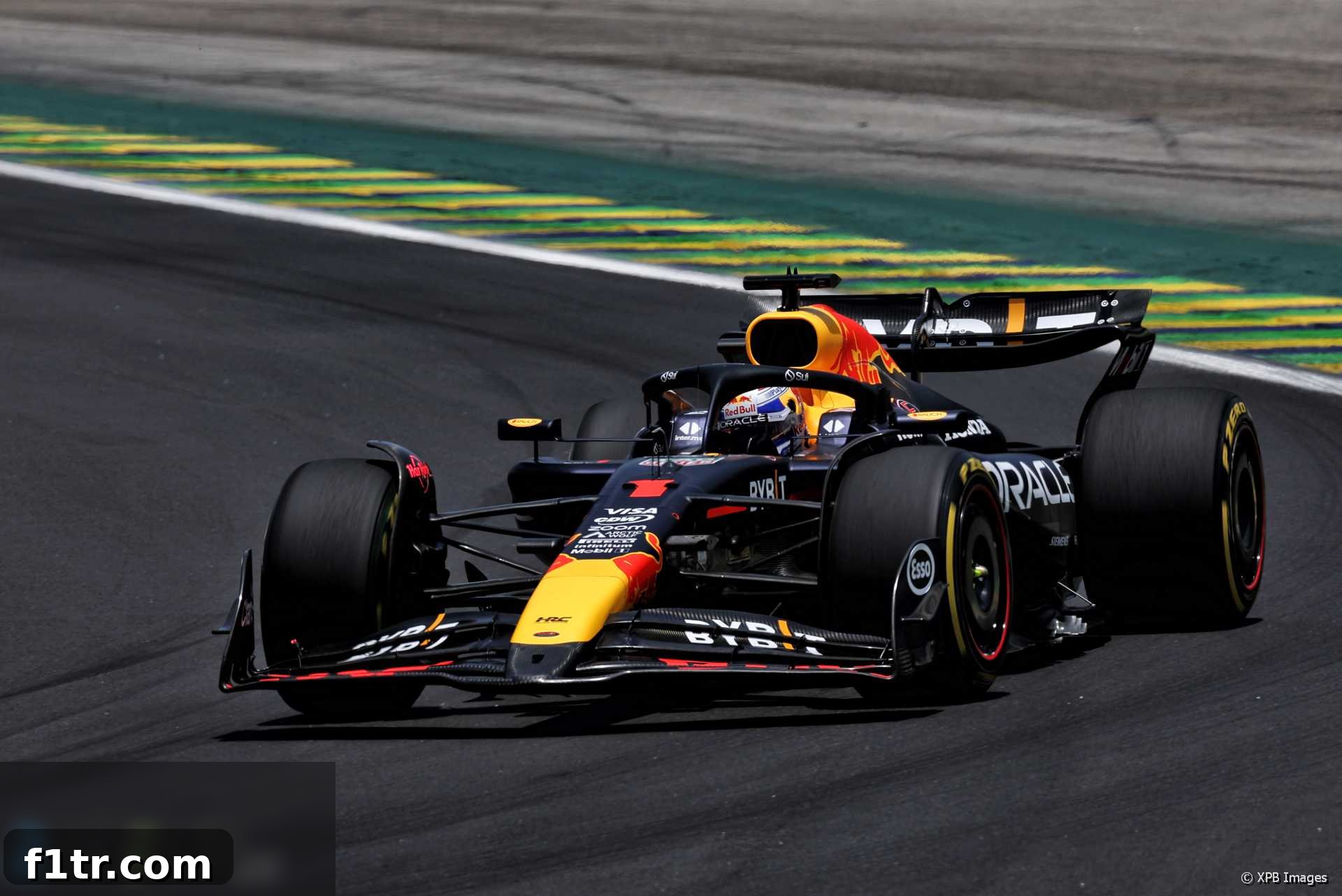
Verstappen, aiming to extend his commanding lead in the drivers’ championship, will line up fourth on the grid for the Saturday morning sprint race. Crucially, this places him two positions behind his closest championship rival, Lando Norris, whose McLaren demonstrated impressive pace. The direct comparison between the two teams was stark, with Verstappen finding himself three-tenths of a second slower than both Norris and his formidable teammate, Oscar Piastri, who expertly clinched pole position for the sprint. This performance gap immediately highlighted a potential vulnerability for Red Bull on a circuit that has historically produced some of the most dramatic moments in F1.
The Bumpy Truth: Interlagos Resurfacing Poses Unique Challenges for the RB20
The core of Verstappen’s apprehension stems from the recently resurfaced Interlagos track. While resurfacing typically aims to smooth out imperfections and enhance grip, the Dutch driver critically stated that he believes the changes have, paradoxically, made the track “worse to drive.” He elaborated on the severe bumpiness now prevalent across various sections of the circuit, a condition that appears to be particularly detrimental to the finely-tuned RB20.
“As soon as we went into qualifying, it looked like we were definitely off,” Verstappen candidly shared with the official F1 channel after the session. He continued, “The car is a bit difficult in the bumps. They did the resurfacing, but I think they actually made it worse to drive. It’s extremely bumpy everywhere, so it’s not good for our cars.”
The challenges posed by a bumpy track extend far beyond driver comfort. Formula 1 cars are meticulously designed to operate within a very specific aerodynamic window, where the car’s floor and diffuser generate immense downforce when held at a consistent distance from the track surface. When a car encounters significant undulations, its suspension system is overworked, and more critically, the aerodynamic platform becomes unstable. This instability causes the critical floor area to lift and drop erratically, disrupting airflow and leading to a substantial loss of aerodynamic grip. For a car like the RB20, renowned for its supreme aerodynamic efficiency and stable platform, such unpredictable surface conditions force engineers to compromise on setup, often leading to a trade-off between ride height for aero performance and suspension stiffness for bump absorption. “All the bumpy areas, the car is jumping around a lot and it’s costing me quite a bit of lap time, unfortunately,” Verstappen concluded, underscoring the direct impact on his pace.
Uncertainty Ahead: Red Bull’s Sprint Race Prospects
When pressed about his expectations for the upcoming sprint race, Verstappen offered a pragmatic, albeit cautious, outlook. “I don’t know,” he admitted, reflecting the team’s genuine uncertainty regarding their race pace relative to their competitors, particularly McLaren. This sentiment is telling, as Red Bull typically arrives at race weekends with a clear understanding of their car’s strengths and weaknesses across different conditions.
“Normally when you’re already quite a bit off over one lap, I don’t think we are particularly the strongest in the race,” he remarked, hinting at the traditional correlation between qualifying and race performance. While sprint races are shorter and involve fewer strategic variables than a full Grand Prix, the underlying car characteristics and tire degradation rates are still paramount. If the RB20 continues to struggle with the bumpy track under race conditions, where tire wear and consistent performance are key, Red Bull could face a tough battle to maintain position, let alone challenge for victory. The sprint race will serve as a crucial testbed, offering invaluable data that could influence their setup decisions for the main Grand Prix on Sunday.
McLaren’s Resurgence: Norris and Piastri Seize the Opportunity
In stark contrast to Red Bull’s struggles, McLaren demonstrated exceptional form throughout sprint qualifying. The papaya team has been on a strong upward trajectory in the latter half of the season, consistently challenging the front-runners and often outperforming rivals on various circuits. Their performance at Interlagos underscores their impressive development efforts and the inherent strengths of the MCL38 chassis.
Lando Norris, a consistent performer, will start from a promising second position, while Oscar Piastri delivered a standout lap to secure pole. This one-two lock-out for McLaren is a clear statement of intent and highlights the car’s adaptability to the challenging Interlagos conditions, even with the new bumps. The MCL38 appears to be finding a sweet spot, allowing both drivers to extract maximum performance. Their ability to manage the bumps and maintain a stable platform suggests either a more compliant suspension setup, a less aerodynamically sensitive floor, or simply a better inherent balance for these specific track characteristics. For McLaren, securing a strong result in the sprint race would not only add valuable points to their constructors’ championship campaign but also build significant momentum heading into Sunday’s main event.
Sergio Perez’s Challenging Sprint Qualifying
While Verstappen faced his own set of challenges, his teammate Sergio Perez endured a significantly more difficult sprint qualifying session. The Mexican driver was unceremoniously eliminated in 13th place during SQ2, missing out on the final segment of qualifying. This result adds further pressure to Perez, who has faced scrutiny over his qualifying performances throughout the season.
Perez elaborated on the issues: “We had a good SQ1, but then into SQ2 we were struggling a little bit with the balance.” He explained that he encountered “a little bit of understeer with the track coming down” and attempted to compensate with brake balance adjustments, which ultimately left the car “a little bit too rear-limited.” Compounding his technical struggles was a crucial procedural error. “Then it was a bit confusing on the programme. We thought we might have a chance for a second lap and unfortunately we didn’t.” This miscommunication or misjudgment meant Perez was unable to cross the timing line to start a final flying lap at the very end of SQ2, thereby missing a critical opportunity to improve his time and potentially advance. Starting 13th on the sprint grid presents a formidable task for Perez, who will need a stellar drive to salvage points and support Red Bull’s constructors’ championship ambitions.
The Interlagos Enigma: A Circuit of Legends and Unexpected Twists
The Autódromo José Carlos Pace, affectionately known as Interlagos, is renowned for its undulating layout, tight corners, and long straights, making it one of the most exciting and demanding circuits on the Formula 1 calendar. Its unique anti-clockwise direction, combined with significant elevation changes and the high altitude of São Paulo, always adds an extra layer of complexity for teams and drivers. The thinner air at altitude affects aerodynamic performance and engine cooling, requiring specific car setups and engine mapping strategies. Historically, Interlagos has been a venue for thrilling overtakes and dramatic championship deciders, largely due to its flowing nature and opportunities for slipstreaming.
However, the recent resurfacing has introduced an unexpected variable. While intended to improve grip and driver safety, Verstappen’s comments highlight that it has instead created a highly bumpy surface. This change shifts the challenge from purely aerodynamic and engine management to include a significant mechanical grip and suspension compliance test. Teams that can adapt their cars more effectively to absorb these bumps without compromising their aero platform will gain a significant advantage, as McLaren appears to have done so far.
Sprint Race Dynamics: A Short, Sharp Battle
The sprint race format itself adds another dimension to the Interlagos weekend. Being a shorter event, typically around 100 kilometers, with no mandatory pit stops, it places a premium on immediate pace, strong starts, and effective tire management over a relatively brief stint. Points are awarded to the top eight finishers, making every position critical. For Max Verstappen, starting fourth means he has a chance to fight for the podium, but he will need to overcome the McLaren duo ahead and potentially defend against other fast cars. The lack of strategic variability means pure car performance and driver skill are magnified.
The bumpy track might also influence tire degradation in the sprint. If cars are constantly unsettled, tires might wear more rapidly, introducing an additional element for drivers to manage. For McLaren, starting P1 and P2 gives them a strong strategic advantage, allowing them to dictate the pace and potentially work together to manage the challenge from behind. The first lap will be crucial, with the run down to Turn 1 often seeing multiple overtakes and skirmishes.
Beyond the Sprint: Implications for the Main Grand Prix
While the sprint race holds its own importance for points and bragging rights, its performance implications for Sunday’s main Brazilian Grand Prix are equally significant. The sprint race will provide teams with invaluable data regarding tire degradation, car balance, and overall performance in race conditions on the newly bumpy circuit. Red Bull will be keenly analyzing every data point from Verstappen’s car to understand how to improve the RB20’s ride quality and race pace for the longer distance. They might consider significant setup changes, if allowed under parc fermé regulations for the main race, to address the bumpiness.
For McLaren, a strong sprint performance will validate their current setup and boost confidence, although they too will be looking for any fine-tuning opportunities. The main Grand Prix, with its longer distance, mandatory pit stops, and potentially varying tire strategies, offers a different tactical landscape. However, a significant performance deficit in the sprint could signal deeper issues that are harder to rectify for the main event, making Sunday’s qualifying session and subsequent race an even more challenging prospect for teams struggling on Saturday.
Conclusion: An Unpredictable Weekend Dawns
The Brazilian Grand Prix weekend has begun with an unexpected twist, as Max Verstappen and Red Bull grapple with the unique challenges presented by the resurfaced Interlagos circuit. Their struggles with the bumps have allowed McLaren, with Lando Norris and Oscar Piastri leading the charge, to demonstrate formidable pace and secure a dominant front-row lockout for the sprint race. Coupled with Sergio Perez’s disappointing qualifying performance, Red Bull finds itself on the back foot heading into Saturday’s short-form race.
The sprint race promises to be a captivating encounter, not only for the immediate points on offer but also for the critical insights it will provide into each team’s true race pace and ability to manage the demanding Interlagos conditions. As the F1 circus navigates the bumps and turns of this legendary circuit, the stage is set for a weekend of high drama, unpredictable outcomes, and intense competition, with the battle between Red Bull and McLaren now firmly in the spotlight.
2024 Brazilian Grand Prix
- “I didn’t really want to come back” – Hamilton explains cryptic Brazil radio message
- Ocon’s role in Gasly’s Q2 exit was almost another ‘flare-up’ at Alpine – Oakes
- Interlagos must improve “very bad” new track surface for 2025, say F1 drivers
- “That’s how we silence them”: Verstappen’s stunning Brazil win from start to finish
- Verstappen now has as many wins as F1’s first six world champions combined
Browse all 2024 Brazilian Grand Prix articles