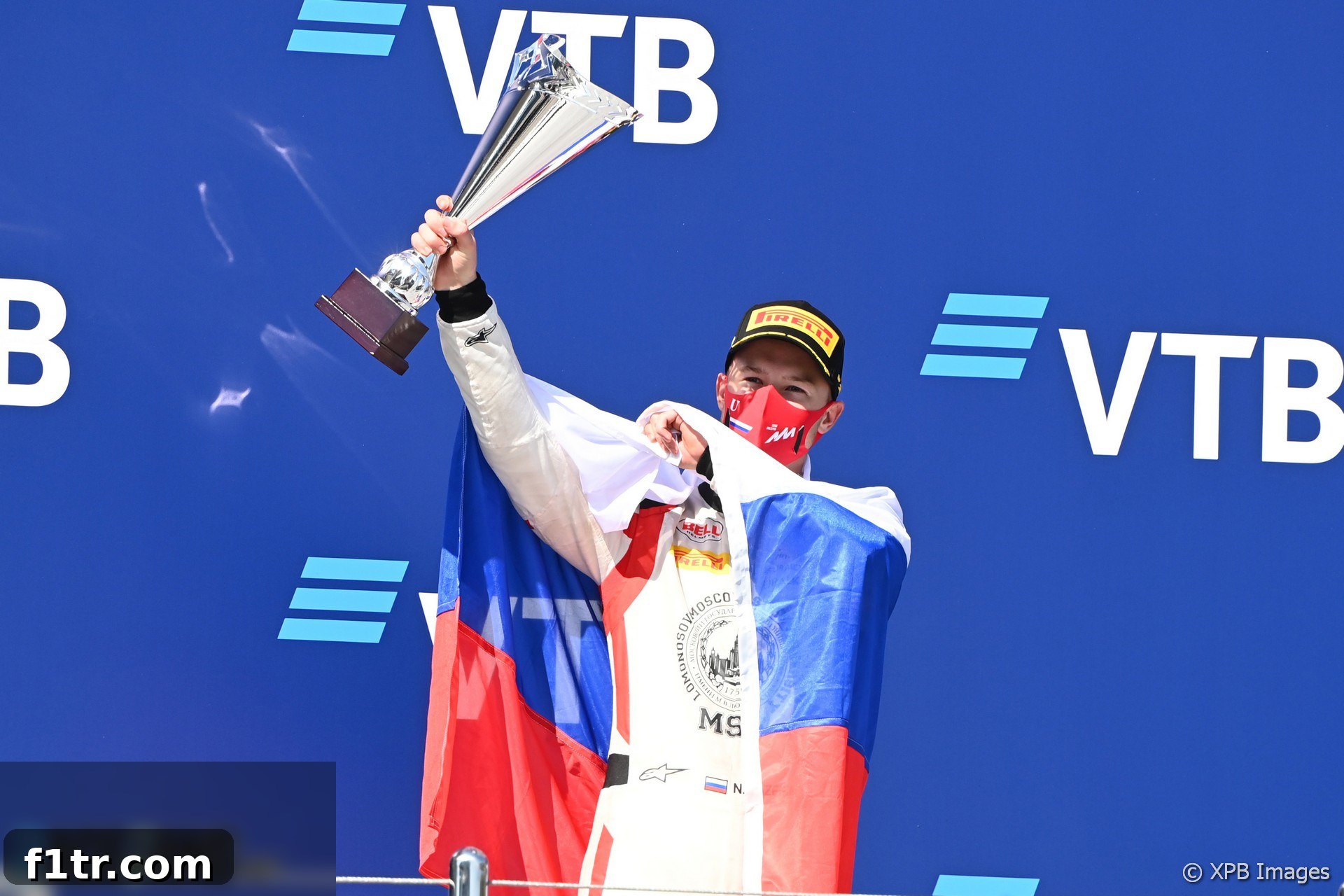
FIA Imposes Strict Sanctions: Russian Athletes Barred from Competing Under National Flag in Motorsports
In a significant development for international motorsports, the FIA has clarified and enforced stringent restrictions on Russian competitors following a landmark ruling by the Court of Arbitration for Sport (CAS). This decision means that prominent Formula 1 driver Nikita Mazepin, alongside other Russian athletes participating in FIA-sanctioned world championships, will no longer be permitted to race under the Russian flag or display national symbols.
The Russian Automobile Federation (RAF), a recognized member club of the FIA, officially announced the sport’s governing body’s position on Friday. This clarification follows a December ruling by the CAS which largely upheld an earlier decision by the World Anti-Doping Agency (WADA) against the Russian Anti-Doping Agency (RUSADA). The outcome imposes a two-year period of restrictions on how Russian athletes can compete in major world championship sporting events, a reduction from an initial four-year proposal. These measures officially came into effect on December 17th, marking a pivotal moment in the ongoing efforts to ensure fairness and integrity in global sports.
The Roots of the Sanctions: WADA, CAS, and the Anti-Doping Code
The core of these wide-ranging restrictions lies in the findings and subsequent rulings concerning state-sponsored doping within Russia. The World Anti-Doping Agency (WADA) initially rendered its decision against RUSADA in December 2019, following the comprehensive findings of the McLaren Report. This pivotal report unveiled the extent of state-sponsored doping in Russia, painting a grim picture of systemic violations.
The investigation that led to the McLaren Report was primarily prompted by the courageous revelations of Grigory Rodchenkov, the former head of the Russian anti-doping laboratory. Rodchenkov detailed how the country orchestrated an elaborate program of doping and concealment, notably during the 2014 Winter Olympics held in Sochi. These revelations shocked the sporting world and underscored a profound breach of ethical conduct and fair play.
The CAS, acting as the ultimate arbiter in sports disputes, upheld WADA’s ruling that RUSADA had indeed breached the World Anti-Doping Code. In its definitive judgment, the CAS imposed robust restrictions on “any athlete from Russia” participating in “any world championships organised or sanctioned by any signatory” to the WADA code. As the FIA is a direct signatory to WADA, it is legally and ethically bound to implement and enforce these rulings across all its relevant championships, ensuring consistency and adherence to global anti-doping standards.
Specific Restrictions: What Russian Athletes Can and Cannot Do
The FIA’s enforcement of the CAS ruling introduces a comprehensive set of prohibitions and allowances that Russian athletes must now adhere to. These measures aim to distance individual athletes from any direct association with the state’s doping infractions while still allowing them to compete as neutral individuals.
Prohibitions on National Symbols and Name Usage
- Flag and National Symbols: The decision explicitly prevents Mazepin and all other Russian drivers competing in world championship motorsports from using the image of the Russian flag. This ban extends to other national symbols, such as the prominent two-headed eagle, on their sporting equipment, uniforms, or any official representations.
- Public Display: Drivers and team personnel are strictly forbidden from displaying the Russian flag, including any historical variations, or the name ‘Russia’ or associated national symbols in public at any FIA-run competitions. This ensures a clear separation between the state and the competing athletes at an official level.
- Name Usage Limitations: The use of the name ‘Russia’ is only permitted if it is displayed with equal prominence alongside the phrase ‘neutral athlete’. Otherwise, the names ‘Russia’ and ‘Russian’ are forbidden from being used in any official capacity related to the athletes’ participation. Similarly, the full name ‘Russian Automobile Federation’ is disallowed, though the acronym ‘RAF’ has been granted an exception and may be used.
Permitted Elements and Spectator Rules
- National Colors: Despite the ban on the flag, Russian competitors are permitted to incorporate the colours of the Russian flag into their sporting equipment and liveries. This allows for a degree of national identity expression without directly violating the symbol ban.
- Spectator Freedom: Significantly, the ruling does not extend to spectators. Fans attending FIA events are explicitly not banned from waving Russian flags or displaying national symbols. This distinction highlights that the sanctions target official representation by athletes and sporting bodies, not the individual expression of support by the public.
Ban on the Russian National Anthem
One of the most notable restrictions affects ceremonial aspects of FIA events: the playing of the Russian National Anthem is now prohibited. This includes at major events such as the Russian Grand Prix, which is scheduled to take place on September 26th. Under normal circumstances, the national anthem of the host country would be performed before the race, a tradition now suspended due to the sanctions. This specific ban underscores the comprehensive nature of the penalties, extending beyond visual symbols to auditory national identifiers.
Impact Across Global Motorsports: Formula 1 and Beyond
According to the Russian Automobile Federation, the implications of this decision are far-reaching, directly impacting Russian athletes competing in a wide array of world championships. This includes the pinnacle of motorsport, Formula 1, where Nikita Mazepin is set to make his debut. Beyond F1, the sanctions apply to other major global series such as Formula E, the World Endurance Championship (WEC), the World Rally Championship (WRC), the World Rallycross Championship (WRX), and various karting world championships. The breadth of these affected categories highlights the significant commitment of the FIA to enforce the CAS ruling across its diverse portfolio of motorsports.
While the RAF specified the impact on world championships, it did not explicitly detail whether junior series, such as Formula 2 – a championship Mazepin competed in last year – would also be affected. This ambiguity raises questions about the scope of the sanctions for developing talent and may require further clarification from the FIA. For athletes like Mazepin, who have climbed the ranks of junior categories, entering F1 under these restrictions marks a unique and challenging beginning to their top-tier careers. They must navigate the complexities of competing without traditional national representation, placing a greater emphasis on their individual achievements and personal brands.
The two-year duration of these restrictions, commencing from December 17th, means that Russian athletes will compete as neutral entities through the 2021 and 2022 seasons. This period offers an opportunity for a reset, allowing the global sporting community to monitor Russia’s adherence to anti-doping protocols and rebuild trust. The precedent set by this ruling is substantial, reinforcing the message that integrity and fair play are paramount, and that breaches of anti-doping regulations will result in significant, high-level consequences across all sports, including the prestigious world of motorsports.
Navigating the Future: Implications and Outlook
The enforcement of these sanctions by the FIA reflects a broader commitment by international sporting federations to uphold the principles of clean sport. While the immediate focus is on the next two years, the long-term implications for Russia’s standing in global sports are profound. The ability of Russian athletes to eventually return to competing under their national flag will depend heavily on the actions and reforms undertaken by the Russian Anti-Doping Agency and other relevant national bodies during this period.
For the athletes themselves, adapting to these new conditions presents a unique challenge. Competing on the world stage without national symbols, flags, or anthems requires a shift in mindset and potentially, a greater emphasis on personal branding and individual identity. While the rules are strict, the allowance of national colors does provide a small avenue for cultural expression.
The global motorsport community will undoubtedly watch closely as these sanctions unfold, particularly at high-profile events like the Russian Grand Prix. The effective implementation and adherence to these rules are crucial for maintaining the credibility of the FIA and the integrity of competitive motorsports worldwide. This chapter serves as a stark reminder of the global sporting community’s unwavering stance against doping and its commitment to ensuring a level playing field for all competitors.
2021 F1 Season Insights and Updates
- Masi ‘basically gifted the championship’ to Verstappen says 2021 FIA steward Sullivan
- Las Vegas race backers looking to extend F1 deal beyond 2025
- Why Mercedes put ‘a reminder of joy and pain’ on display in their factory lobby
- Verdict on error in GT race suggests Mercedes would have lost 2021 Abu Dhabi GP appeal
- Title ‘stolen’ from Mercedes made us ‘underdogs people cheer for’ – Wolff
Browse all 2021 F1 season articles