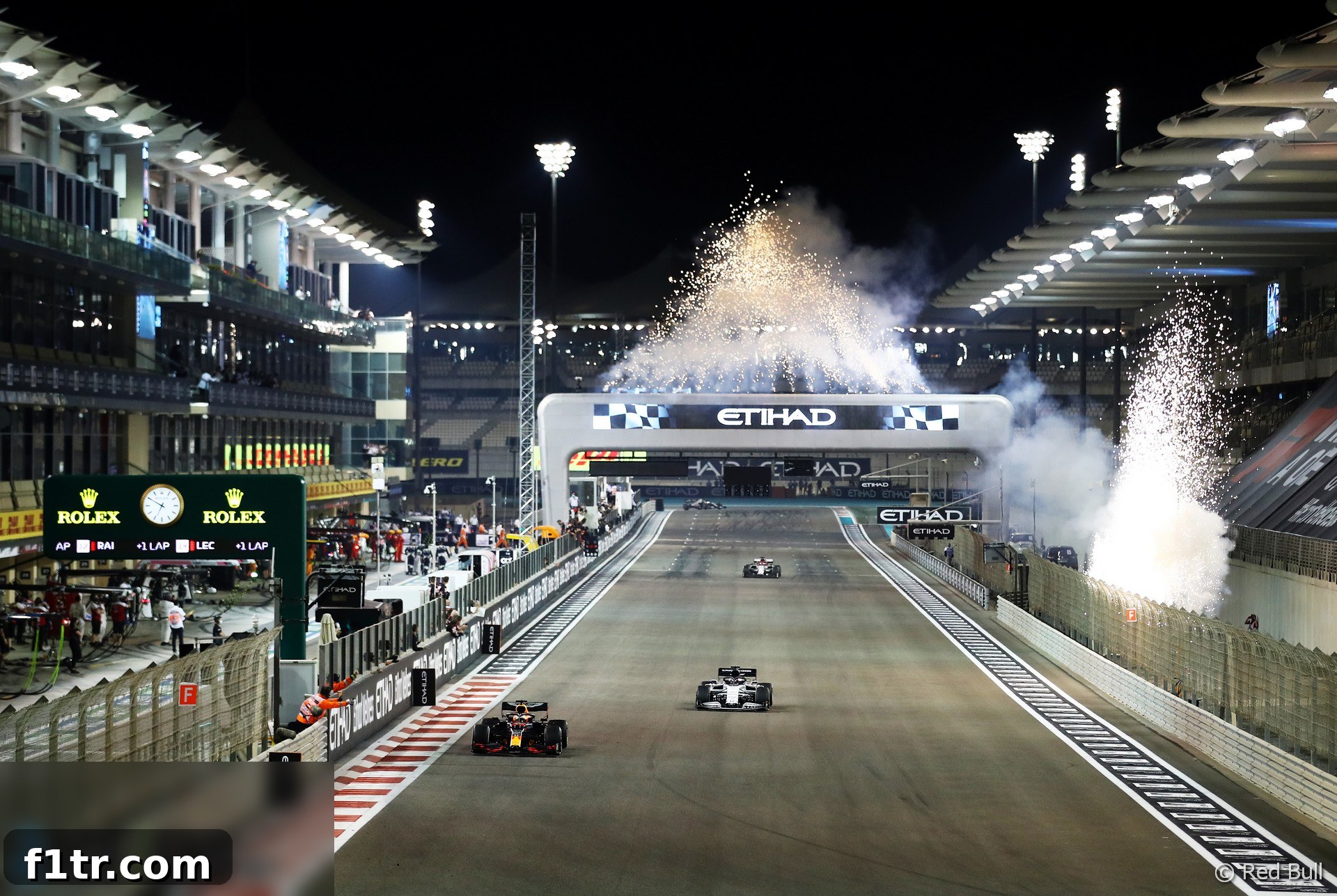
The curtain fell on a tumultuous 2020 Formula 1 season at the Yas Marina Circuit, where Max Verstappen delivered a commanding performance to secure his second victory of the year at the Abu Dhabi Grand Prix. In what many described as a refreshingly straightforward race after a season filled with drama and unpredictability, Verstappen’s triumph underscored his growing stature in the sport and offered a glimpse of the potential challenges to Mercedes’ dominance in future campaigns. While the race itself proved to be a largely processional affair following an early Safety Car intervention, the strategic intricacies and individual battles further down the field kept fans engaged, providing a fitting conclusion to an unforgettable season.
From the moment the lights went out, it was clear that Verstappen was a driver on a mission. Having secured a stunning pole position the day before, he masterfully held onto his lead into Turn 1, resisting any potential threat from the formidable Mercedes duo behind him. His ability to build a comfortable gap almost immediately, combined with a strong race pace, allowed him to dictate terms from the front. This was a crucial psychological victory for both Verstappen and Red Bull Racing, as they demonstrated their capability to lead from the front and manage a race against the sport’s most dominant team.
The race dynamic, however, was significantly shaped by an early Safety Car period triggered by the retirement of Sergio Perez. The Racing Point driver, who had enjoyed a career-defining season and was coming off a sensational victory in Sakhir, suffered a power unit failure on lap 10. This unfortunate incident not only brought his impressive run to an abrupt end but also had profound implications for the Constructors’ Championship battle and the race strategy of almost every team on the grid. As his car ground to a halt on the side of the track, race control deployed the Safety Car, opening a critical window for teams to make their mandatory pit stops without losing significant time.
The vast majority of the field seized this opportunity, diving into the pits for a fresh set of hard tyres. This strategy, common in such scenarios, was designed to allow drivers to run to the end of the race without further stops. Among those to pit were Valtteri Bottas and Lewis Hamilton, who had been following Verstappen in grid order from the start. They emerged from their pit stops still behind the Red Bull, but the early switch to hard compound tyres locked in their strategy, meaning the remainder of the 55-lap race would be a test of tyre management and raw pace rather than strategic gambles. Despite their efforts, neither Bottas nor Hamilton could truly challenge Verstappen’s lead once the race restarted, highlighting a rare weekend where Mercedes seemed to lack their usual dominant edge.
Advert | Become a Supporter & go ad-free
For Alexander Albon, this race carried immense significance, potentially being his final opportunity to impress Red Bull management and secure his seat for the following season. Starting fifth, he quickly showcased his intent by working his way around Lando Norris to claim fourth place. Throughout the race, Albon demonstrated commendable pace, mounting a determined charge in the latter stages to try and catch Lewis Hamilton for a podium spot. While his efforts were valiant and he significantly closed the gap to the seven-time world champion, he ultimately fell short, finishing a respectable fourth. This performance, while solid, left many wondering if it would be enough to guarantee his future with the team, given the intense speculation surrounding his position.
The battle for third in the Constructors’ Championship was one of the season’s most captivating narratives, coming down to the wire between McLaren and Racing Point. McLaren’s Lando Norris and Carlos Sainz Jnr. played crucial roles in this fight. Norris delivered a strong drive to finish fifth, while Sainz crossed the line in sixth. However, Sainz’s race was complicated by an investigation from the stewards for driving too slowly on his way into the pits during the Safety Car period. This potential penalty cast a shadow over McLaren’s celebrations, as any points deduction could swing the outcome of their fierce championship fight with Racing Point, adding another layer of tension to the post-race proceedings.
Racing Point’s fortunes in Abu Dhabi took a significant hit with Sergio Perez’s early retirement. This left Lance Stroll as their sole representative in the points. Stroll navigated a challenging race, ultimately taking the chequered flag in 10th place, securing a solitary point for his team. However, even this point was hard-fought, as he was overtaken by Esteban Ocon on the final lap, further highlighting the tight competition in the midfield. The outcome of this particular battle for third place in the Constructors’ Championship remained contingent on the stewards’ decision regarding Sainz, a testament to the incredibly close racing witnessed throughout 2020.
Daniel Ricciardo, in his final race for Renault before his move to McLaren, put in a characteristic performance, maximizing his opportunities. As one of the few drivers who did not pit during the early Safety Car period, Ricciardo found himself on an alternative strategy, stretching his initial stint on medium tyres. This bold decision paid dividends as he was able to set the fastest lap of the race in the closing stages, earning a valuable bonus point for his team. He eventually finished seventh, ahead of AlphaTauri’s Pierre Gasly, showcasing his pace and strategic acumen one last time in yellow and black.
Further down the order, the race marked potentially the final Formula 1 appearance for some familiar faces. Daniil Kvyat, whose future with AlphaTauri was uncertain, finished 11th, just outside the points. He crossed the line ahead of Kimi Raikkonen, the veteran Alfa Romeo driver, who in turn led home the struggling Ferrari pair. George Russell, having made headlines with his stunning temporary move to Mercedes in Sakhir, returned to his Williams car for this final round, finishing 15th. The Haas drivers brought up the rear, with Kevin Magnussen, in his last F1 race, opting for a fresh set of tyres for a final blast before taking the chequered flag for the very last time in his Formula 1 career, symbolizing the end of an era for several drivers and teams.
Advert | Become a RaceFans supporter andgo ad-free
2020 Abu Dhabi Grand Prix Race Reaction: A Season Concludes
- The Abu Dhabi Grand Prix brought a sense of closure to a season that will undoubtedly be remembered for its unique challenges and thrilling moments. Max Verstappen’s dominant victory was met with widespread praise, particularly his ability to secure pole and convert it into a win against a Mercedes team that had been virtually untouchable all year. Many analysts viewed it as a statement performance, signaling Red Bull’s potential to mount a stronger championship challenge in the future.
- While Verstappen’s performance was hailed, there was much discussion surrounding Mercedes’ uncharacteristic lack of pace. Both Lewis Hamilton and Valtteri Bottas admitted they struggled to match the Red Bull, prompting questions about the W11’s performance on the Yas Marina circuit, or perhaps a more relaxed approach given the championships were already secured.
- The Constructors’ Championship battle for third place between McLaren and Racing Point remained a hot topic, with the pending investigation into Carlos Sainz’s pit lane conduct adding a layer of suspense. Fans and pundits eagerly awaited the stewards’ decision, understanding its significant financial and prestige implications for the respective teams.
- Alex Albon’s performance, particularly his chase of Hamilton, garnered mixed reactions. While praised for his effort, the consistent gap to his teammate Max Verstappen throughout the season continued to fuel speculation about his future at Red Bull, setting the stage for an intriguing off-season decision.
- The farewells of drivers like Kevin Magnussen and potentially Daniil Kvyat, along with Daniel Ricciardo’s final race for Renault, added an emotional touch to the season finale. Their contributions to the sport were acknowledged, and fans pondered the next chapters for these talented individuals.
- Overall, the 2020 Abu Dhabi Grand Prix, despite its processional nature, served as a poignant end to a remarkable Formula 1 season, setting the stage for what promises to be an even more exciting 2021 campaign.