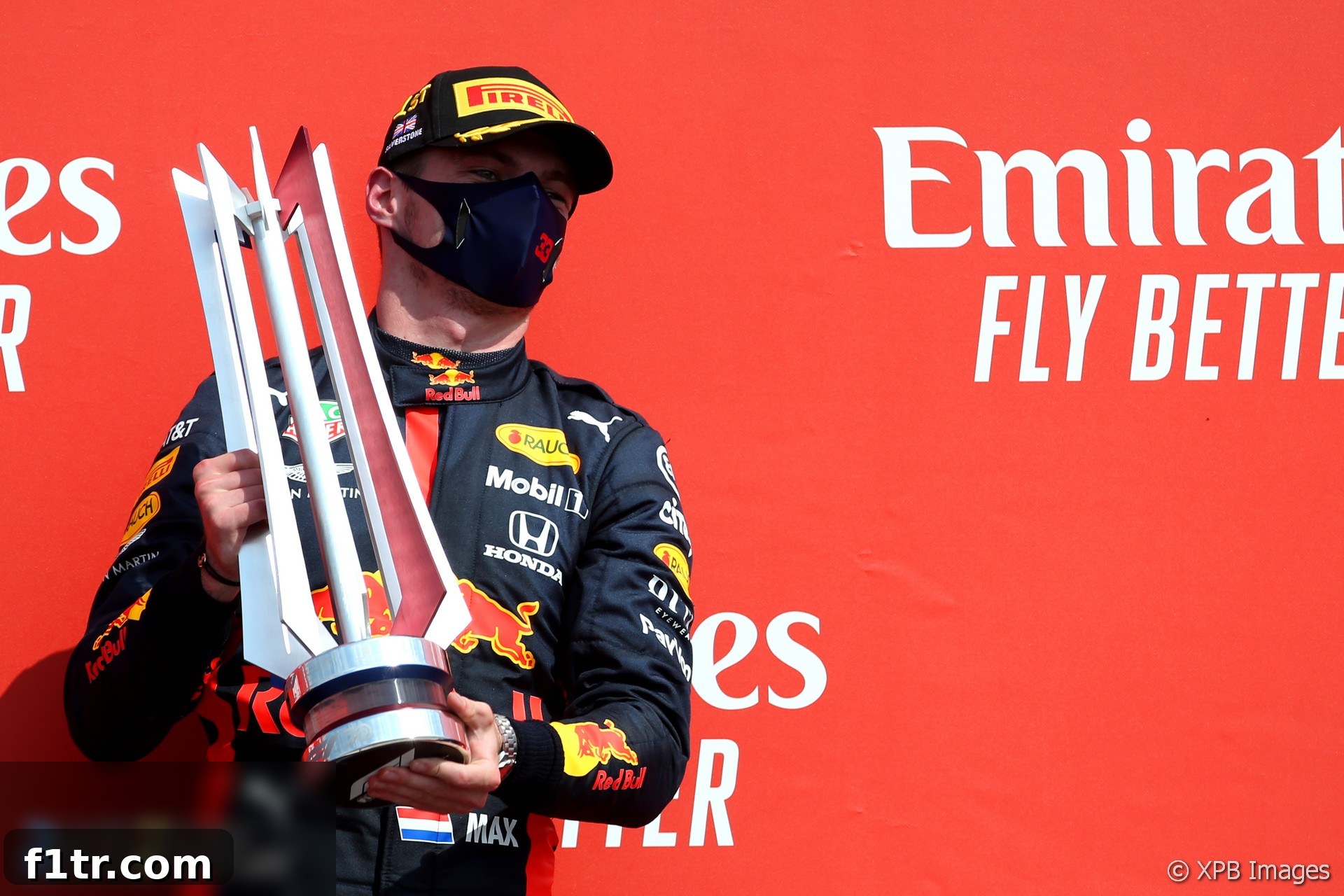
Max Verstappen Dominates 70th Anniversary Grand Prix: A Tyre-Driven Triumph at Silverstone
Max Verstappen delivered a masterful performance at the 70th Anniversary Grand Prix, securing a stunning victory that sent shockwaves through the Formula 1 paddock. The Red Bull driver attributed his breakthrough win primarily to the softer tyre compounds supplied by Pirelli for the weekend, a crucial factor that turned the tables against the dominant Mercedes team. While the Dutchman savored his first victory of the 2020 season, he remained cautiously optimistic, expressing doubts that Red Bull would replicate such a competitive edge in races featuring more “conservative” tyre selections.
The Softer Tyre Advantage: Red Bull’s Masterstroke Against Mercedes’ Blistering Woes
The decision by Formula 1 to opt for a tyre compound one stage softer than the previous weekend’s British Grand Prix at Silverstone proved to be a pivotal strategic choice. Following concerns over tyre wear and dramatic punctures during the preceding race, Pirelli brought the C2, C3, and C4 compounds for the 70th Anniversary Grand Prix, as opposed to the harder C1, C2, and C3 compounds used a week prior. This seemingly minor adjustment had profound implications for the race dynamic and, ultimately, the outcome.
Mercedes, who had comfortably clinched victory in every race leading up to Silverstone’s second event, found themselves grappling with severe blistering issues on their W11 cars. Both Lewis Hamilton and Valtteri Bottas struggled to manage their tyres, particularly the softer compounds, throughout the race. The blistering, where chunks of rubber detach from the tyre surface due to overheating, severely compromised their pace and forced them into a defensive strategy of careful management.
In stark contrast, Red Bull and Max Verstappen appeared to thrive on the softer rubber. Verstappen showcased exceptional tyre management skills, allowing him to push harder and maintain consistent lap times where Mercedes drivers were forced to back off. This ability to exploit the softer compounds more effectively was not just about raw pace, but about the delicate balance between aggression and preservation. It was a testament to Red Bull’s chassis characteristics, their setup philosophy, and Verstappen’s inherent talent for extracting the maximum from his machinery without overstressing the tyres.
Verstappen’s victory wasn’t merely a stroke of luck; it was a strategically brilliant drive executed with precision. While other teams struggled, Red Bull’s combination of a well-balanced car and a driver capable of managing degradation allowed them to dictate the pace and secure a memorable win against overwhelming odds. This marked a significant turning point in the early part of the 2020 season, demonstrating that Mercedes’ dominance, while formidable, was not entirely invincible.
Verstappen’s Realistic Outlook: Beyond the Silverstone Anomaly
Despite the elation of his first win of the season, Max Verstappen remained grounded and realistic about the implications for future races. He acknowledged that the unique circumstances of the 70th Anniversary Grand Prix – specifically the softer tyre allocation – played a significant role in Red Bull’s unexpected competitiveness. He cautioned against believing that this victory signaled a fundamental shift in the pecking order or a definitive closing of the gap to Mercedes.
“I think to fully close that gap will be very hard,” Verstappen stated post-race. His pragmatism stemmed from a clear understanding of Red Bull’s underlying performance relative to Mercedes. He emphasized that the softer tyres allowed him to push significantly harder, a luxury he expects will be absent when Formula 1 reverts to more conventional, “conservative” tyre selections at most other circuits.
The Red Bull driver elaborated on his concerns, highlighting that on tracks where harder compounds are mandated, the competitive landscape often shifts. “Especially when we go back to conservative tyres everywhere, because basically I think most of the tracks we go to we’re just doing a one-stop, I think it will be a bit harder for us because then nobody really has blistering that severe, you don’t need to manage as much as we did today,” he explained. This suggests that the Mercedes W11’s inherent speed might become more pronounced when tyre degradation is less of a factor, allowing them to exploit their raw pace without the impediment of overheating rubber.
Verstappen’s comments underscore the complexity of Formula 1 tyre strategy. While the softer compounds at Silverstone presented an opportunity for Red Bull to shine, they also exposed a vulnerability in the Mercedes package under specific conditions. However, the Red Bull camp is acutely aware that their qualifying pace still lags behind their rivals, a deficit that becomes even more critical when tyre management is less of a differentiator during the race.
The “Conservative Tyre” Challenge: Barcelona and Beyond
The immediate challenge for Red Bull following Silverstone was the Spanish Grand Prix in Barcelona, a circuit renowned for its high-speed corners and abrasive track surface, which typically places a significant demand on tyres. Verstappen explicitly pointed to Barcelona as a litmus test for Red Bull’s true performance without the assistance of softer compounds. “We’ll see. Like I’ve said before, let’s just enjoy today and then we’ll see again in Barcelona where we are,” he remarked, signaling a realistic approach to the upcoming races.
The term “conservative tyres” typically refers to the harder compounds in Pirelli’s range (C1, C2, C3), which are designed for greater durability and less degradation. While these tyres offer more robustness, they often result in more straightforward, one-stop races with less strategic variance. For Red Bull, this could mean a return to the scenario where Mercedes can unleash their full pace without being hampered by tyre issues, making it harder for Verstappen to challenge for victories.
Verstappen’s assessment of Barcelona was stark: “Of course, we go back to harder tyres in Barcelona. We saw last week that on those harder tyres we are still quite a bit off. I don’t expect any miracles there. I know it’s a hard track on tyres, but with these hard tyres you can push quite a bit harder than what we have done today.” This highlights the inherent speed difference between the two teams on their standard race setups, where Mercedes’ advantage becomes more evident.
His honest evaluation reflects a deep understanding of his team’s strengths and weaknesses. While the Silverstone victory was a moral booster and a testament to their potential, it also served as a stark reminder of the continuous development required to consistently challenge for the championship against a team as formidable as Mercedes.
A Call for More Dynamic Racing: Pirelli’s Role in Future Tyre Selections
Beyond the immediate concerns for upcoming races, Verstappen also voiced a broader desire for more exciting and strategically diverse Formula 1 races, advocating for tyre selections that encourage multi-stop strategies and allow drivers to push harder. He expressed a common sentiment among drivers and fans alike that managing tyres throughout a race can detract from the thrill of pure competition.
“I think in general it’s more about doing a one-stop is not very exciting. So if we find a way of doing two stops with of course nice tyres as well… I think in general nobody likes managing tyres throughout the race, we want to push, that would be great,” Verstappen articulated. This perfectly encapsulates the frustration felt when drivers are forced to drive significantly below the car’s potential to preserve tyre life, rather than showcasing their maximum speed and aggression.
Despite his clear preference, Verstappen maintained that lobbying Pirelli for softer compounds was not his role. “I don’t think it’s up to me to push that,” he said. “I don’t think I can do that.” While he may not directly influence Pirelli’s decisions, his public comments add to the ongoing discourse within the sport about the role of tyres in shaping race outcomes and enhancing the spectacle for viewers. The balance between challenging tyre management and enabling flat-out racing remains a crucial design consideration for the sport’s sole tyre supplier.
The Unique Landscape of the 2020 Formula 1 Season
The 2020 Formula 1 season was an unprecedented year, heavily impacted by the global COVID-19 pandemic. The revised calendar featured multiple double-headers at the same circuit, leading to unique tyre allocations and strategic challenges. The 70th Anniversary Grand Prix at Silverstone was a prime example, offering a rare opportunity for teams to race at the same venue within a week, but with different tyre compounds. This allowed for direct comparisons and highlighted how crucial tyre choice could be.
Mercedes had started the season with an iron grip, dominating every race prior to Silverstone’s second event. This made Verstappen’s victory all the more significant, as it broke their seemingly insurmountable winning streak and injected a much-needed dose of unpredictability into the championship battle. It provided a glimmer of hope for other teams and for fans eager for a challenge to Mercedes’ supremacy.
The compressed nature of the season also meant that teams had less time for extensive development and often had to adapt quickly to new circuits or revised conditions. The ability of Red Bull to extract performance from the softer tyres, where Mercedes faltered, underscored their adaptability and strategic acumen within this unusual season.
What This Means for Red Bull and the Championship Fight
Max Verstappen’s victory at the 70th Anniversary Grand Prix was undoubtedly a highlight for Red Bull and a testament to their potential. It demonstrated that under specific circumstances, they could indeed challenge and even defeat the formidable Mercedes team. However, the Dutchman’s measured assessment serves as a crucial reminder that sustained success would require more than just favorable tyre allocations.
For Red Bull to truly contend for the championship, consistent improvements in their car’s qualifying pace and overall performance across all tyre compounds are essential. While the Silverstone win provided a massive psychological boost for Verstappen and the team, turning an “anomaly” into a regular occurrence remains the ultimate goal. The battle for the 2020 F1 season, despite Mercedes’ continued strength, gained a fascinating new dimension after this tyre-driven triumph.
Related Articles and Further Reading
- Grosjean to make F1 test return tomorrow for first time since Bahrain horror crash
- Pictures: Wrecked chassis from Grosjean’s Bahrain fireball crash to go on display
- Bottas vs Rosberg: Hamilton’s Mercedes team mates compared after 78 races each
- F1 revenues fell by $877 million in Covid-struck 2020 season
- Hamilton and Mercedes finally announce new deal for 2021 season
Browse all 2020 F1 season articles