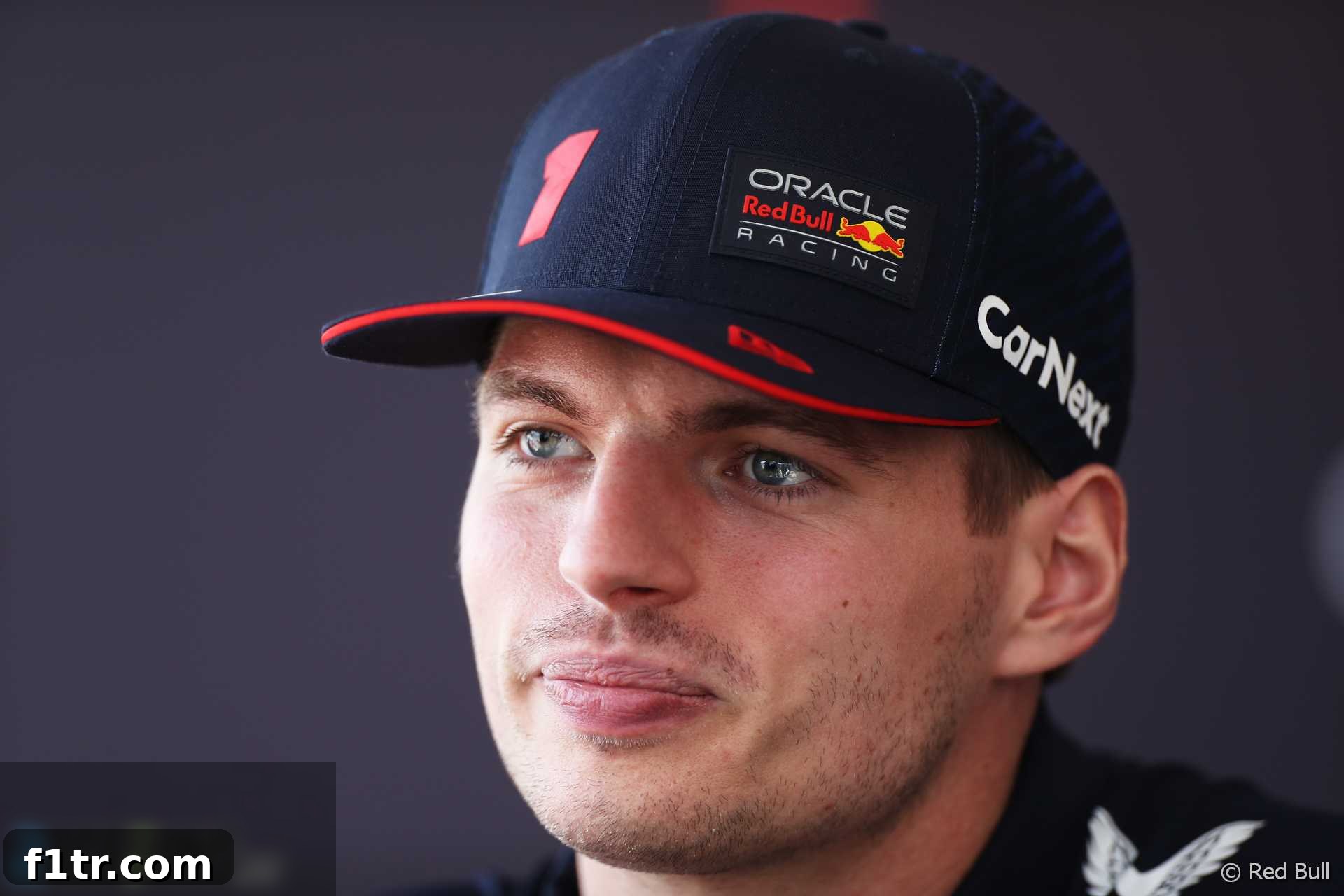
The streets of Monaco are set to host the season’s sixth round, and despite Red Bull Racing’s formidable dominance in the 2023 Formula 1 season, their drivers harbor concerns. Max Verstappen and Sergio Perez both acknowledge a potential vulnerability in qualifying, which could grant their rivals a significant advantage on the Principality’s notoriously tight and unforgiving circuit. This weekend promises to be a true test of the RB19’s adaptability and the drivers’ raw skill.
Red Bull has enjoyed an unparalleled start to the year, sweeping every race victory so far. However, their advantage in race trim has not consistently translated into pole positions on Saturday afternoons. A prime example of this disparity was seen at the Azerbaijan Grand Prix, another street circuit featuring numerous slow corners where effective tire warm-up is paramount. There, Charles Leclerc, driving for Ferrari, managed to secure pole position for both the sprint race and the main Grand Prix, demonstrating that even the mighty RB19 isn’t invincible over a single flying lap.
Red Bull’s Dominant Season Faces a Monaco Test
The 2023 season has been a masterclass in performance and execution for Red Bull. Their RB19 chassis, powered by the Honda RBPT engine, has proven to be an almost unstoppable force, particularly on race day. The team’s strategic prowess, combined with the exceptional talent of their drivers, has seen them establish a commanding lead in both the Drivers’ and Constructors’ Championships. Yet, amidst this unprecedented success, a subtle chink in their armor has emerged: their qualifying pace, while still strong, doesn’t always reflect the overwhelming advantage they demonstrate over a full race distance.
Qualifying – The RB19’s Achille’s Heel?
In the high-stakes world of Formula 1, a car’s performance is often judged across two distinct metrics: its raw pace over one lap in qualifying and its consistency and efficiency over many laps in the race. While the RB19 excels spectacularly in the latter, the former has occasionally seen it challenged. At circuits that demand unique car characteristics or where rivals find a specific sweet spot, Red Bull has found pole positions harder to come by than race wins. This subtle nuance becomes critically important at a venue like Monaco, where track position is almost synonymous with victory.
Max Verstappen, known for his frank assessments, openly predicted that the Monaco Grand Prix weekend would be “a little bit more difficult and closer together” than recent races. Despite acknowledging the RB19’s inherent strengths, he articulated the team’s ongoing challenge: “We still have a good car. Just trying to extract the most out of it.” He candidly added, “We know that over one lap it’s normally not our strongest point. But nevertheless we still took quite a few pole positions this year. So it’s still all possible but for sure here in Monaco there can always be quite a surprise.” Verstappen’s remarks underscore a cautious optimism, recognizing the team’s overall capabilities while also respecting the unique demands of Monaco.
The Unique Demands of the Monaco Grand Prix
Monaco stands as an anomaly on the Formula 1 calendar, a circuit that defies many of the conventions of modern racing. Its historical significance is immense, but its layout presents a distinct technical puzzle for engineers and a supreme test of precision for drivers. Unlike high-speed tracks with sweeping corners and long straights that reward aerodynamic efficiency, Monaco thrives on mechanical grip, nimble handling, and absolute accuracy.
A Circuit Unlike Any Other
Verstappen eloquently described the peculiar characteristics of the circuit that might not play directly into the RB19’s usual strengths. “It’s just because of the corners being so tight and really quick changes of direction,” he explained. “It’s really stop-start compared to most tracks, you have to combine a lot more. It’s a different technique.” This “stop-start” nature means heavy braking, followed by immediate acceleration out of low-speed corners, demanding excellent traction and a car that can change direction instantaneously without losing stability. The lack of open sections also means less opportunity for the high-speed aerodynamic prowess of a modern F1 car to fully shine, shifting the emphasis towards chassis balance and suspension setup. As Verstappen further elaborated, “The corners are so tight, so slow that you sometimes require a lot of different behavior of the car compared to normal tracks, and also the way you have to drive it.” This hints at a need for a specific, perhaps compromised, car setup that prioritizes agility and mechanical grip above all else, potentially diverging from the optimal setup for faster, more flowing circuits.
The Criticality of Tire Warm-Up and Mechanical Grip
Another crucial factor in Monaco, and one specifically highlighted by both Red Bull drivers, is tire warm-up. At low speeds, tires generate less energy through friction, making it harder to bring them into their optimal operating window quickly. This is particularly vital in qualifying, where drivers have only one or two laps to extract maximum performance. If a car struggles to heat its tires effectively, it can lose precious tenths of a second, which, in Monaco, can mean several grid positions. Mechanical grip, derived from suspension, brakes, and tire contact patches rather than airflow, becomes paramount. Teams often opt for softer suspension settings and maximize steering angle to navigate the tight Hairpins and chicanes. The relentless succession of corners also places immense strain on the car’s brakes and cooling systems, though the overall average speed remains the lowest of the season.
Verstappen’s Cautious Optimism for Monaco
Despite the inherent challenges, Max Verstappen approaches Monaco with a pragmatic mindset, typical of a reigning world champion focused on the bigger picture. His assessment acknowledges the hurdles while maintaining a firm grip on his championship aspirations. “Sometimes your car works perfectly for these kind of conditions and sometimes it’s maybe not ideal,” he reflected. “I prefer of course [that] I have a quick car on most of the tracks and maybe not ideal for Monaco. But it’s okay, it’s only one race on the calendar. We want to have a good result, I want to win of course, but if that is not the case, I just take the points.” This philosophy underscores the maturity of his approach – aiming for victory, but prepared to consolidate points if the ultimate prize remains out of reach on a particular weekend.
Navigating the Principality’s Tight Corners
Verstappen’s driving style, known for its aggression and ability to push limits, will be tested to its extreme in Monaco. The circuit demands a different kind of precision – one where millimeters matter and even the slightest error can lead to disaster. His comments about the “different technique” required to drive here highlight the need for ultra-fine throttle control, pinpoint braking, and an intuitive feel for the car’s limits against the unforgiving barriers. The ability to quickly adapt the RB19’s setup to maximize its mechanical grip and traction out of the slow corners will be crucial for the Dutchman to maintain his championship lead.
Championship Mindset: Balancing Risk and Reward
For a driver leading the championship, every race is an opportunity to extend the advantage, but also a risk. Monaco amplifies this dynamic due to its unpredictable nature and the high likelihood of incidents. Verstappen’s statement about “just taking the points” if a win isn’t on the cards is a testament to his strategic thinking. In a long season, consolidating points even on a challenging weekend can be more valuable than chasing an unlikely victory and risking a DNF. This mature approach speaks volumes about his focus on securing a third consecutive world title.
Key Rivals Poised to Challenge Red Bull
The unique characteristics of Monaco naturally favor certain car designs and driver styles, opening the door for Red Bull’s rivals to potentially close the performance gap. Both Verstappen and Perez were quick to identify key competitors who could mount a serious challenge, especially in qualifying.
Ferrari’s Home Advantage and Historic Prowess
Ferrari, in particular, has a strong history at Monaco. Last year, they locked out the front row of the grid, with Charles Leclerc securing pole position. Verstappen explicitly named Leclerc as a likely threat for pole, and wisely added that “Carlos is also pretty handy around here.” Carlos Sainz Jr. has often demonstrated strong performances on street circuits. The Scuderia’s car, historically, has shown good mechanical grip and tire warm-up characteristics in low-speed conditions, which are precisely what Monaco demands. For Leclerc, his home race carries an extra layer of motivation, and he will be eager to break his Monaco curse and convert pole into a win.
Aston Martin: A Dark Horse in Low-Speed Arenas
Beyond Ferrari, Aston Martin has also emerged as a potent threat. Verstappen noted, “Also I think Aston Martin they’re quite good in the low speed and in general. They haven’t been as efficient on the straight so I guess here I think they can be close.” The AMR23, driven by the resurgent Fernando Alonso, has impressed throughout the season with its strong performance in slower corners and its ability to manage tires effectively. While their straight-line speed might not match Red Bull’s on faster tracks, Monaco’s emphasis on mechanical grip and low-speed cornering could play directly into Aston Martin’s hands, making them a serious contender for a front-row start or even victory.
Perez, The Defending Champion, Weighs In
Sergio Perez, the defending Monaco Grand Prix winner, brings a unique perspective to this weekend. His victory last year showcased his exceptional street-circuit prowess and strategic acumen. However, even with that experience, he shares his teammate’s apprehension about Red Bull’s qualifying strengths in Monaco. “We certainly know that is not our strongest circuit, that we will struggle to show our strengths,” he stated with characteristic candor. This acknowledgement from the reigning champion at this specific track underscores the genuine nature of Red Bull’s concerns.
The Unpredictable Nature of Monaco
Perez reiterated the critical role of tire warm-up on Saturday, stating, “I think come Saturday you really need a good warm-up on your tyre, that definitely is a key around here.” He concluded with a phrase often associated with Monaco: “It’s still Monaco and anything can happen.” This sentiment perfectly encapsulates the circuit’s unpredictable nature. Even if Red Bull doesn’t have the outright fastest car, crashes, safety cars, red flags, or unexpected weather changes can completely flip the script, creating opportunities for those who remain calm and seize the moment. Perez’s own victory last year involved a clever strategy call and capitalizing on rivals’ misfortunes, serving as a vivid reminder of Monaco’s chaotic potential.
The Paramount Importance of Qualifying
In almost every other Grand Prix, an outstanding race pace can often overcome a mediocre qualifying performance. However, Monaco is the stark exception to this rule. The narrow, winding streets make overtaking notoriously difficult, if not virtually impossible, without significant risk or a substantial pace advantage. This elevates the importance of qualifying to an almost unparalleled degree. Securing a strong grid position, ideally on the front row, is considered more than half the battle won. Starting further down the order means navigating traffic, battling for track position where space is at a premium, and relying heavily on strategy and luck, rather than outright speed, to make progress.
Red Bull’s Strategy and Expectations
Given these unique challenges, Red Bull’s strategy for Monaco will likely be a fascinating blend of caution and controlled aggression. The primary goal will be to maximize their qualifying performance, even if it means compromising slightly on their race setup. Understanding that overtakes are rare, a clean, fast lap on Saturday will be their paramount focus. Should pole position prove elusive, the team will need to rely on intelligent strategy calls, exceptional pit stops, and their drivers’ ability to manage tires and pressure impeccably. For Max Verstappen, consolidating his championship lead with solid points would be a successful outcome, while Sergio Perez, as the defending winner, will undoubtedly be pushing for another victory, knowing this circuit could offer him his best chance of the season to challenge his teammate.
Conclusion: A High-Stakes Weekend Awaits
The Monaco Grand Prix is more than just a race; it’s a spectacle, a unique challenge that tests every facet of a Formula 1 team and driver. Red Bull’s season-long dominance faces its sternest test yet, not necessarily in race pace, but in the crucial qualifying session. With rivals like Ferrari and Aston Martin looking particularly strong in the specific conditions Monaco demands, the battle for pole position promises to be exceptionally fierce. Max Verstappen and Sergio Perez are acutely aware of the obstacles, but also of the opportunities. As the cars hit the iconic streets, the world will be watching to see if Red Bull can overcome their one-lap vulnerability or if the Principality will crown a different qualifying king, setting the stage for a truly unpredictable Sunday showdown.
Further Reading on the 2023 Monaco Grand Prix
- Mercedes ready to “grind” their way to competitiveness after major W14 update
- Verstappen surpasses Vettel as winner of most races for Red Bull
- How the first team to fit intermediate tyres in Monaco got the call right
- Verstappen’s Monaco pole run was the completion of his 2021 Jeddah lap – Horner
- Haas thrilled as upgrade performance exceeds wind tunnel predictions
Explore all 2023 Monaco Grand Prix insights