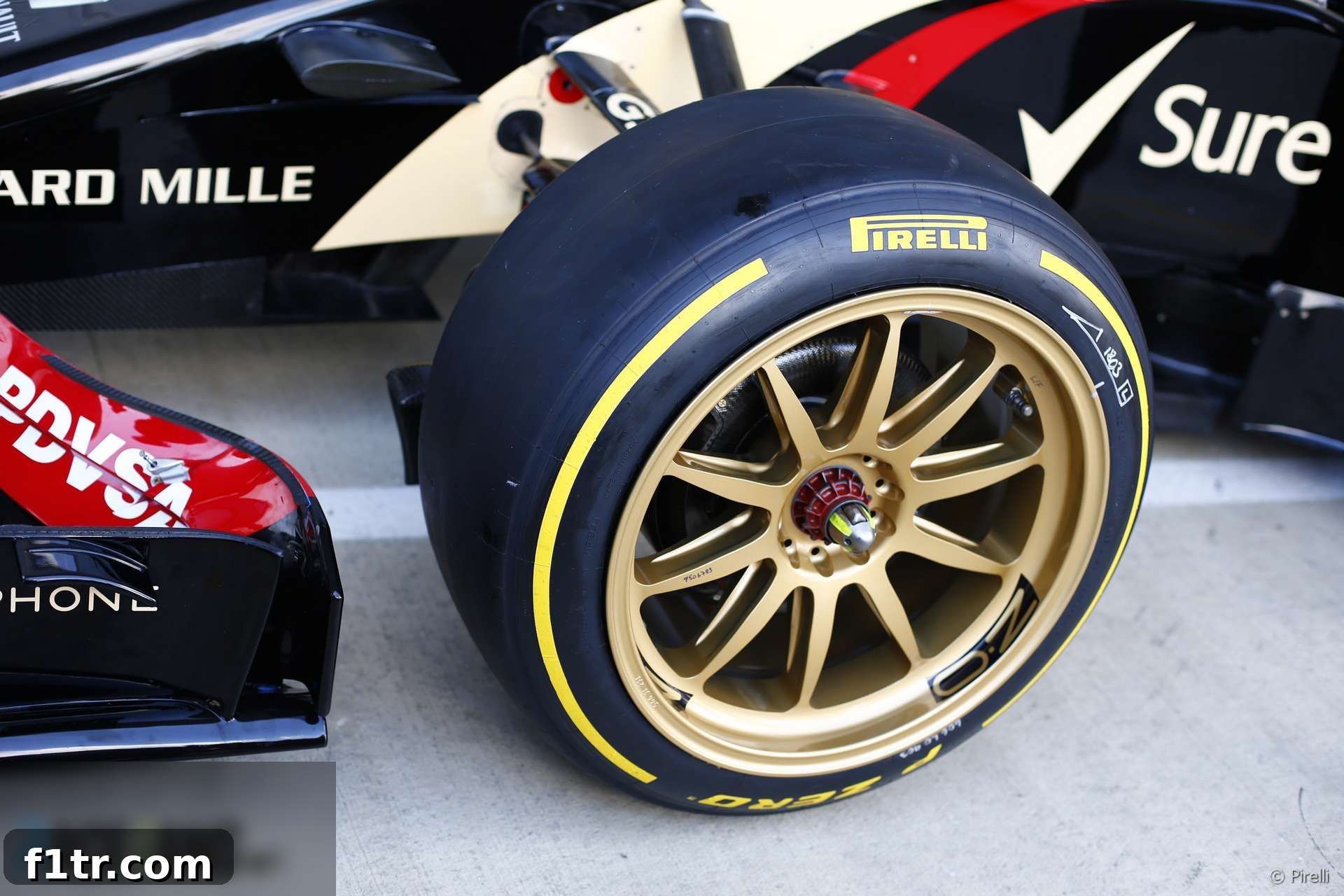
In a significant development for the future of Formula 1, Sauber team principal Frederic Vasseur has expressed unequivocal support for the sport’s radical new tyre specification and operational changes slated for the 2021 season, a move exclusively reported by RaceFans. Vasseur’s enthusiastic endorsement highlights the growing consensus among key figures in F1 that fundamental overhauls are necessary to propel the sport forward, both technologically and in terms of racing spectacle.
Pivotal Changes: 18-inch Wheels and Tyre Warmer Ban
The proposed changes for 2021 are extensive, focusing on two critical areas: the adoption of larger 18-inch wheels and the complete prohibition of tyre warmers, also known as tyre blankets. When questioned about these ambitious plans, Vasseur’s response was direct and overwhelmingly positive, underscoring a belief that these adjustments are not just beneficial but essential for modern Formula 1.
I am 200% in favour. The tyre blankets are just a nightmare. Only the manufacturer explained that you can’t run without the tyre blankets, but if you look at [F2], then they are doing it. DTM, the tyre manufacturer explained that it was not possible and then they did it. And it’s just a nightmare, it’s a nightmare for everybody, but in [F2] they are able to do the fastest lap in the out lap without tyre blankets and if it’s possible in [F2] I can imagine that we could do it in F1.
And the 18 inches: I think 13 inches – except on a Renault 5 1.1 litre – it was up-to-date 40 years ago. And if we want to be the pinnacle of the technology, then it makes sense to stick with the reality. Even 18 inches, I’m not sure it’s the majority of the road cars now, it’s probably 19 or 20.
Vasseur’s impassioned stance reflects a broader sentiment within the Formula 1 paddock regarding the need for modernisation and a return to practices that challenge drivers and teams alike. His comments delve into the practicalities and philosophical implications of these upcoming regulations, arguing for F1 to embrace technological relevance and operational simplicity.
Quotes: Dieter Rencken
The Tyre Blanket Dilemma: A “Nightmare” for Formula 1
The concept of banning tyre warmers, or blankets, has been a contentious one, but Vasseur’s description of them as a “nightmare” resonates with many who see them as an unnecessary complexity and an outdated operational overhead. Tyre blankets are used to pre-heat slick tyres to their optimal operating temperature before a car heads out onto the track. While this ensures immediate grip and peak performance from the very first corner, it comes with significant drawbacks.
Firstly, the logistical burden is substantial. Teams must transport, manage, and power dozens of these electric blankets throughout a race weekend. This adds considerable weight to freight, increases operational costs, and contributes to the environmental footprint of the sport, contradicting F1’s sustainability goals. Secondly, Vasseur points out the hypocrisy of manufacturers claiming that racing is impossible without them, when series like Formula 2 (F2) and DTM successfully operate without pre-heated tyres. In F2, drivers regularly achieve their fastest lap times on their out-laps, demonstrating that cold tyres do not inherently compromise performance or safety to an unacceptable degree, given proper development and driver adaptation.
Removing tyre blankets would introduce a new strategic dimension to Formula 1. Drivers would need to manage tyre temperatures much more carefully during out-laps and restarts, potentially leading to more challenging and unpredictable early laps, where driver skill in generating heat becomes paramount. This shift could create more overtakes and dynamic race scenarios, enhancing the sporting spectacle. It would also align F1 more closely with real-world driving conditions, where tyres are rarely pre-heated, thus improving the sport’s relevance to road car technology.
Embracing Modernity: The Shift to 18-inch Wheels
Vasseur’s critique of the current 13-inch wheels is equally sharp. He argues that this small wheel size is an anachronism, belonging to a bygone era, humorously likening them to those found on a “Renault 5 1.1 litre” from 40 years ago. His point is clear: for Formula 1 to maintain its status as the “pinnacle of technology” and engineering, its components must reflect contemporary automotive advancements.
The move to 18-inch wheels brings F1 in line with modern road car design, where larger wheels are now standard, often ranging from 18 to 20 inches or even more. This change isn’t merely aesthetic; it has profound technical implications for the entire car. Larger wheels typically mean lower-profile tyres, which fundamentally alter the tyre sidewall’s stiffness and flex characteristics. This impacts how the car’s suspension system functions, how aerodynamic forces interact with the wheels, and how braking performance is modulated. Teams will face a significant challenge in re-engineering their suspension geometries and aerodynamic packages to effectively manage these new tyre characteristics.
Furthermore, larger wheels offer more space for bigger brake assemblies, potentially leading to improved braking performance and heat dissipation. The visual aspect cannot be understated either; modern F1 cars with larger, sleeker wheels would appear more aggressive and relevant to a younger audience accustomed to contemporary car designs. This evolution signals F1’s commitment to innovation and its willingness to shed outdated elements in pursuit of a more advanced and engaging future.
Social Media: The Pulse of Formula 1
Social media platforms offer an immediate and unfiltered glimpse into the world of Formula 1, capturing everything from driver opinions and team updates to fan reactions and expert analysis. Here’s a snapshot of notable posts that encapsulate the diverse discussions and moments in the F1 sphere:
Hamilton on Hockenheim:
“It’s a shame we don’t have the old circuit. I always say that!”#F1 #GermanGP pic.twitter.com/UgXOEidofL
— RaceFans (@racefansdotnet) July 20, 2018
Lewis Hamilton, a multiple world champion, often voices a sentiment shared by many purists and drivers: a longing for the classic layouts of historic tracks. His comment about Hockenheim reflects a desire for circuits that offer unique challenges and retain their original character, a recurring theme in F1 discussions.
Did anybody said 18 inches tires? 🤔
Many many days of testing and 16 months of development on several different circuits. ✅ pic.twitter.com/2aCOxHemrs— Luca Filippi (@LucaFilippiLF) July 20, 2018
Former F2 driver Luca Filippi’s post offers a peek into the intensive research and development that goes into new tyre specifications. His mention of “many many days of testing and 16 months of development” underscores the colossal effort required from tyre suppliers like Pirelli to adapt to new regulations and ensure optimal performance and safety for F1’s unique demands. This resonates with Vasseur’s points about the scale of change for 2021.
Shame Mercedes re-signed Bottas. Chance missed. They could really have grabbed the initiative in the championship by landing @danielricciardo.
— Byron Young (@byronf1) July 20, 2018
Byron Young’s comment highlights the ever-present “silly season” in Formula 1, where driver movements and contract negotiations fuel intense speculation. The strategic decisions made by top teams like Mercedes regarding their driver lineup can have championship implications, and the potential addition of a highly sought-after driver like Daniel Ricciardo is always a hot topic among fans and pundits.
We do not envy who will be cleaning up the car after FP1…
Do we have any volunteers? 😂🇩🇪 pic.twitter.com/s42Q1VCnJv
— Williams Racing (@WilliamsRacing) July 20, 2018
Williams Racing provides a humorous, behind-the-scenes glimpse into the less glamorous aspects of F1: car maintenance and cleaning. These informal posts help connect fans with the human side of the sport, showcasing the immense effort and dedication of team personnel even for seemingly mundane tasks after a practice session.
Force India on Haas skipping the Hungary test: “it’s the most important test of the year, we’re trying 2019 parts. But we’re a team that has to develop its car over the winter itself…”
— Christian Menath (@MSM_Christian) July 20, 2018
Christian Menath’s report on Force India’s comments regarding Haas skipping a test highlights the differing strategies and resource constraints among F1 teams. For smaller privateer teams, every testing opportunity is crucial for developing future components, emphasizing the financial and technical challenges they face compared to manufacturer-backed outfits.
x2 World Endurance Champions reunited 🤜🤛
@Timo_Bernhard is with us today!#GermanGP pic.twitter.com/NUABfGUWok
— Visa Cash App RB F1 Team (@visacashapprb) July 20, 2018
This tweet from what was then Toro Rosso (now Visa Cash App RB F1 Team) celebrates the camaraderie within motorsport, highlighting special guest appearances by legends like Timo Bernhard. These moments underscore the tight-knit community of racing and the mutual respect among competitors from various disciplines.
- Find more official F1 accounts to follow in the F1 Twitter Directory
Further Insights from the Motorsport World
Beyond the immediate paddock discussions and social media buzz, various outlets offer deeper dives into the strategic, personal, and technical facets of Formula 1. These links provide a broader perspective on the ongoing narratives and challenges within the sport:
Advert | Become a Supporter & go ad-free
The car is working well (Ferrari)
Kimi Raikkonen’s insight into tyre management at Ferrari emphasizes a critical aspect of Formula 1 racing. His observation that warm weather will make tyre strategy “challenging” highlights the delicate balance between outright pace and preserving tyre life. In conditions similar to Austria, where tyre degradation is a key factor, the team that masters this management gains a significant competitive advantage. This underlines the ongoing importance of tyre development and race strategy, irrespective of future wheel size changes.
Free practice (Toro Rosso)
Toro Rosso’s (now Visa Cash App RB) update on free practice demonstrates the relentless pursuit of performance in F1. The introduction of “new parts” and “performance updates” for both the chassis and power unit (PU) sides illustrates the continuous development cycle that smaller teams undertake. Every fraction of a second gained through innovation can be crucial for moving up the competitive midfield, showcasing the engineering intensity behind every Grand Prix weekend.
Hamilton warned over interview snub: ‘Do not turn your back on this’ (The Express)
David Coulthard’s comments regarding Lewis Hamilton’s media interactions touch upon the immense pressure and scrutiny faced by top-tier F1 drivers. While dominance brings success, it also brings conservatism and increased media obligations. Managing public relations and maintaining engagement with fans and journalists is a vital, yet often challenging, part of a driver’s role, and even champions are not immune to criticism regarding their approach to these duties.
Catch-up with Kiwi driving royalty Hartley (Newshub)
Brendon Hartley’s reflections on his journey to F1 offer an inspiring perspective on the childhood dreams that fuel many aspiring racing drivers. His admission that it seemed “ridiculous” to ever think F1 would happen, yet it did, highlights the extraordinary dedication, talent, and sheer perseverance required to reach the pinnacle of motorsport. Such stories resonate deeply with fans, showcasing the human element of ambition and achievement in a highly competitive sport.
Traveling the world, sought-after autographs – The life of an F1 superfan (CNN)
CNN’s feature on an F1 superfan beautifully illustrates the global passion and dedicated community that surrounds Formula 1. The commitment of fans who travel the world, seek autographs, and passionately support their chosen team (“McLaren’s my team”) is a testament to the sport’s enduring appeal. This article reminds us that F1 is not just about technology and competition, but also about the emotional connection and loyalty it fosters among millions worldwide.
We always endeavour to credit original sources. If you have a tip for a link to feature in the next RaceFans round-up please send it in here:
- Contact RaceFans
Advert | Become a RaceFans supporter andgo ad-free
Community Voice: The FIA’s Tyre Tender Under Scrutiny
The FIA’s process for selecting a tyre supplier is a critical, yet often complex, aspect of Formula 1. It directly impacts competition, development, and costs. @Montreal95’s comment offers a scathing critique of the FIA’s tyre tender for the 2020 to 2023 period, highlighting perceived flaws in its structure:
It doesn’t make the slightest bit of sense. No tyre company in their right mind would spend many tens of millions to develop tyres for one year and further many tens of millions to develop a completely new tyre, that has absolutely nothing in common with the previous one. It’s in effect no tender at all. It’s Pirelli or nothing. I’m used to hearing stupid stuff from the FIA but this is another level.
@Montreal95
This passionate comment dissects a significant issue within F1’s governance. @Montreal95 argues that the tender, which would require a supplier to develop one specification of tyre for a single year (2020) and then an entirely different 18-inch specification for the following three years (2021-2023), is financially unfeasible for any manufacturer other than the incumbent, Pirelli. The immense cost and effort involved in developing high-performance F1 tyres, let alone two vastly different specifications in such quick succession, effectively creates a monopoly, stifling genuine competition for the tender. This perspective raises important questions about the FIA’s approach to encouraging competitive bids and ensuring a fair playing field for potential tyre suppliers, aligning with Vasseur’s concern about the overall development strategy for F1 tyres.
Engaging with the F1 Community: Games and Discussions
The F1 fan experience extends far beyond race weekends, encompassing immersive games and vibrant online forums where enthusiasts can connect and share their passion:
- The F1 2018 game generated significant excitement, and our forum provided a direct channel for fans to engage with Codemasters, the developers, to ask questions about the new official F1 game. This interactive approach fosters a stronger community and allows developers to gather valuable feedback directly from their audience.
Celebrating Milestones: Happy Birthday to a Fellow Fan!
The F1 community is a global family, and celebrating personal milestones is a small but meaningful way to connect with fellow enthusiasts:
Happy birthday to Dirceu!
If you want a birthday shout-out, tell us when yours is via the contact form or by adding it to the list here. It’s these personal touches that build a strong and loyal fan base.
A Glimpse into F1 History: On This Day
Formula 1 is a sport rich in history, marked by legendary drivers, iconic races, and unforgettable championships. Looking back at historical moments helps us appreciate the legacy and evolution of the sport:
- On this day in 2002, the legendary Michael Schumacher etched his name deeper into the F1 record books by clinching his fifth World Championship title. This victory was particularly remarkable as it was achieved earlier in the season than any F1 title before, underscoring Schumacher’s unparalleled dominance during that era and setting a benchmark for future champions. His legacy continues to inspire generations of drivers and fans.