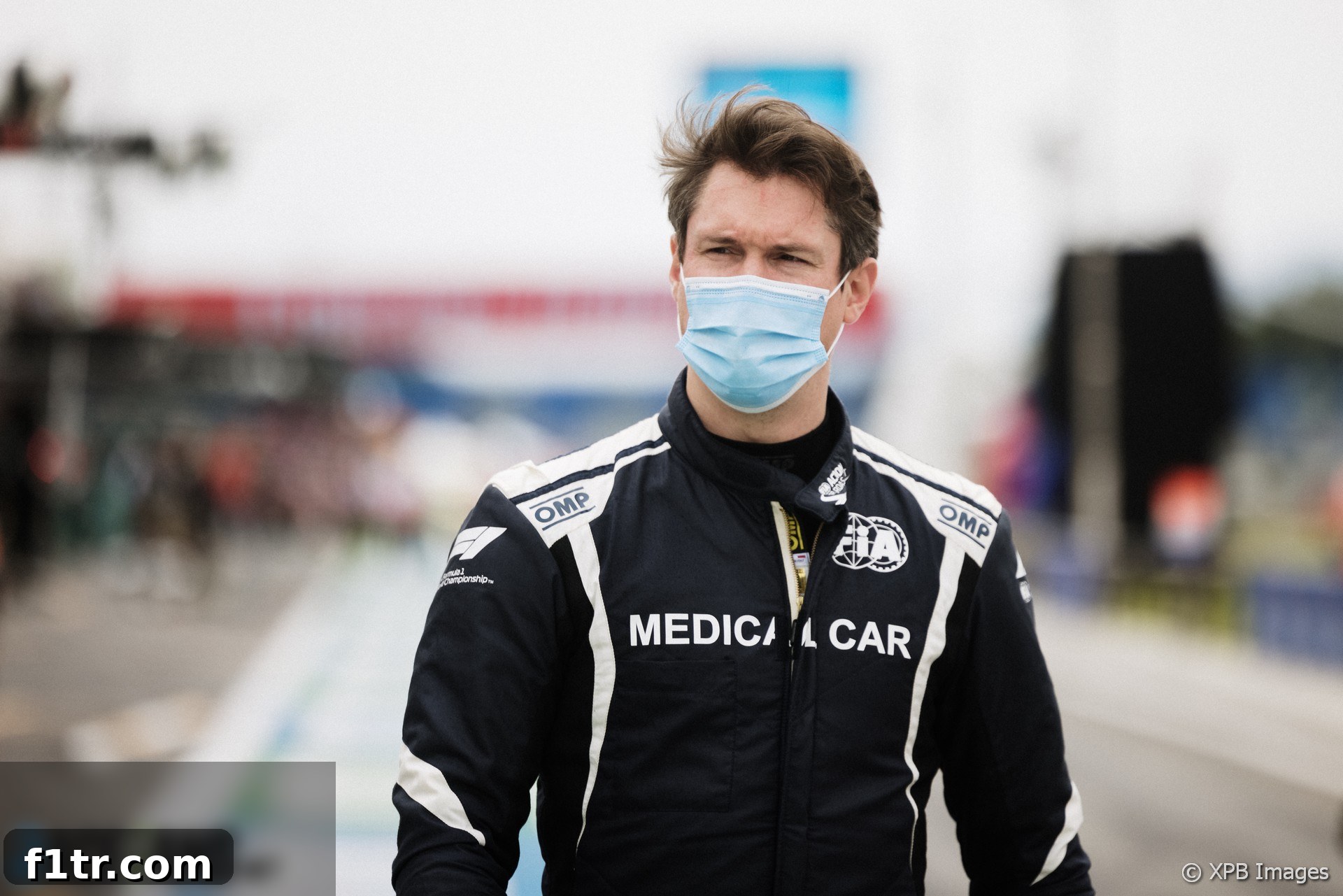
Formula 1 Medical Car Driver Alan van der Merwe Faces Potential Race Absences Over COVID-19 Vaccination Rules
Formula 1’s highly respected Medical Car driver, Alan van der Merwe, is facing an uncertain future regarding his participation in upcoming Grand Prix events due to prevailing COVID-19 travel restrictions and his unvaccinated status. This situation highlights the complex challenges professional sports, especially those with a global calendar like F1, face in navigating diverse international health mandates.
The Crucial Role of the Formula 1 Medical Car Team
The Formula 1 Medical Car is an indispensable part of Grand Prix safety, playing a critical role in rapid response to accidents. Driven by Alan van der Merwe and accompanied by the Chief Medical Officer, Dr. Ian Roberts, this vehicle follows the racing pack on the opening lap and remains on standby throughout the event. Their presence ensures immediate medical attention can be provided at the scene of any incident, often reaching drivers even before marshals. The Medical Car crew’s expertise and swift action have been vital in numerous high-stakes situations, underscoring their importance to driver safety and the integrity of the sport.
Van der Merwe and Dr. Roberts form a seasoned team, known for their calm and professional demeanour under immense pressure. Their absence, therefore, creates a significant void, necessitating equally competent replacements to maintain F1’s stringent safety standards. The dedication of these individuals goes beyond just responding to emergencies; they are integral to the planning and execution of medical protocols across all F1 venues.
Absence from the Turkish Grand Prix and the Immediate Aftermath
The issue first came to public attention when van der Merwe and Dr. Ian Roberts were unable to attend the Turkish Grand Prix. Both individuals tested positive for COVID-19 prior to the Istanbul event, marking van der Merwe’s second contraction of the virus. Their sudden absence necessitated a swift response from the FIA to ensure the Medical Car team’s continuity and the race’s safety. This immediate challenge was successfully met thanks to the FIA’s contingency planning and the depth of talent within its broader motorsport family.
For the Turkish Grand Prix, the Formula E Safety Car driver, Bruno Correia, was promptly drafted in to take the wheel of the Medical Car. He was accompanied by Dr. Bruno Franceschini, who stepped in for Dr. Roberts. Michael Masi, the FIA F1 Race Director, lauded their readiness and capability: “Bruno Correia has actually been one of our driver advisors in F2 and F3 this year. It’s a broad family and it was great for both of them to be available at short notice. They’re always sort of our first reserves in the case of something like that happening which none of us ever wish.” Masi also confirmed that despite their illness, both van der Merwe and Roberts remained engaged, offering invaluable assistance and advice to their temporary replacements throughout the weekend, demonstrating their unwavering commitment to the sport’s safety.
Navigating Global Restrictions: The Vaccination Dilemma
Beyond the immediate challenge of his COVID-19 infection, van der Merwe’s unvaccinated status presents a more persistent hurdle for his future involvement in Formula 1 races. As the championship traverses various countries, each with its unique set of public health regulations, vaccination against COVID-19 has become a mandatory entry requirement for many nations. This puts van der Merwe in a precarious position, as he may be barred from entering countries that enforce strict vaccination policies for international travelers.
Michael Masi elaborated on the FIA’s stance, emphasizing the need for compliance with local governmental health mandates: “From what we understand there’s a couple of countries that you probably won’t be allowed to enter the country unless you are vaccinated, which is no different to in some parts of the world, malaria shots or whatever it might be that you can’t enter.” He added, “You need to comply with those requirements to enter the country and from that perspective the FIA obviously has to respect the country’s requirements to get in and as will all the teams and everyone else.” This statement underscores the FIA’s position as an international governing body that must adhere to the sovereign laws of host nations, even if it impacts its own personnel.
The FIA acknowledges that it will “quite possibly” need to replace van der Merwe for several upcoming rounds of the championship. This pragmatic approach ensures that the critical safety functions of the Medical Car are always maintained, regardless of individual circumstances. The situation highlights the broader logistical complexities faced by global sports organizations in the current climate, where flexibility and contingency planning are paramount to an uninterrupted season.
Alan van der Merwe’s Personal Stance and Public Statement
Alan van der Merwe openly addressed his decision not to be vaccinated in a series of posts on social media, offering insight into his personal health philosophy. He acknowledged the professional ramifications of his choice, stating, “I am fully aware that I will potentially be less employable or that my freedom of movement will be restricted based on my choices.” He clarified that his decision was not driven by selfishness but by a preference for what he perceives as his own health over convenience: “That I will not choose convenience over my own health does not mean I am making decisions out of selfishness. We all just want to be healthy.”
Van der Merwe emphasized his commitment to public health, asserting, “I’ll continue to adhere to public health guidelines, reduce risk as much as possible, and I’ll respect other’s decisions equally. There doesn’t need to be polarisation or hate involved with every discussion about masks or vaccines.” He also pointed to differing international perspectives on immunity, noting, “In Switzerland (I’m half Swiss) and other developed countries, prior infection counts as much as a vaccine. I trust that those countries know what they’re doing, and also respect countries’ more restrictive rules and not travel there.” He concluded his statement by affirming, “For the avoidance of doubt: if you want to get vaccinated, do it. I’m pro-vaccine for those that want and can have them.” His statements reflect a nuanced position, balancing personal autonomy with an understanding of collective responsibility and diverse medical views.
Broader Implications for Formula 1 and Global Sports
The situation with Alan van der Merwe is indicative of a wider challenge confronting Formula 1 and other international sporting events. The pandemic has forced organizations to implement strict health protocols, including testing, quarantines, and, increasingly, vaccination mandates. For a sport that travels to over 20 countries annually, managing a diverse workforce with varying vaccination statuses adds layers of logistical complexity and potential disruption.
While F1 has largely succeeded in maintaining its racing calendar, these individual cases highlight the pressure on all personnel, from drivers and team principals to support staff and track officials, to comply with global health requirements. The FIA’s stance, aligning with host country regulations, sets a clear precedent for all individuals involved in the sport. This could lead to similar situations for other unvaccinated F1 personnel, potentially affecting various roles within teams or the broader operational structure.
This evolving landscape underscores the ongoing need for adaptability within Formula 1. The sport’s ability to find suitable replacements for key roles, as demonstrated at the Turkish Grand Prix, showcases its resilience. However, it also brings into focus the delicate balance between individual freedoms and the collective mandates required to ensure the continuity and safety of a high-profile global championship. The discussions surrounding vaccine requirements will likely continue to shape F1’s travel and personnel policies for the foreseeable future, as the sport navigates the complexities of a post-pandemic world.
2021 Turkish Grand Prix Related Articles
- Fifth place was possible from back row without slow pit stop – Sainz
- Giovinazzi ignoring position swap order was “not ideal”, admit team
- Bottas becomes 35th Formula 1 driver to reach 10 race wins
- Medical Car driver van der Merwe likely to miss further races due to Covid-19 rules
- Drivers to ask Masi why Alonso and Norris went unpunished for “very clear” incidents
Browse all 2021 Turkish Grand Prix articles