[gmsabu]
FIA’s Unwavering Commitment to Motorsport Safety: Learning from Tragedy
In the wake of the devastating incident at Spa-Francorchamps, which tragically claimed the life of Anthoine Hubert and left Juan Manuel Correa fighting for his, FIA President Jean Todt has forcefully reiterated the federation’s steadfast commitment to continuously improving safety standards across all disciplines of motorsport. The recent events have served as a stark, painful reminder of the inherent dangers that persist in high-speed racing, underscoring the critical importance of relentless innovation and vigilance in protecting competitors.
Speaking with a somber resolve, Todt acknowledged the profound impact of the Spa tragedy. “We have witnessed what has happened one week ago in Spa where Hubert lost his life,” he stated. “Now we have Juan Manuel Correa who is fighting for his life. But that’s the way it is: We need to learn out of that and make sure that one time, one life lost, will help [us] to understand better.” This philosophy forms the bedrock of the FIA’s safety strategy: every incident, every injury, and heartbreakingly, every fatality, must serve as an invaluable, albeit tragic, lesson to prevent future occurrences.
Advert | Become a Supporter & go ad-free
Acknowledging Inherent Risks: The ‘Never Bulletproof’ Reality
Despite significant advancements in driver and circuit safety over recent decades, Todt candidly admitted that motorsport can never be rendered entirely risk-free. “It will never be bulletproof, unfortunately,” he conceded. This stark realism underpins the FIA’s approach, balancing the thrill and demands of racing with the imperative of safeguarding human life. It’s a delicate equilibrium, where the pursuit of speed and competition must always be tempered by an uncompromising dedication to safety protocols and technological innovation.
The FIA President’s remarks at Monza, made shortly before Alex Peroni’s harrowing crash in an F3 race – from which the driver miraculously emerged unscathed – served as a poignant reminder of racing’s unpredictable nature. While fatal crashes have, thankfully, become increasingly rare in top-tier motorsport, the inherent dangers remain ever-present. Todt drew a comparison to other high-risk activities: “If you take motor racing it kills less people than professional cycling. But saying that we cannot be happy because it just is less. One victim is too much.” This perspective highlights that even a single loss is unacceptable and fuels the continuous drive for enhanced safety measures.
The Wake-Up Call: Catalysts for Change and Progress
Motorsport’s history is unfortunately punctuated by such “wake-up calls.” Tragedies often become catalysts for profound advancements, leading to wholesale changes in regulations, car design, circuit infrastructure, and medical response. From the introduction of mandatory seatbelts and fire-resistant overalls to the sophisticated HANS (Head and Neck Support) device and improved crash structures, every major safety leap has often been spurred by an incident that demanded introspection and reform. Todt’s statement, “Less than it was, but it’s still dangerous. And sometimes there is a kind of wake-up call,” perfectly encapsulates this ongoing, reactive, yet proactive cycle of learning and evolving.
The Halo Device: A Testament to Vision and Resilience
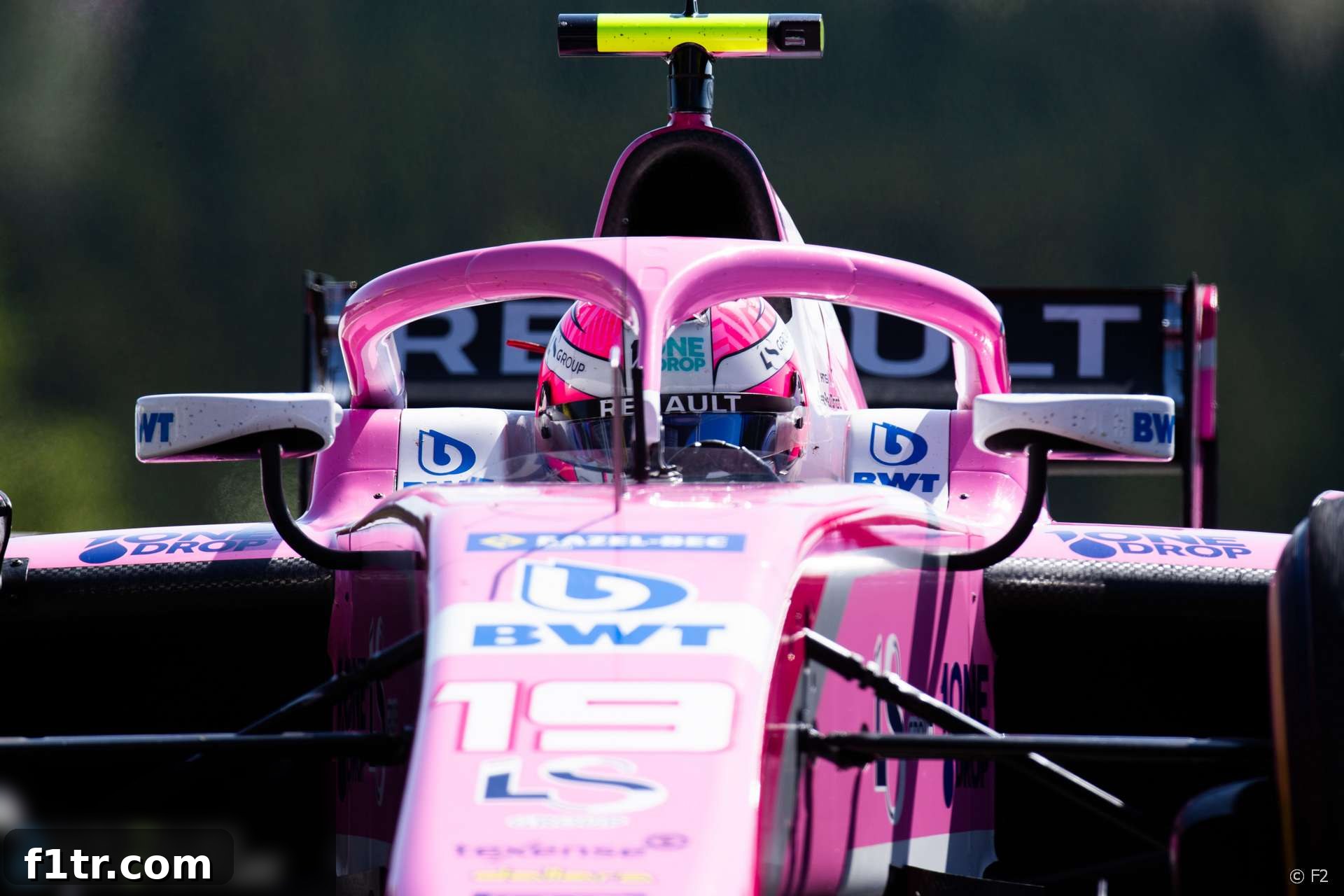
One of the most significant and initially controversial safety innovations in recent memory is the Halo device. Todt, a vocal proponent of its introduction, recalled the considerable resistance faced from various quarters, including some drivers and fans, who questioned its necessity and aesthetic impact. “Sometimes people have a short memory,” he reflected. “If you think about a few months ago when we introduced Halo, people were saying ‘we don’t need that’. And now if we will speak about that they say ‘we want more than the Halo’. So it’s very emotional.”
Indeed, the perception of the Halo has undergone a dramatic shift. Originally met with skepticism, its life-saving capabilities have since been unequivocally proven in multiple high-profile incidents across Formula 1, Formula 2, and Formula 3. From Charles Leclerc’s close call at the 2018 Belgian Grand Prix where Fernando Alonso’s car landed on his Halo, to Romain Grosjean’s miraculous escape from a fiery crash in Bahrain 2020, and the previously mentioned Alex Peroni incident, the device has prevented potentially fatal head injuries on numerous occasions. These real-world demonstrations have silenced critics and solidified its status as an indispensable safety component. Todt emphasized that in positions of responsibility, difficult decisions must be made based on potential prevention, even when unpopular: “Of course when you have a responsibility to decide you must decide, just thinking what it could prevent. But we know that unfortunately it cannot prevent everything.” This foresight and determination to prioritize safety above all else exemplify the FIA’s commitment.
A Holistic Approach: Monitoring and Learning Across All Disciplines
The FIA’s commitment extends far beyond the high-profile arenas of Formula 1. Todt confirmed that the federation maintains a meticulous, ongoing surveillance of crashes across all motorsport disciplines globally, irrespective of their scale or visibility. This comprehensive monitoring allows the FIA to identify emerging patterns, assess the effectiveness of existing safety measures, and pinpoint areas requiring further research and development.
“I think this year we are at about 21 fatalities in motor sport, all categories together across the world,” Todt revealed, underscoring the breadth of their concern. He clarified that this figure encompasses not only drivers but also spectators and marshals, highlighting the holistic nature of their safety mandate. The lives of everyone involved in motorsport, from the competitor to the trackside official and the fan in the stands, are of paramount importance.
While single-seater racing categories such as Formula 1, Formula 2, and Formula 3 naturally attract significant media attention, Todt stressed the equal importance of safety in grassroots motorsport. “Clearly we are monitoring every day the situation. We speak a lot about single-seater racing, about Formula 1, Formula 2, Formula 3 but we have to be very conscious about what is happening in karting because you have thousands of competitors and we want nobody injured. That’s the aim.” Karting, often the entry point for aspiring racing drivers, involves thousands of participants worldwide, making its safety paramount for the future of the sport. The lessons learned from a karting incident can be just as crucial as those from a Grand Prix, informing safety protocols that cascade through the entire motorsport pyramid.
The Road Ahead: Continuous Innovation and Vigilance
The FIA’s work is never truly done. The dynamic nature of motorsport, with ever-increasing speeds and evolving technologies, demands a constant re-evaluation of safety protocols. Future efforts will likely focus on leveraging advanced data analytics, artificial intelligence for predictive safety modeling, innovative materials for crash structures, and further refinements in circuit design to minimize risk zones. The integration of augmented reality for marshals and enhanced real-time telemetry for medical response teams are also areas ripe for development.
Ultimately, the FIA, under Jean Todt’s leadership, views every incident, no matter how minor, as an opportunity to learn and improve. The tragic loss of Anthoine Hubert, like the countless incidents before it that have shaped the sport, reinforces the solemn responsibility borne by governing bodies. It’s a relentless, often thankless task, but one that is absolutely essential to ensure that the thrill of motorsport can continue to be enjoyed by all, with the utmost possible protection. The pursuit of safety is not merely a compliance exercise; it is an ethical imperative, a core value that drives the sport forward.
Advert | Become a RaceFans supporter andgo ad-free
Related Articles: 2019 F1 Season Insights
For more insights into the season that saw these critical discussions unfold, explore our coverage of the 2019 F1 season:
- Crying in the Melbourne car park at 2019 grand prix was my career low – Ocon
- McLaren Racing reports reduced £71 million loss in 2019
- Kvyat: Hockenheim podium last year was “my biggest achievement” so far
- How the FIA’s new encrypted fuel flow meter targets Ferrari’s suspected ‘aliasing’ trick
- “He smashed my office door”: 23 must-see moments from ‘Drive to Survive’ season two
Browse all 2019 F1 season articles