The opening round of the Formula 1 season at the Austrian Grand Prix delivered an unforgettable spectacle, filled with drama, strategic gambles, and nail-biting finishes. Amidst the chaos and excitement, several drivers rose above expectations to deliver stellar performances, while others grappled with significant challenges. This comprehensive analysis dives into the standout performances and the unfortunate struggles that defined a thrilling weekend at the Red Bull Ring, highlighting the key moments that shaped the race’s outcome and set the tone for the championship battle ahead.
Stars of the Austrian Grand Prix
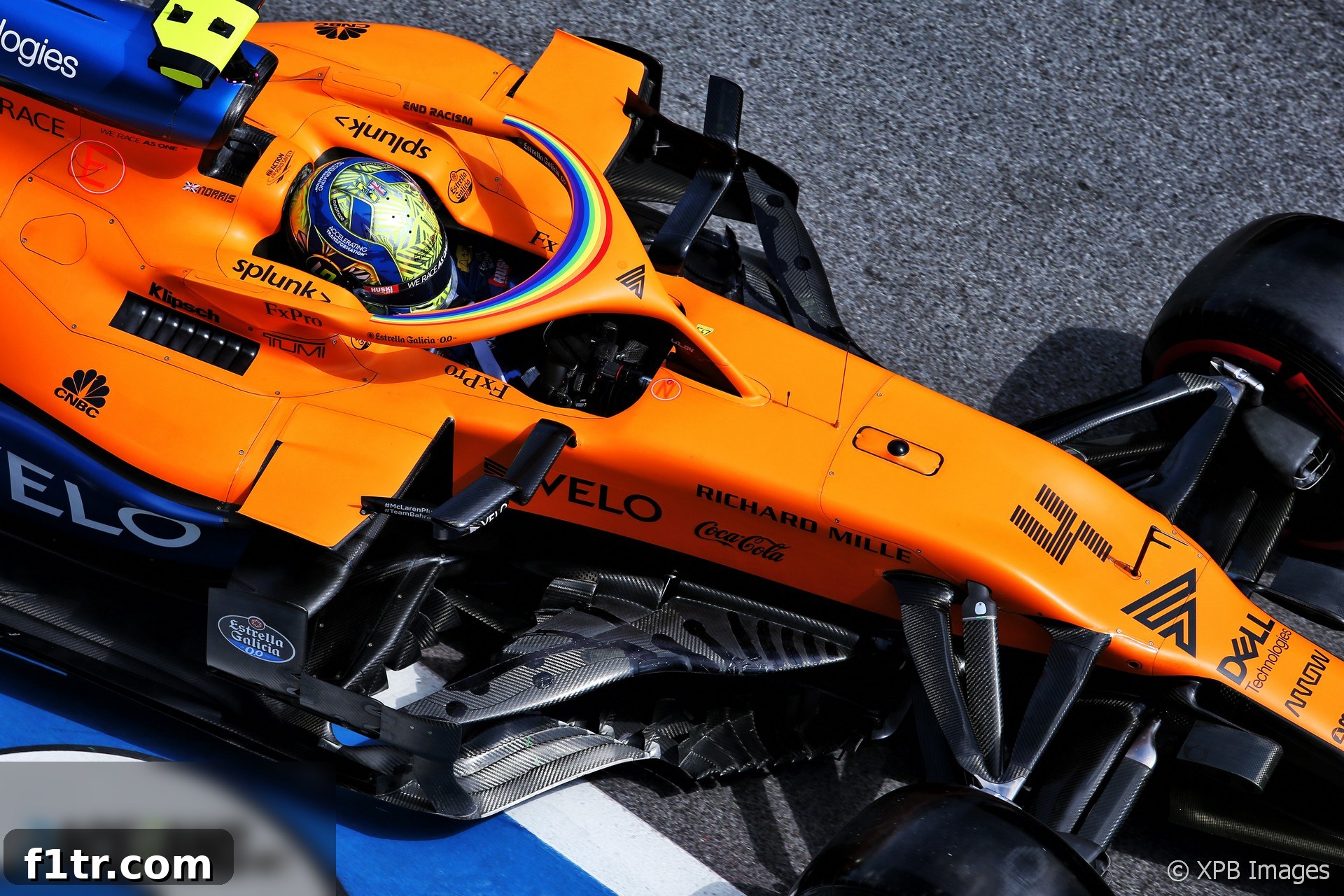
Lando Norris: The Breakthrough Podium
McLaren had approached the Austrian Grand Prix with cautious optimism, acknowledging the strong pace shown by rivals like Racing Point and Renault in practice sessions. However, Lando Norris defied expectations, delivering a truly inspired performance that culminated in his maiden Formula 1 podium finish. His journey to the top three began in qualifying, where he secured a career-best fourth position, outpacing a Red Bull and both Ferraris, despite a minor delay leaving the pits for his final crucial run. This impressive showing was further boosted when Lewis Hamilton incurred a pre-race penalty, promoting Norris to an incredible third on the starting grid.
From the outset, Norris displayed remarkable confidence, pressuring Max Verstappen intensely during the opening lap. While he ultimately couldn’t match the raw pace of the front-runners and was eventually passed by Alexander Albon and Hamilton, Norris demonstrated tenacity by fending off Sergio Perez for an extended period until the initial round of pit stops. Perez, on softer tyres, eventually found a way past the young Briton. However, Norris’s race truly came alive during the second Safety Car period. A swift pit stop for fresh soft tyres proved to be a strategic masterstroke, giving him the grip and confidence to launch a late-race charge.
Though he was unable to hold off the resurgent Charles Leclerc, Norris executed a daring dive down the inside of Perez at Turn Three, a move that saw wheels bang and paint exchanged as he snatched back fourth place with sheer audacity. The real drama unfolded in the final laps, as Norris was informed of Hamilton’s five-second penalty. Understanding the opportunity, he pushed his McLaren to its absolute limit. Entering the final lap, he was eight-tenths of a second shy of bridging the gap to Hamilton. Yet, in a breathtaking display of raw speed and determination, Norris unleashed the fastest lap of the entire race, crossing the finish line just one-tenth of a second ahead of Hamilton on corrected time to clinch an extraordinary third place. It was a performance that perfectly blended aggressive driving, strategic awareness, and a cool head under immense pressure, truly marking him as a star of the future.
Charles Leclerc: Ferrari’s Unsung Hero
The Austrian Grand Prix laid bare Ferrari’s significant lack of pace, particularly in qualifying, where Charles Leclerc could manage no better than seventh position. Despite the car’s clear deficiencies, Leclerc showcased his exceptional talent by comfortably outperforming his team mate, Sebastian Vettel, in Q2. The team harbored hopes for slightly improved race pace, a glimmer of which was eventually realized through Leclerc’s sheer driving skill.
Leclerc’s race began with a patient approach, as he found himself unable to overcome Sergio Perez in the early stages. He wisely bided his time behind the Racing Point until the opportune moment presented itself during the second Safety Car period. A strategic switch to medium tyres ignited his charge through the field. With renewed grip and confidence, Leclerc made quick work of Norris, demonstrating precision and controlled aggression. He then executed a spectacular late-braking maneuver on Perez, seizing a crucial position. Ultimately, thanks to Lewis Hamilton’s five-second penalty for causing a collision, Leclerc was elevated to an astonishing second place, finishing a mere 2.7 seconds behind race winner Valtteri Bottas. His ability to wring such a superb result from a challenging car, overcoming its inherent disadvantages with tactical prowess and brilliant overtakes, undeniably marked him as a top performer of the weekend, providing a much-needed morale boost for the struggling Ferrari team.
Valtteri Bottas: A Dominant and Controlled Victory
From the outset of the Austrian Grand Prix weekend, it was unequivocally clear that the Mercedes W11 was the class of the field. While Lewis Hamilton often appeared to have a slight edge in raw pace during practice, Valtteri Bottas capitalized on every opportunity to seize pole position. This achievement, however, was aided by a momentary spin of his own in Q3, which triggered yellow flags and inadvertently caught out his team mate, preventing Hamilton from improving his lap. Despite this small stroke of fortune, Bottas’s qualifying performance was strong and decisive.
On race day, with Hamilton starting fourth due to a penalty and Max Verstappen battling with Norris on the opening lap, Bottas made a clean getaway and rapidly established an early lead. He enjoyed a relatively unchallenged spell until the Safety Car periods began to bunch up the field, bringing his closest rivals directly onto his tail. Under immense pressure from a six-time world champion directly behind him, Bottas executed three flawless restarts, each time meticulously managing the gap and re-establishing his control. Furthermore, he achieved this while simultaneously nursing a critical gearbox problem that had emerged early in the race. This underlying technical fragility demanded constant vigilance and precise driving to prevent terminal failure.
Hamilton’s five-second penalty in the closing laps provided Bottas with some much-needed breathing room, allowing him to manage the final few tours without the immediate threat of an attack. He capped off an impeccable drive with a well-deserved victory, showcasing not just his speed but also his mental fortitude and ability to manage complex race situations. This win not only provided a perfect start to his championship campaign but also demonstrated his capability to convert pole positions into wins, a crucial attribute in his title aspirations.
Strugglers of the Austrian Grand Prix
Nicolas Latifi: A Tough Debut Weekend
Nicolas Latifi’s much-anticipated Formula 1 debut weekend at the Austrian Grand Prix quickly turned into a challenging ordeal. The rookie’s struggles began early in Practice Three when he spun on the exit of Turn One and collided with the barriers. This incident was particularly impactful, especially for a smaller team like Williams. In the compressed schedule of a triple-header, spare parts are scarce, meaning any significant shunt carries far greater consequences than usual, both financially and in terms of track time for the driver.
While his dedicated mechanics managed the impressive feat of repairing the car in time for qualifying, the limited track time profoundly affected Latifi’s ability to extract maximum pace from the car. This deficit was painfully evident in qualifying, where he finished a significant six-tenths of a second behind his team mate, George Russell, who demonstrably proved the Williams could outpace the Alfa Romeos. In the race itself, Latifi continued to struggle, unable to genuinely contend with any of the cars around him, in stark contrast to Russell, who was locked in battles with Alfa Romeo and Haas drivers. His race strategy was also less than optimal, with the team bringing him in on the second lap of the first Safety Car period, only to leave him out during the second, which further compromised his track position and tyre strategy. Among the eleven cars that completed the race, Latifi was the sole driver who failed to score points, marking a tough, yet undoubtedly educational, initiation into the pinnacle of motorsport.
Romain Grosjean: A Weekend of Frustration and Retirement
Romain Grosjean’s Austrian Grand Prix weekend, while starting with a marginal victory over Kevin Magnussen in qualifying – less than a tenth of a second separating them into Q2 – quickly unraveled on race day. His race was significantly rougher and more problematic than his team mate’s. From the very start, Grosjean rapidly slipped backwards through the field, finding himself overtaken by both Renault drivers and even his own team mate. This initial lack of pace set a difficult tone for the rest of his afternoon.
The Frenchman’s struggles intensified as the race progressed. He endured a spin and an excursion through the grass at Turn Four, moments that further compounded his loss of track position and confidence. Additionally, he accumulated three warnings for track limits violations, indicating a persistent difficulty in maintaining control and consistency within the track boundaries. Ultimately, his race came to an early and disappointing end as he was forced to retire due to debilitating brake problems. It was a weekend that showcased a driver out of sorts with his machinery and the circuit, resulting in a performance well below his usual capabilities.
And the Rest of the Field: Highs and Lows
Lewis Hamilton appeared poised to be the dominant force throughout practice, consistently setting the fastest times. However, his qualifying session was marred by Bottas’s spin in Q3, which led to yellow flags. Hamilton was subsequently penalized for failing to adequately slow down in response, costing him pole position. Starting fourth, he meticulously worked his way through the field, picking off Albon and Norris, eventually closing the gap to Bottas. The first Safety Car negated his opportunity to leapfrog his team mate through the pits but did place him directly on Bottas’s tail. Yet, a growing gearbox issue affected both Mercedes drivers, preventing them from pushing flat out. With ten laps remaining, Hamilton’s race took a dramatic turn when he made contact with Albon’s right rear tyre while attempting an overtake. He was swiftly handed a five-second penalty for causing a collision, a decision that ultimately stripped him of a podium finish, despite his impressive recovery drive.
Carlos Sainz Jnr found himself slightly outshone by his team mate, Lando Norris, throughout the weekend. He was out-qualified and didn’t quite match Norris’s race pace initially, getting stuck behind Leclerc early on. However, Sainz demonstrated his strong race craft and consistency, delivering valuable points for McLaren by eventually picking off Perez to secure a commendable fifth place. His performance, while less spectacular than Norris’s, was crucial for the team’s constructors’ championship aspirations.
Racing Point, often dubbed the “pink Mercedes,” showed exceptional pace during practice, leading many to tip them as midfield leaders. However, neither driver translated this promise into expected qualifying results, with Perez starting sixth and Lance Stroll ninth. Stroll’s race was cut short early on due to engine problems. Perez, meanwhile, found himself battling strongly within the top five. A critical strategic decision not to pit during the second Safety Car period proved costly, as he was subsequently overtaken by Leclerc, Norris, and Sainz, ultimately finishing in sixth place. This decision highlighted the fine margins in Formula 1 strategy.
The AlphaTauri drivers, Pierre Gasly and Daniil Kvyat, lined up 12th and 13th respectively, indicating a solid midfield presence. Both cars ran consistently within the points for a significant portion of the race. Kvyat, unfortunately, saw his promising run end prematurely when he was involved in a wheel-to-wheel battle with Esteban Ocon, resulting in a left-rear puncture and suspension failure with only two laps remaining. Gasly, on the other hand, managed to keep out of trouble, delivering a clean and consistent drive to cross the finish line in seventh place, securing crucial points for the team.
Esteban Ocon, making his return to Formula 1, expressed some unhappiness regarding the amount of time he lost on the straights in qualifying due to not having a tow. His team mate, Daniel Ricciardo, managed to make it into Q3, but his final run was unfortunately ruined by Bottas’s yellow flags. Ricciardo’s race came to an early end due to engine problems after he had already been passed by Sebastian Vettel. Ocon, however, delivered a solid performance on his comeback, scoring valuable points for eighth place, a strong start to his season with Renault.
Alfa Romeo, like all Ferrari-powered cars, endured a challenging weekend marked by a significant lack of power. Both drivers, Antonio Giovinazzi and Kimi Raikkonen, were eliminated in Q1. In the race, both benefited from retirements ahead to move up the order. However, Raikkonen’s race ended in dramatic fashion when a cross-threaded wheel nut caused his front right wheel to detach, a rare and alarming incident. Giovinazzi, despite the team’s struggles, managed to steer his car to a commendable ninth place, salvaging some points.
Sebastian Vettel spent the entire weekend grappling with the balance of his Ferrari, openly expressing his dissatisfaction. He failed to advance out of Q2 on Saturday, a rare occurrence for the four-time world champion. On Sunday, his frustration was palpable, describing his car as “almost undriveable.” This assessment was visually supported when he spun attempting a speculative overtaking maneuver on Carlos Sainz. Despite these difficulties, Vettel managed to recover and finish in tenth place, salvaging a single championship point from what was undoubtedly a very rough day for him and Ferrari.
Max Verstappen started the Austrian Grand Prix alongside Valtteri Bottas on the harder compound tyres, a strategic choice that hinted at a strong long-run pace and potential victory. However, his aspirations were cruelly cut short on lap 12 when an engine issue forced his retirement, with the car repeatedly entering anti-stall mode. This early exit was a significant blow to his championship ambitions. His Red Bull team mate, Alexander Albon, settled into third after starting fifth and utilized his softer, newer tyres to make an audacious move around the outside of Lewis Hamilton. Their contact, which led to Hamilton spinning Albon out, prompted Albon’s memorable radio verdict: “Sore loser.” This incident further highlighted the intense rivalries on track.
George Russell continued to show encouraging signs of his prodigious talent in the struggling Williams. In qualifying, he came tantalizingly close to making it out of Q1, missing out by less than a tenth of a second. In the race, he showcased strong pace and race craft, climbing as high as 12th position, a remarkable achievement for the Williams. However, an engine problem prematurely ended his promising day, robbing him and the team of a potential strong finish.
Kevin Magnussen had arguably the best opening lap of any driver on the grid, rocketing from 16th to 11th position with a series of bold moves. He was able to hold his improved position for a period, demonstrating the Haas car’s competitive potential in clean air. However, his race was ultimately compromised when his brake problems intensified in the challenging Austrian heat, causing him to eventually spin into Turn Three. This incident brought out the first Safety Car of the race, significantly altering the dynamics for many competitors.
Over to You: Your Driver of the Weekend
After such a dramatic and action-packed opening round, it’s time to reflect on the performances that truly captivated you. We invite you to consider all the highs and lows, the moments of brilliance and the unfortunate struggles. Which driver impressed you the most last weekend at the Austrian Grand Prix? Your vote helps shape the narrative of the season, and you can see whether other fans share your view.
- Vote for your 2020 Austrian Grand Prix Driver of the Weekend
For more insights and analyses from this thrilling season opener, explore all articles related to the 2020 Austrian Grand Prix.
Browse all 2020 Austrian Grand Prix articles