Formula 1’s Dramatic Shift: From Red Bull Dominance to Multi-Team Mayhem
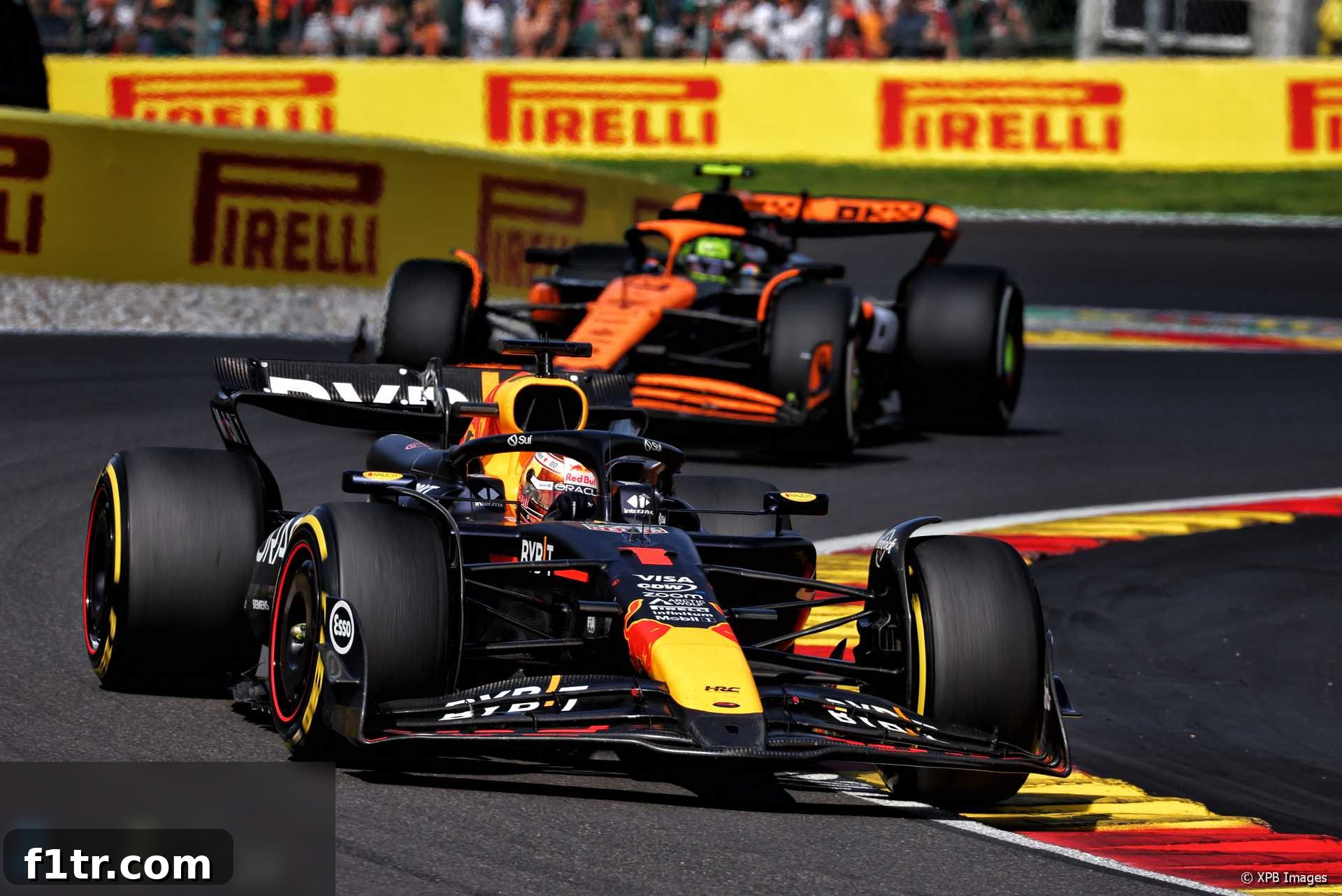
The exhilarating world of Formula 1 has witnessed a seismic shift in its competitive landscape. A mere twelve months ago, Red Bull Racing appeared almost invincible, securing a staggering victory in every single one of the twelve rounds leading up to the summer break. Such an overwhelming display of dominance sparked widespread discussion about the possibility of an unprecedented clean sweep of the entire season. However, as the sport now stands on the cusp of its mid-season pause, the narrative could hardly be more different. The 2024 season has unfolded as a thrilling spectacle of unpredictability, with seven different drivers from four distinct teams already tasting the sweet success of victory.
Advert | Become a Supporter & go ad-free
Red Bull Under Pressure: A Shifting Dynamic
The constant questions that once plagued Red Bull about their seemingly unassailable lead have transformed into an intense grilling over internal decisions. Specifically, the team is facing heightened scrutiny regarding their continued commitment to Sergio Perez. His notably dismal results this season are widely seen as a significant vulnerability, severely threatening Red Bull’s chances of retaining the coveted Constructors’ Championship, a title they have dominated in recent years.
This dramatic turn of fortunes was far from evident just a little over three months ago. Following the fifth round of the season in China, it appeared that the familiar pattern of Red Bull dominance would continue unchallenged. Max Verstappen, the reigning champion, had already clinched four out of the first five races. Many believed he was destined for a perfect start, a streak only broken by an unfortunate and race-ending incident in Australia where his right-rear brake jammed at the start, forcing his retirement.
Since that early show of strength, however, Red Bull’s rivals have methodically and relentlessly closed the gap. McLaren, in particular, has emerged as a formidable threat, consistently challenging the champions. Verstappen himself candidly admitted to this shift in the competitive landscape during the Spa Grand Prix weekend, stating, “I think if you look at the last five, six races, they for sure have been the best. It’s quite clear.” This acknowledgement from the pinnacle of the sport underscores the genuine and profound change in the pecking order.
McLaren’s Resurgence: From Midfield to Front-Runners
McLaren’s season has been defined by a remarkable and strategic turnaround, primarily catalyzed by the introduction of a significant new upgrade package at the Miami Grand Prix. This pivotal moment allowed the Woking-based team to unleash the full potential of their MCL38 chassis. Lando Norris, showcasing exceptional skill and capitalizing on the car’s enhanced performance, secured a memorable victory in Miami. While that remains his only win to date, the dramatic improvement in pace and consistency has been undeniable, propelling McLaren firmly into contention at the front of the grid.
Advert | Become a RaceFans supporter andgo ad-free
[This space typically features a dynamic chart illustrating the evolving pace deficit between leading teams throughout the season, clearly highlighting McLaren’s significant gains and Red Bull’s diminishing lead in the latter half of the calendar.]
Empirical data robustly supports the observation that McLaren has been in vastly superior form during the latter half of the season compared to its initial struggles. However, statistics alone reveal only a partial picture. Consider the Austrian Grand Prix: Red Bull demonstrated a clear single-lap pace advantage, with Max Verstappen clinching pole position by an impressive four-tenths of a second. Yet, in the race, McLaren’s long-run performance was exceptional. Lando Norris, armed with the improved MCL38, was able to repeatedly challenge and attack his rival, ultimately leading to their much-discussed collision. This incident perfectly encapsulated the razor-thin margins and the shifting dynamics of car performance across different phases of a race weekend.
Red Bull, not one to rest on its laurels, swiftly responded to the intensifying threat from McLaren. They expedited the introduction of a drastically revised bodywork package, originally intended for high-downforce tracks, bringing it to the Hungaroring three weeks ahead of schedule, exclusively for Verstappen’s car. Despite these proactive measures, Verstappen himself conceded that the team needs to do more to effectively repel McLaren’s relentless challenge.
“Fair play to them, I think they have done a great job,” Verstappen stated, acknowledging his rivals’ progress. “From our side we have a bit of work to do. There’s a few things also to analyse over the break, from race one all the way to here, what we have done. Then try to fight back from Zandvoort, see if we can actually improve the situation, try to turn it around, try to be more competitive.” This honest assessment from the reigning world champion highlights the immense pressure now weighing on the Red Bull engineering team to accelerate development and regain their clear competitive edge.
Dissecting the Data: The Margins Shrink
While Verstappen appropriately urges his team to push relentlessly with car development, it is vital to remember that the RB20 remains, in real terms, an incredibly competitive machine within the F1 paddock. On average, across the entire season thus far, it has maintained a performance deficit of only 0.11% off the ultimate pace. This statistic still positions it ahead of the next-best car, McLaren’s MCL38, which registers a 0.32% deficit. These figures, taken in isolation, suggest a continued, albeit smaller, advantage for Red Bull.
However, focusing solely on these overarching season averages risks obscuring the true intensity of the current battle. A closer examination of recent races paints an even more compelling picture of the tightening competition between the two leading teams. Over the last five Grand Prix events, Red Bull’s average pace deficit has been a mere 0.15%, while McLaren’s has further narrowed to an almost identical 0.17%. This microscopic difference puts the teams squarely in what is effectively “as near as makes no difference” territory, implying that external factors now play a much more significant role in determining who holds the advantage on any given race weekend.
Advert | Become a RaceFans supporter andgo ad-free
[This space typically features a dynamic chart showcasing the average pace deficits for leading teams over the most recent five races, powerfully illustrating the extremely close margins now separating Red Bull and McLaren.]
In such finely balanced conditions, factors that were once secondary now take on monumental importance. The unique characteristics of different track configurations, fluctuating weather conditions, tire management strategies, and even slight changes in ambient temperature can now profoundly impact performance. Consequently, driver performance has ascended to an even more critical level of importance. This increased scrutiny on individual talent and consistency naturally fuels much of the intrigue surrounding Sergio Perez’s challenging situation, as every decision and every tenth of a second counts more than ever before.
Verstappen’s measured assessment of his team’s form is not an isolated incident. After the Hungarian Grand Prix, Lando Norris confidently asserted: “Last weekend was the first one I can quite happily say we were easily the best team. Both in quali and the race.” Yet, even amidst this declaration of superiority, Norris remained acutely aware of the formidable presence of Max Verstappen. He elaborated: “Max only missed out on pole by four-hundredths of a second. It’s nothing. At the same time you could have said he was just as quick in qualifying and, yes, he didn’t have a great race, but he’s still pretty quick. He just made a few too many mistakes and the race didn’t go too well for him.” This nuanced perspective from a direct competitor highlights the high regard in which Verstappen is still held, even when his team faces challenges.
Advert | Become a RaceFans supporter andgo ad-free
Mercedes’ Quiet Strength: The Underestimated Powerhouse
Beyond the primary Red Bull-McLaren showdown, another formidable team has quietly amassed more race victories than McLaren this season: Mercedes-AMG. Their true performance potential, particularly showcased at the Belgian Grand Prix in Spa, can be deceptively disguised by raw data if not viewed within its full context. At Spa, a dry Friday practice session was dedicated to evaluating a new floor design, which ultimately was not raced. This, combined with a tactical misjudgment during the rain-affected qualifying session that saw them a full second off the pace, meant their outright speed wasn’t immediately obvious. However, when race day arrived, the W15 was undeniably flying, demonstrating its inherent strength and proving Mercedes remains a potent force.
Lando Norris himself expressed little surprise at Mercedes’ strong showing at Spa, suggesting that many observers have consistently undervalued the genuine potential the Silver Arrows have showcased in earlier races. “I feel like everyone just doubts them, doubts what Mercedes can do,” he commented. “They’ve been almost just as quick as us for the last month. Everyone underestimates what they can do and on a day like today, they just do what they are very capable of doing, and, it’s a good job. So fair play to them.” This high praise, coming directly from a fierce competitor, serves as a powerful testament to Mercedes’ underlying capabilities and their capacity to challenge for top honors, making them a quiet but significant contender in the championship battle.
The Broader Championship Picture: Unpredictability Reigns
It is a long-standing tradition in Formula 1 for drivers to skillfully downplay the performance of their own cars while simultaneously amplifying the capabilities of their rivals. This strategic rhetoric often makes it challenging for fans and pundits alike to accurately distinguish between genuine on-track potential and carefully constructed off-track narratives. However, in the current season, the convergence of competitive advantages and the authenticity of driver remarks strongly indicate a truly open and unpredictable championship.
Adding yet another fascinating layer of intrigue is the situation at Ferrari. After enduring a challenging slump that saw them fall out of contention in several recent races, there are now clear signs emerging that the iconic Scuderia is beginning to correct its trajectory. With their immense resources, unwavering passion, and a proud racing heritage, a resurgent Ferrari could further intensify the competition, potentially transforming what is already a multi-team battle into a gripping five-way championship fight by the season’s conclusion. This exciting prospect promises an exceptionally competitive and thrilling second half of the season, solidifying this year as one of the most memorable and unpredictable in recent Formula 1 history.
The razor-thin margins and the convergence of performance mean that every element – from strategic brilliance and the sheer talent of the drivers to operational efficiency and even a slice of luck – will be more decisive than ever before. Each upcoming Grand Prix will unfold as a high-stakes chess match, where even the smallest error or the boldest gamble could fundamentally alter the championship standings. For devoted fans, this translates into an unparalleled spectacle of speed, skill, and suspense, promising a captivating and unforgettable conclusion to a truly remarkable Formula 1 season.