Nico Hulkenberg Disqualified from 2025 Bahrain Grand Prix Following Post-Race Technical Breach
In a significant development from the 2025 Formula 1 season opener, Nico Hulkenberg has been officially disqualified from the Bahrain Grand Prix. The Sauber driver’s promising performance, which saw him classified in 13th position, was nullified after his car failed a rigorous post-race technical inspection, specifically concerning its underfloor plank wear.
Advert | Become a Supporter & go ad-free
The FIA’s technical delegate, Jo Bauer, identified the non-compliance during the routine checks conducted after the race. It was determined that Hulkenberg’s Sauber C45 did not adhere to Article 3.5.9 e) of the FIA Formula One Technical Regulations, which strictly governs the permissible thickness of the car’s underfloor plank. Measurements taken at three distinct points across the plank assembly revealed thicknesses below the mandated 9mm minimum, directly leading to the disqualification.
Understanding the Critical Role of F1 Underfloor Planks
The underfloor plank, commonly referred to as the “skid block,” is a crucial component of every Formula 1 car, installed beneath the chassis. Its primary purpose is multifaceted, serving both safety and regulatory functions. Introduced in 1994 following a series of high-profile accidents, particularly those at the San Marino Grand Prix, the plank prevents teams from running their cars excessively low to the ground. While a lower ride height significantly enhances aerodynamic performance by maximizing ground effect, it also poses considerable safety risks, including potential bottoming out, damage to the car’s structural integrity, and dangerous sparks or debris on track. The plank, typically made from a durable composite material like Kevlar, acts as a physical gauge, ensuring that a minimum ground clearance is maintained throughout a race.
FIA regulations specify that the plank must have a minimum thickness of 10mm when new, with a tolerance allowing for no more than 1mm of wear during a race. This means the plank must retain a minimum thickness of 9mm at all designated measurement points at the end of an event. This strict rule forces teams to optimize their car’s setup, balancing aggressive aerodynamic performance with the imperative of technical compliance. Excessive wear indicates that a car has been running too low, either due to an aggressive setup, suspension failure, or even track conditions, providing an illegal aerodynamic advantage over competitors.
The Specifics of the Infringement and Sauber’s Response
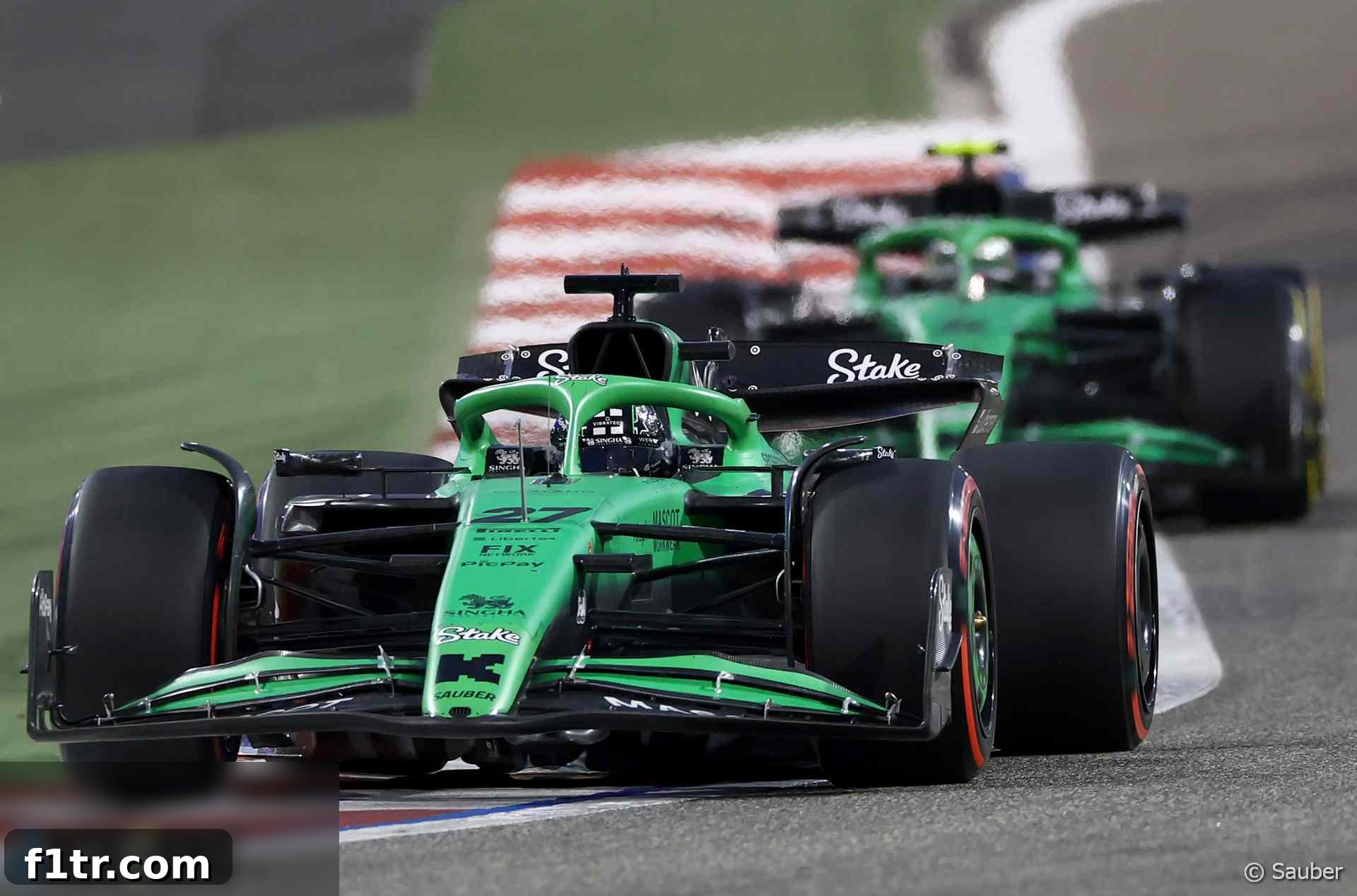
The stewards’ report meticulously detailed the findings concerning car number 27, driven by Nico Hulkenberg. The measurements recorded were 8.4mm on the left-hand side, 8.5mm at the car’s centre line, and 8.4mm on the right-hand side. All three readings were unequivocally below the 9mm threshold stipulated by the technical regulations. This precise and repeatable method of measurement leaves little room for ambiguity, ensuring a fair and consistent application of the rules.
During the subsequent hearing, Sauber’s team representative did not contest the findings. Instead, the team confirmed the accuracy of the measurements and acknowledged that all required procedures during the inspection were correctly performed by the FIA officials. Crucially, Sauber accepted full responsibility, stating that the non-compliance was a “genuine error” on their part. This immediate admission of fault streamlined the adjudication process, leading the stewards to a straightforward conclusion.
Given the clear breach of Article 3.5.9 e) of the FIA Formula One Technical Regulations and the team’s acceptance of the findings, the stewards determined that “the standard penalty of a disqualification needs to be applied for such an infringement.” This decision underscores the FIA’s unwavering commitment to upholding the integrity of the sport and ensuring a level playing field for all competitors, regardless of the perceived minor nature of a technical error.
Impact on Race Results and Championship Standings
Hulkenberg’s disqualification means his 13th-place finish at the Bahrain Grand Prix is expunged from the official records. While he was outside the points-scoring positions, his removal from the classification does have a ripple effect on drivers who finished behind him. Isack Hadjar, along with five other competitors, are now promoted one position up the official race result sheet. However, as Hulkenberg had not scored any championship points, his disqualification has no immediate impact on the overall constructors’ or drivers’ championship standings regarding points awarded. Nevertheless, for the drivers who gain a position, it can be a morale boost and potentially influence tie-break situations later in the season, or simply improve their statistical record.
Advert | Become a RaceFans supporter andgo ad-free
A Pattern of Strict Enforcement: Precedents in the 2025 Season
Nico Hulkenberg’s disqualification marks him as the fourth different driver to face such a penalty following a Grand Prix in the nascent 2025 season. This high frequency of post-race technical infringements highlights the FIA’s stringent approach to technical regulations and its commitment to ensuring all cars conform to the rulebook at all times. This season’s vigorous enforcement sends a clear message to all teams that even the slightest deviation from the technical directives will not be overlooked.
A notable parallel occurred just last month at the Chinese Grand Prix, where none other than Lewis Hamilton received a similar disqualification. Stewards found excessive plank wear on his Ferrari, mirroring the exact nature of the infringement committed by Sauber with Hulkenberg’s car. Hamilton’s disqualification, despite his stature in the sport and the competitive nature of Ferrari, unequivocally demonstrated the FIA’s impartiality. It underscored that technical compliance is non-negotiable for all teams and drivers, from front-runners to midfield contenders. The consistency in applying the “standard penalty” of disqualification for such breaches ensures fairness and maintains confidence in the integrity of the sport’s technical rulebook.
Furthermore, the Chinese Grand Prix also saw two other significant disqualifications. Charles Leclerc, Hamilton’s teammate at Ferrari, and Alpine’s Pierre Gasly were both disqualified from the same event after their respective cars were found to be underweight. The minimum weight regulation is another critical pillar of Formula 1’s technical rules, designed to prevent teams from gaining an unfair speed advantage by building excessively light cars. An underweight car can achieve higher top speeds and better acceleration, providing a clear performance benefit. These incidents collectively illustrate the breadth and depth of the FIA’s post-race technical scrutiny, covering various aspects from aerodynamic elements to fundamental car mass. The strict application of penalties across different types of infringements reinforces the message that technical compliance is paramount, forming the bedrock of fair competition in Formula 1.
The Broader Implications for Formula 1
These recurring technical disqualifications, particularly at the start of a new season, serve as a stark reminder of the extreme precision and diligence required in modern Formula 1. The fine margins between success and failure extend beyond driver skill and strategic prowess; they delve deep into the millimetre-level exactitude of engineering and compliance. Teams are constantly pushing the boundaries of what is technically permissible, seeking every possible aerodynamic or performance advantage. This inherent drive for innovation often brings them perilously close to the line drawn by the technical regulations.
The FIA, through its rigorous technical checks and uncompromising penalties, acts as the guardian of these rules. Post-race inspections are not merely formalities; they are critical components of race integrity, ensuring that the results achieved on track are indeed legitimate within the confines of the rulebook. Such strict enforcement, while sometimes leading to disappointing outcomes for drivers and teams, is essential for maintaining a level playing field, preventing an “arms race” of illegal innovations, and ultimately preserving the competitive spirit and fairness that define Formula 1 as the pinnacle of motorsport.
For Sauber, this incident is a setback, requiring an immediate internal review of their car setup and quality control processes to prevent future recurrences. For Nico Hulkenberg, it’s a lost classification, but crucially, a lesson for the team in the incredibly tight margins of Formula 1 technical compliance. As the 2025 season progresses, every team will undoubtedly be double-checking their plank wear and overall car weight, acutely aware that the FIA is watching, and the penalties for non-compliance are severe and unyielding.
Updated: 2025 Bahrain Grand Prix race result and championship points
Miss nothing from RaceFans
Get a daily email with all our latest stories – and nothing else. No marketing, no ads. Sign up here:
2025 Bahrain Grand Prix – Related Articles
Stay informed on all the latest news, analyses, and developments from the season-opening 2025 Bahrain Grand Prix with these essential articles:
- Hamilton making “drastic shift” in driving style to master Ferrari’s car
- Leclerc revealed Ferrari strategy details to Gasly before Bahrain Grand Prix
- Lawson made “very significant step forward” in Bahrain – Mekies
- Russell’s transponder was ‘frazzled and charred’ after Bahrain Grand Prix DRS drama
- “Don’t give me too much now”: Hamilton’s search for speed at Ferrari continues
Browse all 2025 Bahrain Grand Prix articles