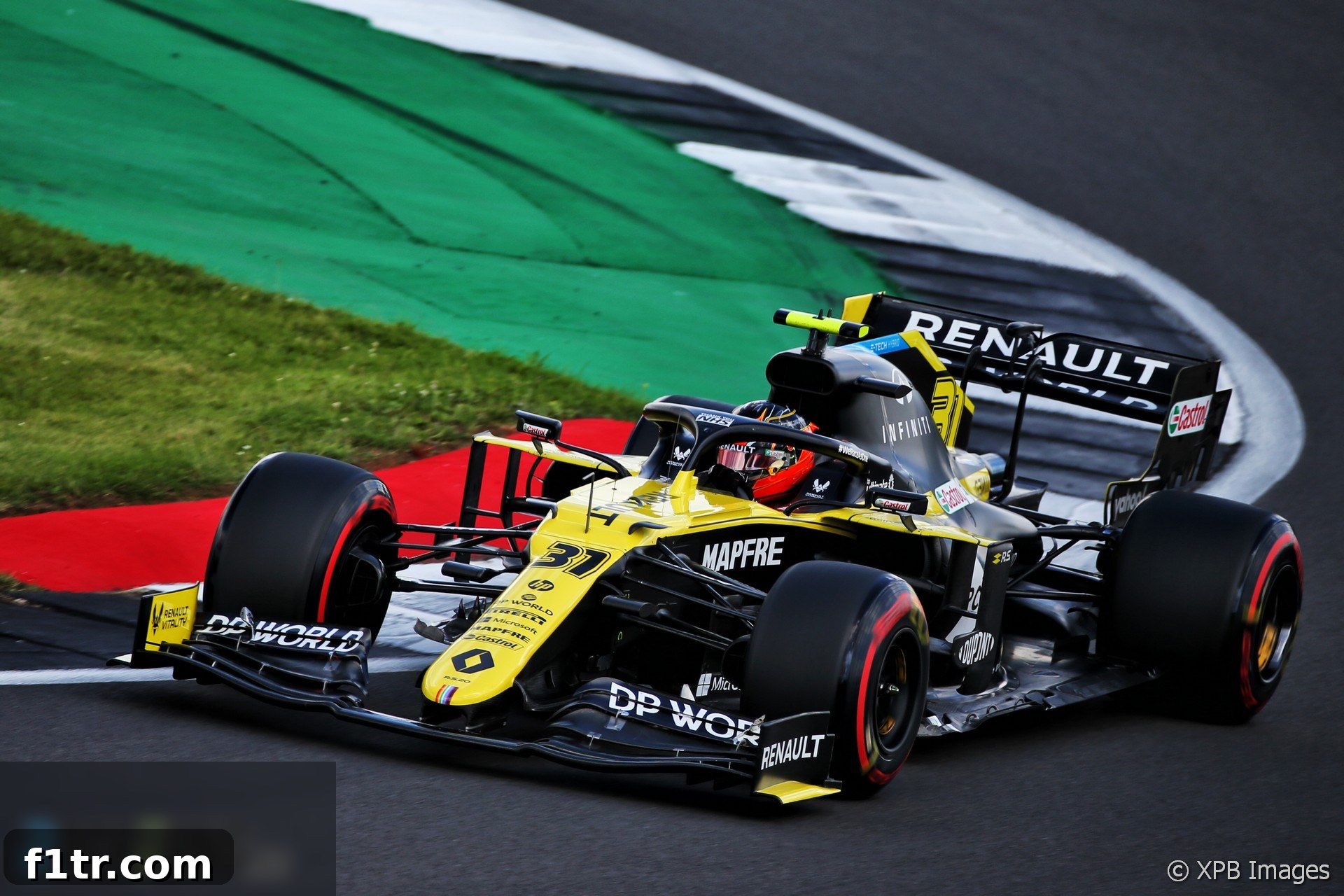
Esteban Ocon Cleared in Raikkonen Impeding Incident: A Deep Dive into F1 Qualifying Regulations
In the fiercely competitive and often controversial world of Formula 1, every millisecond and every inch of track position can mean the difference between triumph and despair. A recent incident during a qualifying session saw Esteban Ocon of the Renault team officially cleared of impeding Kimi Raikkonen, the seasoned driver for Alfa Romeo. This ruling by the race stewards, which followed a heated exchange and a formal complaint from Raikkonen, offers a compelling look into the intricacies of F1’s sporting regulations and the fine line drivers must navigate during the most critical phase of a race weekend.
Qualifying in Formula 1 is a relentless pursuit of perfection. It’s a session where drivers push their sophisticated machinery to the absolute limit, extracting every ounce of performance to secure the best possible starting grid position for Sunday’s race. With varying speeds, tire strategies, and the constant threat of traffic, incidents of alleged impeding are not uncommon. They often ignite passionate debate among fans, teams, and pundits alike, placing the focus squarely on the impartial judgment of the race stewards.
The Q1 Incident: Raikkonen’s Frustration vs. Ocon’s Defense
The focal point of this particular controversy was an interaction that unfolded during the Q1 segment of qualifying. Kimi Raikkonen, a driver renowned for his candid radio communications, expressed significant frustration over an encounter with Ocon’s Renault. Raikkonen was on a crucial flying lap, battling to secure his place in the subsequent Q2 session, when he found himself rapidly gaining on Ocon through the final sequence of turns, specifically turns 17 and 18. His immediate complaint was that Ocon’s presence and positioning negatively impacted his car’s aerodynamics, thereby impeding his lap and contributing to his failure to progress.
Understanding the concept of aerodynamic disadvantage is vital here. In Formula 1, a car’s performance is intrinsically linked to its aerodynamic efficiency. Downforce, the force that pushes the car into the track, is generated by the complex array of wings, diffusers, and other bodywork elements. When a car follows another closely, it enters the turbulent wake, commonly referred to as ‘dirty air,’ created by the leading vehicle. This dirty air significantly disrupts the airflow over the following car’s aerodynamic surfaces, leading to a substantial reduction in downforce. Such a loss can compromise braking stability, reduce grip in corners, and ultimately cost valuable lap time – precisely the outcome Raikkonen attributed to his interaction with Ocon.
Esteban Ocon presented a contrasting perspective during the stewards’ hearing. He explained that his team had duly informed him of Raikkonen’s approach. Prior to entering turn 16, Ocon stated he assessed the relative distance between their cars and concluded there was a “significant gap.” His intention, he clarified, was to accelerate through turn 17 to begin his own flying lap. This highlights the subjective nature of such incidents: Raikkonen felt Ocon’s failure to accelerate sooner constituted impeding, while Ocon believed he was managing the situation appropriately, preparing for his own performance run without unnecessarily hindering another driver.
The Intricacies of F1 Regulations on Impeding
The rules governing impeding are fundamental to maintaining fair competition and safety in Formula 1. While the exact wording can vary slightly year by year, the essence generally revolves around “unnecessary impeding” or “unsafely impeding.” This means that simply affecting another car’s lap is not always an automatic penalty. The stewards must determine if the action (or inaction) of the driver being complained about was indeed “unnecessary” – meaning it could have been avoided – and if it had a significant, demonstrable impact on the other driver’s lap time or safety.
The role of the race stewards in these situations is paramount. Comprising experienced officials, often including former racing drivers, they are tasked with impartially applying the sporting regulations. Their process involves summoning both drivers involved, reviewing all available evidence – which includes telemetry data, onboard camera footage, trackside camera angles, and team radio transcripts – and then rendering a decision based on objective facts and established precedents. This rigorous process underscores the gravity with which these incidents are treated within the sport.
Stewards’ Deliberation: Objective Evidence Over Subjective Feeling
Following the qualifying session, both Esteban Ocon and Kimi Raikkonen were called to the stewards’ office for a formal hearing. This standard procedure ensures that each driver has the opportunity to present their case, answer questions, and respond to any evidence presented. The stewards undertook a meticulous review of all pertinent data, cross-referencing information from multiple sources to construct a comprehensive picture of the incident.
Ultimately, the stewards delivered their verdict: Esteban Ocon was cleared of any wrongdoing. Their official explanation, a crucial document for understanding F1 justice, acknowledged Raikkonen’s subjective experience. The statement noted, “In the hearing, Raikkonen stated that because of the position of Ocon’s car through turn 17 to turn 18 his aero was affected negatively and that he was impeded.” Furthermore, the stewards conceded that “while they accept that Raikkonen’s aero may have been affected in his lap…” This acknowledgment indicates an understanding of the aerodynamic realities Raikkonen described.
However, the pivotal point of their ruling came down to objective evidence. The stewards concluded: “…the cars were never close enough, especially compared to previous cases, to constitute ‘unnecessary impeding’ which is the text of the regulation.” This distinction is critical. While an aerodynamic disturbance might have been a factor, the stewards found insufficient objective evidence – particularly in terms of the actual proximity between the cars and comparisons to similar incidents – to classify Ocon’s actions as a breach of the “unnecessary impeding” rule. It highlights the challenging threshold between a driver’s perceived disadvantage and a quantifiable regulatory infraction.
The Broader Implications for Drivers and the Sport
The stewards’ decisions are more than just rulings on individual incidents; they also serve to establish precedents that guide driver behavior and team strategy in future events. By clearing Ocon, the stewards reaffirmed that a minor aerodynamic disruption, without significant objective proof of excessive proximity or deliberate obstruction, may not always warrant a penalty. This puts the onus on drivers to manage traffic carefully but also ensures that the rule isn’t applied too broadly to every instance of one car encountering another on track.
This incident also casts a spotlight on the critical role of team-to-driver communication. Drivers rely heavily on their race engineers for real-time information about traffic, gaps, and potential hazards. A slight delay in communication or a misjudgment can quickly escalate into a compromising situation, leading to a potential impeding offense or, at minimum, a compromised lap. Ocon’s reliance on his team for traffic information underscores this vital partnership.
For Kimi Raikkonen, failing to progress from Q1, especially under perceived interference, is a significant setback. A poor starting grid position can severely constrain a driver’s race strategy, forcing them into recovery drives, premature tire changes, and increasing the risk of early-race contact. For Esteban Ocon, the clearance meant avoiding a grid penalty that could have hampered his own Sunday performance. In Formula 1, where championship points and career trajectories are at stake, such rulings are meticulously scrutinized and carry substantial weight.
Ultimately, the Ocon-Raikkonen case serves as a poignant reminder of the relentless competition, the fine margins separating success from struggle, and the paramount importance of the rules that govern this exhilarating sport. It underscores the stewards’ crucial role as the ultimate arbiters, meticulously balancing subjective driver experience with objective data analysis and established precedents to ensure fair play and uphold the integrity of Formula 1.
Further Reading and F1 Insights
- Understanding ‘Dirty Air’ and its Impact in Formula 1 Racing
- The Role of F1 Race Stewards: Penalties, Decisions, and Appeals Explained
- Esteban Ocon: Career Journey, Stats, and Achievements in Formula 1
- Kimi Raikkonen: The ‘Ice Man’ Legacy and His Impact on Motorsport
- How F1 Qualifying Works: Formats, Strategies, and the Pursuit of Pole Position
Browse all Formula 1 News and Updates