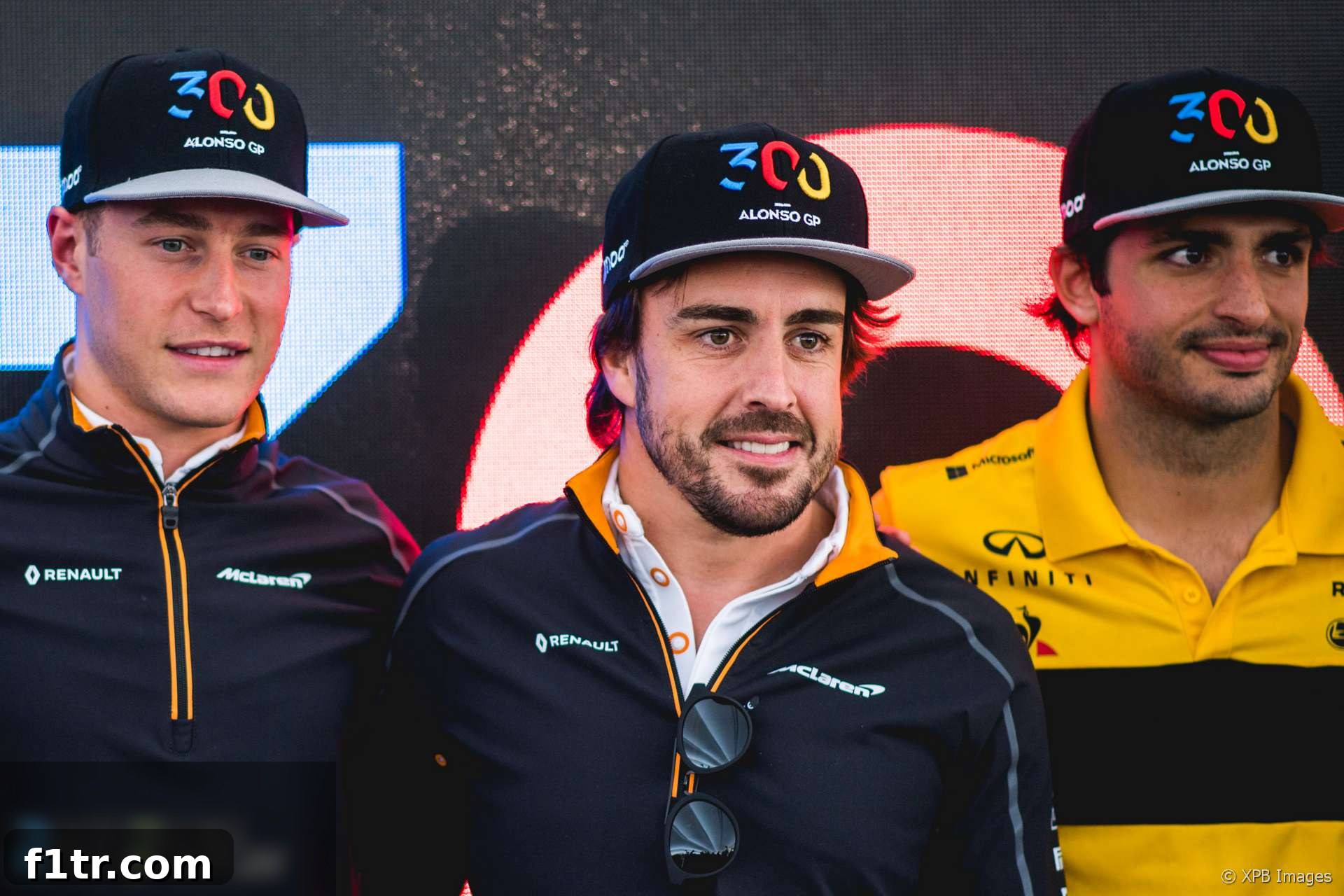
McLaren, Formula 1’s storied racing team, is navigating a tumultuous period of profound transformation and strategic recalibration. This era of significant upheaval, characterized by a series of high-profile departures and a fundamental restructuring, now culminates in a critical driver dilemma that will undoubtedly shape the team’s trajectory for the foreseeable future. The foundation of this ongoing metamorphosis was laid with the departure of long-standing patriarch Ron Dennis, a pivotal moment that signaled a shift in the team’s cultural and operational ethos. This was swiftly followed by the severing of its much-anticipated, yet ultimately disappointing, engine partnership with Honda, necessitating a crucial switch to Renault power units. Concurrently, the team has undertaken an extensive internal overhaul, implementing a new management structure and replacing key senior figures, including Eric Boullier, Matt Morris, and Tim Goss. Against this backdrop of significant change, maintaining a degree of continuity, especially within its driver line-up, becomes an invaluable asset for stability and progress. However, this hinges precariously on securing the continued presence of its talismanic double world champion, Fernando Alonso, whose future with the team remains uncertain and a subject of intense speculation.
The question of Fernando Alonso’s commitment is paramount. As widely discussed within the sport, Alonso, a driver of unparalleled talent and ambition, may very well decide that his illustrious career holds aspirations beyond battling in the lower echelons of the top ten. His illustrious track record and hunger for victory suggest he may seek opportunities elsewhere that offer a more immediate path to championship contention. If McLaren fails to retain Alonso – an outcome that would leave a significant void in experience, feedback, and raw speed – the team faces the daunting task of identifying a suitable replacement from an increasingly competitive and fluid F1 driver market. The implications of Alonso’s potential departure extend beyond just the cockpit; it would represent the loss of a driving force, a highly experienced benchmark, and a critical voice in the car’s development, all of which are invaluable to a team striving to rebuild its competitive edge.
Advert | Become a Supporter & go ad-free
In anticipation of such a scenario, McLaren has already begun exploring its options. The team made a notable approach to Daniel Ricciardo, one of the sport’s most charismatic and aggressive overtakers, indicating McLaren’s ambition to secure a proven race-winner. However, Ricciardo’s subsequent decision to move to Renault reshaped McLaren’s focus, turning their attention towards the driver he would be replacing: Carlos Sainz Jnr. Sainz, a product of the formidable Red Bull junior program and a driver known for his consistent performances and technical feedback, has emerged as a favored candidate. Discussions with his management have reportedly advanced, and in a scenario where Red Bull does not exercise their option on Sainz for the upcoming season, the prospects of him securing a coveted McLaren seat appear increasingly credible. His blend of experience, youth, and technical acumen could offer a robust solution to McLaren’s driver puzzle, potentially bringing fresh perspectives and a strong work ethic to the Woking-based squad as they continue their revival efforts. The intricate dance of the F1 driver market ensures that such decisions are rarely straightforward, often involving multiple teams and complex contractual arrangements, making McLaren’s pursuit of Sainz a strategic play in a high-stakes game.
The internal question mark, and a significant one, hovers over Stoffel Vandoorne. His performance against the formidable Fernando Alonso this year has, by most measures, been challenging. Consistently outqualified and often outraced by his veteran teammate, Vandoorne has undoubtedly faced one of the toughest benchmarks in Formula 1. Alonso himself, however, has frequently heaped praise on his younger teammate, acknowledging Vandoorne’s talent and the immense pressure he is under, even while maintaining a perfect qualifying record against him throughout the season. McLaren CEO Zak Brown has publicly stated that Vandoorne “needs to start beating Alonso,” a clear directive that underscores the pressure on the Belgian driver to elevate his game. Yet, Brown’s comments also betray a preference for consistency and a measured approach to driver decisions, suggesting that Vandoorne’s long-term potential and contribution to the team’s stability are still highly valued. “We do have a long-term agreement with Stoffel and Fernando, but as you can imagine, in these contracts there’s a variety of elements to them,” Brown elaborated. “We will make our driver decision when ultimately we’re ready and anticipate that being sometime after the summer break. We’re still reviewing, analyzing what ultimately we think is the best combination for McLaren moving forward, and Stoffel is very much part of that consideration.” This careful articulation from Brown highlights the complex balance McLaren must strike between immediate performance demands and the cultivation of long-term talent, especially with the monumental task of rebuilding the team’s competitiveness.
Advert | Become a RaceFans supporter andgo ad-free
Another pivotal factor for McLaren to carefully weigh in its driver deliberations is the undeniably bright future of its highly-regarded junior driver, Lando Norris. Brown has enthusiastically championed Norris, unequivocally stating that he is “obviously a future star.” The eighteen-year-old Briton has carved out an exceptional junior career, accumulating a string of impressive titles across various categories, firmly establishing himself as one of the most promising talents to emerge in recent years. His rookie Formula 2 season, while demonstrating flashes of brilliance, has proven to be a somewhat harder challenge than initially anticipated, partly due to the dire and well-documented reliability issues plaguing the championship’s new machinery. Despite these hurdles, if Norris manages to deliver the Formula 2 title, or indeed achieves a result that further validates his immense potential, McLaren will face the delightful, yet complex, problem of finding a suitable placement for him. “Obviously you have a talent like Lando, you want to keep him in the family,” Brown affirmed, highlighting the team’s commitment to nurturing its home-grown talent. This brings forth several strategic possibilities: Will McLaren promote him directly to the Formula 1 team, perhaps alongside Sainz or a renewed Alonso? Or will they opt for a more conservative approach, ‘parking’ him in a competitive, high-level series like Japanese Super Formula, a pathway they previously utilized for Stoffel Vandoorne? Another intriguing option involves loaning him out to a rival F1 team, such as Toro Rosso, potentially as part of a larger deal to secure technical director James Key’s services early. This “good problem to have,” as Brown might describe it, underscores the wealth of talent McLaren possesses in its ranks, a stark contrast to the challenges they face elsewhere. The careful management of Norris’s career trajectory is not merely about finding him a seat; it is about strategically positioning him for a successful and long F1 career within the McLaren family, ensuring that their investment in his development yields substantial dividends.
Ultimately, McLaren’s impending driver decisions are not isolated choices but integral components of a much broader strategy to regain its lost competitive footing. The current period of upheaval, while challenging, presents an opportunity for a comprehensive reset, and the choice of drivers in its coveted cockpits will send a clear message about the team’s ambition, philosophy, and direction. Balancing the proven experience of a world champion, the potential of an external candidate, the growth curve of an incumbent, and the undeniable promise of a junior prodigy requires astute judgment and a clear vision for the future. Zak Brown’s measured approach, emphasizing the pursuit of the “best combination” for McLaren moving forward, reflects the high stakes involved. These choices will resonate through the team’s performance, development pace, and market appeal, playing a crucial role in whether McLaren can truly emerge from its rebuilding phase as a formidable contender once more. The intricate F1 driver market dynamics, combined with internal talent management, make these decisions some of the most critical McLaren will face in its bid to return to the pinnacle of motorsport, far removed from the lower reaches of the top ten.
View the current list of 2019 F1 drivers and teams
Advert | Become a RaceFans supporter andgo ad-free
Quotes: Dieter Rencken
2019 F1 season
- Crying in the Melbourne car park at 2019 grand prix was my career low – Ocon
- McLaren Racing reports reduced £71 million loss in 2019
- Kvyat: Hockenheim podium last year was “my biggest achievement” so far
- How the FIA’s new encrypted fuel flow meter targets Ferrari’s suspected ‘aliasing’ trick
- “He smashed my office door”: 23 must-see moments from ‘Drive to Survive’ season two
Browse all 2019 F1 season articles