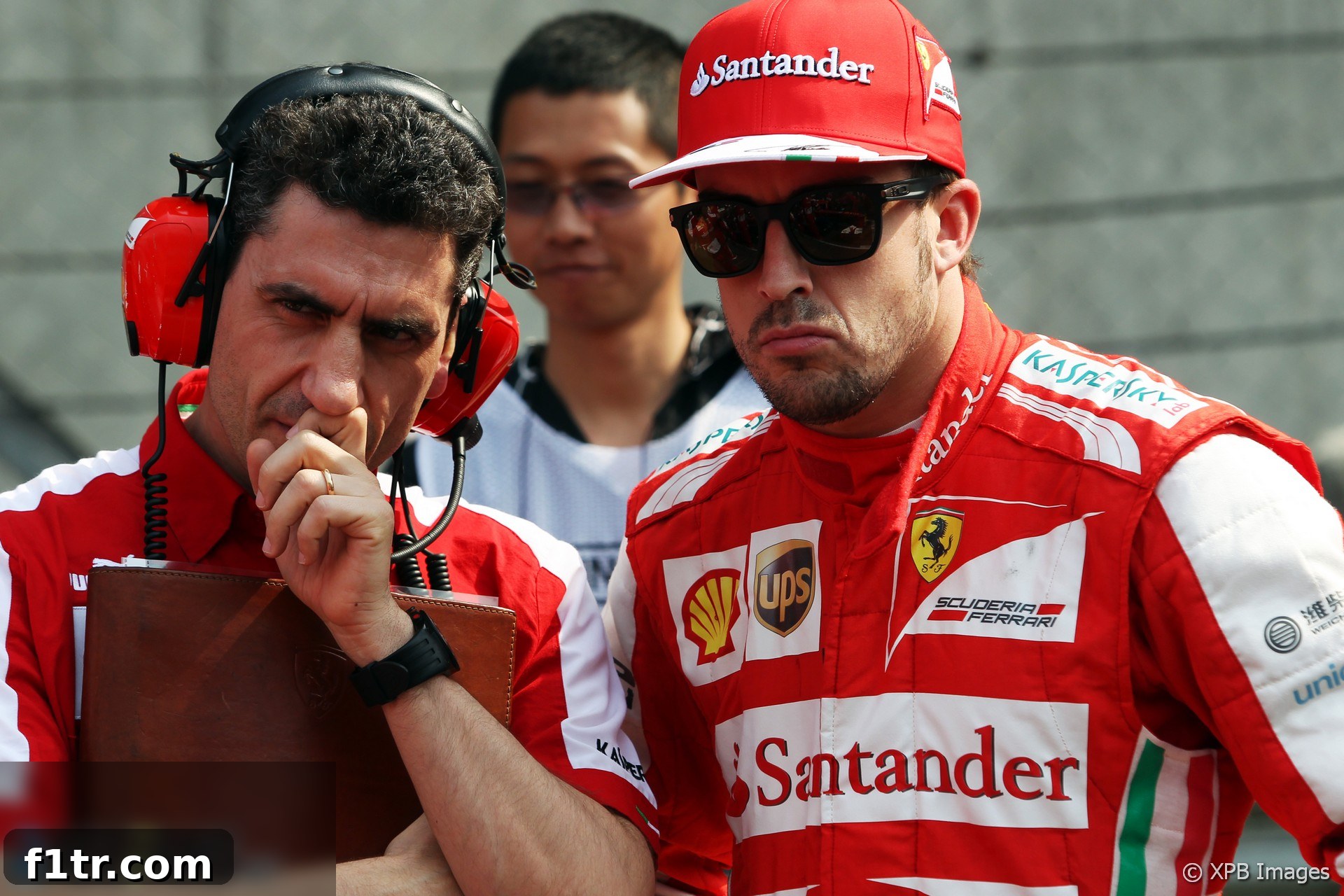
Fernando Alonso Escapes Driver Penalty in Hungarian GP DRS Incident; Ferrari Fined
In a significant development following the 2013 Hungarian Grand Prix, legendary Formula 1 driver Fernando Alonso was cleared of any direct punishment for an unauthorised activation of the Drag Reduction System (DRS) during the race. However, his team, Scuderia Ferrari, was held accountable for the technical breach and subsequently incurred a substantial fine of €15,000 (approximately £12,945 at the time). This incident sparked considerable discussion across the paddock and among fans, highlighting the intricate nature of F1 regulations and the razor-thin margins that define success and failure in the sport.
The controversy arose when stewards meticulously reviewed telemetry data from Alonso’s Ferrari F138. Their investigation revealed that the Spanish driver had activated his DRS on three distinct occasions when he was not within the mandatory one-second proximity to another car – a fundamental requirement for legal DRS deployment in designated zones. This breach, while seemingly minor in isolation, carries significant weight in a sport where every fraction of a second is crucial.
Understanding the Drag Reduction System (DRS) in Formula 1
To fully grasp the gravity of this incident, it’s essential to understand the mechanics and regulations surrounding the Drag Reduction System. Introduced in Formula 1 in 2011, DRS was designed to enhance overtaking opportunities and inject more excitement into races. It functions by allowing the driver to temporarily flatten a movable flap on the car’s rear wing, significantly reducing aerodynamic drag and thus increasing top speed on specific straights.
However, its use is strictly regulated to maintain fairness and safety. Drivers are permitted to activate DRS only in pre-defined “DRS zones” on the track, typically long straights. Crucially, a driver can only deploy DRS if they are within one second of the car ahead at a specific detection point preceding the DRS zone. This rule ensures that the system serves its purpose of aiding overtaking rather than simply giving faster cars an unfair advantage. When activated illegally, even inadvertently, it constitutes a technical infringement that can alter race outcomes and impact sporting integrity.
The Incident: Three Unauthorised DRS Activations
During the Hungarian Grand Prix, a race known for its tight, twisty layout and historically challenging overtaking opportunities, Fernando Alonso’s Ferrari exhibited three instances of illegal DRS deployment. Each time, the system was engaged outside the one-second delta to a preceding competitor, meaning Alonso gained a temporary, albeit small, speed advantage without being entitled to it. The sophisticated telemetry systems present in modern Formula 1 cars immediately flagged these discrepancies, prompting an official review by the race stewards.
The fact that the infringement occurred three times suggested a systemic issue rather than a singular, momentary lapse. The stewards, tasked with upholding the fairness and adherence to the technical and sporting regulations, launched a full investigation, summoning representatives from Ferrari and carefully examining all available data and team communications.
The Stewards’ Investigation and Ferrari’s Accountability
The core of the stewards’ ruling shed light on the root cause of the infringement, pointing directly to a technical oversight within the Ferrari team. Their official statement clarified: “The DRS enabling system was not changed by the team from the pre-race to the race setting.” This critical detail was central to their final decision, absolving Alonso of deliberate wrongdoing while penalising the team.
The Technical Glitch: Pre-Race vs. Race Settings
Modern Formula 1 cars are marvels of engineering, controlled by highly complex electronic systems. Before each race, teams configure various parameters, including those related to auxiliary systems like DRS. The “pre-race setting” might allow for DRS activation during practice or qualifying sessions under different conditions, whereas the “race setting” imposes the strict one-second rule. In this instance, it appears Ferrari failed to transition Alonso’s car’s DRS system from its pre-race configuration to the race-specific regulations. This oversight meant the car’s internal logic was still allowing DRS deployment even when the mandatory proximity rule was not met.
Such technical glitches, while rare, underscore the immense pressure and complexity involved in preparing a Formula 1 car for competition. With thousands of parameters and settings to manage, even a small configuration error can lead to a breach of regulations. Ferrari, as the constructor and entrant, bears the ultimate responsibility for ensuring its machinery complies with every facet of the rulebook, a principle strongly upheld by the FIA.
Driver’s Reaction to Incorrect Messaging
Consequently, due to this configuration error, Fernando Alonso repeatedly received “DRS enabled” messages on his steering wheel display and through his headset, even when he was not legitimately entitled to use the system. As a highly trained and disciplined driver, Alonso reacted instinctively to these prompts, deploying the DRS as instructed by the car’s systems. The stewards acknowledged this human element, understanding that a driver’s focus in the heat of a Grand Prix race is absolute, and they rely heavily on the accuracy of the information provided by their car and team.
The ruling implicitly recognised that Alonso did not intentionally seek to gain an unfair advantage. His actions were a direct consequence of incorrect information being fed to him by a faulty system configuration. This distinction between a deliberate breach by a driver and a technical error originating from the team is crucial in how penalties are assessed in Formula 1.
Assessing Sporting Advantage and Disadvantage
During their deliberations, the stewards weighed both the perceived advantage gained and a unique disadvantage suffered by Alonso’s car. They noted that “whilst a small sporting advantage (less than one second over the entire race) was gained,” the team also argued that “car three [Alonso] also suffered a disadvantage by being unable to use DRS on every legitimate occasion.”
The “less than one second over the entire race” figure suggests that the cumulative impact of the three illegal activations was minimal in terms of total lap time. This quantification is vital for the stewards in determining the severity of the infringement. However, the counter-argument from Ferrari highlighted that the malfunctioning system also prevented Alonso from deploying DRS when he *was* legitimately within the one-second window behind a competitor. This effectively meant the system was unreliable, sometimes granting an illegal advantage, but other times denying a legal one, creating an inconsistent and potentially frustrating experience for the driver. This nuanced perspective undoubtedly played a role in the decision to fine the team rather than penalise the driver.
Why Fernando Alonso Was Not Penalized
The decision to fine Ferrari but not penalise Fernando Alonso directly for the DRS infringement underscores a fundamental principle in Formula 1 adjudication: intent and responsibility. The stewards’ investigation concluded that the fault lay squarely with the team’s technical setup, not with a deliberate action or a clear error on Alonso’s part. He was simply following the instructions relayed by his car’s systems, which had been incorrectly configured by the team.
Had the stewards found evidence that Alonso knowingly activated DRS when not entitled, or disregarded specific team instructions, a driver penalty (such as a time penalty, grid drop, or even disqualification) would have been highly probable. However, in this case, the chain of events pointed to a technical malfunction for which the team was ultimately responsible. This ruling aligns with previous precedents where technical non-compliance, even if resulting in a slight performance gain, often leads to team fines or constructor points deductions rather than direct driver penalties, provided the driver acted in good faith.
Implications for Ferrari and Formula 1 Regulations
The €15,000 fine served as a clear message to Ferrari and indeed to all teams: technical diligence is paramount. While the sum itself might not cripple a major Formula 1 outfit, the incident highlighted areas where even top-tier teams can make critical errors. It reiterated that maintaining perfect compliance with the ever-evolving and increasingly complex technical regulations is a continuous challenge requiring unwavering attention to detail.
For Formula 1 as a whole, this incident further cemented the importance of strict regulatory oversight. DRS, while adding excitement, also adds a layer of complexity to the rules. The precision of detection points, activation zones, and the one-second delta leaves little room for error. The stewards’ thorough investigation and reasoned decision reinforced confidence in the fairness of the sport’s judicial process, demonstrating that while technical breaches are penalised, driver intent is also carefully considered.
The 2013 Hungarian Grand Prix: A Race of Scrutiny
The 2013 Hungarian Grand Prix itself was a memorable event, ultimately won by Lewis Hamilton, marking his first victory for Mercedes. Against this backdrop, the DRS incident involving Fernando Alonso, a multiple world champion and fierce competitor, added another layer of intrigue to a race weekend already filled with high-stakes action. While the incident did not directly alter the podium positions, it served as a potent reminder of the microscopic level of scrutiny under which every aspect of Formula 1 racing operates.
Conclusion: Precision, Responsibility, and the Fine Line in F1
The Fernando Alonso DRS incident at the 2013 Hungarian Grand Prix offers a compelling case study in the exacting world of Formula 1. It showcased the sport’s commitment to upholding its intricate regulations, the critical role of technology, and the fine line between driver action and team responsibility. While Fernando Alonso was spared a personal penalty due to the technical nature of the glitch, Ferrari’s significant fine underscored the absolute necessity for teams to ensure their systems are faultlessly configured and compliant at all times. In Formula 1, where milliseconds define victory and defeat, precision and accountability are not just desirable – they are indispensable.
Further Reading: 2013 Hungarian Grand Prix Insights
- Hamilton takes second Driver of the Weekend win
- Hungarian GP rated among top three races so far
- 2013 Hungarian Grand Prix team radio transcript
- Why the Hungarian Grand Prix is a must-see race
- 2013 Hungarian Grand Prix fans’ video gallery
Browse all 2013 Hungarian Grand Prix articles
Image © Ferrari/Ercole Colombo