Haas F1’s 2019 Nightmare: Guenther Steiner’s Plea to Erase a Disappointing Season
A Season of Unprecedented Frustration for the Haas F1 Team
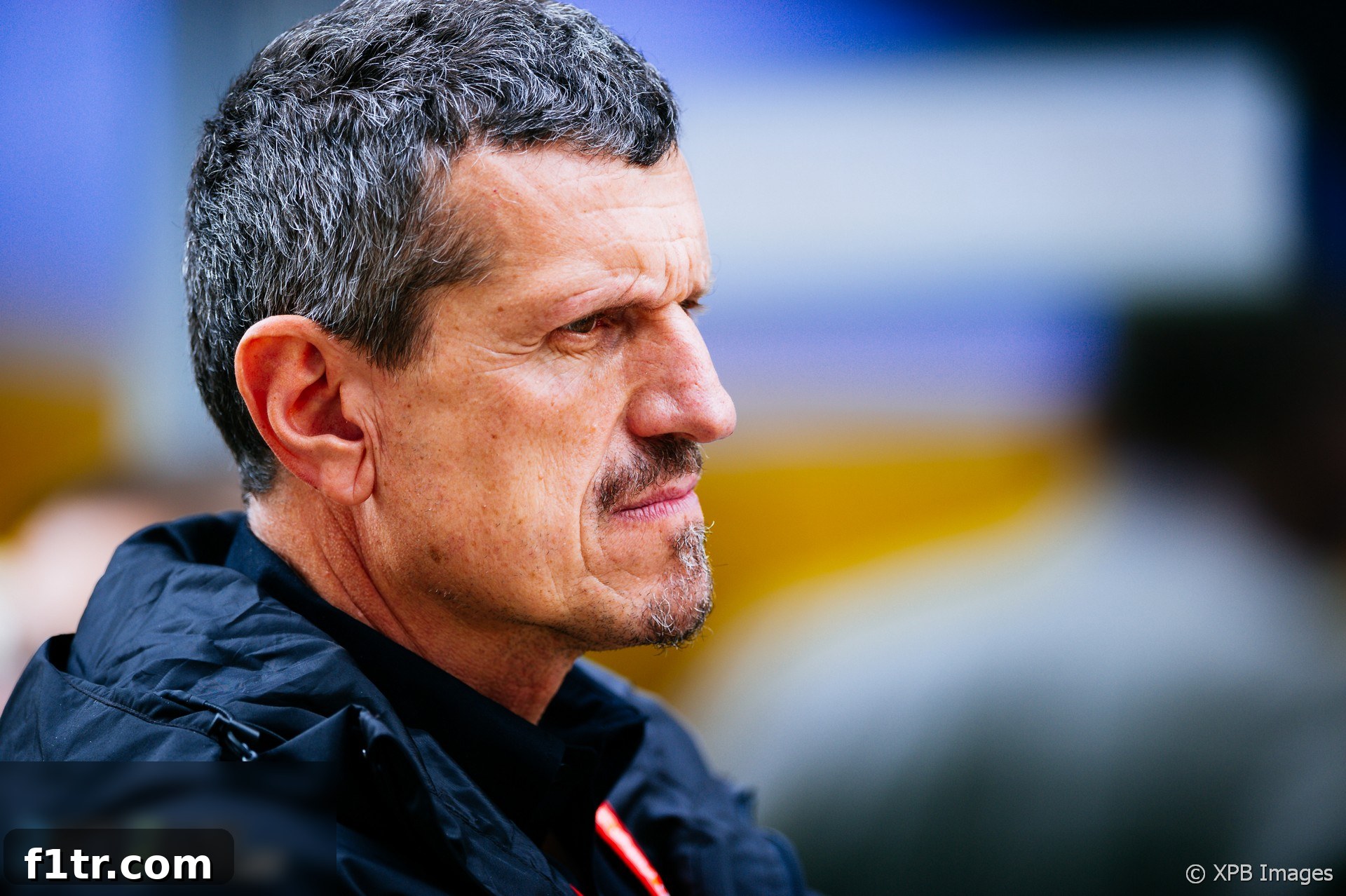
From the vibrant spectacle of the Formula 1 paddock, few statements resonate with such raw frustration as those uttered by Haas F1 Team Principal Guenther Steiner towards the close of the 2019 season. Following a dismal performance at the team’s home race, the United States Grand Prix at the Circuit of the Americas (COTA), Steiner minced no words in expressing his profound disappointment. “For me, 2019 never happened,” he declared, his voice a clear reflection of a season plagued by technical woes and elusive performance. This sentiment was not merely a fleeting comment but a desperate plea to mentally cleanse the slate, hoping to “forget about that year” entirely and move forward.
The COTA weekend, intended as a celebratory affair on American soil, instead encapsulated all the difficulties Haas had endured, leaving Steiner and his crew yearning for its swift conclusion. The team, which had established itself as a formidable midfield contender in previous years, found itself grappling with an utterly unpredictable machine, a predicament that sapped morale and left engineers scratching their heads. The stark contrast between their promising 2018 campaign, which saw them achieve their best-ever fifth place in the Constructors’ Championship, and the crushing reality of 2019, underscored the depth of their struggles. What was once a nimble and effective operation seemed to be mired in an endless loop of underperformance and confusion.
The Enigma of the VF-19: A Car with a Mind of its Own
Unpredictable Nature and Aerodynamic Flaws
At the very core of Haas’s 2019 struggles lay the VF-19, a car that quickly gained a notorious reputation for its “very temperamental” nature. This unpredictability was vividly illustrated by Romain Grosjean’s mystifying crash during the second practice session at COTA. Despite the French driver’s extensive experience and intimate knowledge of the circuit, he was left bewildered by the incident, a stark testament to the car’s inherent flaws. Steiner’s analysis pointed directly to the VF-19’s critical weakness: an extreme sensitivity to external factors that would be minor for most other F1 machines. “A little bump or something and you lose the downforce, and going through them corners there in sector one is pretty fast. You just need to lose a little bit of downforce and you spin out,” Steiner explained, highlighting the treacherous tightrope the drivers were forced to walk.
This characteristic made the car incredibly difficult to drive consistently on the limit, with drivers constantly battling an unstable platform. The core issue revolved around persistent balance problems that defied conventional solutions and revealed a fundamental disconnect in the car’s aerodynamic philosophy. The VF-19 struggled to generate consistent downforce across varying speed ranges and cornering conditions. Furthermore, the car exhibited significant correlation issues between its performance in the wind tunnel and its behavior on the actual track. What looked promising in simulations often failed to translate into real-world pace, leaving the team with a limited understanding of how to genuinely improve the car’s performance. This meant that every track, every session, and even minor environmental changes could completely alter the car’s handling characteristics, turning a potential contender into a backmarker without warning.
The Vicious Cycle of Upgrades and Setbacks
Throughout the year, the team resorted to the drastic measure of removing planned aerodynamic upgrades, a clear indication that new parts often exacerbated rather than alleviated the underlying instability. This was not a case of fine-tuning; it was a fundamental aerodynamic and mechanical disconnect that baffled the engineering team. “This car is so temperamental, from one session to the other,” Steiner lamented. “Before it was like from Friday to Saturday, now it’s from FP3 to qualifying, you don’t know what is going to happen.” Such erratic behavior meant that setup changes, often crucial for optimizing performance in varying track and weather conditions, were a constant gamble. A slight shift in wind direction, a minor temperature fluctuation, or even changing track grip levels could transform the VF-19 into an entirely different, often unmanageable, machine.
“It’s just like a little bit of wind change, a little bit of temperature change, it’s a different car. But it’s not like, ‘okay a little bit more front wing’ or ‘a little bit more balance’ or something, no, it’s completely unstable,” Steiner emphasized. This level of instability wasn’t just a challenge; it was a critical handicap in the hyper-competitive world of Formula 1. Unlike rivals who could incrementally adjust their cars for optimal performance, Haas found itself in a constant struggle to find even a baseline of predictability. The unpredictable aerodynamic platform of the VF-19 also significantly impacted tire management, making it incredibly difficult for drivers to maintain optimal tire temperatures and prevent excessive degradation, adding another layer of complexity to their already formidable challenge.
Driver Challenges and Team Morale
Battling an Unruly Beast
The VF-19’s capricious nature had a profound impact on both of Haas’s experienced drivers, Romain Grosjean and Kevin Magnussen. Each driver has a distinct style – Grosjean typically prefers a very stable rear end, while Magnussen can be more aggressive with a looser car. However, the VF-19 offered neither driver the stability or predictability they needed to perform at their best. They were forced to adapt to a machine that provided little confidence, hindering their ability to extract its maximum potential. Grosjean’s frustration was often palpable, as he struggled to understand why a car that occasionally showed flashes of pace could be so utterly uncooperative at other times, sometimes within the same race weekend. Magnussen, known for his ability to wrestle difficult cars, also found himself constantly battling the car’s inherent inconsistencies, leading to a visible erosion of his usually robust confidence.
The psychological toll of driving such an unpredictable car at speeds exceeding 200 mph is immense. It eroded driver confidence, leading to more errors and often forcing them into conservative driving styles, which further hindered the team’s performance. They spent more time fighting the car than fighting their rivals, a demoralizing situation for any racing driver at the pinnacle of motorsport. The constant battle with the car’s setup and the inability to trust its behavior meant that both drivers were pushed to their limits, both physically and mentally, throughout the gruelling season.
The Weight on the Team’s Shoulders
Beyond the cockpit, the constant struggles of the VF-19 affected the entire Haas F1 team. Engineers tirelessly worked long hours, analyzing data and trying countless setup variations, often without clear solutions. Mechanics were equally strained, executing frequent and often desperate setup changes between sessions, hoping for a breakthrough that rarely materialized. The strategic team also faced immense pressure, as race strategy became a gamble; predicting the car’s behavior over a full race stint, especially with its tire management issues, was nearly impossible. This collective strain on morale was significant for an independent team like Haas, where every individual’s contribution is crucial.
A string of poor results and the inability to understand their own car’s performance can quickly lead to disillusionment within any sporting outfit. For Haas, a relatively young team in Formula 1, maintaining team spirit and focus amidst such adversity was a testament to Steiner’s leadership and the team’s inherent resilience. However, the palpable frustration and disappointment permeated through every level of the organization, making the desire to simply close the chapter on 2019 an understandable sentiment.
The Unforgiving Reality: Championship Plunge and Financial Implications
From Fifth to Ninth: A Dramatic Reversal of Fortune
The tangible result of the VF-19’s capricious nature was a dramatic fall from grace in the Constructors’ Championship. After achieving its best-ever finish of fifth in 2018 with a commendable 93 points, a testament to its efficient operational model and strong technical partnerships, Haas plummeted to a humbling ninth place in 2019, securing a mere 28 points. This precipitous decline was underscored by a dire points tally; the team managed to finish in the points just five times throughout the entire season. For a team that had shown flashes of genuine potential to challenge the established midfield order, this regression was a bitter pill to swallow. The competitive landscape of Formula 1 is unforgiving, and a season marked by such inconsistency quickly saw Haas lose ground to rivals. Teams like McLaren, Renault, and even Toro Rosso surged ahead, leaving Haas isolated in the lower echelons of the standings.
The financial implications of such a dramatic drop, particularly for a privately-owned outfit like Haas, are profound. Formula 1’s prize money distribution is heavily weighted by championship position, meaning a fall from fifth to ninth represents a significant reduction in revenue. This loss of income directly impacts the team’s budget for future development, operational costs, and investment in talent and infrastructure, making the task of recovering even more challenging. Without the backing of a large manufacturer or a mega-rich owner, every point scored, and every championship position gained, directly translates into vital resources for survival and competitiveness.
Reputational Damage and Sponsorship Pressures
Beyond the financial hit, a poor season inevitably affects a team’s reputation. Consistently underperforming, especially after a successful previous year, makes it harder to attract top engineering talent and retain skilled personnel who might seek opportunities elsewhere. Furthermore, maintaining sponsor interest and securing new partnerships becomes a more arduous task when on-track results are consistently disappointing. Sponsors invest in Formula 1 for visibility and association with success, and a team struggling at the back of the grid offers limited returns on their investment. While Guenther Steiner and his team handled the public perception with their characteristic frankness, the internal and external pressures mounted throughout the season, adding layers of stress to an already challenging technical situation.
Guenther Steiner’s “New Book”: A Vision for the Future
A Complete Reset, Not Just a Tweak
With the frustrating 2019 season drawing to a close, Guenther Steiner’s focus was firmly on the future, envisioning a complete break from the disappointing past. His declaration, “We have to do three more races and then we are over. Then I hope we can open a new book. Not a new page, a new book,” was more than just hyperbole; it was a deeply felt desire for a fundamental reset. A “new book” implies a complete re-evaluation, a fresh start unburdened by the specific technical and philosophical errors of the previous year. It suggests a departure from incremental adjustments and a commitment to addressing the root causes of the VF-19’s shortcomings, rather than merely patching over symptoms.
For Haas F1, this meant an intensive winter period dedicated to understanding precisely where the 2019 car went wrong and implementing robust changes for the 2020 challenger. This would involve a thorough post-mortem analysis of the VF-19’s design, reviewing aerodynamic philosophy, examining their correlation methods, and potentially reassessing development priorities. The goal was to eliminate the fundamental unpredictability that plagued the car, focusing on building a stable and predictable platform that drivers could confidently push to the limit. Steiner’s demand for a “new book” signaled a critical shift in approach, moving beyond troubleshooting individual symptoms to fundamentally rethinking their design philosophy and development processes to ensure that such an unpredictable and unstable car would not be replicated.
The Path to Recovery: Challenges and Hopes for 2020
The challenge for smaller teams like Haas is always balancing development with limited resources, and a season like 2019 severely tests that balance. The lessons learned from the VF-19’s aerodynamic deficiencies, its temperamental behavior, and its inability to respond predictably to setup changes would be crucial for the subsequent season’s design. The utmost importance was placed on addressing the correlation issues, ensuring that what worked in the wind tunnel and computational fluid dynamics (CFD) simulations translated effectively and reliably to track performance. Building a predictable car allows engineers to optimize setups effectively and, crucially, allows drivers to extract maximum performance without constantly battling the machine itself. Predictability fosters confidence, and confidence translates into speed.
Despite the immense difficulties faced in 2019, the Haas F1 Team, under Steiner’s frank and resolute leadership, remained determined. The team’s resolve to put the “year that never happened” firmly behind them was palpable, with a collective hope that the coming season would usher in an era of greater stability, improved performance, and a return to the competitive form that had once defined the Haas F1 Team. The journey to reclaim their position in the midfield would be arduous, but the experience of 2019 provided invaluable, albeit painful, lessons that were essential for their long-term growth and success in the demanding world of Formula 1.