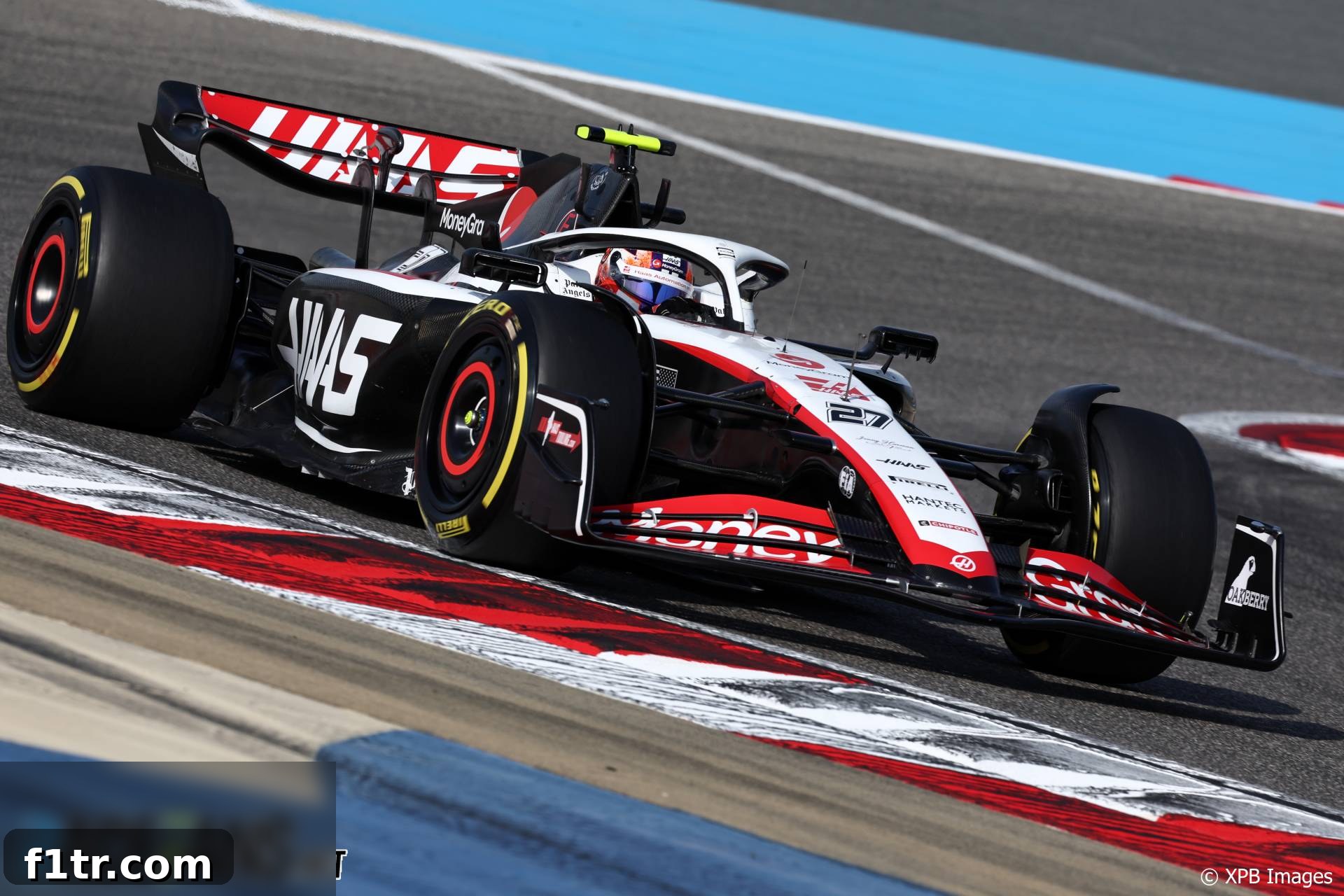
The Haas Formula 1 team is embarking on a new chapter, as team principal Guenther Steiner confirms their return to a “normal” development cycle for the 2023 season. This marks a significant shift for the American outfit, which had strategically diverted its resources in previous years to navigate the sport’s evolving landscape. After a challenging period that saw them prioritize long-term stability over immediate gains, Haas is now poised to consistently introduce upgrades and compete on a more even footing with their rivals throughout the championship campaign.
The journey back to normalcy has been a calculated one. Haas famously made the bold decision to effectively sacrifice their 2021 season, electing to halt all development on their existing car. This radical strategy was driven by the impending overhaul of Formula 1’s technical regulations for the 2022 season, which promised a new era of racing with entirely redesigned machinery. By dedicating their limited financial and engineering bandwidth entirely to the development of their 2022 challenger, the VF-22, Haas aimed to hit the ground running under the new rules. While this commitment resulted in a last-place finish in the 2021 Constructors’ Championship with zero points, the gamble appeared to pay off handsomely in 2022. The team scored points in the very first race of the season and ultimately secured an impressive eighth place in the standings by the year’s end, a testament to their foresight and strategic planning.
Despite the significant gains made in 2022, the team’s development approach remained somewhat constrained. Haas introduced only a limited number of upgrades throughout that season, with just one major package arriving before the traditional summer break. This was largely a consequence of the intensive initial development period for the new car. However, looking ahead to 2023, Steiner assures that the team now possesses the infrastructure and capacity to deliver a steady stream of enhancements for their VF-23. This continuous improvement philosophy is fundamental to remaining competitive in the hyper-evolving world of Formula 1.
“As I often tell my team now, regardless of our current performance, we are officially back to being what I consider a ‘normal’ Formula 1 team – whatever that implies in such a unique sport,” Steiner explained to gathered media, including esteemed outlets focusing on motorsports. “This means we are committed to continuous development. In 2021, of course, development was non-existent, so any comparison would be moot. I genuinely believe our team did an exceptional job in 2021 to bring out a competitive 2022 car, but it was all executed under immense time pressure, leading to numerous issues we had to rectify on the fly. This year, however, the team has matured significantly; they are working together more cohesively and efficiently, which is vital for sustained progress.”
Steiner elaborated on the implications of this newfound ‘normalcy’: “For the 2023 season, our approach mirrors that of any established team on the grid. If we find ourselves not where we aspire to be, our immediate focus shifts to diagnosing the problem: ‘Where are our weaknesses? What specific areas require development? Let’s tackle it head-on.’ Crucially, with the Formula 1 budget cap now firmly in place, we have the financial framework to execute these plans. This financial stability is a game-changer for independent teams like ours, allowing us to plan long-term development strategies without fear of overspending or being outmuscled by larger rivals.”
“As we progress deeper into the season, I anticipate we will gain a clearer understanding of our car’s strengths and weaknesses, particularly after the initial races,” Steiner continued, outlining the strategic planning. “This mid-season evaluation will dictate our future development path, identifying where we need to reinforce the team or the car’s performance. The objective is to consistently build upon our foundation, ensuring we address any areas that prevent us from maximizing our potential on track. This iterative process of identifying, designing, testing, and implementing improvements is the hallmark of a healthy, competitive Formula 1 operation.”
While Steiner confirms the team’s ambition to introduce a range of new components to the VF-23 throughout the season, he also stressed the meticulous evaluation process that precedes any manufacturing commitment. Haas will only proceed with producing and implementing upgrades if they are absolutely convinced that these parts will deliver a tangible and significant boost to performance. This pragmatic approach is essential under the stringent budget cap regulations, where every dollar spent must contribute meaningfully to track performance.
“We have a robust plan in place for upgrades that will be rolled out across the entire season,” Steiner stated confidently. “However, I refrain from announcing precise dates, because the nature of development in Formula 1 is inherently fluid. If our wind tunnel simulations and performance targets are not met during the development phase, we will not proceed with manufacturing those upgrades. To do so would simply be a regrettable waste of valuable financial resources and engineering effort. We patiently await conclusive results before committing to production. Rest assured, though, multiple updates are slated to arrive throughout the year.”
The team principal further elaborated on this cautious, data-driven philosophy: “We do have tentative timelines established for various upgrade packages. But if the performance improvements projected in the wind tunnel do not meet our stringent targets, we simply won’t release those parts at the scheduled time. What would be the logic in manufacturing a different component if it doesn’t demonstrably enhance performance? Such a move would only serve to deplete our budget cap unnecessarily, undermining our overall development strategy. Every upgrade must be a genuine step forward.”
Projecting the timeline for the first significant upgrade package, Steiner indicated that major enhancements for the VF-23 are tentatively planned to debut around the Spanish Grand Prix. This event, traditionally held at the Circuit de Barcelona-Catalunya, is often considered round eight of the season and typically takes place in early June. Barcelona’s familiar characteristics and diverse range of corners make it an ideal testing ground for new components, allowing teams to gather valuable data on their effectiveness.
“At this precise moment, our internal planning targets the Spanish Grand Prix for the introduction of something substantial,” he confirmed. “However, this is still very much a work in progress. We are continuously evaluating the development process and need to ensure we achieve the desired performance gains in the wind tunnel before we give the green light for production. The initial concepts are progressing well, and if everything aligns with our plan and we hit our ambitious targets, then indeed, the first major wave of upgrades will be making its debut.”
Supporting Independent Formula 1 Coverage
High-quality, independent journalism is crucial for a thriving community of Formula 1 enthusiasts. It provides depth, analysis, and perspectives often missed by mainstream reporting, fostering a deeper understanding and appreciation for the sport.
By contributing a small amount monthly or annually, you empower dedicated journalists and content creators to continue their vital work. Your support helps cover the essential costs associated with producing original F1 content: including travel to events, in-depth research, writing, editing, hosting, and maintaining platforms to deliver timely and insightful reports. This collective backing ensures the longevity and integrity of unbiased Formula 1 news and analysis.
For over a decade, independent F1 coverage has been proudly supported by its readership. If you value detailed reports, unique interviews, and critical analysis free from external pressures, please consider contributing to the future of independent F1 journalism today. Your contribution helps sustain a unique voice in the sport and ensures fans always have access to unfiltered insights.
- Learn More About Supporting F1 Journalism
- Frequently Asked Questions on Support Programs
Haas F1 Team: 2023 Season Insights & Development
- Haas F1’s Strategic Gamble: A Look Back at the 2021-2022 Transition
- The Impact of F1’s Budget Cap on Team Development Strategies
- Guenther Steiner on Leadership and Cultivating Team Cohesion at Haas
- Decoding F1 Upgrades: From Wind Tunnel to Race Track Performance
- Analysis: How Haas Plans to Maintain Mid-Grid Competitiveness in 2023
Browse all 2023 F1 Season Articles