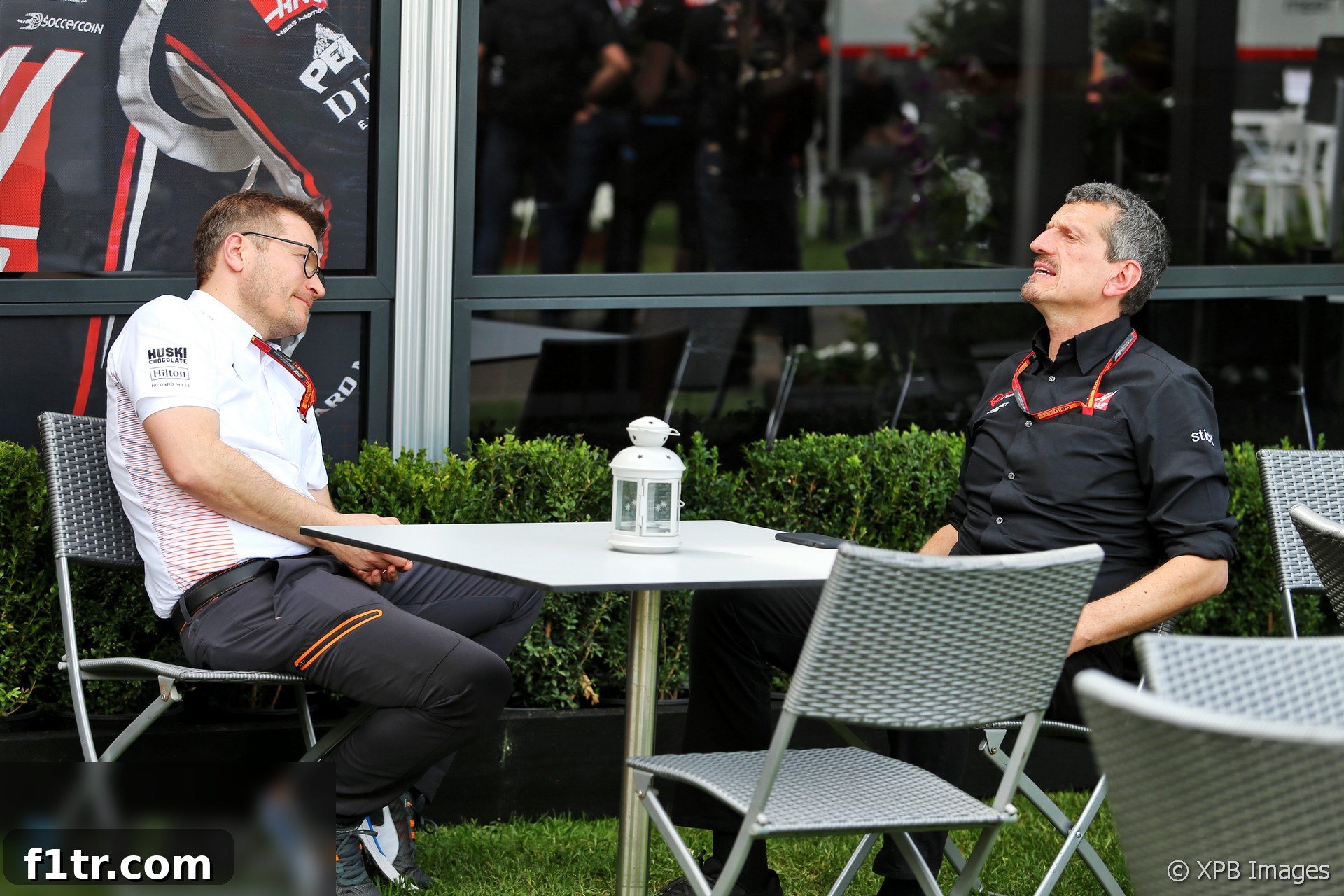
Steiner’s Optimism: Formula 1’s Resilience Amidst Global Crisis
Haas team principal Guenther Steiner has expressed a firm belief that Formula 1 will successfully navigate the current global health crisis and return to competitive racing later this year. His optimistic outlook comes at a time of unprecedented disruption, as the sport grapples with the challenges posed by the Coronavirus pandemic, which has brought professional sports worldwide to a grinding halt.
The initial phase of the 2020 Formula 1 season saw a series of rapid and unavoidable cancellations and postponements. Four Grand Prix events were immediately called off, with their reinstatement on a revised calendar remaining highly uncertain. Furthermore, a multitude of other races faced considerable doubt as numerous nations implemented stringent public event limitations and strict travel restrictions in a desperate effort to curb the spread of the virus. This widespread disruption tested the very fabric of the sport, forcing teams, organisers, and fans into a period of anxious waiting.
The Unprecedented Challenge: F1’s Stalled Start to 2020
The dawn of the 2020 Formula 1 season was meant to usher in a new era of competitive racing, but instead, it was met with an unforeseen adversary: the COVID-19 pandemic. As the virus spread globally, the meticulously planned F1 calendar began to unravel. Race after race fell victim to government directives, public health concerns, and the sheer logistical impossibility of staging international sporting events. Teams found themselves in an agonizing limbo, with their multi-million-dollar operations stalled, their personnel grounded, and the roar of engines replaced by an eerie silence.
Steiner, a veteran figure known for his direct and pragmatic approach, conveyed his conviction that F1 possesses the resilience to overcome these hurdles. “I’m pretty sure we will race this year and hopefully we get this virus under control for the whole world so the world can go back to a normal life,” he stated in an interview with Ziggo Sport. This sentiment reflects not just a hope for the sport, but a broader aspiration for global recovery, underlining the interconnectedness of Formula 1 with the wider world.
The Australian Grand Prix Controversy: A Defining Moment
The events leading up to the scheduled Australian Grand Prix in Melbourne serve as a poignant case study in the early days of the pandemic’s impact on Formula 1. The sport faced significant criticism for its initial attempts to proceed with the race despite escalating concerns surrounding the Coronavirus. Teams and personnel had already travelled halfway across the globe, set up their garages, and were preparing for the season opener, creating a palpable tension between the desire to race and the looming health risks.
The situation reached a critical point with McLaren’s dramatic withdrawal from the weekend’s proceedings after one of its team members tested positive for the virus. This pivotal moment forced a reckoning, highlighting the immediate and undeniable threat to the health and safety of everyone involved. The subsequent delayed response from F1 organisers in officially cancelling the event further intensified public and internal scrutiny, underscoring the complexities and pressures inherent in making such monumental decisions on a global stage.
Balancing Passion and Safety: A Difficult Decision
Steiner himself acknowledged the profound difficulty of the decision to halt racing, particularly given the varying circumstances and differing perspectives among the numerous stakeholders. For those deeply embedded in the sport, the allure of the track and the competitive spirit are ingrained. “The decision is not easy because you come here to race,” he explained. “As a racer that is what you want to do. You look forward to the first race of the season as well, we are all fresh and cannot wait to go racing.” This quote perfectly encapsulates the internal conflict experienced by many – the immense dedication to their craft clashing with an unprecedented global health crisis.
The abrupt halt was a sobering reminder that even in the high-octane world of Formula 1, certain realities supersede sporting ambition. “Then this comes in and then you need to pace yourself in and say there is some safety reasons for a lot of people and the whole world is upside-down in the moment because of this virus. So it’s very difficult to reason about that,” Steiner elaborated. This internal struggle between professional duty and a greater responsibility for public health weighed heavily on all involved, from team principals to drivers and engineers.
The Intricate Web of Stakeholders: Navigating Diverse Interests
The process of making such a far-reaching decision, like cancelling a Grand Prix, is far from simple, involving a myriad of interconnected parties with often divergent interests. Steiner highlighted this intricate network: “But the decision comes out of it, like a lot of things. And you’ve got a lot of parties involved. You’ve got the local promoter, you’ve got the the promoter, you’ve got the federation, you’ve got 10 teams with different backgrounds.”
Breaking down this complex ecosystem reveals the challenges faced:
- Local Promoters: These entities are responsible for the on-the-ground organisation of a Grand Prix, investing significant capital and resources into infrastructure, logistics, and ticketing. Cancellations represent massive financial losses for them, impacting local economies and tourism.
- Formula 1 Management (Liberty Media): As the commercial rights holder, F1 Management is responsible for the overall promotion and financial health of the sport. Their revenue streams, largely dependent on race fees, broadcasting rights, and sponsorship, are severely hit by cancellations, creating immense pressure to salvage a viable season.
- The FIA (Fédération Internationale de l’Automobile): As the governing body, the FIA’s primary concern is the safety and regulatory framework of the sport. They must balance sporting integrity with public health directives, often liaising with national governments and health authorities.
- The Ten Teams: Each of the ten Formula 1 teams operates as a multi-million-dollar enterprise, employing hundreds of highly skilled personnel. Their financial models rely heavily on prize money, sponsorship, and technical partnerships. A curtailed season means reduced income, threatening job security and future development. Furthermore, teams have diverse national origins, leading to different perspectives based on their home countries’ specific health regulations and economic situations. Smaller, privately-owned teams like Haas are particularly vulnerable to financial shocks.
- Sponsors and Broadcasters: These crucial partners invest heavily in F1 for global visibility. A lack of racing undermines their return on investment, making future commitments uncertain.
- Host Governments: Often, host governments provide substantial funding and support for Grand Prix events, viewing them as opportunities for national prestige and economic stimulus. Their decisions regarding public gatherings directly impact the feasibility of races.
This multi-layered decision-making process underscores the immense coordination required and the difficulty in achieving universal consensus, especially during an unprecedented global crisis where health and safety must take absolute precedence over commercial interests.
Charting a Path Forward: Optimism for a Resilient Return
Despite the initial setbacks and the ongoing uncertainty, the pervasive sentiment within Formula 1, as articulated by Guenther Steiner, remains one of cautious optimism. The sport, known for its rapid innovation and adaptability, is actively exploring various scenarios for a return to racing. These include a condensed calendar featuring multiple back-to-back races, potentially held at European circuits, and the prospect of ‘ghost races’ – events staged without spectators to minimise public health risks.
The challenges of resuming a global sport during a pandemic are formidable, encompassing complex travel logistics, rigorous testing protocols for all personnel, and the creation of ‘biosphere’ environments to protect teams. However, the determination to race, to bring the spectacle of Formula 1 back to its passionate global fanbase, remains undimmed. The resilience demonstrated by the teams and the sport’s governing bodies in planning for a safe return reflects a deep-seated commitment to its future.
Ultimately, the 2020 Formula 1 season, whenever and however it fully unfolds, will stand as a testament to the sport’s capacity for adaptation and perseverance in the face of extraordinary adversity. While the path ahead is still fraught with challenges, the collective will to overcome them, as embodied by Steiner’s optimistic outlook, suggests that the roar of Formula 1 engines will indeed be heard again this year.