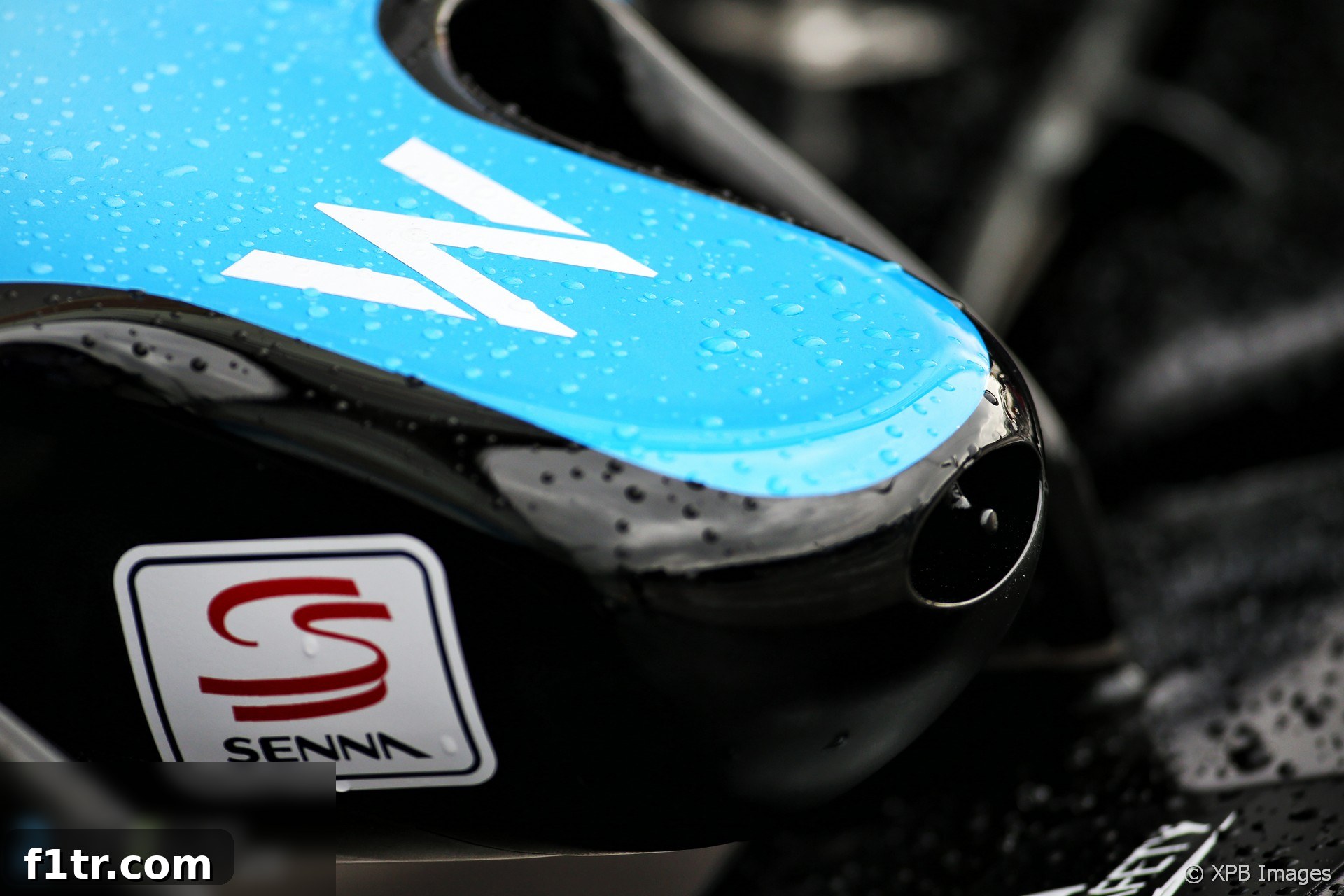
In a significant announcement that marks a new chapter for the legendary Williams Formula 1 team, CEO Jost Capito has confirmed that the iconic tribute logo to three-time world champion Ayrton Senna will no longer be featured on the nose of their Grand Prix cars. This decision, communicated as the team embraces a fresh era, concludes a deeply entrenched tradition spanning nearly three decades, paying homage to one of motorsport’s most revered figures.
For 28 years, every Formula 1 car produced by Williams since the tragic events of the 1994 San Marino Grand Prix has carried a poignant reminder of Senna’s enduring legacy. It was at Imola, behind the wheel of a Williams FW16, that Senna lost his life. In the aftermath, the team adopted his personal ‘S’ logo, often accompanied by a graphic and the Portuguese phrase “Ayrton Senna sempre” (Ayrton Senna forever), as a permanent fixture on their vehicles. This tribute served not only as a remembrance of a fallen champion but also as a symbol of the profound impact he had on the team and the sport itself.
However, observant fans quickly noted the absence of the familiar ‘S’ on images of the team’s new FW44 livery for 2022. Capito, speaking about the change, articulated a forward-looking vision for the Grove-based outfit. “The decision was that we want to move on in the future,” Capito stated, highlighting the team’s embrace of a “new era” and the introduction of a completely “new car” under updated regulations. This strategic shift extends beyond mere aesthetics, signifying a broader psychological transition for Williams.
Capito elaborated on the rationale, emphasizing a desire to balance honoring Senna’s memory with creating a positive, future-oriented environment for current and future drivers. “We also refurbished our museum where we have a special area to celebrate Ayrton,” he explained, suggesting a dedicated, respectful space for remembrance. “I think we had to look now to the future and not showing the drivers the ‘S’ every time they get in the car and being reminded of what happened. I think it’s now time for the team to move on and be very honourable to Senna and having a very dedicated space to him in the museum to honour him there.” This approach aims to preserve Senna’s monumental legacy within the team’s heritage while allowing the current generation to forge their own paths without the constant, visual burden of a tragic past.
The removal of the tribute logo represents a pivotal moment for Williams, a team currently striving to reclaim its former glory. After years of struggling at the back of the grid, a renewed sense of purpose and a clear vision for the future are paramount. By transitioning the tribute from a car livery, which is inherently linked to competition and driver performance, to a dedicated museum space, Williams can ensure Senna’s memory is preserved with dignity and respect, while simultaneously signaling a fresh start for its racing endeavors. This move allows the team to honor its past while wholeheartedly focusing on the challenges and opportunities of modern Formula 1.
Significantly, Capito clarified that this profound decision was made independently by the team, without direct consultation with the Senna family or the Ayrton Senna Foundation. The Ayrton Senna Foundation, a non-profit organization established by Ayrton’s sister, Viviane Senna, and now managed by his niece, Bianca Senna, is dedicated to supporting underprivileged youth in Brazil through educational initiatives. Despite the removal of the visual tribute from the cars, Capito affirmed Williams’s unwavering commitment to the Foundation, signaling a potential deepening of their partnership.
“We didn’t have a consultation or talk with the family,” Capito confirmed. “But we are working with the foundation and we will increase our efforts with the foundation and then work with the foundation how we can support the Senna foundation more.” This declaration underscores Williams’s intention to maintain a meaningful relationship with Senna’s humanitarian legacy. By potentially amplifying their support for the Foundation, the team aims to transform a symbolic gesture into a more tangible and impactful contribution, directly benefiting those in need, which aligns with the spirit of generosity that Senna himself embodied.
Capito expressed optimism about the increased scope of their future collaboration: “I think that there are more people that will benefit from this and if it can help people especially through the foundation and I think that’s a very good programme but it has to be still finally defined.” This indicates that while the public tribute on the car is gone, Williams is actively exploring ways to enhance its charitable contributions, turning remembrance into active support for a cause close to Senna’s heart. This new chapter in their relationship with the Foundation could potentially lead to a more profound and widespread positive impact, echoing Senna’s own dedication to improving the lives of his fellow Brazilians.
The legacy of Ayrton Senna extends far beyond his three world championships and his 41 Grand Prix victories. His impact on Formula 1 safety regulations was monumental, his charisma captivated millions, and his fierce dedication to his homeland left an indelible mark. For Williams, the team with whom he competed in his final, fateful race, his memory has been a constant presence. The decision to remove the physical tribute from the car is therefore a deeply symbolic one, signaling a deliberate shift in the team’s identity and its public narrative. It acknowledges that while Senna will forever be a part of Williams’s rich history, the team must now look firmly towards its future, aiming to build new successes and create new legends.
For fans, the removal of the tribute may initially evoke mixed emotions. Senna’s ‘S’ on the Williams livery was a constant, comforting presence, a bridge to a golden era of Formula 1. However, Capito’s explanation provides a clear and respectful rationale: to move forward while still honoring the past in a dedicated, thoughtful manner. The refurbishment of the museum, creating a special sanctuary for Senna’s memory, ensures that his story and his connection to Williams will continue to be told and celebrated for generations to come, albeit in a different context. This strategy allows the team’s history to be cherished without it overshadowing the aspirations and challenges of its present and future.
In conclusion, Williams Racing’s decision to remove the Ayrton Senna tribute from its Formula 1 cars marks a bold step in the team’s journey of reinvention. Under Jost Capito’s leadership, the team is committing to a future-focused vision, acknowledging its legendary past by housing Senna’s memory in a dedicated museum space and strengthening its support for the Ayrton Senna Foundation. This move, while symbolic, reflects a broader strategic intent to revitalize the Williams brand, inspire a new generation of drivers and fans, and ultimately, return to competitive success in the pinnacle of motorsport.
A New Era for Williams: Looking Beyond 2022
The strategic shift embodied by this decision aligns with Williams’s broader efforts to redefine itself in the highly competitive world of Formula 1. After years of financial and performance struggles, the acquisition by Dorilton Capital brought renewed investment and a fresh perspective. The focus on a “new era” is not just rhetoric; it reflects a genuine effort to overhaul the team’s infrastructure, engineering processes, and overall culture. The 2022 regulations, which introduced radically different car designs, offered a unique opportunity for all teams to reset and potentially climb the grid. For Williams, this clean slate provides the perfect context to symbolically “move on” from a past that, while glorious, also carries the weight of tragedy, allowing them to fully embrace a forward-looking identity.
The emphasis on the refurbished museum and increased support for the Senna Foundation demonstrates a nuanced approach to heritage. It’s not about forgetting Senna, but rather about evolving how his immense contribution is recognized. By channelling resources and focus into the Foundation, Williams can ensure that Senna’s humanitarian spirit continues to make a tangible difference in the world, a legacy he himself was passionate about. This shift from a visual car tribute to a more active, philanthropic engagement potentially amplifies Senna’s enduring positive impact, demonstrating that true homage can be found in action as much as in symbolism.
As Williams embarks on this exciting yet challenging new chapter, the removal of the Senna logo serves as a powerful testament to its commitment to forge a new identity, one that respects its profound history while boldly chasing future success. It’s a delicate balance of reverence and ambition, a testament to the enduring power of Senna’s legacy, and a clear signal of Williams’s determination to once again stand among Formula 1’s elite.