Ferrari’s British Grand Prix Strategy: Unpacking Binotto’s Safety Car Decisions
In the high-stakes world of Formula 1, race strategy often dictates outcomes as much as raw pace. The 2019 British Grand Prix provided a prime example of this, particularly concerning Scuderia Ferrari and their star driver, Charles Leclerc. The race saw a critical juncture during a Safety Car period, which ultimately saw Leclerc lose track position to rival Max Verstappen. Following the event, then-team principal Mattia Binotto offered his insights into the strategic decisions made, explaining the challenging circumstances that left Ferrari with limited options. His candid assessment revealed the immense pressure and real-time calculations inherent in top-tier motorsport, shedding light on why a seemingly straightforward decision can be anything but in the heat of battle.
The Safety Car Dilemma: A Strategic Tightrope Walk
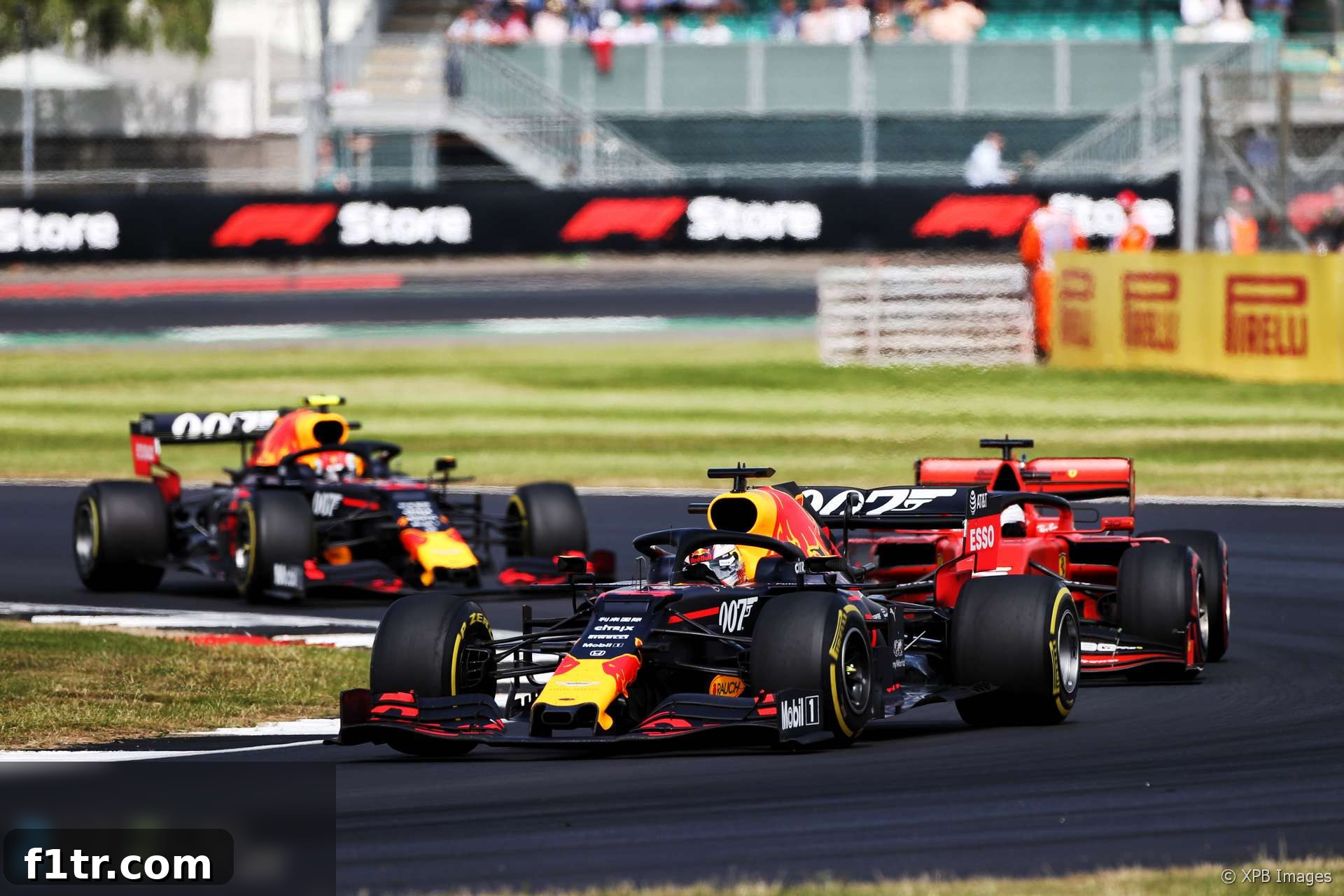
The pivotal moment arrived when the Safety Car was deployed, creating a common strategic headache for all teams. For Ferrari, with Charles Leclerc fiercely battling Max Verstappen, the deployment triggered a rapid-fire decision-making process on the pit wall. Leclerc had been ahead of Verstappen prior to the Safety Car, having re-passed the Red Bull driver after their synchronized first pit stops. However, the Red Bull’s underlying race pace, which appeared superior, added an extra layer of complexity to Ferrari’s predicament. Binotto elaborated on the difficult position his team found themselves in, highlighting how Verstappen’s team, Red Bull, could react directly to Ferrari’s actions.
“On the radio we know Max was called ‘opposite to Charles’,” Binotto revealed, underscoring the direct strategic counter-play from their rivals. This intel was critical: if Ferrari had opted to pit Charles Leclerc for fresh tires under the Safety Car, Red Bull’s immediate response would have been to keep Max Verstappen out on track. The consequence for Leclerc would have been devastating, as Binotto explained: “if he would have stopped, Max would have stayed out and we would have simply put Charles behind everybody.” Such a move would have seen Leclerc rejoin the race deep in the pack, effectively forfeiting any chance of a strong finish, a scenario Binotto deemed unequivocally “not the right call.”
This illustrates the fundamental challenge of F1 strategy during Safety Car periods. Teams must weigh the benefit of fresh tires against the severe penalty of losing track position. In this specific instance, with Verstappen positioned directly behind and privy to Ferrari’s decision via Red Bull’s real-time counter-strategy, Ferrari’s hands were largely tied. Binotto maintained, “I think we had not really any choice at the time. [We’re] trying to stay ahead but as soon as Max stopped I think we looked at all the data, it was still good for us to stop again.” This suggests a desperate attempt to maintain track position, but once Verstappen had committed, the optimal window for Ferrari shifted again, reinforcing the dynamic nature of such decisions. The Ferrari team principal further dismissed the notion of an earlier stop, stating, “I don’t think we could have stopped earlier, one stop before, because the others [would have] to stay out and we would have lost our entire advantage.” This implies a complex interplay of pit stop windows, tire wear, and the perceived strategies of other competitors, not just Red Bull. Every team was observing and reacting, creating a volatile strategic landscape where a single misstep could prove costly.
The Nuances of Pit Stop Timing and Track Position
The art of pitting under a Safety Car is one of the most scrutinized aspects of Formula 1 strategy. While pitting for fresh tires offers a significant pace advantage in the subsequent laps, it comes at the cost of the time spent in the pit lane and the potential loss of track position to cars that opt to stay out. For Ferrari, the decision was compounded by the direct competition with Max Verstappen. Had Leclerc pitted, he would have surrendered his hard-won track position, not just to Verstappen who would have stayed out, but potentially to a host of other drivers as well. This immediate loss of position would have nullified any potential tire advantage, forcing Leclerc into a difficult battle through traffic, wasting precious lap time and placing additional strain on his tires.
Binotto’s explanation underscores the defensive nature of their decision. They were not seeking to gain an advantage, but rather to minimize the damage in a situation where their rival held a strategic trump card. The recognition that Verstappen would simply do the “opposite to Charles” effectively created a lose-lose scenario for Ferrari in terms of track position. Their primary objective became damage limitation, a testament to the immense pressure and split-second calculations required when strategy unfolds in real-time under a global spotlight. This scenario highlights why F1 strategists often say that “track position is king,” especially when the pace difference between cars is marginal.
Ferrari’s Tire Strategy: A Calculated Risk
Beyond the Safety Car drama, another key element of Ferrari’s British Grand Prix strategy was their initial tire choice. For the start of the race, Ferrari again chose to equip their cars with the softest available tire compound. This decision is often a calculated risk: soft tires offer maximum grip and quick warm-up, providing a significant advantage off the starting line and for the opening laps. However, this comes at the expense of higher degradation and a shorter lifespan compared to medium or hard compounds, necessitating an earlier pit stop.
When questioned about this choice, Binotto offered a pragmatic perspective. “I think at least we can say it was not the wrong choice,” he stated. This cautious affirmation reflects the complexities of pre-race strategy, where conditions, car performance, and competitor choices all factor into the decision. A “not wrong” choice, in F1 parlance, often means it achieved its primary objective without creating unforeseen liabilities, even if it wasn’t definitively superior.
Binotto further supported the decision by referencing discussions with his drivers, particularly Charles Leclerc. “Having discussed with the drivers I think that Charles had got some good pace at the start of the race. He was controlling the tyres as well not to wear them. He was able to at least manage the pace and be in the very first lap faster than the people behind,” Binotto explained. This detailed account paints a picture of a driver expertly managing the delicate balance of pushing hard while preserving the rapidly degrading soft tires. Leclerc’s ability to extract initial pace and maintain a lead in the early stages validated the team’s gamble, demonstrating that the tire choice delivered on its promise of early aggression.
The challenge, however, lay in a definitive comparison. “We believe it was the right choice. It was difficult to have a comparison,” Binotto admitted. In races where various teams opt for different starting compounds, a direct, apples-to-apples comparison of optimal strategy is often elusive. Each strategy unfolds based on track conditions, car characteristics, and the unique challenges faced during the race. While Ferrari believed their soft tire choice provided initial benefits and allowed Leclerc to control the pace effectively, the broader strategic outcome of the race, influenced by the Safety Car and Verstappen’s superior race pace, ultimately overshadowed the initial tire advantage.
Understanding Tire Compounds in Formula 1
For a deeper appreciation of Ferrari’s decision, it’s useful to understand the role of tire compounds in Formula 1. Pirelli, the sole tire supplier, provides teams with a range of compounds for each Grand Prix, typically three different specifications: soft, medium, and hard. These compounds vary in their rubber mixture, influencing their grip levels, durability, and operating temperature windows.
- Soft Compound: Offers the highest grip and fastest lap times, making it ideal for qualifying or for attacking in the early stages of a race. However, it degrades quickly, requiring more careful management or an earlier pit stop.
- Medium Compound: Provides a balance between grip and durability. It’s often a versatile choice for longer stints and can be a strong race tire.
- Hard Compound: The most durable, designed for long stints with minimal degradation. While offering less outright grip, it allows for extended running, crucial for one-stop strategies or recovering from early incidents.
Teams make their tire choices based on extensive simulation, practice data, and race day conditions. Factors like track temperature, expected degradation, car balance, and even the driver’s preferred style influence these decisions. Ferrari’s choice of softs at Silverstone indicated a clear intent to be aggressive from the start, aiming to build an early lead and dictate the pace. Leclerc’s execution in managing these tires confirmed that the strategy had the desired initial effect, even if external factors later altered the race’s trajectory.
The Broader Implications for Ferrari’s 2019 Season
The 2019 Formula 1 season was a challenging one for Ferrari, often marked by a fierce three-way battle for supremacy with Mercedes and Red Bull. Strategic calls, pit stop efficiency, and tire management were constantly under the microscope, as fine margins often separated victory from a podium miss. The British Grand Prix, while showcasing Leclerc’s driving prowess, also highlighted the relentless strategic chess match that defines F1. Ferrari, under Mattia Binotto’s leadership, was striving to optimize every aspect of their race weekend performance, and decisions like those at Silverstone were crucial learning experiences.
Binotto’s post-race commentary was not just an explanation but also a defense of the team’s strategic process. It emphasized that F1 strategy is rarely a clear-cut choice between a “right” and “wrong” option, but rather a series of calculated risks and responses to an evolving situation. The team’s ability to adapt, learn from each scenario, and continually refine their approach is paramount for long-term success.
Conclusion: The Unforgiving Nature of F1 Strategy
Mattia Binotto’s reflections on the 2019 British Grand Prix offer a compelling glimpse into the intense strategic pressures faced by Formula 1 teams. The Safety Car period, in particular, presented Ferrari with a complex conundrum where any move was met with an immediate counter-strategy from rivals like Red Bull. The explanation that Ferrari “had not really any choice” underscores the reality that sometimes, the optimal decision is simply the one that minimizes potential losses, rather than guarantees a gain. Similarly, the initial soft tire choice, while delivering on its promise of early pace and driver satisfaction, illustrates the nuanced difficulty of assessing success in a dynamic environment.
In essence, F1 strategy is an unforgiving discipline where every decision, from tire compound selection to pit stop timing, carries significant weight. Binotto’s comments serve as a powerful reminder of the intricate dance between driver skill, engineering prowess, and strategic acumen that defines Grand Prix racing. For Ferrari, and indeed for all F1 teams, the pursuit of strategic perfection is an ongoing journey, filled with relentless analysis and the constant challenge of outpacing not just the clock, but also the minds in the rival pit lanes.
More from the 2019 F1 Season
- Crying in the Melbourne car park at 2019 grand prix was my career low – Ocon
- McLaren Racing reports reduced £71 million loss in 2019
- Kvyat: Hockenheim podium last year was “my biggest achievement” so far
- How the FIA’s new encrypted fuel flow meter targets Ferrari’s suspected ‘aliasing’ trick
- “He smashed my office door”: 23 must-see moments from ‘Drive to Survive’ season two
Browse all 2019 F1 season articles