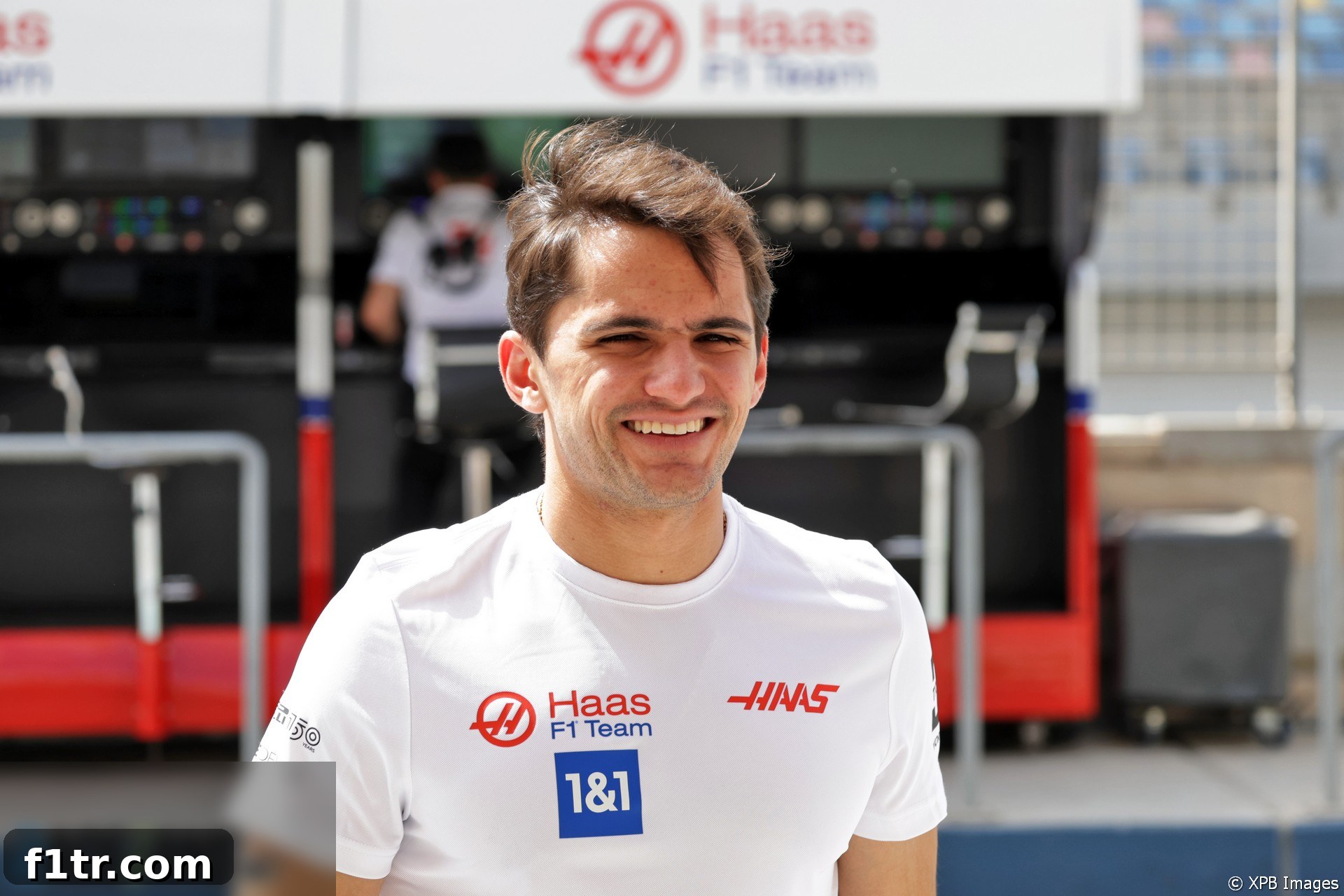
Pietro Fittipaldi, Haas F1 Team’s dedicated reserve driver, is set to make his return to a Formula 1 cockpit during two crucial Free Practice One (FP1) sessions. The Brazilian-American racer will take part in the opening practice sessions at the upcoming Mexican Grand Prix and the season-closing Abu Dhabi Grand Prix. This announcement marks a significant opportunity for Fittipaldi to further demonstrate his capabilities behind the wheel of the Haas VF-22, while also helping the team fulfil a new and important FIA regulation aimed at promoting young driver talent within the sport.
The Evolving F1 Junior Driver Mandate for 2022
The 2022 Formula 1 season introduced a significant change to the sporting regulations, requiring every team to allocate at least two of their Free Practice One sessions to “junior drivers.” This mandate specifies that these drivers must have made fewer than three Grand Prix starts in their careers, providing invaluable track time to aspiring talents who are often reserve drivers or part of a team’s academy. The rule’s objective is clear: to create a structured pathway for emerging drivers to gain experience in a contemporary F1 car during a race weekend, thereby enhancing their development and offering teams a chance to evaluate potential future stars in a competitive environment.
Pietro Fittipaldi perfectly fits this eligibility criterion, having only competed in two Formula 1 Grand Prix races to date. His previous outings came at the very end of the 2020 season, where he valiantly stepped in for the injured Romain Grosjean at Haas for the Sakhir Grand Prix and the Abu Dhabi Grand Prix. These two appearances were born out of necessity following Grosjean’s dramatic accident in Bahrain and provided Fittipaldi with his initial taste of competitive Formula 1 action.
Pietro Fittipaldi’s Journey: From Reserve to Race Weekend Driver
As Haas F1 Team’s long-standing reserve driver, Pietro Fittipaldi has been an integral part of the American outfit’s operations. His role typically involves extensive simulator work, attending race weekends to support the team, and conducting testing duties. Earlier in the year, Fittipaldi was already entrusted with driving Haas’s Ferrari-powered VF-22 during pre-season testing in Bahrain. This experience provided him with crucial familiarity with the car’s characteristics and performance, which will undoubtedly be beneficial for his upcoming FP1 sessions.
Despite his significant commitment and prior F1 experience, Fittipaldi was not the driver chosen by Haas when the team needed a replacement for Nikita Mazepin, who was dropped following the initial testing in Spain. Instead, Haas opted to bring back experienced former driver Kevin Magnussen, a decision that underscored the team’s desire for immediate results and stability in a challenging season. However, Fittipaldi’s continued dedication and readiness have now earned him these vital practice opportunities.
“Super-excited to announce I’ll be doing the FP1 in Mexico and Abu Dhabi,” Fittipaldi shared with enthusiasm. “I want to thank Haas F1 Team for the great opportunity. I drove the car in the beginning of the year in Bahrain, but to get another chance to drive the VF-22 is going to be pretty amazing. It’s a very fast car, and I’m looking forward to driving in Mexico and Abu Dhabi.” His statement reflects not only his excitement but also his confidence in the VF-22, setting the stage for productive sessions.
Crucial Track Time: Mexico and Abu Dhabi
Fittipaldi’s upcoming sessions are strategically important. In Mexico City, he will take over Kevin Magnussen’s car for the first practice, providing him with a direct comparison to an established F1 driver’s setup and feedback. The Autódromo Hermanos Rodríguez circuit in Mexico presents unique challenges, primarily due to its high altitude, which significantly impacts engine performance, aerodynamics, and cooling. Adapting to these conditions quickly will be a key test for Fittipaldi.
Later, at the season-ending Abu Dhabi Grand Prix, Mick Schumacher will make way for Fittipaldi in the FP1 session. The Yas Marina Circuit is a more conventional track, but its status as the final race of the season means teams are often focused on maximizing data for future development and fine-tuning for race performance. These sessions will allow Fittipaldi to offer fresh perspectives and data to the Haas engineers, contributing to the team’s ongoing development efforts.
Beyond his F1 commitments, Fittipaldi has maintained an active and diverse racing career, sharpening his skills across various top-tier categories. He has competed in the demanding IndyCar Series in North America, the high-performance Super Formula championship in Japan, the highly competitive DTM (Deutsche Tourenwagen Masters) in Germany, and most recently, the European Le Mans Series. This breadth of experience across different car types and racing philosophies has undoubtedly molded him into a versatile and adaptable driver, qualities highly valued in Formula 1.
Teams Fulfilling the Junior Driver Mandate
With only four Grands Prix remaining in the 22-event 2022 season, many teams have been diligently working to meet their commitment to provide seat time to inexperienced drivers during race weekends. The implementation of the new rule has seen a variety of young talents given their opportunity to shine. However, it’s also worth noting that some teams initially ran drivers who were not eligible under the specific “fewer than three Grand Prix starts” rule, such as Robert Kubica at Alfa Romeo and Antonio Giovinazzi at Haas, who both have more extensive F1 race experience. These particular instances would not count towards fulfilling the junior driver mandate, highlighting the strict interpretation of the new regulation.
The table below outlines how various F1 teams have approached or are planning to approach their junior driver practice schedules for the 2022 season, showcasing the diverse pool of talent being nurtured for future F1 contention:
F1 Teams’ Junior Driver Practice Schedules
| Team | Event 1 | Driver 1 | Event 2 | Driver 2 |
|---|---|---|---|---|
| Mercedes | French Grand Prix | Nyck de Vries | TBC | TBC |
| Red Bull | Spanish Grand Prix | Juri Vips | TBC | TBC |
| Ferrari | United States Grand Prix | Robert Shwartzman | TBC | Robert Shwartzman |
| McLaren | TBC | TBC | TBC | TBC |
| Alpine | TBC | TBC | TBC | TBC |
| AlphaTauri | Belgian Grand Prix | Liam Lawson | TBC | Liam Lawson |
| Aston Martin | Italian Grand Prix | Nyck de Vries | Abu Dhabi Grand Prix | Felipe Drugovich |
| Williams | Spanish Grand Prix | Nyck de Vries | United States Grand Prix | Logan Sargeant |
| Alfa Romeo | Bahrain Grand Prix | Zhou Guanyu | TBC | TBC |
| Haas | Mexican Grand Prix | Pietro Fittipaldi | Abu Dhabi Grand Prix | Pietro Fittipaldi |
The Broader Impact of the Junior Driver Rule
The introduction of the junior driver rule is a positive step for Formula 1’s long-term health and talent pipeline. It provides a formal structure for young, promising drivers to gain crucial experience that was previously difficult to acquire. Participating in an FP1 session on a Grand Prix weekend exposes these drivers to the intense pressure, media scrutiny, and operational complexities that are inherent to Formula 1. This real-world experience is far more valuable than simulator hours alone and helps bridge the gap between junior categories and the pinnacle of motorsport.
For teams, the rule offers a mandated opportunity to scout and evaluate potential future talent within their own structures or from other academies. It allows engineers to assess a driver’s feedback, technical understanding, and ability to extract performance from the car under varying conditions. While a single FP1 session is a limited snapshot, it provides valuable data points that can inform future driver development programs and recruitment strategies.
Conclusion
Pietro Fittipaldi’s confirmed participation in the FP1 sessions for the Mexican and Abu Dhabi Grands Prix is a testament to his persistent dedication as Haas’s reserve driver and an important step in his ongoing ambition for a full-time F1 seat. These sessions are not merely procedural; they represent a significant chance for him to reinforce his presence in the Formula 1 paddock, demonstrate his speed and adaptability, and provide valuable input to the Haas F1 Team. As the 2022 season draws to a close, all eyes will be on these junior drivers as they seize their moments on the world stage, showcasing the future talent of Formula 1.
Further Reading: The 2022 F1 Season
- Mercedes told me “you’re wrong” about 2022 car’s problems – Hamilton
- FIA confirms all 10 F1 teams complied with 2022 cost cap
- Steiner “not ashamed” of panning “slow” Schumacher in Drive to Survive
- Albon believes year out of F1 improved him as a driver
- Hamilton sees diversity gains in F1 years on from his ‘traumatising’ experience of racism
Browse all 2022 F1 season articles