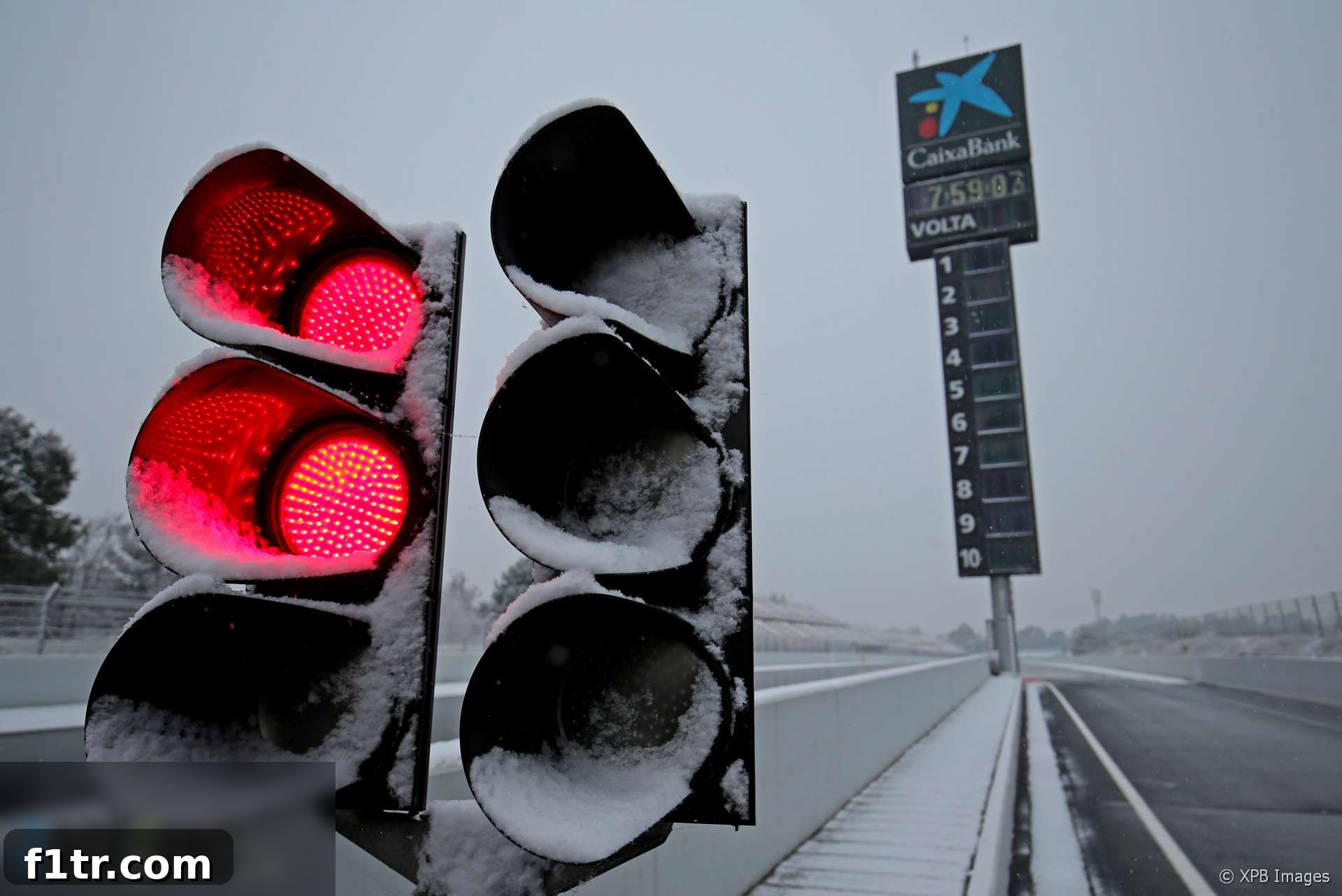
The dawn of the third day of pre-season testing for the 2018 F1 season was met with an entirely unforeseen and unusual challenge at the Circuit de Barcelona-Catalunya: snow. This rare meteorological event, which blanketed the track overnight, forced a significant postponement of the day’s crucial testing schedule, casting an unexpected shadow over the teams’ meticulous preparation plans for the upcoming championship.
Unprecedented Snowfall Halts F1 Pre-Season Testing in Barcelona
Pre-season testing is an indispensable phase in Formula 1, offering teams their sole opportunity to rigorously assess new car designs, validate engineering concepts, and fine-tune performance before the competitive season commences. The 2018 F1 season’s first test in Barcelona was already underway, with teams diligently working through their complex programs, when the circuit awoke to a pristine, white landscape. The overnight snowfall transformed the familiar Spanish track into a winter wonderland, a sight utterly at odds with the high-octane environment of Formula 1. This highly unusual weather phenomenon for late February in Catalonia immediately prompted concerns about track conditions, safety, and ultimately, the viability of running cars.
The initial delay was significant, pushing back the scheduled 9 AM start time by a substantial three hours. The session eventually commenced at 12 noon local time (11 AM GMT), much to the relief of eager fans and frustrated teams alike. However, the decision to postpone was not solely due to the snowy track surface. A critical safety protocol in Formula 1 mandates the availability of a medical helicopter at all times during on-track activity. The adverse weather conditions, characterized by low visibility and active precipitation, rendered the medical helicopter unable to fly, thereby directly impeding the start of testing. This strict adherence to safety regulations underscores F1’s unwavering commitment to driver well-being, even if it means sacrificing precious track time.
Safety First: The Non-Negotiable Role of the Medical Helicopter
Formula 1’s safety standards are among the highest in motorsport, meticulously designed to protect drivers, marshals, and spectators. A cornerstone of these protocols is the immediate availability of emergency medical services, including an air ambulance. In the event of a serious incident, a medical helicopter must be able to reach a nearby trauma center within a specified, very short timeframe. When weather conditions, such as the heavy snowfall and associated low visibility experienced in Barcelona, prevent the helicopter from taking flight, all on-track activities must cease. This rule is absolute, regardless of how ready the cars or drivers might be, or how vital the testing data. The decision to delay was therefore a straightforward, albeit frustrating, one for the circuit operators and the FIA, prioritizing human safety above all else.
The impact of this safety mandate extended beyond just the initial delay. With a shortened window for testing, circuit operators swiftly confirmed that the session would run without its customary lunch break, concluding at 6 PM local time. This adjustment aimed to maximize the available track time for the teams, allowing them to salvage as much data as possible from what was already an abbreviated day. For engineers, mechanics, and drivers, this meant an intensified, continuous six-hour period of work, demanding heightened focus and efficiency to navigate the revised schedule and unpredictable conditions.
Strategic Implications for Teams and the Pursuit of Precious Data
The unexpected disruption posed significant strategic dilemmas for all ten Formula 1 teams. Pre-season testing is not merely about logging laps; it’s a meticulously planned program designed to evaluate every aspect of a new car. Teams typically arrive with detailed checklists, focusing on aerodynamics validation, power unit integration, chassis balance, tire degradation characteristics across various compounds, and crucial long-run simulations for race pace. Each hour of track time is invaluable, representing an opportunity to gather data that will inform development decisions for the entire season. Lost time, especially due to such unusual circumstances, can have tangible consequences.
For teams still grappling with early reliability issues, or those introducing significantly revised concepts, the loss of three hours was particularly painful. It forced engineers to ruthlessly prioritize their testing schedules, potentially abandoning less critical runs or delaying the introduction of new components. Drivers, too, were affected. This is their first real chance to acclimatize to their new machinery, understand its nuances, and push the limits in a relatively controlled environment. Driving a brand-new, complex F1 car in cold, damp, and potentially treacherous conditions, after a delay, adds another layer of challenge to their already demanding roles. The mental fortitude required to switch from waiting in the garage to immediately extracting performance in sub-optimal conditions is immense.
The Debate Over Test Extensions: Logistics vs. Necessity
In light of the persistent poor weather conditions experienced throughout the week at the Circuit de Barcelona-Catalunya – which included rain and unseasonably cold temperatures even before the snow – teams had already engaged in discussions regarding the possibility of extending the pre-season test by an additional day. The rationale was clear: to compensate for the significant amount of track time lost to the elements and ensure all teams could complete their essential testing programs. However, reaching a unanimous agreement on such a proposal in Formula 1 is notoriously difficult, primarily due to the complex logistical and financial implications.
Extending a test involves considerable costs for all participants. Teams would incur additional expenses for personnel, accommodation, freight, and track hire. Crucially, it would also disrupt the tightly packed schedules of hundreds of individuals who would need to adjust their travel plans. Furthermore, F1 regulations aim to ensure fairness and prevent any team from gaining an undue advantage. An extension would require unanimous consent from all teams, as well as approval from the FIA. Ultimately, despite the clear desire from some to mitigate the impact of the weather, no plans to run on an extra day were formally agreed upon. This decision highlighted the delicate balance between the practical needs of testing and the overarching logistical and regulatory frameworks of the sport.
A Glimpse of the White Track: Social Media and Visuals
The surreal scenes at the Circuit de Barcelona-Catalunya quickly became a focal point for social media and news outlets. Fans around the world were captivated by images and videos of snow falling on an F1 track, a spectacle rarely witnessed. The circuit itself shared a memorable snapshot, encapsulating the extraordinary conditions:
Reconnaissance lap!! #F1Testing 😬❄️ pic.twitter.com/aJi4QtUn1A
— Circuit de Barcelona-Catalunya (@Circuitcat_eng) February 28, 2018
The visual impact of the snow was profound, serving as a stark reminder of the unpredictability that can sometimes define even the most technologically advanced sports. RaceFans.net, among other outlets, captured the unique atmosphere with a series of striking photographs from the track, showcasing the unusual conditions:
The Enduring Importance of Pre-Season Prep for the 2018 F1 Season
Despite the meteorological curveball, the fundamental objective of pre-season testing remains unchanged: to prepare for a successful and competitive Formula 1 season. The 2018 F1 season was anticipated with great excitement, with new aerodynamic regulations and a refined car design philosophy set to challenge teams and drivers. Every lap, every data point gathered, contributes to a clearer understanding of the car’s behavior and potential. While the snow delay certainly complicated matters, it also served as a stark reminder of the inherent adaptability and problem-solving capabilities within F1 teams, who are constantly prepared to adjust to unforeseen circumstances.
The resilience shown by the teams and circuit staff in adapting to the delayed start and compressed schedule highlights the relentless pursuit of performance and safety that defines Formula 1. As the cars eventually took to the track later in the day, albeit in challenging cold and damp conditions, the focus immediately shifted back to development. The lost hours necessitated even more stringent time management and strategic thinking to ensure that no critical aspect of the testing program was entirely overlooked. Ultimately, the snow-affected day three of testing became a memorable, if not entirely welcome, chapter in the lead-up to the 2018 F1 season, underscoring the dynamic and often unpredictable nature of the sport.
Explore More About the 2018 F1 Season
- F1 feared “death knell” for Drive to Survive after Ferrari and Mercedes snub
- McLaren staff told us we were “totally crazy” to take Honda engines in 2018 – Tost
- ‘It doesn’t matter if we start last’: How Red Bull’s junior team aided Honda’s leap forward
- Honda’s jet division helped F1 engineers solve power unit problem
- McLaren Racing losses rise after Honda split
Browse all 2018 F1 season articles