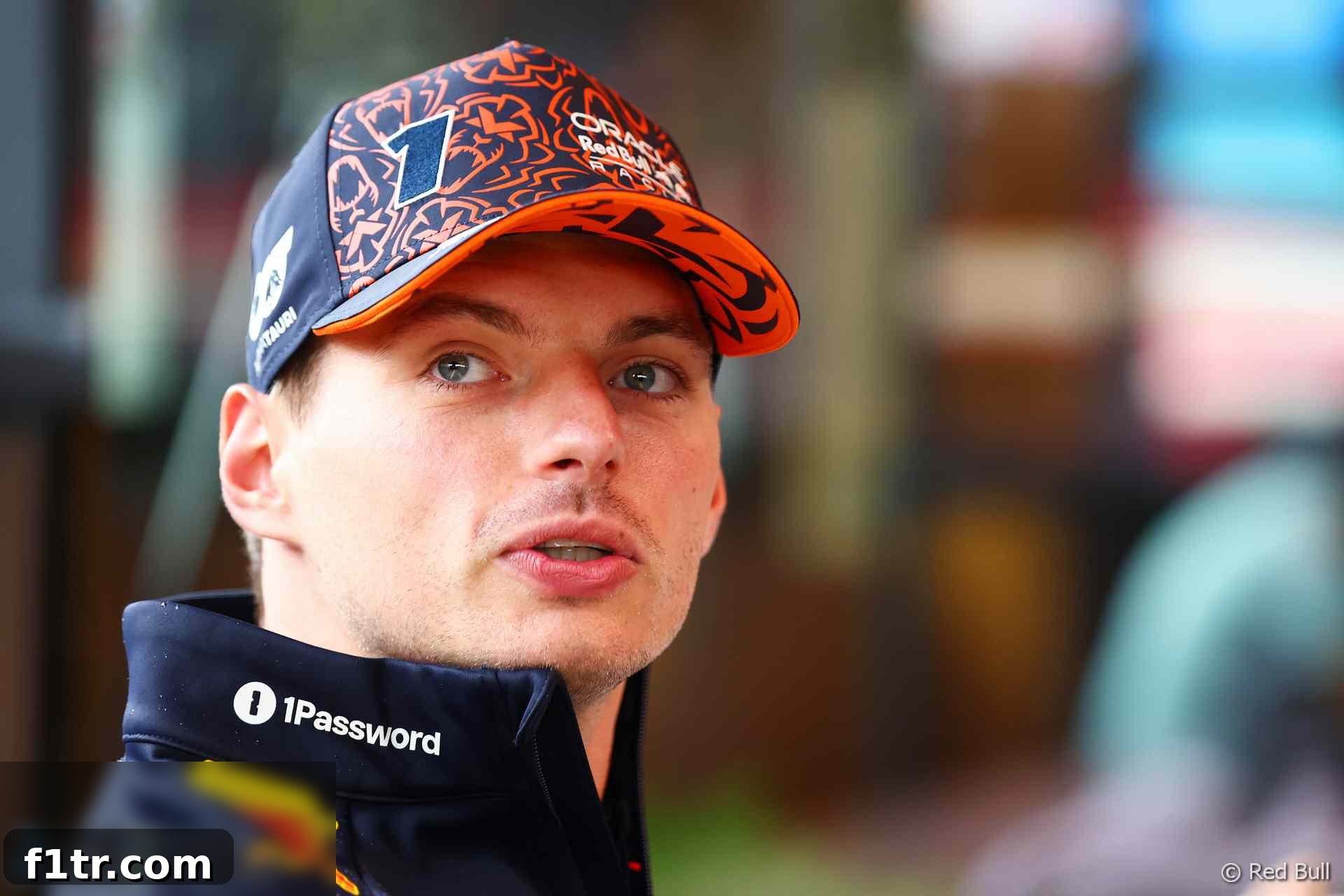
Red Bull Navigates Changes: Verstappen Adapts to New Race Engineer Amidst Crucial Spa Upgrades and Team Reshuffle
The highly anticipated 2025 Belgian Grand Prix at the legendary Spa-Francorchamps circuit presents a complex and challenging scenario for Red Bull Racing and its star driver, Max Verstappen. For the second time in three events, Verstappen finds himself working without his long-standing and highly effective race engineer, Gianpiero Lambiase, who is absent due to personal reasons. This significant change comes at a pivotal moment, as Red Bull introduces an extensive upgrade package during a demanding sprint race weekend, all while the team undergoes its own high-level organizational shifts.
The absence of a familiar voice and strategic partner like Lambiase can profoundly impact a driver’s performance, especially one as meticulous and demanding as Verstappen. Their relationship, often characterized by direct and frank exchanges over team radio, is a cornerstone of Verstappen’s success, forged over nearly a decade since his arrival at Red Bull in 2015. Lambiase’s deep understanding of Verstappen’s driving style, his preferences for car setup, and his nuanced approach to race strategy are invaluable assets that are temporarily missing from the pit wall.
Gianpiero Lambiase’s Role and the Impact of His Absence
Gianpiero Lambiase, affectionately known as ‘GP’, is more than just a race engineer; he is a crucial confidant and strategic anchor for Max Verstappen. Their partnership extends beyond the technical aspects of car performance and race strategy, encompassing a psychological rapport that has been instrumental in Verstappen’s championship triumphs. Lambiase’s ability to calmly guide Verstappen through high-pressure situations, manage tire strategy, and provide precise feedback has made him one of the most respected figures in the F1 paddock.
His repeated absence, now for the second time in three races (first in Austria, now at Spa-Francorchamps), inevitably raises questions about continuity and the potential for disruption, however minor. While top teams like Red Bull have robust structures and experienced personnel ready to step in, the unique chemistry between a driver and their primary race engineer is not easily replicated. Each communication, each strategy call, and each nuanced piece of advice builds on a foundation of shared history and mutual understanding. This weekend’s challenge for Verstappen and his stand-in engineer is to rapidly build that crucial connection under immense pressure.
Simon Rennie Steps In: A Wealth of Experience
Filling the sizeable shoes of Gianpiero Lambiase is Simon Rennie, a veteran within the Red Bull ranks. Rennie is far from new to the high-stakes world of Formula 1 race engineering. He currently serves in the team’s vital simulator department, a role that keeps him intimately familiar with the intricacies of the Red Bull car and the demands of modern F1 circuits. Prior to his simulator duties, Rennie held the race engineer position for several other prominent Red Bull drivers, including Daniel Ricciardo and Alexander Albon, guiding them through numerous successful campaigns.
Verstappen himself has expressed confidence in Rennie’s capabilities. Reflecting on their previous collaboration during Lambiase’s absence in Austria, Verstappen noted, “I’ve known Simon for a long time on the other side of the garage and I’m working with him also in the simulator and he has a lot of experience anyway. He was straight on it and it was nice.” This pre-existing relationship, particularly through their work in the simulator, provides a significant advantage, allowing for a quicker adaptation period than might otherwise be possible. However, the intensity and unpredictability of a live race weekend, especially a sprint format, test even the most seasoned partnerships.
Navigating the Sprint Weekend: Upgrades and Limited Practice
The 2025 Belgian Grand Prix is further complicated by its sprint race format. This means teams have only a single hour of practice to fine-tune their cars before heading directly into qualifying. This compressed schedule places immense pressure on drivers and engineers alike, leaving minimal room for error or extensive experimentation. Every lap in practice becomes critical, and the ability to quickly extract performance from the car is paramount.
Compounding this challenge, Red Bull has opted to introduce an extensive upgrade package at Spa. This is a bold move, given the limited track time available. The upgrades span several key areas of the car, including the front wing, sidepods, engine cover, front suspension, and rear corner bodywork. Each of these components plays a crucial role in aerodynamic efficiency, balance, and overall performance. The front wing, for instance, dictates initial airflow and balance, while sidepods and engine cover design heavily influence cooling and the car’s overall aerodynamic profile. Changes to the front suspension and rear corner bodywork can significantly alter mechanical grip and tire management characteristics.
The decision to roll out such a comprehensive set of enhancements reflects Red Bull’s relentless pursuit of marginal gains and their desire to maintain a competitive edge. However, integrating these new parts and ensuring they perform as expected with limited practice time is a substantial undertaking. It demands flawless communication between Rennie and Verstappen, rapid analysis from the engineers back in the garage, and an astute understanding of how each modification affects the car’s behavior. Any misstep could jeopardize their weekend, especially with strong rivals constantly pushing for supremacy.
Recent Challenges and the Road Ahead for Lambiase
The previous race saw an unexpected early exit for Verstappen after a collision with Andrea Kimi Antonelli shortly after the start. Such incidents, while part of racing, underscore the importance of every detail, from car setup to strategic calls, to maximize a driver’s chances. The pressure to rebound strongly at Spa is therefore amplified, particularly with the new upgrades and engineer change.
Following his second absence in three events, questions naturally arise regarding Gianpiero Lambiase’s return. It remains uncertain whether he will be able to return for the next round in Hungary, which immediately precedes the Formula 1 summer break. The continuity of a race engineer is vital for a team’s long-term strategy and driver comfort, making Lambiase’s potential return a keenly anticipated development for Red Bull and Verstappen.
Broader Organizational Shifts at Red Bull
Beyond the immediate engineering changes, Red Bull Racing is also navigating significant organizational shifts at the highest levels. The team recently announced the departure of its long-standing team principal, Christian Horner, who had been an integral part of Red Bull’s F1 journey since its inception. In his place, Laurent Mekies has been promoted to the role of team principal. This is a monumental change for any F1 team, particularly one that has achieved such consistent success under Horner’s leadership.
While the immediate impact of such high-level management changes might not be felt directly by the drivers on track, they can subtly influence team morale, strategic direction, and overall stability. Mekies, with his extensive experience in various F1 roles, steps into a challenging position, tasked with steering Red Bull through a period of intense competition and evolving regulations. These changes underscore a broader period of transition for the Milton Keynes outfit, adding another layer of complexity to their pursuit of championship glory.
The Unfolding Narrative of the 2025 Belgian Grand Prix
The 2025 Belgian Grand Prix at Spa-Francorchamps is shaping up to be far more than just another race weekend for Max Verstappen and Red Bull. It’s a crucible where personal absences, significant technical upgrades, high-stakes sprint format racing, and profound team management changes converge. Spa itself, with its iconic Eau Rouge and unpredictable Ardennes weather, always presents a unique test of skill and nerve. For Verstappen, who is accustomed to driving at the absolute limit, adapting to a stand-in engineer while simultaneously integrating new car parts under the watchful eye of a newly structured leadership team will be the ultimate challenge.
The performance at Spa will not only be crucial for Red Bull’s championship aspirations but will also serve as a barometer for the team’s resilience and adaptability. Can Verstappen and Rennie quickly forge the necessary communication links to optimize the new upgrades? How will the team navigate these internal changes amidst external pressures from fierce competitors? The answers will begin to unfold on the challenging asphalt of Spa, setting the tone for the remainder of the season and highlighting Red Bull’s ongoing journey in pursuit of Formula 1 excellence.
Further Reading: 2025 Belgian Grand Prix Insights
- Hadjar’s Silverstone crash shows FIA was right to be cautious with Spa rain, say drivers
- “Stay out”: Antonelli told Mercedes track was ready for slicks on same lap as Hamilton
- Antonelli ‘paying the price for wrong steps’ made by Mercedes – Allison
- Verstappen is in his longest run of races without a podium finish for six years
- “I’m down to try”: How Hamilton changed his mind about crucial Spa pit stop
Browse all 2025 Belgian Grand Prix articles