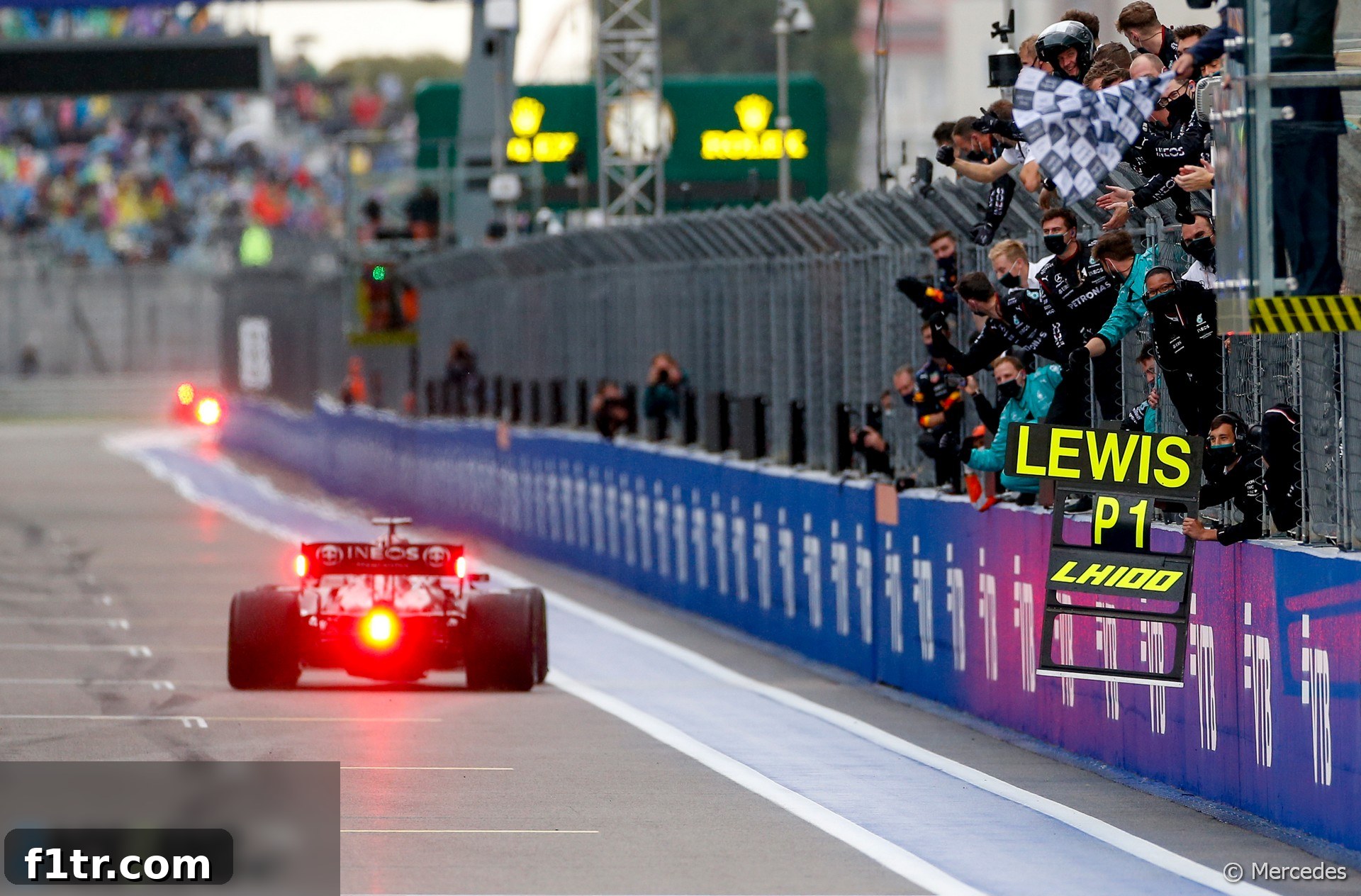
In a sport defined by high-octane drama and relentless competition, the Russian Grand Prix weekend at Sochi delivered an unforgettable spectacle, ultimately culminating in Lewis Hamilton’s historic 100th career Formula 1 victory. This landmark achievement, a testament to unparalleled skill and dedication, overshadowed the intense paddock discussions that had previously dominated headlines – from the potential entry of the VW Group into F1 and the highly anticipated 2022 calendar announcements, to the intriguing possibility of Qatar joining the championship roster. The unpredictable elements, both on and off the track, set the stage for a race weekend that would etch itself into the annals of Formula 1 history.
Saturday: A Day of Downpours and Paddock Speculation
The dawn of Saturday broke with an ominous rumble, a bolt of lightning at 4 AM serving as a rude awakening and a stark reminder of the foreboding forecast. In stark contrast to Friday’s serene, clear skies and Sochi’s rather picturesque lighting, the day was destined to be relentlessly wet. This meteorological shift immediately cast a pall over the paddock, setting an entirely different tone for the crucial second day of the Grand Prix weekend. The air was thick with the scent of rain, and the usual pre-practice buzz was replaced by the drumming of water against temporary structures.
Throughout the day, the rain proved to be as unpredictable as a strategic pit stop. It abated intermittently, offering fleeting moments of respite, only to return with a vengeance. Around noon, while engaged in conversation within the paddock, a gentle drizzle escalated into a raging storm in mere seconds. The sheer intensity of the downpour was astonishing, strong enough to visibly blow over the protective screens of both Alfa Romeo and Williams garages within a minute. Such raw power from nature underscored the challenges inherent in motorsport, where every element, even the weather, can dramatically alter plans and test the resilience of teams and personnel alike.
The immediate and most significant consequence of the inclement weather was the cancellation of Free Practice 3 (FP3). For many, including myself, this scuppered the traditional Saturday trackside visit – a cherished opportunity to observe the cars and teams up close in their natural habitat, listening to the roar of engines and feeling the spray from the tires. However, this unexpected downtime presented a silver lining. I utilized the lull to connect with various team personnel, many of whom had been far too busy during the frenetic final European race weekend in Monza, which had featured a notoriously packed schedule. These informal chats provided invaluable insights, shedding light on topics that would otherwise remain behind closed doors, offering a glimpse into the strategic thinking and behind-the-scenes negotiations that shape the sport.
VW Group and the Future of F1 Engines: Paddock Poll Results
During my strolls through the paddock, navigating puddles and dodging raindrops, I conducted an informal straw poll among those “in the know” regarding the chances of Porsche (or other VW Group brands) committing to Formula 1. The consensus, though not unanimous, suggested a growing proximity between the German automotive giant and the pinnacle of motorsport. All sources agreed that the VW Group had never been closer to entering F1, a tantalizing prospect for the sport, promising increased competition and technological innovation. However, the prevailing belief was that any potential entry would materialize not merely as an engine supplier, but rather as a full team operation, perhaps with a secondary engine supply arrangement. This ambitious approach would signify a much deeper commitment, leveraging the brand’s engineering prowess and marketing might on a grander scale, potentially bringing a new powerhouse to the grid. Overall, the sentiment regarding an entry remained cautiously optimistic, with most sources placing the probability at a 50-50 chance, indicating serious discussions were underway but no final commitment had been made.
A perturbing detail emerged from these discussions, highlighting the significant hurdles a new entrant would face. One individual pointed to the arduous gestation period of over three years that Honda endured to develop their complex hybrid power unit, which was initially fraught with reliability issues. They then asserted with conviction, “If they haven’t decided yet, a 2025 entry is out of the question.” This stark statement underscored the monumental task of designing, developing, and refining a competitive F1 power unit from scratch within a tight timeframe, especially with the sport’s ever-evolving technical regulations. Furthermore, it was revealed that no firm planning was yet in place for such a project within the VW Group, suggesting that internal decision-making processes were still in their preliminary stages, casting doubt on any immediate entry and emphasizing the sheer scale of investment and lead time required.
My sources also held a firm belief that the timing for F1’s new engine regulations would likely be pushed back by a year, shifting from 2025 to 2026. This would mean another four years of competition with the current power units, which are already slated for an engine freeze ahead of the 2022 opening race. Such a delay would provide crucial breathing room for potential new manufacturers like the VW Group, allowing them more time to prepare and adapt to the sport’s unique engineering demands. It also suggests an acknowledgment from F1’s governing bodies of the immense undertaking involved in developing a next-generation power unit, aiming to create a more attractive entry point for new blood and ensuring the long-term sustainability and competitiveness of the sport.
The 2022 F1 Calendar: A Logistical Puzzle
Another significant piece of information I gathered revolved around the 2022 F1 calendar, a perennial topic of keen interest for teams, drivers, and fans alike. The main sticking point, it appeared, was the question of whether a second Italian round at Imola would ultimately replace the French Grand Prix at Paul Ricard. This debate wasn’t merely about sporting preference; it was rooted deeply in logistical realities and the relentless demands of a global championship. The increasing number of races each season puts immense pressure on team personnel, making logistical efficiency a paramount concern.
Paul Ricard, despite its modern facilities and picturesque setting, suffers from narrow access roads, which effectively make it impossible to stage a back-to-back race with Hungary’s round – an operational preference for reducing travel and setup times for teams. This logistical bottleneck complicates the scheduling significantly, adding to travel fatigue and operational costs. Imola, on the other hand, presented a compelling alternative. Not only is it approximately 600 kilometers closer to the heart of European motorsport operations, but its strategic location within 5 kilometers of a major motorway offers unparalleled accessibility. This means that the first heavy-goods trucks could depart the circuit even before the race officially concludes, a logistical dream for teams facing tight turnarounds and demanding transport schedules.
The net effect of these considerations is that Formula 1 faces a challenging choice for its mid-summer schedule. One option involves a demanding Red Bull Ring/Silverstone/Paul Ricard triple-header, followed by a standalone Hungaroring event just before the traditional summer break. This intense sequence would push teams to their absolute limits. The alternative, and one that teams were reportedly pushing for, would see a set of July double-headers, with Imola or Hungaroring forming the second part of such a pairing. While the latter option offers a more manageable workload for team personnel, reducing the strain of back-to-back-to-back races, it would necessitate scrapping France’s round a year earlier than planned, a decision with potential contractual and political ramifications for the sport. Consequently, it was widely expected that a final decision on next year’s schedule, which looks set to include 23 rounds again, would not be announced before the middle of the following month, as stakeholders continued to navigate these complex logistical and commercial waters.
As for the more immediate concerns regarding this year’s schedule, it appeared increasingly likely that Qatar would make the final cut. The circuit had reportedly undergone thorough inspection and was found to be up to the stringent standards required for Formula 1, both in terms of track safety and infrastructure. The inclusion of Qatar underscores F1’s continued push into new, strategically important markets, expanding its global footprint. The final decision, keenly awaited by many in the paddock, was expected to be announced later that week, adding another intriguing destination to the sport’s ever-evolving global championship.
The day’s proceedings were further complicated by the often-confusing intricacies of F1’s Covid protocols, which manifested themselves in an almost farcical manner after qualifying. To reach the open media zone in the paddock from the second-floor media center, journalists were inexplicably forced to traverse virtually the entire 350-meter length of the paddock twice – all in teeming rain. This involved navigating a second-floor corridor, descending a public escalator, and then returning at ground level within the paddock. This convoluted route was particularly frustrating during peak periods, with looming deadlines adding to the pressure and making timely reporting a significant challenge. The root cause of this logistical headache? A seemingly minor but impactful oversight: someone had failed to specify electronic turnstiles that would have permitted direct paddock access via two flights of unused stairs, a simple fix that would have saved much wasted time and discomfort. After a thoroughly soggy and frustrating day, I retreated to my accommodation to pack, ready for an early Sunday check-out, with my return flights scheduled shortly before midnight, marking a swift departure from the Russian Grand Prix.
Sunday: Race Day – Triumph and Controversy
Sunday began with the now-obligatory Covid test, mercifully no worse than the previous one, allowing me to prepare for the day’s main event – the Russian Grand Prix. The overarching topics dominating discussions were, predictably, the weather – still a significant factor that could turn the race on its head – and a surprising decision by Mercedes. The team had elected to “take a tactical opportunity” to change the power unit on Valtteri Bottas’s car. This carefully chosen phrase immediately sparked a flurry of speculation among journalists and team members alike. It evoked a multitude of possible intentions: from a cunning strategy to complicate Max Verstappen’s charge through the field from the back row due to his own grid penalty, to a genuine mechanical damage mitigation exercise, or even a subtle psychological play. The implications of this decision would undoubtedly ripple through the race and potentially the championship battle.
I had secured a coveted slot for the pre-race media pit lane walk, an experience that, as always, proved exhilarating. It’s truly captivating to witness the meticulous work of the crews and support personnel as they execute their duties with precision and dedication, all while the tension mounts towards the race start. The air hums with the whir of pneumatic wrenches, the scent of fuel and hot rubber, and the focused intensity of hundreds of individuals working in perfect synchronicity. Driven by instinct, I made a beeline for the sharp end of the grid, where the immediate intrigue and competitive edge lay, observing the top teams’ final preparations. However, as I gradually worked my way down the order, observing each team, a profound realization dawned on me: regardless of their budget or current standing, whether big or small, winning or not, every single team is there on merit. Each is worthy of media interest and respect. The commitment level of a smaller team is no less intense than that of the giants; it merely operates under different constraints, a testament to the universal passion and relentless pursuit of excellence that permeates Formula 1.
Following the pit lane walk, I returned to my designated seat, strategically overlooking the Mercedes and Red Bull ‘prat perches’ – the elevated platforms from which team principals and key personnel observe the race, their expressions a testament to the rollercoaster of emotions unfolding on track. As the topsy-turvy, drama-filled race drew to a close, culminating in Lewis Hamilton’s incredible 100th Grand Prix victory, I was genuinely astounded by the eerie quiet that descended upon the media center. This monumental achievement, a truly incredible milestone in the annals of Formula 1, seemed to be met with a muted response, a stark contrast to the usual celebratory clamor. It begged the question: Had victory fatigue set in after Mercedes’ protracted hegemony, underpinned by what has undeniably been consistently the best car on the grid for years? Or was this perceived lack of immediate recognition a symptom of the media’s often-prickly relationship with arguably the most complex and polarizing character on the grid? Either way, a more vocal appreciation for such a singular achievement would certainly not have gone amiss, especially given its historical significance as a benchmark in global motorsport.
Post-Race Reactions and Unanswered Questions
After the race, it was time to navigate the media zone, once again via the same torturous and soggy route endured on Saturday. The driver comments, predictably, proved as mixed and contrasting as the weather and the race itself. Those who had made the right strategic calls, particularly during the final five laps as the rain began to fall and conditions rapidly deteriorated, were understandably cheerful, brimming with satisfaction at their foresight. Conversely, the rest were visibly downcast, none more so than Lando Norris, who, after leading for much of the race and looking set for his maiden F1 victory, saw triumph agonizingly slip away in the dying moments. He understandably showed clear signs of moist eyes and a dejected demeanor, a poignant reminder of the fine margins and cruel nature of Formula 1, where dreams can be shattered in an instant.
During the post-race interviews, amidst the flurry of questions, I took the opportunity to question Valtteri Bottas about his power unit change. His response was intriguing and raised further questions. He informed me that despite having a full power unit swap in Monza, he was now utilizing a (well) used unit in combination with a new(ish) engine. This revelation did not bode well for Lewis Hamilton’s chances of completing the remainder of the season without incurring further grid penalties, given the limited number of engine components permitted under regulations. The strategy seemed contradictory to conserving engine life, especially for a championship contender. However, an underlying sense of unease persisted; something about the explanation didn’t quite add up, leaving a lingering suspicion about the true motivations behind the change and fueling speculation within the paddock.
Frankly, I found myself pondering which of the two immediate scenarios was lesser: the seemingly worrisome unreliability of Mercedes’ power units, suggesting a genuine technical vulnerability that could impact both drivers, or the more cynical possibility of the team tactically scuppering their prime title opponent (Max Verstappen) via the main driver’s ‘wingman’ (Bottas). The latter scenario, while strategically astute in a championship battle, raises ethical considerations about sporting integrity and fair play. The ambiguity made for compelling, if somewhat unsettling, speculation in the paddock, adding another layer of intrigue to an already complex championship narrative.
As we awaited the last drivers to pass through the media zone, a familiar sight unfolded. A number of their colleagues, accompanied by their team managers, were spotted heading towards the stairs behind us. This subtle movement is always a clear sign that they have been summoned by officialdom – the stewards – to explain some incident or other from their perspective. It’s an unspoken ritual in the paddock, filled with palpable tension. Each driver and manager walks with a certain gait, their expressions often betraying their fate. If their respective demeanours were any guide, they often know in advance whether they’ll face a penalty or not, having likely reviewed the incident countless times themselves. And so it proved, when the decisions arrived an hour or so later, confirming the fate of those called before the stewards and impacting their championship standings.
With the final interviews completed and my immediate reporting duties fulfilled, I packed my gear and returned to the hotel, ready for the shuttle to Adler Airport, situated approximately seven kilometers away. The Russian Grand Prix had been a whirlwind of emotion, strategy, and historical significance, leaving an indelible mark on the 2021 season. With just seven races remaining in this thrilling season, the championship battle promised to intensify further, with every point and every strategic decision becoming ever more crucial. Our next stop on the Formula 1 calendar would be Istanbul Park – a circuit renowned for its challenging layout and exciting races, often delivering unexpected results. I look forward to sharing more insights and paddock chatter from there, as the high-stakes journey towards the championship climax continues.
Explore More from the 2021 Russian Grand Prix
- Norris reflects on missed opportunities in 110-race wait for first F1 victory
- Sochi disappointment fuels Norris and McLaren’s resolve for future success
- F1 considering earlier race starts to mitigate weather disruptions
- Ferrari’s power unit update: A crucial step for 2022 competitiveness
- Wolff admits Mercedes squandered points, highlighting championship pressure
Browse all articles related to the 2021 Russian Grand Prix