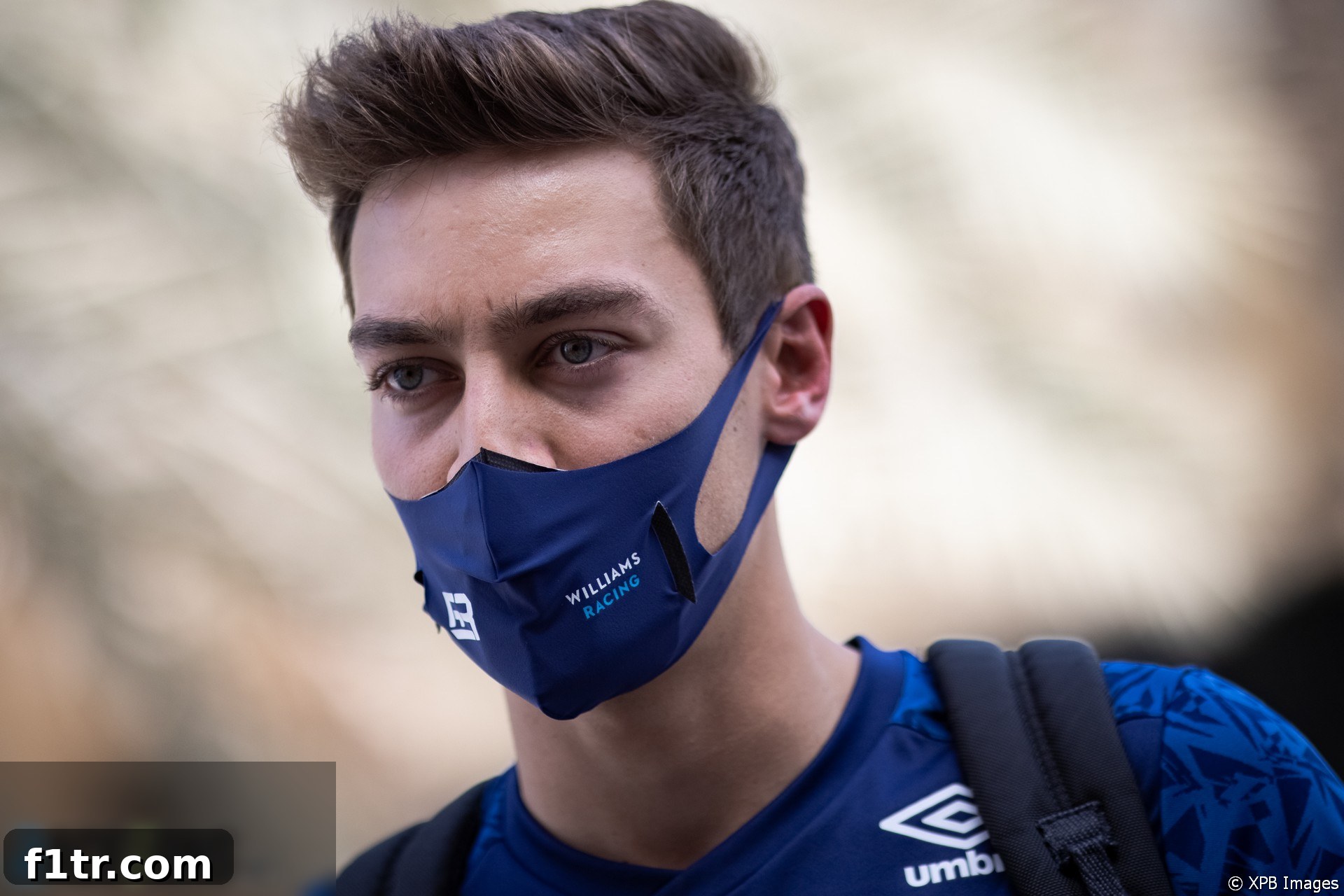
The exhilarating world of Formula 1, renowned for its speed, precision, and high-stakes drama, frequently grapples with complex regulatory challenges. Among these, the debate surrounding track limits consistently fuels discussions among drivers, teams, and fans alike. In the aftermath of a contentious season-opening Bahrain Grand Prix, George Russell, in his capacity as a newly appointed director of the Grand Prix Drivers Association (GPDA), emerged as a vocal advocate for clearer and more consistent enforcement of these critical regulations. His comments directly addressed the controversy involving Lewis Hamilton and Max Verstappen, highlighting a systemic issue that impacts the very integrity of racing.
The 2021 Bahrain Grand Prix served as a stark reminder of the ambiguities that can plague track limit interpretations. During the race, seven-time world champion Lewis Hamilton received a warning from race control for repeatedly exceeding track limits at Turn 4. This incident sparked significant debate, particularly because drivers had been advised prior to the race that limits at that specific corner would not be strictly enforced, a stance that appeared to shift mid-event. The inconsistency created a cloud of confusion, undermining driver confidence and potentially influencing race outcomes.
George Russell, known for his articulate and thoughtful insights, offered a nuanced perspective on the matter. “It is quite a unique corner with that entry piece of Tarmac going off,” Russell explained, pointing to the specific design of Turn 4 as a contributing factor. “I guess a better solution is needed for that specific corner.” His observation underscores the idea that not all corners are created equal, and some may require bespoke solutions rather than a blanket rule application.
The situation escalated when Red Bull Racing, having observed Hamilton’s wide trajectory at Turn 4, instructed Max Verstappen to adopt a similar line to avoid losing time to his rival. This strategic directive highlighted the competitive advantage that could be gained from exploiting the perceived lack of enforcement. However, once Hamilton received his warning, expressing his surprise with “I thought there was no track limits?”, the narrative quickly changed. Later in the race, Verstappen himself overtook Hamilton while running wide at the very same corner, only to be promptly advised by race control to relinquish the position, which he did. This sequence of events, unfolding within a single race, vividly illustrated the perils of inconsistent application, generating frustration and a sense of unfairness among competitors and spectators.
Russell openly admitted to understanding the dilemma from both angles. “I understand it both ways, to be honest,” he stated. “We initially said ‘let’s not bother about it and let drivers do as they wish’. I think some guys on Friday were taking that to another extreme which looked a bit silly on television.” This acknowledgment sheds light on the fine line between allowing drivers to explore the limits of the circuit and maintaining an aesthetically pleasing and fair competition. While some purists argue that drivers should be allowed to use all available asphalt, the visual spectacle of cars routinely running far beyond traditional track boundaries can detract from the sport’s image and dilute the challenge of precise driving.
Yet, Russell firmly believes that if the circuit naturally allows for a wider line, that should be considered the de facto limit. “But in my opinion it was fine – if that’s the limit, that is the limit. Just because there’s a white line two metres inside it, it’s easier just to drive to the natural limit the circuit allows you to take as opposed to a piece of paint.” This powerful statement champions a fundamental racing philosophy: drivers will naturally gravitate towards the fastest possible line, and if the track design permits an advantage by going beyond a painted line, they will exploit it. He argues that relying solely on painted white lines for enforcement is often inadequate and counter-intuitive to a driver’s instinct.
The complexity of the Bahrain situation was further compounded by the differing rules applied across sessions. “It’s my understanding track limits was being enforced during qualifying but it wasn’t being looked at in the race unless you took a clear advantage in a race incident,” Russell elaborated. “That was made clear that if you were to go over. So what I saw from Verstappen and his overtake, that was absolutely clear that if you were to overtake off the track, you would have your [position] taken away.” This clarification underscores the nuanced interpretation that race control often employs, distinguishing between gaining a time advantage and a positional advantage. While the rule regarding overtaking off-track is relatively clear, the ambiguity surrounding general track limit violations for lap time remains a persistent headache.
As a leading voice within the GPDA, Russell’s stance is clear: the solution lies in physical boundaries. “I think we need to just drive to the what is the natural limit of the circuit. If the natural limit is outside of track limits then we need to sort the edge of the track, if that makes sense.” This advocacy for physical deterrents – such as deeper gravel traps, harsher kerbs, or even walls – aligns with a growing sentiment among drivers and fans who seek unambiguous rules. Physical barriers leave no room for interpretation; a driver either stays on track or suffers a clear, immediate, and often time-costing consequence. This approach would eliminate the need for subjective decisions from stewards, reducing controversy and increasing transparency.
The debate surrounding track limits is far from new in Formula 1. For years, circuits have evolved, often incorporating large tarmac run-off areas for safety reasons. While these run-offs are crucial for mitigating the impact of high-speed errors, they inadvertently create an incentive for drivers to push beyond the conventional track edge without immediate penalty. This safety improvement, paradoxically, has given rise to a regulatory headache that demands ongoing attention. Russell’s argument resonates because it proposes a return to a more definitive form of boundary, where the consequences of exceeding limits are inherent to the circuit design rather than subject to the scrutiny of cameras and human judgment.
The role of the GPDA, with Russell now at its helm, is to champion driver safety and ensure fair competition. By advocating for clearer track limits, Russell is not only addressing a specific incident but also pushing for a fundamental principle that underpins the sport’s credibility. Consistency in rule enforcement is paramount for strategic planning by teams and drivers, ensuring that every competitor operates under the same, predictable framework. When rules fluctuate or are applied differently, it introduces an element of chance and undermines the meritocratic nature of racing.
Ultimately, the objective is to find a harmonious balance between safety, spectacle, and sporting integrity. While modern F1 cars push the boundaries of performance, the regulations governing how they interact with the circuit must keep pace. George Russell’s articulate defense of Lewis Hamilton’s driving and his call for physical track boundaries are more than just reactionary comments; they represent a significant plea from the drivers’ collective for a more straightforward, consistent, and ultimately fairer racing environment. As the sport continues to evolve, addressing these core regulatory challenges will be crucial for maintaining its appeal and ensuring that the focus remains firmly on the exceptional talent and skill of the drivers on track, rather than on the ambiguities of rule interpretation.
2021 F1 season
- Masi ‘basically gifted the championship’ to Verstappen says 2021 FIA steward Sullivan
- Las Vegas race backers looking to extend F1 deal beyond 2025
- Why Mercedes put ‘a reminder of joy and pain’ on display in their factory lobby
- Verdict on error in GT race suggests Mercedes would have lost 2021 Abu Dhabi GP appeal
- Title ‘stolen’ from Mercedes made us ‘underdogs people cheer for’ – Wolff
Browse all 2021 F1 season articles