Formula 1 Insights: Ricciardo’s Optimism, Calendar Shifts & The Open-Wheel Debate
Welcome to our comprehensive F1 news roundup, where we delve into the latest developments shaping the world of Formula 1. From driver confidence to crucial calendar changes and the ongoing philosophical debates about car design, the sport continues to evolve at a relentless pace. Today, we focus on Daniel Ricciardo’s hopeful outlook for Red Bull, significant adjustments in the motorsport calendar, key team principal perspectives, and a thought-provoking discussion on the future aesthetics and safety of F1 cars.
F1 Paddock Pulse: Key Stories & Perspectives
Your daily digest of F1 news, views, features, and more, gathered from leading sources across the motorsport world.
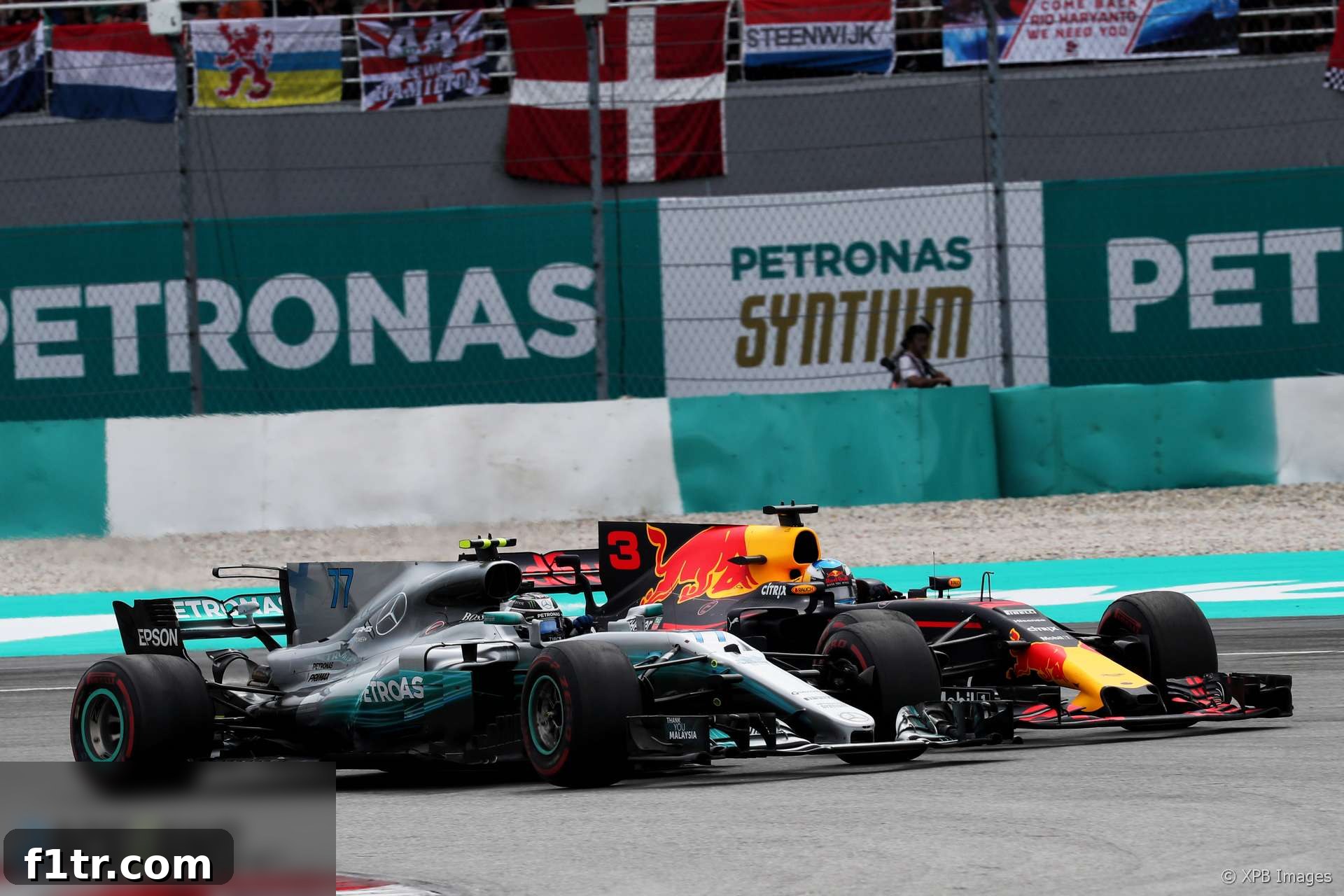
Daniel Ricciardo Believes Stable Rules Can Propel Red Bull Forward in 2018
Red Bull Racing driver Daniel Ricciardo has expressed strong confidence in his team’s ability to challenge front-runners Mercedes and Ferrari in the upcoming 2018 Formula 1 season. His optimism stems largely from the relative stability in the sport’s technical regulations compared to previous years. Ricciardo highlights that with fewer major rule changes, Red Bull can leverage the significant car improvements made in the preceding season, carrying over that momentum and further evolving their package. This continuity, he suggests, provides a solid foundation for Red Bull to close the performance gap and engage in more frequent battles for podiums and victories.
In a pre-season interview, Ricciardo articulated his belief: “I believe so. With not many rule changes and stuff we improved the car a lot last year so in principle we should be able to carry that over for this year and keep evolving from there. We should be able to fight more often.” This sentiment underscores a common hope among teams that stable regulations often lead to convergence in performance, making the championship more competitive. Red Bull’s strong development curve throughout the latter half of the previous season demonstrated their potential, and a consistent regulatory environment could be exactly what they need to mount a sustained challenge against their formidable rivals. Fans eagerly anticipate whether Ricciardo’s pre-season optimism will translate into a genuine three-way fight at the pinnacle of motorsport.
You can watch the full interview here:
Super GT Adjusts Calendar to Avoid Fuji WEC Clash, Highlighting Alonso’s Influence
The prestigious Super GT series, a fan-favorite championship based in Japan, has announced a significant alteration to its 2018 schedule. The change involves moving an event originally planned for the Oct. 12-14 weekend to avoid a direct clash with the recently adjusted FIA World Endurance Championship (WEC) race at Fuji Speedway. This calendar modification is a direct consequence of Fernando Alonso’s high-profile commitment to the WEC Super Season, demonstrating the profound influence a single marquee driver can have on global motorsport calendars.
The decision by Super GT underscores the complex logistical challenges faced by series organizers in an increasingly packed motorsport schedule, especially when accommodating top-tier talent who participate in multiple championships. Alonso’s presence in endurance racing brought immense global attention to the WEC, making it crucial for other series to avoid direct conflicts to maximize viewership and participation. This move by Super GT ensures that fans and potentially drivers who might otherwise be split between the two events can follow both series without conflict, highlighting a growing trend of cooperation in scheduling to benefit the broader motorsport ecosystem.
Read more about the calendar change: Super GT Moves Race to Avoid Fuji WEC Clash (Sportscar365)
Gene Haas Clarifies Stance on American Drivers in F1
Gene Haas, owner of the only American Formula 1 team, Haas F1, has offered clarity on his team’s position regarding the recruitment of American drivers. In an ongoing debate about the lack of American talent in F1, Haas emphasized the pragmatic challenges faced by a relatively new team in the highly competitive sport. He stated, “We’re still learning here in Formula 1, and bringing on a driver who needs to learn about Formula 1 probably isn’t the best thing for us or them.”
Haas’s remarks reflect the intense pressure on F1 teams, particularly those in their formative years, to maximize performance and secure championship points. While supporting American talent is a desirable long-term goal for the American team, their immediate priority remains establishing a competitive foothold. Integrating a rookie driver, regardless of nationality, requires significant resources for development and often comes with a steep learning curve, which Haas believes his team isn’t yet in a position to fully accommodate without potentially compromising their own growth. This perspective highlights the brutal reality of F1, where results often take precedence over national sentiments, even for a team with a strong national identity.
Find the full statement here: Gene Haas clarifies stance on American drivers (Crash)
F1’s Best Races Possess ‘Huge Untapped Potential’
Leading figures within Formula 1 believe that the sport’s most iconic and well-established races hold “huge untapped potential” for further growth and fan engagement. This sentiment suggests a new strategic direction, possibly influenced by F1’s current ownership, Liberty Media, which aims to enhance the overall experience surrounding Grand Prix weekends. The focus is on leveraging the unique characteristics and local appeal of host cities like Melbourne, which has long been celebrated for its vibrant event atmosphere.
The article states: “There’s a feeling of a different approach and a different philosophy, and it aligns perfectly to what we’ve been doing in Melbourne for many years and what Melbourne does with all of its events.” This “different approach” likely refers to a greater emphasis on entertainment, fan interaction, and integrating the race weekend more deeply with the cultural fabric of the host city, moving beyond just the track action. By recognizing and cultivating the existing strengths of popular Grand Prix events, F1 aims to broaden its appeal, attract new audiences, and maximize commercial opportunities, transforming race weekends into comprehensive sports and entertainment festivals.
Explore more on this topic: F1’s best races have ‘huge untapped potential’ (Autosport)
Azerbaijan GP Labels Current F1 Deal as ‘Unacceptable’
The organizers of the Azerbaijan Grand Prix have publicly voiced their dissatisfaction with the terms of their current Formula 1 hosting agreement, describing it as “unacceptable.” This bold declaration signals potential friction between race promoters and F1’s commercial rights holders, likely revolving around the financial burden of hosting a Grand Prix and the perceived returns on investment. Hosting an F1 race is a significant undertaking, often requiring substantial fees, infrastructure development, and logistical support, which can strain local economies if the commercial benefits do not outweigh the costs.
The article quotes the organizers: “Everyone understands that the contract we have now is unacceptable. I think the new leadership of Formula 1 understands that as well.” This statement suggests that the new F1 leadership, which took over from Bernie Ecclestone, is more open to renegotiating terms or at least acknowledging the financial pressures faced by promoters. Such discussions are critical for the long-term sustainability of many races on the F1 calendar, particularly those in newer or non-traditional markets. The outcome of these negotiations could set a precedent for future hosting agreements, influencing which circuits remain on the calendar and how F1 positions itself globally.
Further details on the Azerbaijan GP’s concerns: Azerbaijan GP labels current F1 deal as ‘unacceptable’ (F1i)
Got a tip for a link to feature in the next RaceFans round-up? Send it in here:
- Contact RaceFans
F1 Through the Lens of Social Media
Notable posts and insights from Twitter, Instagram, and other digital platforms, connecting fans with the sport’s rich history and current events.
Here’s the office Keke Rosberg worked in when he set #F1’s first 160mph average speed lap time… https://t.co/yDrGWfOafa pic.twitter.com/XkXrQCIbjR
— RaceFans (@racefansdotnet) February 13, 2018
This evocative tweet from RaceFans transports us back in time, showcasing the cockpit from which Keke Rosberg achieved a remarkable feat: setting Formula 1’s first 160 mph (approximately 257 km/h) average speed lap time. Such historical posts on social media serve as a powerful reminder of the technological evolution and the courage of drivers in F1’s storied past. Rosberg’s achievement highlights an era of raw speed and increasing performance, pushing the boundaries of what was thought possible in Grand Prix racing. Social media platforms effectively bridge the gap between F1’s rich heritage and its contemporary audience, allowing fans to appreciate the sport’s legendary moments and the iconic figures who shaped its history.
- Find more official F1 accounts to follow in the F1 Twitter Directory
Deep Dive: Open-Wheel vs. Closed-Wheel F1 – A Lingering Debate
Today’s featured comment sparks a profound discussion about the fundamental design philosophy of Formula 1 cars: the choice between open-wheel and closed-wheel configurations. This debate transcends mere aesthetics, touching upon critical aspects of aerodynamics, driver safety, and the very identity of Grand Prix racing.
Open wheel vs. closed wheel is largely just a matter of aesthetic preference these days. F1 stays open-wheel because F1 began open-wheel.
If the F1 rules actually allowed closed-wheel / closed-cockpit designs, competitors would switch immediately, for better aerodynamics and for driver safety. But the cars are iconic just as they are, and such a dramatic aesthetic change would surely annoy just as many fans as it would please, so the F1 organisers continue with the open-wheel, open-cockpit tradition. But the changes are coming. We can see them in the F1 concepts from Red Bull, Renault or Ferrari.
‘F1 cars do it, so it must be better’ is very dangerous reasoning. F1 cars are bound by F1 rules, and for many years F1 rules have been deliberately designed to slow the cars down. The rules are largely designed to create a level playing field, but at some point the cars got so fast, and the sport got so dangerous, that the rules also became tools to make the sport less dangerous. That has led to many rules whose sole purpose is to prevent the cars from getting too fast. Formula E has a different approach, Alejandro Agag is doing it great, except for the Fanboost thing.
OSCAR (@Okif1)
The commenter, OSCAR (@Okif1), argues that the continued adherence to open-wheel design in F1 is primarily a matter of tradition and aesthetic preference. He posits that if regulations permitted, teams would swiftly adopt closed-wheel and closed-cockpit designs for their undeniable advantages in aerodynamics and, crucially, driver safety. The inherent danger of exposed wheels leading to airborne collisions and the vulnerability of an open cockpit are well-documented concerns that closed-wheel designs could mitigate.
However, OSCAR also acknowledges the powerful, iconic image of the open-wheel F1 car, an image deeply ingrained in motorsport history. A radical shift would undoubtedly alienate a significant portion of the fanbase, who cherish the traditional look. Yet, he notes that “the changes are coming,” pointing to various concept designs from teams like Red Bull, Renault, and Ferrari that have explored more enclosed or futuristic aesthetics, often incorporating elements that hint at a move towards greater driver protection and aerodynamic efficiency.
Furthermore, OSCAR critically evaluates the common misconception that “F1 cars do it, so it must be better.” He correctly highlights that F1 regulations have often been deliberately crafted not just to foster competition but also to manage car speeds and enhance safety, especially during periods when cars became excessively fast and dangerous. These rules, while creating a level playing field, also serve as constraints that prevent optimal engineering solutions purely focused on speed or safety if they deviate from the established F1 aesthetic. This perspective invites comparison with other racing series, such as Formula E, which has embraced a different design philosophy, prioritizing both innovative technology and specific safety features, demonstrating alternative paths for single-seater racing’s evolution. The debate underscores the delicate balance F1 must strike between preserving its heritage and embracing future innovations in safety and performance.
Happy Birthday!
Today, we extend our best wishes to any members of the RaceFans community celebrating their birthdays. While we don’t have any specific F1 personalities to feature today, every fan’s birthday is a special occasion for us!
If you want a birthday shout-out in our future roundups, be sure to tell us when yours is via the contact form or by adding your date to our list here.
On This Day in F1 History
- Born today in 1944: Ronnie Peterson
On this day, we commemorate the birth of one of Formula 1’s most revered figures, Ronnie Peterson. The Swedish driver, affectionately known as “SuperSwede,” was born on February 14, 1944. Peterson’s career, tragically cut short, was marked by incredible natural talent, dazzling speed, and a spectacular, often sideways, driving style that captivated fans around the world. He achieved 10 Grand Prix victories and was a two-time F1 runner-up, celebrated for his exceptional car control and fearless approach. His legacy endures as one of the sport’s greatest talents who, despite never winning a world championship, left an indelible mark on Formula 1’s golden era. His memory continues to inspire generations of drivers and fans, reminding us of the raw passion and skill that define the sport.
That concludes today’s F1 news roundup. As the motorsport world continues its dynamic journey, we’ll be here to bring you all the essential updates, debates, and historical insights from the pinnacle of racing.