Red Bull’s Internal Battle: Christian Horner on Ensuring Parity Amidst Verstappen-Perez Rivalry
As the 2023 Formula 1 season heats up, Red Bull Racing finds itself in a commanding position, with its two star drivers, Max Verstappen and Sergio Perez, leading the charge at the top of the Drivers’ Championship standings. With two Grand Prix victories each in the opening four rounds, the competition within the team is as intense as the battle against their rivals. This unique and enviable scenario, dubbed a “luxury problem” by Team Principal Christian Horner, necessitates a meticulous approach to driver management to ensure absolute parity and prevent internal discord from derailing their championship ambitions.
Horner has openly stated that the team goes to “pains” to guarantee equal treatment for both Verstappen and Perez, a crucial strategy given the significant advantage Red Bull currently enjoys over the rest of the grid. This commitment to fairness is paramount, especially as all signs point towards an intra-team battle deciding the 2023 World Championship.
The Brewing Rivalry: A Season of Close Contests and Strategic Calls
The 2023 season has already provided several flashpoints highlighting the burgeoning rivalry between the reigning world champion and his Mexican teammate. The recent Azerbaijan Grand Prix served as a stark reminder of the fine margins and strategic complexities that can sway a race result, and potentially, team dynamics. Verstappen had been comfortably leading the race in Baku before a critical pit stop call just prior to a Safety Car deployment. This timing inadvertently handed the advantage to Perez, who subsequently pitted under the Safety Car and retained his lead, ultimately driving to a dominant victory.
Such incidents, though often dictated by the unpredictable nature of Formula 1, inevitably fuel speculation and scrutiny over team strategy and driver treatment. While Red Bull maintains these are racing incidents, the perception of fairness is critical for driver morale and team cohesion.
Echoes of the Past: Unresolved Tensions from 2022
The current internal competition isn’t without its historical context. A significant rift developed between Verstappen and Perez towards the end of the 2022 season, particularly at the penultimate race in Brazil. During that Grand Prix, Verstappen controversially refused a direct team order to allow Perez to re-pass him on the final lap, a decision that sent shockwaves through the paddock and reportedly created tension within the Red Bull garage. This refusal was widely believed to be linked to an earlier incident at the 2022 Monaco Grand Prix, where Perez out-qualified Verstappen after crashing in the final qualifying session, which caused a red flag and prevented Verstappen from completing his final flying lap. These past events underscore the deep-seated competitive instincts of both drivers and the potential for previous grievances to resurface.
Managing these highly competitive personalities, especially when they are vying for the same ultimate prize, is a delicate balancing act. Horner acknowledges that while the team’s dominance is a dream scenario, it also presents unique challenges that require constant vigilance and proactive management.
Red Bull’s “Luxury Problem”: Navigating an Intra-Team Championship Battle
Christian Horner’s assessment of the situation as a “luxury problem” perfectly encapsulates the unique position Red Bull finds itself in. While most teams dream of having two drivers capable of challenging for a world title, the reality of managing such a scenario brings its own set of complexities. The primary concern, as Horner articulates, is “to ensure that paranoia doesn’t creep in, that both drivers are treated equally.” This isn’t just about rhetoric; it translates into concrete actions aimed at fostering an environment of trust and fairness.
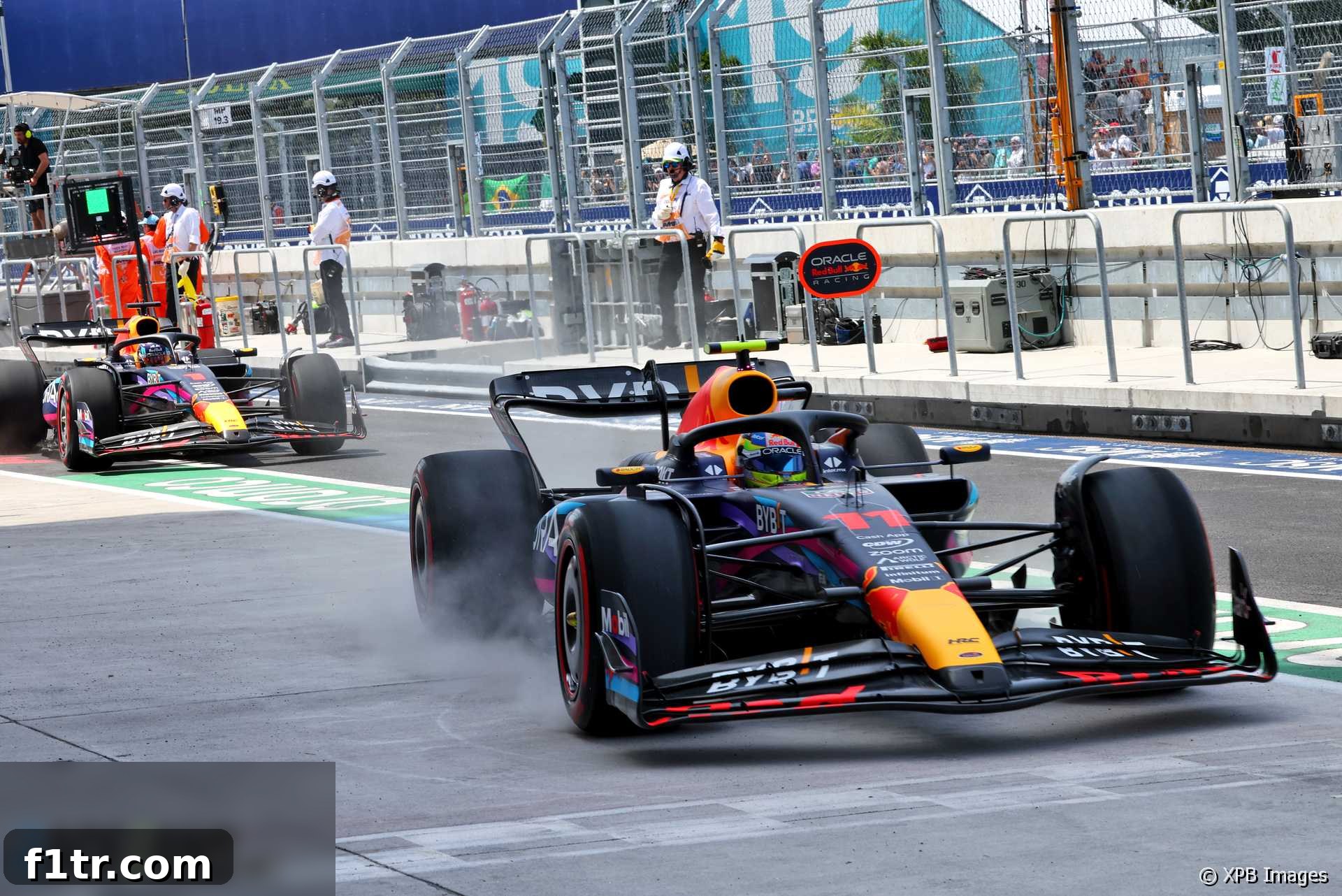
Red Bull’s commitment to parity extends to seemingly minor details that nonetheless hold significant symbolic weight for the drivers. Horner elaborates: “You go to pains to provide equality to the point of who drives out the garage first each weekend, it alternates. It even alternates in the debrief who talks first.” These seemingly small gestures are designed to reinforce the message that neither driver is favored, ensuring that both Max and Sergio feel equally valued and supported by the team. The goal is to remove any doubt that could lead to internal friction, allowing their performance on track to be the sole determinant of success.
The Art of Driver Management: Beyond the Pit Lane
Beyond the alternating garage exits and debrief orders, the philosophy underpinning Red Bull’s driver management is rooted in transparency and the acceptance of racing’s inherent unpredictability. Horner acknowledges that “it’s racing, it’s Formula 1, and occasionally something will happen like a Safety Car or a pit stop. You can’t control every aspect within the sport – there are still variables.” The key, he argues, is ensuring that the drivers understand that external factors, rather than team bias, are behind any perceived advantage or disadvantage.
The ultimate objective is to ensure that the championship is decided by skill and performance on the circuit, not by reliability issues or any form of preferential treatment. “I think so long as the drivers know that they’re both getting an equal chance and it’s ultimately down to what they do on the circuit, that’s where you want it to play out,” Horner asserts. This philosophy is crucial for maintaining a healthy competitive spirit without allowing it to devolve into destructive internal conflict.
Lessons from Mercedes: Toto Wolff’s Perspective on Internal Rivalries
The challenges faced by Christian Horner and Red Bull are not unprecedented in Formula 1. Mercedes Team Principal Toto Wolff, who famously navigated years of intense rivalry and occasional clashes between his former drivers Lewis Hamilton and Nico Rosberg, empathizes deeply with Horner’s current situation. Wolff’s experiences offer a valuable historical perspective on the complexities of managing two championship contenders within the same team.
“From my past, it’s a super-tricky job for Christian and the team,” Wolff remarked. He highlights the inherent paradox: “Because both drivers will obviously try to always feel that they’re fairly and equally treated whilst at the same time trying to have an advantage.” This insight underscores the relentless competitive drive that defines Formula 1 athletes, making driver management a constant psychological battle.
Wolff shared his key takeaways from the Hamilton-Rosberg era: “I think in our team it was important to maintain a lot of transparency and clarity – discuss things before we actually go racing on a Sunday. Put boundaries.” Establishing clear communication channels and setting expectations beforehand were crucial for Mercedes. Even amidst their fierce personal battle, both Hamilton and Rosberg ultimately respected the team’s authority and guidelines, understanding that they were part of a larger structure working towards a common goal.
The Hamilton-Rosberg Saga Revisited: A Cautionary Tale
The rivalry between Lewis Hamilton and Nico Rosberg culminated in several on-track incidents, most notably their collision at the 2016 Spanish Grand Prix, which saw both Mercedes cars retire from the race while disputing the lead. This high-stakes clash perfectly illustrates the potential consequences when internal competition boils over.
Reflecting on that period, Wolff admitted, “going back in time, there’s things I probably would have done differently, in 2016 particularly.” This candid admission reveals the immense pressure and learning curve involved in managing such an explosive dynamic. Finding the right balance between allowing drivers to race hard for a championship and ensuring they do not compromise the team’s overall success is incredibly difficult. “But getting the balance right between accepting that these two guys are racing for a championship and it’s within the same garage and, at the same time, they are part of a larger structure, I think that’s not always easy because they are very competitive animals,” Wolff concluded.
The Unpredictable Nature of Racing and Championship Implications
The 2023 season promises to be a captivating spectacle, not just for the battle against rival teams, but for the evolving dynamic within Red Bull Racing. The team’s dominant performance means that the championship very well could be decided by the direct confrontation between Max Verstappen and Sergio Perez. This internal competition, while a testament to Red Bull’s engineering prowess, also presents a constant management challenge.
Christian Horner and his team face the unenviable task of allowing their drivers to fiercely compete while simultaneously safeguarding team unity and preventing a repeat of past tensions. The ultimate goal is for the championship to be a pure reflection of driver skill and performance on the track, devoid of any accusations of favoritism or strategic manipulation. As the season progresses towards the Miami Grand Prix and beyond, all eyes will be on how Red Bull navigates this “luxury problem,” ensuring fairness as their two gladiators vie for the ultimate prize in Formula 1.