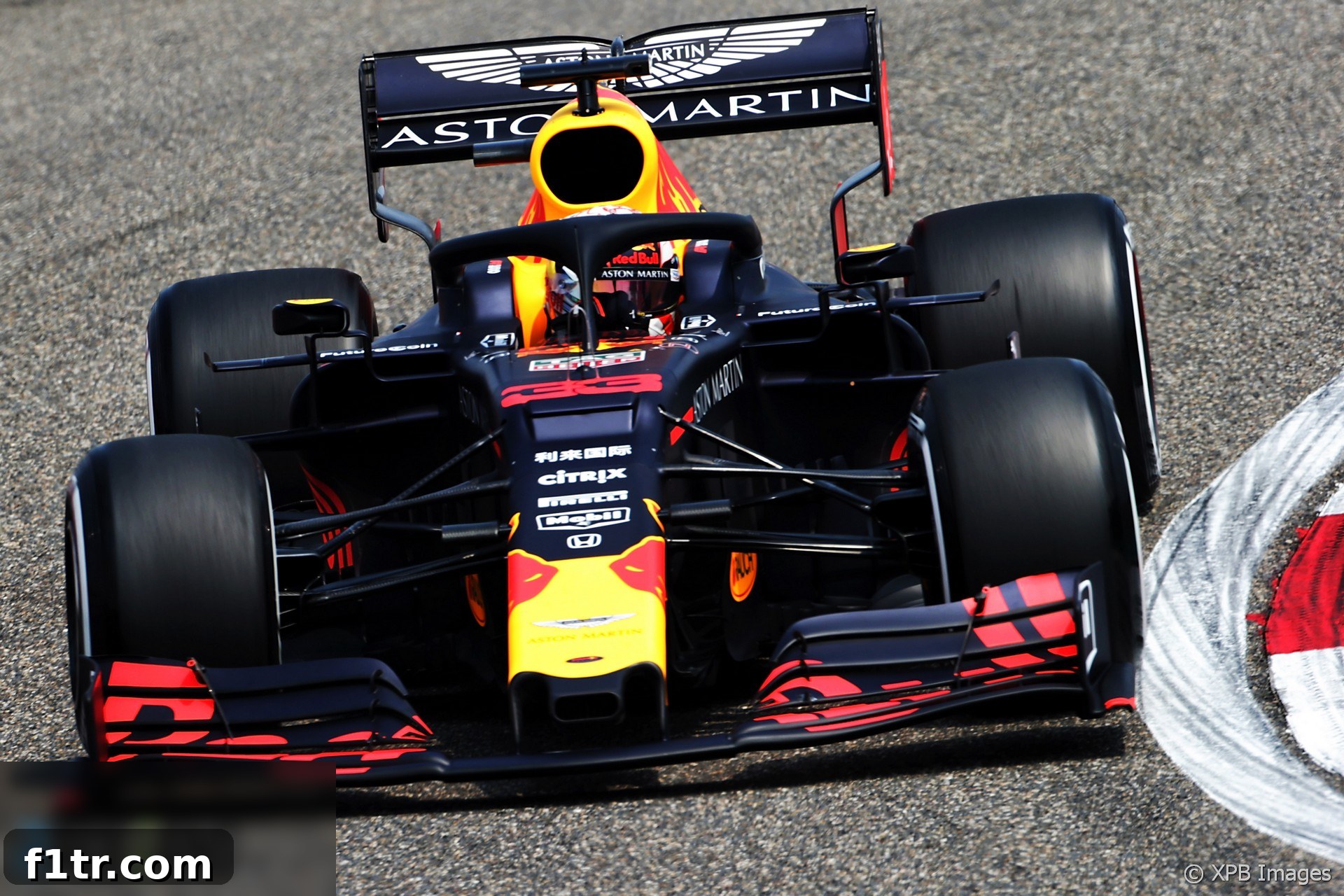
Red Bull’s 2019 Bahrain GP Set-Up Blunder: Unpacking the Sensor Saga and Its Aftermath
The highly competitive world of Formula 1 leaves no room for error, and even the most minuscule technical glitch can have profound consequences on a team’s performance. Red Bull Racing, a perennial contender, found this out the hard way during the 2019 Bahrain Grand Prix. Team principal Christian Horner candidly revealed after the event that a fundamental set-up error, directly attributable to a faulty sensor, plagued both of their RB15 cars, severely impacting their potential on track.
This revelation shed light on why the Milton Keynes squad struggled to match the pace of rivals Ferrari and Mercedes throughout the Bahrain weekend. What seemed like an inherent lack of speed or grip was, in fact, a deeper, systemic issue stemming from unreliable data. The incident underscored the critical reliance of modern F1 cars on sophisticated electronics and the cascading effect a single sensor malfunction can trigger across an entire car’s performance parameters.
The Subtle Sensor Malfunction: A Hidden Handicap
Christian Horner elaborated on the problem, stating to Sky Sports, “It was something on both cars, it was basically a sensor issue that has meant that the set-up we thought was on the car actually wasn’t on the car.” He described the error as “quite subtle,” indicating it wasn’t immediately obvious, yet its impact on the car’s dynamic behavior was anything but minor. In Formula 1, where gains are measured in milliseconds and car balance is meticulously tuned, even a slight deviation from the intended setup can significantly compromise performance.
Sensors are the eyes and ears of an F1 car, constantly feeding data back to the engineers regarding everything from suspension travel and tire temperatures to aerodynamic load and engine parameters. If a sensor provides erroneous readings, the team might inadvertently apply incorrect setup adjustments, believing the car is responding one way when it’s actually behaving quite differently. This could lead to a car that feels inconsistent, unpredictable, and ultimately, slower than its true capability.
The direct consequence of this miscalibration was evident in the drivers’ struggles, particularly with tire management. Both Max Verstappen and Pierre Gasly found it exceptionally difficult to achieve the expected lap times, especially when running on the soft compound tires. These high-grip, fast-wearing tires demand a perfectly balanced car to extract their peak performance, and any instability introduced by an incorrect setup would exacerbate their degradation and reduce their effective operating window. In qualifying, this fundamental flaw meant Red Bull barely edged out Haas, finding themselves a distant third behind the dominant Ferrari and Mercedes machines.
Driver Performance: Navigating Unforeseen Challenges
The sensor issue presented unique challenges for both of Red Bull’s drivers, albeit with different implications for their respective seasons. For Max Verstappen, a driver renowned for his aggressive yet precise style, an unstable car can be particularly frustrating. While his immense talent often allows him to drive around problems, even he would have been hindered by a car that wasn’t responding as predicted. Verstappen typically thrives on a front-end strong, responsive machine, and a compromised setup would limit his ability to attack corners with his characteristic verve. Although not explicitly detailed how it affected him, the “both cars” statement confirms he too was fighting an invisible foe.
For Pierre Gasly, however, the situation was arguably more critical. Joining Red Bull as a relatively new face, he was under immense pressure to perform immediately alongside the highly-rated Verstappen. His struggle to consistently reach Q3 in the early races of the 2019 season, coupled with scoring his first points for the team only in Bahrain, highlighted a difficult adaptation period. The sensor issue added another layer of complexity to his challenge, making it even harder for him to find comfort and confidence in the RB15. A driver stepping into a new team needs a stable platform to learn and push, and an unreliable setup would undoubtedly have hampered his progress and magnified his difficulties in what was already a demanding environment.
Post-Bahrain Recovery: Unlocking the RB15’s Potential
Recognizing the severity of the issue, Red Bull immediately swung into action. The post-race test in Bahrain proved to be an invaluable opportunity for the team to diagnose and rectify the sensor problem, along with gaining a deeper understanding of the RB15’s characteristics. These tests are crucial for F1 teams, allowing them to conduct extensive data logging and experimental runs without the pressure of a race weekend.
Christian Horner emphasized the positive outcomes of this intense scrutiny. “We had a good test in Bahrain. We understood a lot of things about the car. It gave us some good direction and it was a really beneficial couple of days. So that was certainly a positive.” This focused effort allowed Red Bull engineers to isolate the faulty sensor, recalibrate systems, and gather accurate data on how the Honda-powered RB15 truly behaved. The insights gained provided a clear roadmap for future development and setup optimizations, ensuring they wouldn’t repeat such a fundamental error.
The team’s commitment to rapid development was further evidenced during the first practice session for the subsequent Chinese Grand Prix. Red Bull ran distinctly different programs on Verstappen and Gasly’s cars, a strategic move aimed at gathering diverse data points and accelerating the understanding of the RB15’s nuances. This aggressive approach highlighted their determination to quickly get on top of the car’s performance and extract the maximum potential from the new Honda power unit, which represented a significant shift for the team after years with Renault.
Pierre Gasly’s Renewed Confidence and the Path Forward
Despite the early season setbacks, Pierre Gasly expressed strong confidence in Red Bull’s formidable development capabilities, a trait the team has consistently demonstrated over its history. “I’m confident the team, I think Red Bull proved many times they are probably one of the fastest teams to develop the car,” he stated, reflecting a belief shared by many within the paddock.
Gasly’s optimism extended to his personal performance trajectory, expecting a symbiotic improvement with the car. “For sure I expect the car to be stronger and stronger race after race and for sure my feeling with it will improve. I expect the evolution to go together in the same direction. I’m pretty confident about it and hopefully we can improve really soon and start properly this weekend.” This perspective is vital for a driver, as a feeling of progress and understanding with the machinery can dramatically boost morale and performance. The synergy between driver confidence and car development is often a key ingredient for success in Formula 1.
The early-season struggles, while unwelcome, provided Red Bull with invaluable lessons. It forced them to scrutinize their data acquisition systems and setup procedures, ultimately making them a stronger, more resilient unit. The ability of a top team to quickly identify and rectify such issues is a testament to their engineering prowess and operational efficiency. Moving forward from Bahrain, Red Bull was poised to leverage these learnings, refine the RB15, and push for more competitive showings, aiming to challenge the established front-runners more consistently.
Broader Implications for Red Bull’s 2019 Championship Hopes
While a single race blunder might seem minor in the grand scheme of a long F1 season, early-season issues can significantly impact a team’s championship aspirations. Losing valuable points and falling behind in the development race in the initial stages can create a difficult uphill battle. However, Red Bull’s rapid response to the sensor problem highlighted their relentless pursuit of perfection and their capability to overcome adversity.
The incident also served as a stark reminder of the complexities of modern Formula 1. With cars being essentially rolling supercomputers, the accuracy and reliability of every single component are paramount. The Red Bull-Honda partnership was in its nascent stages in 2019, and overcoming such technical hurdles together was crucial for building a strong foundation for future seasons. Their ability to quickly diagnose and correct a ‘subtle’ but fundamental error demonstrated the strength of their technical department and their commitment to maximizing the performance of the RB15.
The 2019 season ultimately saw Red Bull make significant strides, particularly in the latter half, with Max Verstappen securing multiple victories and establishing himself as a potent force. The lessons learned from the Bahrain sensor saga undoubtedly contributed to this mid-season resurgence, proving that even setbacks can be transformed into stepping stones for future success. The team’s proactive approach, combined with Gasly’s unwavering faith and the ongoing development of the RB15, set the stage for a compelling narrative of recovery and ambition throughout the rest of the championship.
Further Reading: Insights from the 2019 F1 Season
Explore more articles related to the exciting 2019 Formula 1 season:
- Crying in the Melbourne car park at 2019 grand prix was my career low – Ocon
- McLaren Racing reports reduced £71 million loss in 2019
- Kvyat: Hockenheim podium last year was “my biggest achievement” so far
- How the FIA’s new encrypted fuel flow meter targets Ferrari’s suspected ‘aliasing’ trick
- “He smashed my office door”: 23 must-see moments from ‘Drive to Survive’ season two
Browse all 2019 F1 season articles