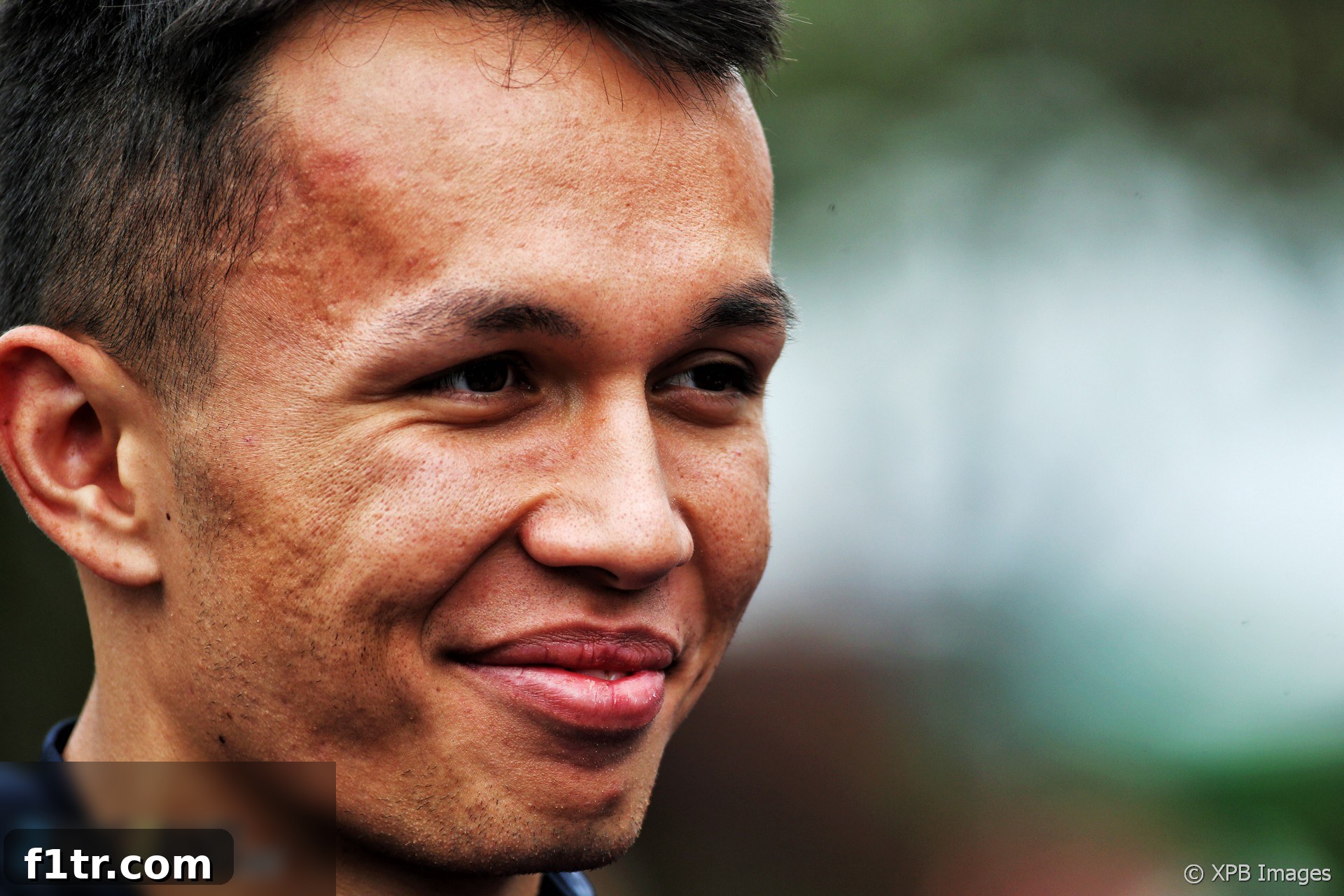
In a dramatic mid-season personnel reshuffle, Red Bull Racing has officially announced the replacement of Pierre Gasly with Alexander Albon, effective immediately for the upcoming Belgian Grand Prix. This significant decision, confirmed by the team in a concise statement on Monday, sees Gasly demoted back to Scuderia Toro Rosso, the sister team from which he was promoted a mere twelve races ago. The move underscores Red Bull’s relentless pursuit of optimal performance and their distinctive approach to driver management within the highly competitive Formula 1 landscape.
The announcement sends ripples across the paddock, highlighting the intense pressure placed on drivers in top-tier teams. Pierre Gasly’s tenure at Aston Martin Red Bull Racing had been fraught with challenges, as he consistently struggled to match the exceptional pace and race craft of his teammate, Max Verstappen. Despite initial hopes that the Frenchman would find his rhythm and adapt to the demands of a front-running car, the persistent performance gap ultimately led the team to make this decisive change, prioritizing their constructors’ championship aspirations.
Advert
Red Bull’s official statement provided insight into their unique driver development philosophy. It read, “Red Bull are in the unique position of having four talented Formula One drivers under contract who can be rotated between Aston Martin Red Bull Racing and Toro Rosso.” This flexibility allows the energy drink giant to nurture and evaluate talent across their two F1 teams, ensuring that only the most competitive drivers are in their prime seats while simultaneously offering development opportunities. The statement further clarified the immediate objective behind Albon’s promotion: “The team will use the next nine races to evaluate Alex’s performance in order to make an informed decision as to who will drive alongside Max in 2020.” This effectively sets up a high-stakes trial period for Albon, with his long-term future at the senior team dependent on his performance throughout the remainder of the 2019 Formula 1 season.
Alexander Albon’s Meteoric Rise to Red Bull Racing
The promotion of Alexander Albon to Red Bull Racing marks an extraordinary acceleration in his Formula 1 journey. Having only made his debut at the start of the 2019 season with Toro Rosso, and famously driving an F1 car for the first time during pre-season testing, Albon’s ascent has been remarkably swift. The British-Thai driver quickly impressed observers and the Red Bull management alike with his calm demeanor, mature race craft, and consistent ability to score points for Toro Rosso. His rapid adaptation to the intricate demands of F1 machinery, coupled with a string of solid performances, positioned him as a prime candidate for a top seat within the Red Bull program. This swift elevation over more experienced drivers within the Red Bull ecosystem underscores the team’s profound belief in Albon’s raw talent and untapped potential. From GP3 to Formula 2, and then a last-minute call-up to Toro Rosso, Albon’s path has now led him to one of F1’s most coveted and demanding drives, all within a remarkably condensed timeframe.
Pierre Gasly’s Challenging Tenure and Demotion
For Pierre Gasly, the demotion back to Toro Rosso represents a significant setback after a tumultuous half-season with Red Bull Racing. Promoted at the beginning of the 2019 campaign following Daniel Ricciardo’s departure, Gasly faced the daunting task of partnering the formidable Max Verstappen. High expectations were placed upon the young Frenchman to provide consistent support and challenge near the front of the grid. However, his performances struggled to meet these demanding benchmarks. Across the twelve races preceding the summer break, Gasly frequently found himself lacking the outright pace to match Verstappen, often qualifying and racing well outside the top five, a position incongruous with the capabilities of a Red Bull chassis. The performance disparity was starkly reflected in the Constructors’ Championship standings, where Gasly contributed only a fraction of the points amassed by the team, severely impacting Red Bull’s ability to consistently contend with Mercedes and Ferrari.
The mounting pressure was palpable, and Team Principal Christian Horner publicly acknowledged the issue, noting after the Hungarian Grand Prix that “not having two cars running at the front does hurt us.” This frank admission highlighted the strategic disadvantage Red Bull faced with only one car consistently challenging for podiums and victories. While Horner had previously expressed the team’s “intention” to keep Gasly in the seat for the remainder of the year, the uncompromising pursuit of competitive advantage and championship success ultimately dictated a different course of action. This decision is a testament to the ruthless, results-driven culture endemic to Formula 1, where long-term plans can be swiftly altered in the face of performance shortfalls. Gasly now returns to Toro Rosso, the team where he previously flourished, demonstrating his talent throughout the 2018 season and securing impressive finishes, suggesting a potential for redemption.
Strategic Implications for Red Bull and Toro Rosso’s Futures
This mid-season driver swap carries profound strategic implications for both Red Bull Racing and Scuderia Toro Rosso. For Red Bull, the primary objective is unequivocally to bolster their performance in the Constructors’ Championship. With Max Verstappen consistently operating at an elite level, the team desperately needed a second driver capable of reliably securing strong points finishes, challenging rival teams, and potentially supporting Verstappen’s race strategies. Alexander Albon’s integration into the team will be rigorously monitored to ascertain if he can fulfill these crucial expectations. Red Bull is keen to assess his capabilities not only for the remaining races of 2019 but also as a potential long-term partner for Verstappen in 2020 and beyond. This extensive trial period will enable Red Bull to make a thoroughly informed decision regarding their future driver line-up, aiming to avoid a recurrence of the performance issues encountered with Gasly.
Conversely, for Toro Rosso, the return of Pierre Gasly provides a significant infusion of experience and proven speed. Gasly, who previously thrived within the Faenza-based outfit, will be eager to rebuild his confidence, demonstrate his true potential, and re-establish his reputation as a formidable Formula 1 driver. His recent experience and insights gained from the main Red Bull team could also prove invaluable for Toro Rosso’s technical development. The dynamics within Toro Rosso will undoubtedly shift, as Gasly partners Daniil Kvyat, another driver well-versed in the highs and lows of the demanding Red Bull driver program. This pairing creates a strong, experienced line-up for Toro Rosso, benefiting their own Constructors’ Championship ambitions and providing critical feedback to Honda, their engine supplier, as they continue to refine their power unit.
The Road Ahead: Belgian Grand Prix and Beyond
The Belgian Grand Prix at the iconic Spa-Francorchamps circuit will serve as the first pivotal test for Alexander Albon in his new Red Bull machinery. Spa is a legendary track, renowned for its challenging high-speed corners, significant elevation changes, and unpredictable weather, presenting a formidable challenge for any driver, let alone one making their debut for a new team mid-season. All eyes will be on Albon as he navigates the complexities of the potent RB15, working in tandem with a new team of engineers and mechanics. His immediate goals will be to integrate seamlessly, minimize errors, and demonstrate consistent progress throughout the weekend. For Pierre Gasly, his return to Toro Rosso offers a tangible opportunity for redemption—a chance to rediscover the formidable form that initially earned him the coveted Red Bull promotion. His performances at Toro Rosso will be equally scrutinized, as every driver within the Red Bull talent pool remains under continuous and rigorous evaluation.
This mid-season driver change is a classic embodiment of Red Bull’s proactive and results-oriented strategy in Formula 1. It reflects a deep-seated culture that prioritizes performance above all else, constantly seeking to optimize its resources to compete at the very forefront of the grid. The remainder of the 2019 F1 season promises to be captivating, not solely for the overarching championship battles but also for the compelling individual narratives unfolding around these two talented drivers. Their respective performances in the upcoming races will undoubtedly shape their careers and profoundly influence Red Bull’s crucial decisions for the 2020 Formula 1 season and beyond, cementing their place, or lack thereof, within the elite echelons of the sport.
Don’t miss anything new from RaceFans
Follow RaceFans on social media:
- Join RaceFans on Facebook
- Follow RaceFans on Twitter
- Get daily email updates from RaceFans
Advert
2019 F1 season
- Crying in the Melbourne car park at 2019 grand prix was my career low – Ocon
- McLaren Racing reports reduced £71 million loss in 2019
- Kvyat: Hockenheim podium last year was “my biggest achievement” so far
- How the FIA’s new encrypted fuel flow meter targets Ferrari’s suspected ‘aliasing’ trick
- “He smashed my office door”: 23 must-see moments from ‘Drive to Survive’ season two
Browse all 2019 F1 season articles