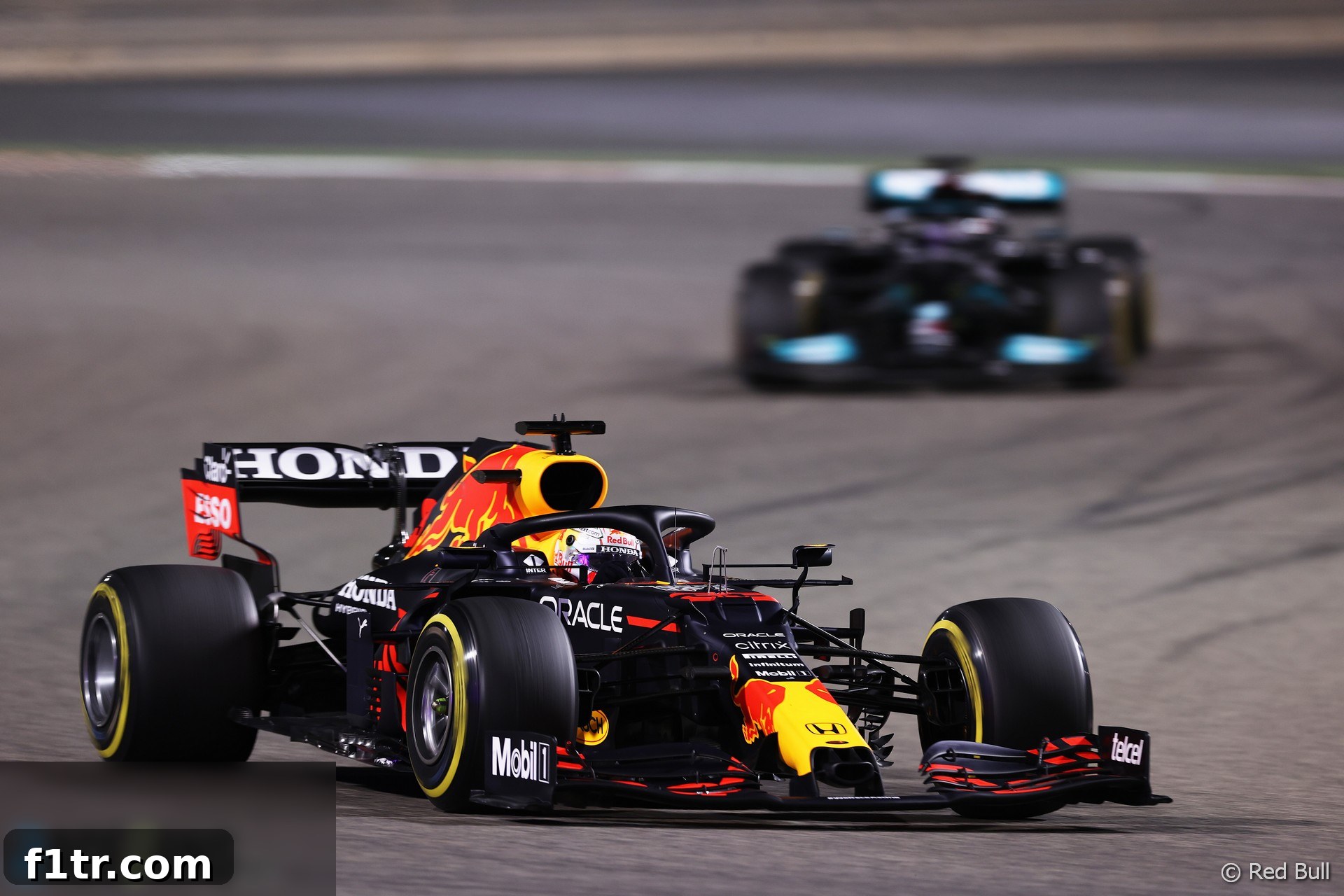
The exhilarating season-opener of the 2021 Formula 1 championship, the Bahrain Grand Prix, delivered instant drama and set the stage for an epic rivalry. While Max Verstappen demonstrated undeniable pace and skill, he ultimately relinquished a hard-fought victory to Lewis Hamilton, sparking immediate debate and frustration within the Red Bull Racing camp. Verstappen himself voiced strong opinions to his team, suggesting they should have allowed him to incur a five-second penalty rather than surrendering the lead after an on-track overtake deemed illegal due to track limits.
The Red Bull driver described losing what would have been a sensational win to Hamilton as a “shame,” particularly after being instructed to concede the position to the Mercedes rival. Verstappen, who had been the dominant force throughout the practice sessions and qualifying of the opening weekend, had clinched pole position and appeared poised for a commanding victory. Despite the setback, he still secured a commendable second place, finishing a mere seven-tenths of a second behind Hamilton in a nail-biting conclusion to the race.
The pivotal moment of the race occurred in the closing stages. With just a handful of laps remaining, Verstappen executed a daring and decisive move on Hamilton, sweeping past him to seize the lead. However, the elation was short-lived. Race director Michael Masi promptly issued a directive to Red Bull, ordering them to instruct Verstappen to hand the lead back to Mercedes. The ruling was based on the interpretation that Verstappen’s decisive pass had taken place with all four wheels beyond the designated track limits at Turn Four, an area that had been a point of contention and inconsistent enforcement throughout the weekend.
Reflecting on the incident and the subsequent instruction, Verstappen firmly believed that his team should have adopted a different strategy. He argued that allowing him to maintain the lead, even with the looming threat of a penalty, would have been the superior tactical choice. His rationale was straightforward: he felt confident he could have extended his advantage over Hamilton to more than five seconds within the remaining laps. Such a gap would have absorbed any likely five-second time penalty, still securing him the victory.
The intensity of the moment was palpable through team radio communications. After crossing the finish line in second, Verstappen’s frustration was evident as he questioned his team: “Why couldn’t you just let me go? I could’ve easily pulled the five seconds. I prefer we lose a win like that than be second like this.” This raw display of competitive spirit highlighted his conviction that a calculated risk could have yielded a different outcome, even in the face of regulatory scrutiny.
In response to his driver’s query, Red Bull Team Principal Christian Horner was quick to explain the team’s predicament. Horner clarified that the decision was not a discretionary one for Red Bull; they had received a clear and unequivocal instruction from race control, leaving them with no alternative but to comply. “We had the instruction from race control unfortunately, Max,” Horner communicated over the radio, tempering the news with praise for Verstappen’s performance: “But that was a hell of a drive you put on there.” The exchange underscored the delicate balance between a team’s strategic ambitions and the binding authority of the race director’s decisions.
Despite the bittersweet taste of narrowly missing victory, Verstappen maintained a pragmatic and forward-looking perspective in his post-race reflections. He acknowledged the disappointment but stressed the importance of identifying the positives from their overall performance. “It’s of course a shame, but also you have to see the positives,” Verstappen stated. “We were really bringing the fight to them and I think that’s great to start the year like that.” This outlook signaled Red Bull’s clear intent to challenge Mercedes vigorously throughout the season, transforming the opening race into a statement of intent rather than a singular setback.
Beyond the high-stakes battle with Hamilton and the track limits controversy, Verstappen encountered another challenge during the race itself. Early on, he was vocal on team radio about a “strange sensation” under throttle, particularly noticeable in low-speed corners. This issue led to concerns about the car’s handling and power delivery. Mercedes strategists, observing their rival’s telemetry and radio messages, quickly diagnosed the problem as potentially related to the differential. This unexpected technical hurdle undoubtedly added another layer of complexity to Verstappen’s already demanding drive.
“I don’t know what happened there,” Verstappen admitted when questioned about the issue. “I don’t think it was completely solved the whole race in the low-speed corners. So we’ll have a look at that. Overall we managed to finish the race, of course, and score good points.” His comments highlighted the ongoing efforts by the team to fine-tune the RB16B and ensure optimal performance across all conditions. Resolving such nuances is crucial for sustained championship contention, and the team would undoubtedly delve into the data to address this “strange sensation” before the next Grand Prix.
Adding to Red Bull’s strong showing in Bahrain was the impressive debut performance of Verstappen’s new team mate, Sergio Perez. The Mexican driver experienced an unfortunate start, beginning the race from the pit lane after his car suffered an electrical shutdown during the formation lap. Despite this significant handicap, Perez orchestrated a masterful recovery drive, systematically carving his way through the field. His perseverance and skill were rewarded with a respectable fifth-place finish, securing valuable points for Red Bull in the Constructors’ Championship.
Perez’s ability to recover from a last-place start to a top-five finish provided crucial evidence of both his talent and the competitive potential of the Red Bull package. His points contribution was vital, underscoring the team’s strength in depth and their ambition to not only challenge for the Drivers’ title but also to mount a serious assault on the Constructors’ Championship. This combined effort showcased Red Bull’s robust start to the season, leaving them with plenty of positives to build upon despite the near-miss for victory.
The 2021 Bahrain Grand Prix served as a thrilling precursor to what promised to be an unforgettable season. The strategic calls, the controversial track limits, the technical challenges, and the sheer wheel-to-wheel racing captivated audiences worldwide. Verstappen’s aggressive approach and unwavering belief in his abilities, contrasted with Hamilton’s defensive masterclass, instantly reignited one of Formula 1’s most compelling rivalries. Red Bull’s overall performance, spearheaded by Verstappen and bolstered by Perez’s recovery, demonstrated that they had arrived with a car capable of taking the fight directly to Mercedes. This initial encounter, despite the outcome, solidified Red Bull’s position as a formidable contender, setting the tone for what many anticipated would be a legendary championship battle.
2021 Bahrain Grand Prix Related Articles
Delve deeper into the events and discussions surrounding the thrilling 2021 Bahrain Grand Prix with these insightful articles:
- Why one driver says there’s no easy solution to F1’s ‘messy’ track limits problem
- Verstappen: Lost win in Bahrain “is not going to matter” if we have fastest car
- The classic rivalry for ‘best of the rest’ and six more Imola talking points
- Ocon: We need to extract the maximum from the car to score points
- Vettel feeling “not at home in the car yet” after tough weekend
Browse all 2021 Bahrain Grand Prix articles