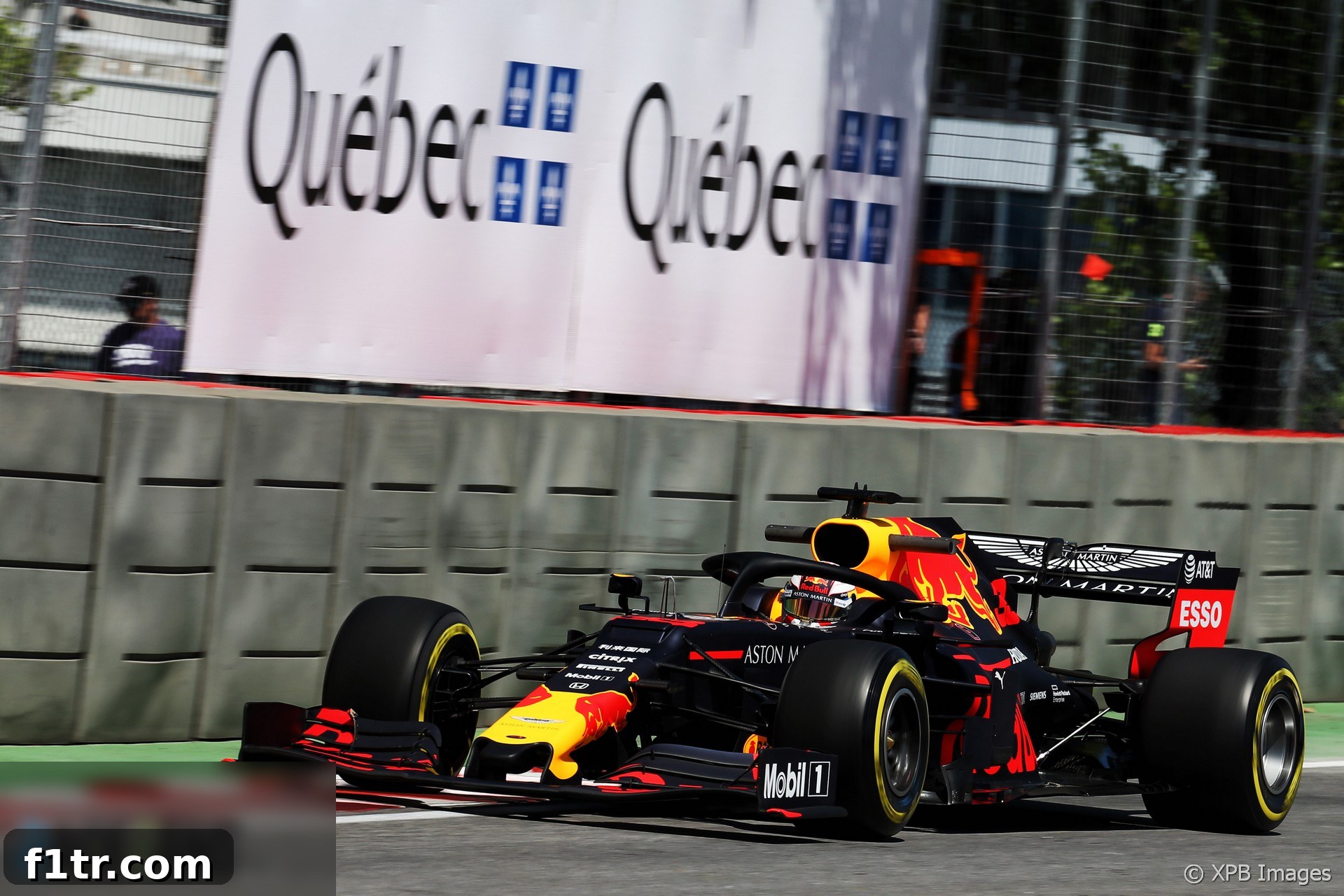
Max Verstappen’s ‘Wall of Champions’ Incident: Unraveling Red Bull’s Communication Blunder at Circuit Gilles Villeneuve
The high-stakes world of Formula 1 demands precision, not just from its drivers but also from its teams. A momentary lapse in communication, a fractional misjudgment, can lead to significant consequences. This harsh reality was brought into sharp focus during the second practice session at the iconic Circuit Gilles Villeneuve when Red Bull Racing found itself at the center of a costly mix-up. The incident culminated in star driver Max Verstappen making an unwelcome acquaintance with the infamous ‘Wall of Champions’, severely curtailing his valuable track time and disrupting the team’s meticulously planned preparations for the Canadian Grand Prix.
The Dramatic Sequence of Events: A Collision of Miscommunication
The tranquil flow of a typical Friday practice session was abruptly shattered by the sound of carbon fiber meeting concrete. As Verstappen, known for his aggressive yet precise driving style, pushed his RB15 towards the limits, he encountered his teammate Pierre Gasly at a critical juncture. Gasly, in the sister Red Bull car, was simultaneously preparing to embark on a flying lap, a common scenario in practice as drivers search for clear air and optimal track conditions.
The critical moment unfolded in the final chicane, a notoriously challenging section of the Circuit Gilles Villeneuve. As Verstappen rapidly closed the gap on Gasly, he found himself caught in the aerodynamic wake of his teammate’s car. The turbulent air, a phenomenon known as ‘dirty air’, dramatically reduces downforce and grip, making the car much harder to control. Compounding this challenge was a reported communication breakdown from the Red Bull pit wall. Verstappen’s account painted a clear picture of the incident, expressing frustration at the confluence of factors that led to the contact.
“I arrived to the last chicane and I had Pierre in front of me,” Verstappen explained to the media following the session. “He was told to speed up but I don’t know exactly what happened then so I arrived into the chicane, and basically in the wake of his car I understeered into the wall.” This concise explanation highlighted the double whammy: Gasly’s presence in a compromised position and the inherent aerodynamic challenges of following another car closely. The understeer, where the front wheels lose grip, sent Verstappen’s car wide, directly into the unforgiving concrete barrier that has claimed many illustrious victims over the years.
The impact, though not catastrophic, was significant enough to force Verstappen immediately back to the pit lane. The Dutchman’s disappointment was palpable. “It’s a shame we missed a bit of running because of that,” he lamented. “When we were running we looked quite decent.” The lost track time in FP2, considered the most representative session for race conditions, is a considerable setback for any team, hindering data collection on tire wear, fuel loads, and long-run performance. Every lap is crucial for fine-tuning the car’s setup for qualifying and the race, and losing a significant portion of that time can have a ripple effect throughout the weekend.
Divergent Perspectives: Max’s Frustration vs. Pierre’s Confusion
The immediate aftermath of the incident saw both drivers offer their perspectives, shedding light on the communication intricacies within a top-tier F1 team. Verstappen’s radio message to his team was direct and accusatory: “I hit the wall out of the last corner because I had Pierre really close in front.” This statement underscored his belief that Gasly’s proximity was the direct cause, implying a failure by the team to adequately manage traffic.
Gasly, however, presented a different side of the story, suggesting that the information he received from the pit wall was delayed, contributing to the unfortunate timing. “They told me quite late when I was preparing my lap behind Romain [Grosjean],” Gasly explained. “And then when they told me I started to push.” This delay meant Gasly was already committed to his preparation when the warning about Verstappen’s rapid approach came through. He noted, “I could see he was like five seconds behind. They told me he hit the wall but I didn’t exactly see what happened so I was trying to prepare my lap.” Gasly’s focus on his own lap preparation is understandable, but it highlights the fine line teams must walk in managing two cars on track, especially when one is on a cool-down or preparation lap and the other is pushing hard.
The differing accounts underline the pressure cooker environment of Formula 1. Team radio messages, while vital for communication, can sometimes be ambiguous or delivered too late in the heat of the moment. For Red Bull, this incident served as a stark reminder of the critical importance of clear, timely, and precise instructions, particularly when two cars are converging on the same piece of track. It also put a spotlight on Gasly’s challenging 2019 season with Red Bull, where he struggled to match Verstappen’s pace, adding another layer of complexity to internal team dynamics.
The Notorious ‘Wall of Champions’: A Circuit Icon
The ‘Wall of Champions’ is not just any barrier; it is an iconic, almost mythical feature of the Circuit Gilles Villeneuve. Officially known as the “Quebec Wall,” it earned its infamous moniker after the 1999 Canadian Grand Prix when three former F1 world champions – Damon Hill, Michael Schumacher, and Jacques Villeneuve – all crashed into it during the race. Since then, numerous other drivers, both champions and aspiring stars, have fallen victim to its unforgiving concrete face. It stands as a testament to the circuit’s challenging nature and its ability to catch even the very best off guard.
Located on the exit of the final chicane (Turns 13 and 14), just before the start-finish straight, the wall demands absolute precision. Drivers approach it at high speed, braking heavily and turning sharply into the chicane, only to immediately face the challenge of getting on the power for the exit without running wide. The margin for error is virtually non-existent, and even a slight misjudgment can lead to significant damage. The wall serves as a psychological barrier as much as a physical one, looming large in every driver’s mind as they navigate one of the most crucial sections of the lap. Verstappen’s crash added his name to the long list of drivers who have tasted its concrete.
Ramifications for Red Bull Racing: Beyond the Immediate Damage
While the immediate consequence for Verstappen was a trip to the pit lane and missed running, the ramifications for Red Bull Racing stretched further. In a tightly contested F1 season, every minute of track time is invaluable. For Verstappen, who was consistently pushing for top positions, losing significant portions of FP2 meant less time to fine-tune his car’s setup, understand tire degradation, and gather crucial long-run data. This could potentially compromise his performance in qualifying and the race, forcing the team to make setup decisions with less comprehensive information.
Beyond the lost data, there’s always the concern of underlying damage to the car. While Verstappen was able to return to the track later, the team would have meticulously checked the chassis, suspension components, and gearbox for any hairline fractures or unseen stresses caused by the impact. Such checks are time-consuming and can divert resources from other critical tasks. Financially, even a minor shunt can incur significant repair costs, an unwelcome expense for any team operating under tight budgets.
Moreover, the incident had a potential impact on team morale and internal dynamics. Communication breakdowns, particularly those leading to an incident between teammates, can create tension. While Verstappen is known for his directness and Gasly was under immense pressure to perform, such events necessitate an internal review of communication protocols to ensure such a mix-up doesn’t recur. For Red Bull, a team with championship aspirations, precision and seamless operation are paramount.
The Broader Context of F1 Practice Sessions and Team Dynamics
Formula 1 practice sessions are a complex ballet of speed, strategy, and data collection. FP2, in particular, is often seen as the most critical session for race preparation, as conditions typically mirror those expected on race day. Teams utilize this time to conduct long runs, evaluate different tire compounds, and fine-tune aerodynamic setups. Any disruption, like Verstappen’s crash, represents a significant dent in this crucial program.
The incident also highlights the intricate challenge of managing two cars on track, especially within the same team. While teammates are expected to cooperate, they are also fierce competitors. Teams must constantly balance the need for individual performance with collective objectives. Managing traffic – both from rival teams and within their own garage – requires impeccable communication and strategic awareness from the pit wall. The ‘wake’ effect, as described by Verstappen, is a constant challenge for drivers, making close following extremely difficult and often dangerous, particularly in high-speed corners.
This incident underscored that even the most technologically advanced and well-drilled teams can fall victim to simple human error or miscommunication. It serves as a stark reminder that F1, for all its sophistication, remains a sport where precision in every detail, from driver input to pit wall instructions, is the difference between success and a costly mistake.
Lessons Learned and Looking Forward
For Red Bull Racing, the ‘Wall of Champions’ incident served as a powerful, albeit painful, lesson. In the immediate aftermath, the focus would have been on repairing Verstappen’s car and ensuring he was back on track as quickly as possible. However, beyond the mechanical fixes, there would undoubtedly have been an internal debrief to analyze the communication failure, identify its root causes, and implement measures to prevent similar occurrences in the future. This might involve reviewing radio protocols, refining communication sequences, or even adjusting on-track strategies during practice sessions to minimize the chances of teammates converging in dangerous scenarios.
Despite the setback, the resilience of Formula 1 teams and drivers is legendary. Verstappen, known for his ability to quickly put incidents behind him, would have immediately shifted his focus to qualifying and the race. For Red Bull, the challenge was to minimize the impact of the lost time and ensure both drivers were in the best possible position to compete for points and podiums. The Canadian Grand Prix, with its unpredictable nature and demanding circuit, always offers opportunities for recovery, but every team knows that avoiding self-inflicted wounds is the first step towards success.
In the high-octane world of Formula 1, where milliseconds define success and failure, the incident involving Max Verstappen and Pierre Gasly at the Circuit Gilles Villeneuve was a vivid demonstration of how critical seamless team operations are. It was a stark reminder that even the slightest misstep, whether on track or over the radio, can have significant consequences, echoing through the weekend and potentially impacting the championship battle.