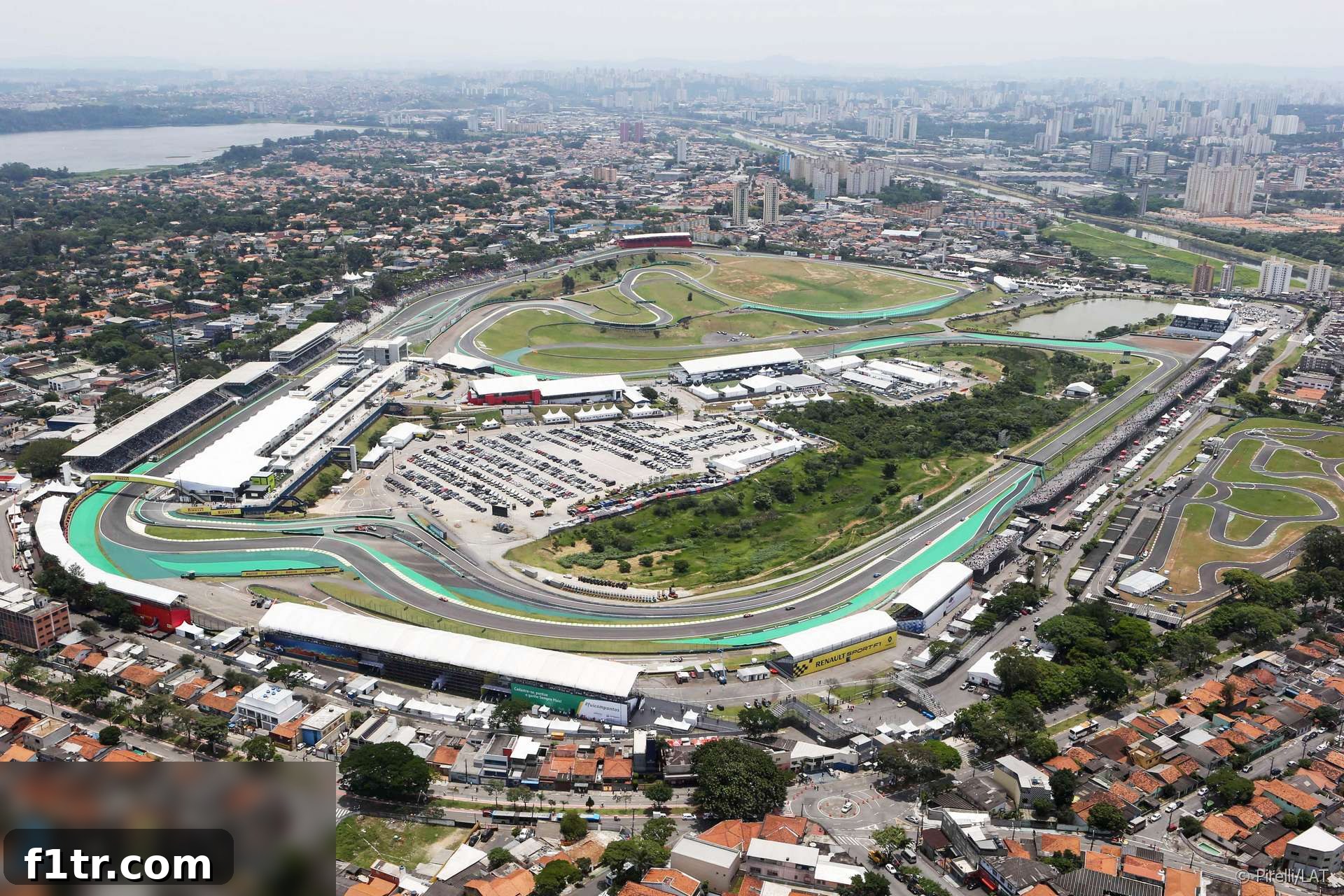
The legendary Autódromo José Carlos Pace, affectionately known as Interlagos, is renowned for delivering some of Formula 1’s most breathtaking and unpredictable races. Nestled in the vibrant city of Sao Paulo, Brazil, this iconic circuit frequently plays host to dramatic championship deciders and memorable moments. As teams and drivers descend upon this hallowed ground, one element always looms large over the race weekend: the notoriously temperamental weather. During pre-race activities, the prospect of rain affecting the Brazilian Grand Prix is always a hot topic, capable of transforming a straightforward race into a strategic gamble.
The unique microclimate of Sao Paulo means that forecasts can change rapidly, often catching even the most prepared teams off guard. This inherent unpredictability adds an extra layer of excitement and challenge, making the Brazilian Grand Prix a must-watch event for motorsport enthusiasts worldwide.
Advert | Become a Supporter & go ad-free
Drivers on Edge: Anticipating the Rain’s Potential Impact
Among the seasoned campaigners keenly observing the skies, McLaren’s Fernando Alonso articulated the widespread sentiment. “We have some unsettled weather for Saturday and Sunday so maybe that gives us also other possibilities,” he remarked, hinting at the strategic advantages that adverse conditions can bring. For a driver of Alonso’s caliber, rain isn’t merely a hindrance; it’s an equalizer, a potential disruptor that can level the playing field, creating opportunities for those with exceptional car control and strategic acumen to shine, irrespective of their machinery’s outright pace.
This sentiment is echoed throughout the paddock. Rain introduces a myriad of variables: tire choices become critical, pit stop strategies morph, and the likelihood of safety car periods or even red flags increases dramatically. Such conditions often lead to a reshuffling of the grid and provide unexpected heroes a chance to make their mark, solidifying Interlagos’s reputation as a stage for motorsport drama.
The Forecast Snapshot: When Will the Rain Arrive?
While the initial chatter suggested a significant chance of rain throughout the weekend, current meteorological forecasts indicate a more nuanced picture. The timing of any precipitation could be key, potentially arriving too late to significantly alter the main proceedings of the race itself. However, as any veteran of Interlagos will tell you, relying solely on forecasts in Sao Paulo is a fool’s errand; vigilance remains paramount.
Friday: Cloudy Skies for Practice, Setting the Foundation
The initial track action on Friday is expected to commence under predominantly cloudy skies. Both Free Practice 1 (FP1) and Free Practice 2 (FP2) sessions are anticipated to experience a low chance of rain. This stable, albeit slightly cool, weather will be a welcome relief for teams, allowing them to focus squarely on crucial setup work without the added complexity of mixed conditions. Temperatures are predicted to hover around 23 degrees Celsius, a modest increase from Thursday, providing consistent track temperatures for data collection.
During these sessions, teams will be meticulously evaluating tire compounds, aerodynamic configurations, and long-run pace. A dry Friday is vital for accumulating representative data, which forms the bedrock of their strategic planning for qualifying and the race. Drivers will be honing their lines and understanding the circuit’s nuances, particularly important at Interlagos with its challenging elevation changes and fast, sweeping corners. Any disruption, even light rain, could compromise this data-gathering process, putting teams at a disadvantage.
Saturday: Rising Temperatures and a Looming Threat for Qualifying
As the weekend progresses into Saturday, the meteorological outlook shifts subtly. The cloud cover is expected to thin out, allowing for potential glimpses of sunshine, especially leading up to the crucial qualifying session scheduled for 3 PM local time. This increase in sunshine could lead to a noticeable rise in track temperatures, impacting tire degradation and grip levels – critical factors for drivers pushing the limits in their pursuit of pole position.
However, the afternoon also brings with it a heightened risk. As Saturday transitions into evening, the probability of rain significantly increases, with a good chance of a substantial shower around this time. This presents a tantalizing possibility: a wet qualifying session. Rain during qualifying can utterly scramble the grid, rewarding brave drivers and often penalizing those who make even minor errors. It forces teams to make split-second decisions on tire strategies, often leading to exhilarating and unpredictable sessions. A dramatic Saturday could truly set the stage for an unforgettable race day, irrespective of Sunday’s weather.
Sunday: A Warmer Race Start with a Late-Race Thunderstorm Threat
By race day, the weather picture is expected to clear once more, setting the stage for what could be a thrilling Grand Prix. Sunday is forecast to be significantly warmer, with temperatures potentially soaring to 28 degrees Celsius. More sustained spells of sunshine are anticipated throughout the lead-up to and during the race itself, offering ideal conditions for high-speed, strategic F1 racing. This would generally favor teams with strong dry-weather performance and allow for more predictable tire strategies.
However, Interlagos wouldn’t be Interlagos without a twist. A characteristic Sao Paulo thunderstorm is still expected to follow the race. With the Grand Prix scheduled to start at 3:10 PM local time, there remains an outside, yet significant, chance that this powerful weather system could arrive before the checkered flag falls. The mere possibility of a late-race deluge keeps everyone on tenterhooks. Such an event would instantly inject chaos and drama, potentially altering the outcome in the final laps and testing the mettle of both drivers and strategists to their absolute limits. The sudden shift from dry to torrential rain is a hallmark of Interlagos, and it’s what often makes this race one of the most exciting on the F1 calendar.
The Strategic Chess Match: How Teams Adapt to Interlagos’s Weather
The ever-present threat of rain at Interlagos elevates the strategic game to another level. Teams employ dedicated meteorologists who work in conjunction with trackside engineers, constantly monitoring sophisticated radar systems and local weather patterns. Every nuance, from the direction of cloud movement to subtle shifts in wind, is meticulously analyzed to inform critical decisions on tire compounds, car setup, and race strategy. The difference between choosing intermediate tires over wets, or opting for a timely pit stop under a looming cloud, can be the difference between victory and defeat.
Wet weather racing also demands exceptional driver skill. The reduced grip, poor visibility due to spray, and rapidly changing track conditions separate the truly elite drivers from the rest. Legends like Ayrton Senna, Michael Schumacher, and more recently, Lewis Hamilton, have all showcased their mastery in rain-soaked conditions at Interlagos, delivering performances that have etched themselves into Formula 1 folklore. These moments underscore why the Brazilian Grand Prix weather is so much more than just a forecast; it’s a character in the unfolding drama.
A Legacy of Rain-Soaked Drama
Interlagos has a rich history of dramatic, rain-affected races. Who can forget the epic 2003 race, which saw multiple lead changes, crashes, and a surprising victory for Giancarlo Fisichella? Or the 2016 race, a masterclass in wet-weather driving by Max Verstappen, navigating treacherous conditions with remarkable control and bravery? These are just a few examples of how rain at Interlagos can elevate a race from exciting to legendary, cementing its place as one of Formula 1’s most iconic venues.
The constant threat of rain forces teams to prepare for every eventuality, often leading to diverse car setups and daring strategic calls. This strategic complexity, combined with the inherent challenges of the circuit itself, ensures that the Brazilian Grand Prix is always a spectacle, no matter the weather. But when the heavens open, the drama is simply unparalleled.
Advert | Become a RaceFans supporter andgo ad-free
Staying Updated: Real-Time Information is Key
Given the rapid changes in weather patterns characteristic of this region, teams and fans alike will be keeping an exceptionally close eye on all available meteorological data. For the latest, real-time updates on track conditions, weather changes, and all the live action during each session of the Grand Prix weekend, be sure to follow RaceFans Live. Additionally, instant notifications and breaking news can be accessed via the RaceFans Twitter account. Staying connected will be crucial to understanding how the ever-evolving weather could shape the fortunes of drivers and teams at the Brazilian Grand Prix.
2018 Brazilian Grand Prix – Relive the Action
- “I have this Force India behind…”: Team radio highlights from the Brazilian GP
- Hamilton takes 19th win in two years, needs 19 more to equal Schumacher
- 2018 Brazilian Grand Prix Star Performers
- Top ten pictures from the 2018 Brazilian Grand Prix
- Verstappen’s ruined masterpiece becomes Hamilton’s latest triumph
Browse all 2018 Brazilian Grand Prix articles