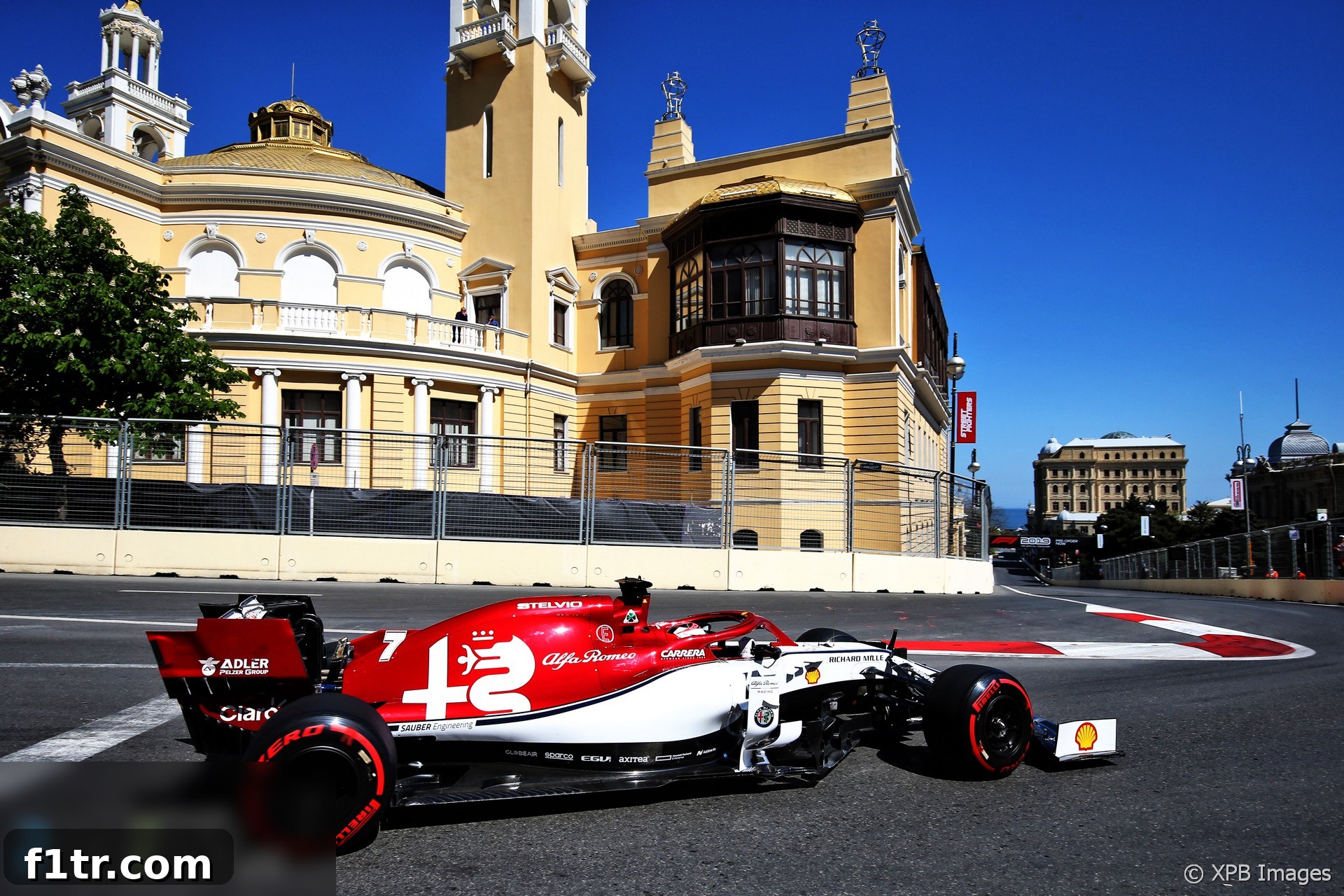
In the high-stakes world of Formula 1 qualifying, where mere milliseconds can dictate grid positions and subsequently influence race outcomes, even the most seasoned veterans are not immune to moments of intense frustration. Such was the case for the enigmatic Kimi Raikkonen, the ‘Iceman’ of motorsport, whose final qualifying lap at a particular event during the 2019 F1 season was derailed by an ill-timed encounter with Mercedes rival Lewis Hamilton. The Alfa Romeo driver, known for his stoic demeanor, openly expressed his dismay on team radio, attributing a suboptimal grid position to what he described as getting “too close to the Mercedes” during his crucial out-lap in Q3.
Kimi Raikkonen’s Q3 Out-Lap Frustration: A Missed Opportunity
The incident unfolded during the climactic Q3 session, the final segment of Formula 1 qualifying where the fastest ten drivers battle for pole position. For midfield teams like Alfa Romeo Racing, reaching Q3 is often a significant achievement, presenting a prime opportunity to secure valuable grid positions that can set the tone for the entire race. Raikkonen, aiming to maximize his potential, had carefully preserved a fresh set of tires for his ultimate run. However, as he meticulously prepared for his hot lap, the delicate balance required for optimal tire temperature and clear air was disrupted.
As Raikkonen navigated the out-lap, the preliminary lap designed to bring tires and brakes up to optimal operating temperature, he found himself in close proximity to Lewis Hamilton’s Mercedes. In Formula 1, an out-lap is far from a leisurely drive; it’s a precisely orchestrated maneuver crucial for performance. Drivers strategically manage speed, brake application, and weaving patterns to generate heat in their tires and ensure they are within the narrow performance window for the subsequent flying lap. Furthermore, maintaining sufficient distance from the car ahead is vital to avoid disturbed airflow, known as ‘dirty air’, which can significantly compromise aerodynamic grip and balance, particularly in the opening corners of a fast lap.
Raikkonen’s frustration was palpable even over the radio. “I obviously had one new set and on the last one I tried to start the lap and got way too close to the Mercedes,” he recounted, elaborating on the sequence of events that undermined his effort. He candidly described the outcome as “shit” and “disappointing,” a rare display of raw emotion from a driver renowned for his calm under pressure. The direct consequence of this compromised out-lap was a performance deficit that saw him finish six-tenths of a second slower than his teammate, Antonio Giovinazzi, who managed to secure a respectable P9 for Alfa Romeo.
The Fine Margins of Formula 1 Qualifying
Formula 1 qualifying is an exhilarating blend of raw speed, technical precision, and strategic foresight. Divided into three segments – Q1, Q2, and Q3 – each session progressively eliminates the slowest cars, ratcheting up the pressure with every passing minute. In Q3, with the top ten vying for the best starting spots, the stakes are highest. Drivers push their cars to the absolute limit, seeking every tenth of a second, knowing that grid position can be half the battle on many circuits.
The incident Raikkonen described highlights the immense pressure and minute details that determine success or failure. Traffic management on an out-lap in Q3 is a notoriously tricky art. Every driver is attempting to create space for themselves, find a clean window, and prepare their tires. The delicate interplay of finding clear air, avoiding slower cars, and maintaining optimal tire temperature is a high-wire act. A slight misjudgment, or an unfortunate confluence of circumstances, can completely unravel a driver’s best intentions, turning a promising lap into a significant disappointment.
For a team like Alfa Romeo, fighting in the competitive midfield, securing a Q3 slot and maximizing that opportunity is paramount. Every position gained on the grid can mean the difference between fighting for points and being caught in the thick of the midfield pack. Raikkonen’s potential loss of several grid spots due to this single incident underscored the unforgiving nature of F1, where the quest for perfection is relentless.
Teammate Comparison: Raikkonen vs. Giovinazzi
In Formula 1, one of the most direct measures of a driver’s performance is their comparison to their teammate. Antonio Giovinazzi, then in his first full season with Alfa Romeo, delivered a commendable performance by putting his car into P9. This result not only showcased Giovinazzi’s growing pace but also put Raikkonen’s incident into sharper relief. Finishing significantly behind his teammate, especially after a Q3 error, inevitably adds pressure and raises questions about lost opportunities for the team.
While Raikkonen is a World Champion with vast experience, his struggle against Giovinazzi in this particular qualifying session underscored the competitive intensity within the team. Giovinazzi’s Q3 appearance and P9 classification demonstrated the car’s potential on that day, making Raikkonen’s compromised lap all the more frustrating for both driver and team. For Alfa Romeo, having both cars start higher up the grid would significantly improve their chances of scoring valuable championship points.
The Iceman’s Frustration: A Rare Glimpse
Kimi Raikkonen earned his moniker, “The Iceman,” through years of displaying a remarkable calm and composure, regardless of the on-track drama or off-track pressures. His radio messages are often curt, direct, and devoid of overt emotion. However, the raw language used in his post-Q3 debrief – “It was fucking shit. I could have done a fucking better lap on my own. So much better” – offered a rare glimpse into the depths of his frustration. This wasn’t merely a small mistake; it was a perceived major blunder that cost him a significant advantage.
Raikkonen’s Raw Team Radio From Q3
| Participant | Transcript |
|---|---|
| Team: | OK Kimi mode charge and slowing down… |
| Kimi: | It was fucking shit. |
| Team: | It was indeed, yeah. |
| Team: | OK we finished P9, P9. |
| Kimi: | I could have done a fucking better lap on my own. So much better. |
The transcript underscores Raikkonen’s deep disappointment. His affirmation, “I could have done a better lap on my own,” suggests he felt capable of a stronger performance had external factors not interfered. This isn’t just a veteran driver complaining; it’s a competitor expressing genuine regret over what he believed was a significant lost opportunity, particularly with a fresh set of tires at his disposal for that crucial final attempt.
Strategic Implications for the Race
A poor qualifying result can cast a long shadow over a driver’s race strategy. Starting lower down the grid means a higher probability of being caught in traffic, which can lead to increased tire wear, greater risk of incidents, and a more challenging path to scoring points. For Alfa Romeo, a midfield team consistently fighting for top-10 finishes, every grid position is critical. A better starting position for Raikkonen would have allowed him cleaner air, less risk in the opening laps, and more strategic flexibility.
Conversely, starting from a less desirable position forces a team to consider more aggressive or unconventional strategies. This might include longer first stints on hard tires, earlier pit stops for an undercut attempt, or relying heavily on safety car periods to gain ground. While Raikkonen’s experience makes him adept at navigating these situations, the inherent disadvantage of starting further back is undeniable, making the task of climbing through the field significantly harder.
Kimi Raikkonen: A Veteran’s Pursuit of Perfection
With a career spanning over two decades in Formula 1, Kimi Raikkonen has seen and done it all. He’s a World Champion, a multiple race winner, and one of the most popular figures in the paddock. Despite his immense experience and accomplishments, the incident in Q3 serves as a poignant reminder that even for the most seasoned drivers, the pursuit of perfection in F1 is an endless endeavor. The sport demands unwavering focus, precision, and the ability to execute under extreme pressure, with external variables often playing a decisive role.
Raikkonen’s continued passion for racing, even in the twilight of his career, was evident in his frustration. It wasn’t just about a single lap; it was about the intrinsic drive to perform at the highest level and maximize every opportunity. His candid reaction resonated with fans, showcasing that beneath the cool exterior, the competitive fire still burned fiercely.
Conclusion: The Unforgiving Nature of F1 Qualifying
Kimi Raikkonen’s qualifying ordeal highlights the razor-thin margins that define success and failure in Formula 1. An out-lap, seemingly innocuous, can make or break a Q3 performance, proving that every single moment on track carries immense significance. The incident with Lewis Hamilton served as a stark reminder of the complexities of traffic management and tire preparation, underscoring why drivers and teams meticulously plan every aspect of their qualifying strategy. While the frustration was palpable for Raikkonen, it also set the stage for a race where the ‘Iceman’ would undoubtedly be looking to recover lost ground, showcasing his enduring skill and determination on track.
Stay Connected with Formula 1 Insights
Follow RaceFans for the latest updates and exclusive content:
- Join RaceFans on Facebook
- Follow RaceFans on Twitter
- Get daily email updates from RaceFans
Explore More From the 2019 F1 Season
- Crying in the Melbourne car park at 2019 grand prix was my career low – Ocon
- McLaren Racing reports reduced £71 million loss in 2019
- Kvyat: Hockenheim podium last year was “my biggest achievement” so far
- How the FIA’s new encrypted fuel flow meter targets Ferrari’s suspected ‘aliasing’ trick
- “He smashed my office door”: 23 must-see moments from ‘Drive to Survive’ season two
Browse all 2019 F1 season articles