Indianapolis 500: Last Row Drama Unfolds as Will Power, Simona De Silvestro, and Sage Karam Secure Final Grid Spots
The Indianapolis 500, often dubbed “The Greatest Spectacle in Racing,” is renowned not just for its electrifying race day but also for the nail-biting drama that precedes it: qualifying. The 105th running of this iconic event proved no different, with the crucial Last Row Qualifying session delivering high stakes, unexpected turns, and moments of both triumph and heartbreak. As the dust settled at the Indianapolis Motor Speedway, the final three coveted spots on the 33-car grid were fiercely claimed by seasoned veteran Will Power, history-making Simona de Silvestro, and consistent contender Sage Karam, leaving Charlie Kimball and rookie RC Enerson on the sidelines.
The Last Row Qualifying, a pressure cooker of a session spanning 75 intense minutes, is where dreams are either realized or shattered. For those drivers whose initial qualifying attempts didn’t secure a spot, this session represents their final chance to earn a place in the field. The format demands four consecutive laps at maximum speed, with the average determining their standing. The initial runs often set the tone, and for Sage Karam, his first attempt was decisive. Piloting the #24 Dreyer & Reinbold Racing Chevrolet, Karam delivered a blistering four-lap average speed of 229.156 mph, a performance strong enough to secure his eighth consecutive Indianapolis 500 start. His consistency and raw speed cemented his position, ensuring his team’s continued presence in the marquee event.
Following Karam, the racing world watched with bated breath as Will Power, the 2008 Indy 500 winner and a driver synonymous with Team Penske excellence, took to the track. The circumstances were extraordinary, a level of pressure Team Penske hadn’t faced in Last Row Qualifying since a memorable bump from the field back in 1995. Power, in the #12 Team Penske Chevrolet, pushed the limits, demonstrating extraordinary car control and unwavering courage. On his critical fourth and final lap, a moment of high drama unfolded as Power’s right-rear wheel made contact with the SAFER barrier exiting Turn Two. In a testament to his veteran skill and championship mettle, he remarkably did not lift off the throttle, maintaining full commitment to his run. This audacious maneuver allowed him to complete his four laps at an impressive average speed of 228.876 mph, just enough to secure his fourteenth consecutive Indianapolis 500 start and provide a palpable wave of relief for the legendary Penske organization.
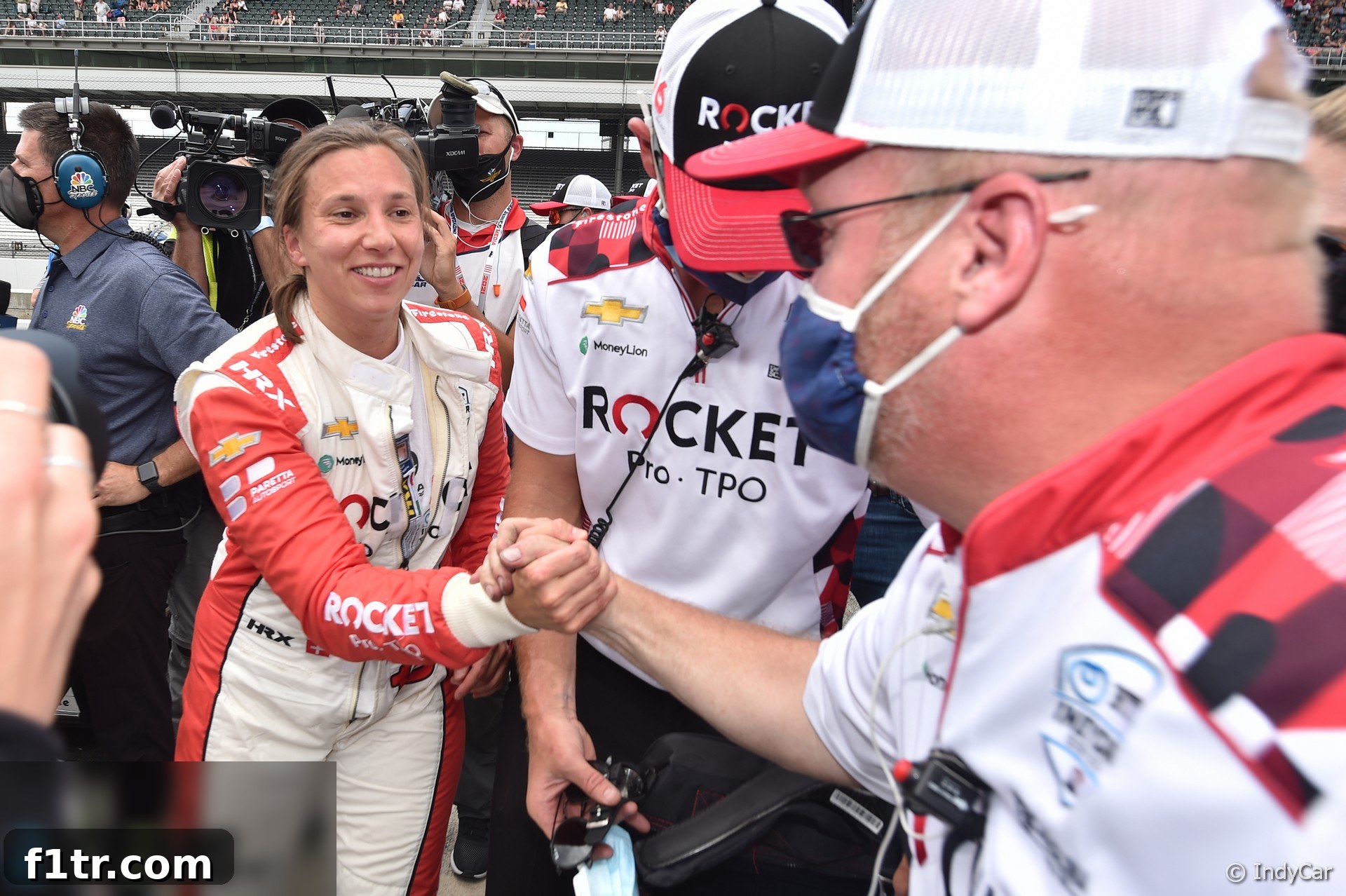
Hot on Power’s heels was Simona de Silvestro, representing Paretta Autosport with technical support from Team Penske. De Silvestro, driving the #16 Paretta Autosport Chevrolet, delivered a remarkably consistent and clean run. Her precision and composure paid off, as she clocked an average speed of 228.353 mph. This performance was not merely about speed; it was a historic moment, as de Silvestro secured Paretta Autosport’s debut entry into the Indianapolis 500 in their very first attempt. This achievement marked a significant milestone for female representation in motorsport, adding another layer of significance to an already dramatic session.
The Agony of Missing Out: Kimball and Enerson’s Heartbreak
As the session wore on, external factors began to play a role. Track conditions at the Indianapolis Motor Speedway started to degrade, with ambient temperatures rising and the air becoming less dense, making it harder for cars to generate maximum downforce and speed. By the time Charlie Kimball and rookie RC Enerson made their initial qualifying attempts, the ideal conditions of earlier in the session had vanished. Both drivers struggled to find the pace required, each averaging speeds below 228 mph on their first runs. This left them vulnerable and outside the top 33.
With just over 30 minutes remaining and no cars on track, the strategic decisions began. Facing the very real prospect of missing the race, Enerson and Kimball each made the courageous and desperate decision to withdraw their first runs. This meant erasing their recorded speeds and gambling on a second attempt, after making wholesale changes to their car setups. The hope was that a change in the weather, specifically the cloud cover that began to roll over the Speedway, would provide cooler track temperatures and better aerodynamic grip – the precise conditions both drivers desperately needed to “bump” their way back into the field.
However, fate, or perhaps the unforgiving nature of the Indianapolis Motor Speedway, had other plans. Despite their best efforts and the strategic adjustments, both drivers were unable to improve their speeds. RC Enerson’s second run clocked in at 226.813 mph, while Charlie Kimball’s attempt yielded 227.584 mph – both slower than their initial efforts. The disappointment was palpable as the realization set in: they would not be fast enough to make the 105th Indianapolis 500 field. For Kimball, a veteran with a remarkable record of ten consecutive Indy 500 qualifications, this marked the first time he would miss the race. For 24-year-old RC Enerson, his dream of joining fellow rookies Pietro Fittipaldi and Scott McLaughlin in the prestigious race was put on hold, a harsh introduction to the demanding world of IndyCar’s biggest event.
Stories of Triumph and Relief for the Qualifiers
For the three drivers who successfully navigated the perilous Last Row Qualifying session, the overwhelming emotions were relief and profound joy. Simona de Silvestro’s accomplishment was particularly resonant. Her qualification not only secured her own place but also propelled Paretta Autosport onto the grand stage of the Indy 500 in their inaugural attempt. This new, female-forward team, bolstered by invaluable technical support from Team Penske, defied expectations and delivered a powerful statement about inclusion and capability in motorsport. Their presence on the grid promises to inspire a new generation of fans and participants.
Sage Karam’s successful qualification underscored the enduring strength and commitment of Dreyer & Reinbold Racing. Since its establishment in 2000, the team has been a consistent presence at the Indianapolis 500, and Karam’s performance ensured that their proud streak would continue. For a smaller, independent team, making the grid of the Indy 500 every year they enter is a monumental achievement, reflecting consistent dedication and strategic prowess. And then, of course, there was the collective sigh of relief from Team Penske. Will Power’s dramatic save and subsequent qualification meant that the iconic team, with its storied history at the Speedway, would have its full contingent of cars in the race, avoiding a repeat of the 1995 heartbreak and allowing them to focus on race strategy rather than qualifying anxiety.
The Historic Challenge: Winning from the 11th Row
The exhilaration of making the field now gives way to the monumental task ahead. For Power, de Silvestro, and Karam, starting from the 11th and final row of the grid presents a daunting challenge. The history books of the Indianapolis 500 are clear: no driver has ever won the race from the 11th row. This statistic highlights the immense difficulty of navigating through a field of 32 other world-class drivers and cars over 500 miles at blistering speeds.
The closest anyone has come to defying this historical statistic was in 1992, when Scott Goodyear, starting from 33rd position (though not technically the 11th row in the traditional 3-car per row format, but the absolute last spot on the grid for that particular year), charged through the field to finish a remarkable second to Al Unser Jr. in a thrilling photo finish. Goodyear’s incredible drive serves as a testament to what is possible, yet the ultimate victory from the absolute back of the grid remains elusive. For the three qualifiers on the 11th row this year, overcoming this historical barrier would not just be a win; it would be an immortalizing moment, solidifying their place in the annals of Indianapolis 500 legend.
Final Qualifiers for the 105th Indianapolis 500
The drivers who successfully secured their place on the last row of the grid are:
- Sage Karam, 229.156 mph
- Will Power, 228.876 mph
- Simona De Silvestro, 228.353 mph
Failed to Qualify
The immense pressure of the Indianapolis 500 qualifying unfortunately meant that two talented drivers were unable to make the cut:
- Charlie Kimball, 227.584 mph
- RC Enerson, 226.813 mph
IndyCar Insights and Related Articles
Stay informed with the latest news, analyses, and driver updates from the world of IndyCar. Explore our extensive coverage for in-depth stories, race previews, and more.
- IndyCar driver McLaughlin cleared of injury after crashing through barrier at Barber
- Schumacher says his IndyCar feels like ‘an F2 car, just with better tyres’
- IndyCar “way faster than Formula 1” in some corners, says Grosjean
- FIA to award more F1 superlicence points to IndyCar drivers from 2026
- Schumacher to race full-time in IndyCar with RLL in 2026
Browse all IndyCar articles