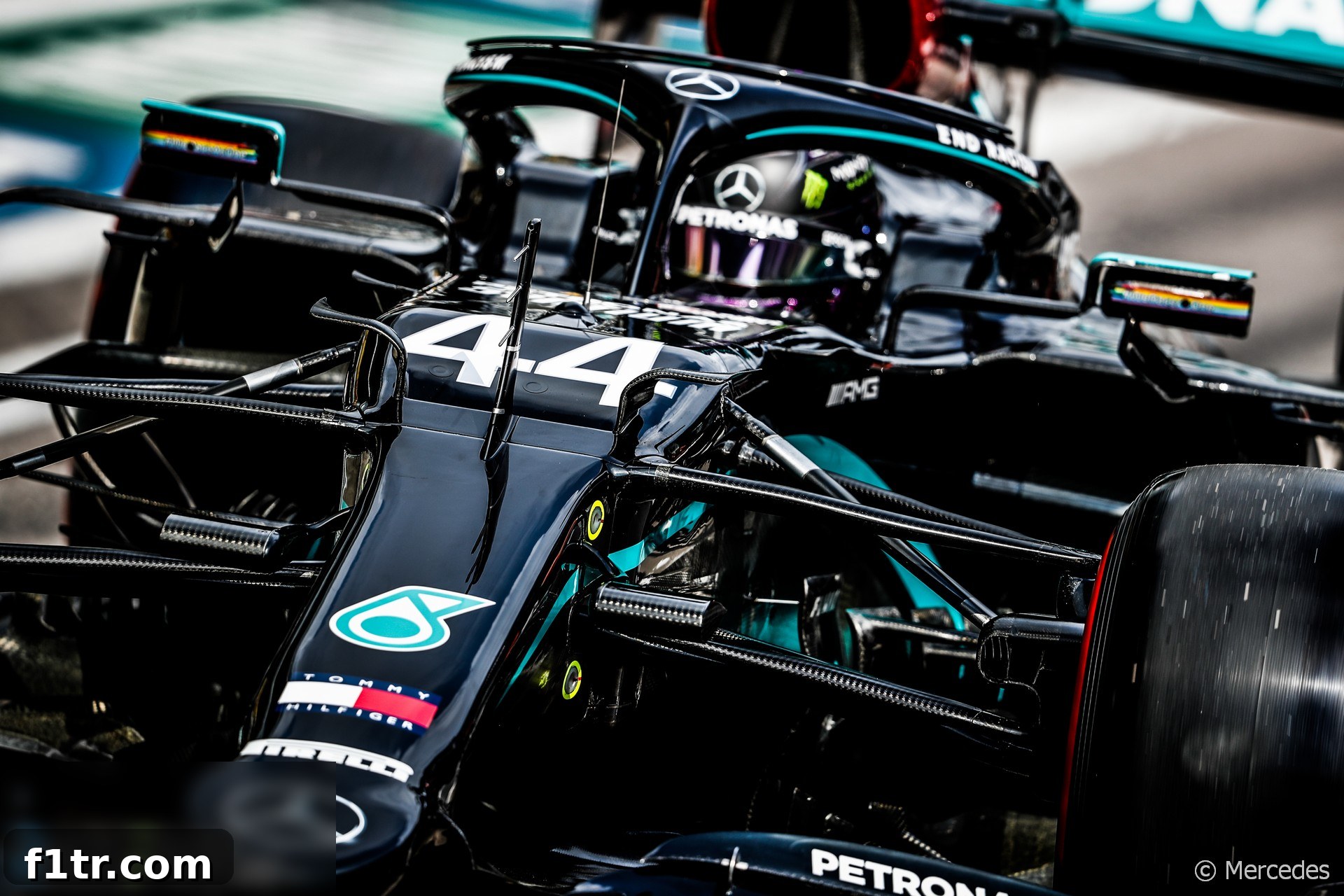
In the high-stakes world of Formula 1, where every millisecond and every procedural detail can define a race outcome or even a championship, the seemingly minor act of a practice start has recently taken center stage. Following a controversial penalty imposed on reigning champion Lewis Hamilton at the Russian Grand Prix, Formula 1’s governing body has moved swiftly to issue crystal-clear directives regarding the precise execution of practice starts. This incident not only sparked debate among fans and pundits but also highlighted the critical need for unambiguous regulations that leave no room for misinterpretation by drivers or teams. The subsequent clarification by Race Director Michael Masi aims to prevent future controversies, ensuring a level playing field and consistent application of rules across the grid, particularly as the sport ventured into new or less-frequented circuits like the Nurburgring for the Eifel Grand Prix.
The controversy erupted during the reconnaissance laps leading up to the Russian Grand Prix in Sochi. Mercedes driver Lewis Hamilton, known for his meticulous preparation, performed his practice starts at what was deemed an incorrect location on the track. Specifically, he stopped near the end of the pit lane exit to conduct these crucial pre-race simulations. For this infraction, the stewards initially handed Hamilton two five-second time penalties, which were to be applied during the race itself. This decision proved highly impactful, effectively denying him a chance at victory and relegating him further down the order from a potential second-place finish. The penalty was met with strong reactions, with Hamilton himself expressing frustration, arguing that he had performed practice starts in similar locations without issue in the past, suggesting a lack of clarity in the existing regulations. The incident became a flashpoint, raising questions about consistency in stewarding decisions and the adequacy of communication regarding track-specific procedures.
Adding another layer to the unfolding drama, Hamilton was also initially given two penalty points on his Super Licence for the infringements. These points brought him perilously close to a race ban threshold, intensifying the scrutiny on the stewards’ decision. However, in a significant turn of events, these penalty points were later rescinded. The stewards explained their decision by noting that the team had given Hamilton the instruction to perform the practice starts in that location, absolving the driver of direct blame for the misinterpretation of the regulations. While the time penalties for the race remained, the retraction of the penalty points underscored the inherent ambiguity that existed regarding practice start locations prior to this incident, making it a pivotal moment in the enforcement of F1’s detailed rulebook.
For a Formula 1 driver, a successful race start is paramount. It can dictate the entire trajectory of their race, offering opportunities for overtakes or, conversely, leading to significant losses of positions. This is precisely why practice starts are an indispensable part of a driver’s pre-race routine. During these practice runs, drivers fine-tune their clutch bite point, engine revs, and reaction times, mimicking the conditions of an actual grid start. They assess the grip levels of the track surface at the specific starting location, which can vary significantly depending on the track layout, temperature, and recent activity. Mastering the delicate balance of the clutch and throttle, especially with the intricate MGU-K energy deployment, requires immense precision and feel. Without these practice starts, drivers would be heading into the race start largely untested, risking poor getaways, wheelspin, or even stalling – any of which can be catastrophic in a field of twenty cars hurtling towards the first corner.
In the wake of the Sochi incident and the ensuing discussions, Formula 1 Race Director Michael Masi took decisive action to provide unequivocal guidelines for practice starts. As F1 returned to the iconic Nurburgring circuit for the Eifel Grand Prix – a track that hadn’t hosted a Formula 1 race since 2013, adding another layer of procedural unfamiliarity – clear instructions became even more vital. Masi issued a comprehensive notice to all teams and drivers, leaving no ambiguity about the designated area for practice starts. The directive stated: “During the time the pit exit is open for the race, practice starts may be carried out after the end of the pit wall and adjacent to the orange band on the right-hand side barrier.” This specification is remarkably precise, using identifiable track furniture – the end of the pit wall – and a distinct marking – the orange band – to define the exact boundaries.
Furthermore, Masi’s directive outlined the specific procedure for drivers undertaking a practice start, emphasizing both safety and the smooth flow of traffic during the reconnaissance laps. Drivers are instructed that “Drivers wishing to carry out a practice start should stop on the right in order to allow other cars to pass on their left.” This measure ensures that cars not performing a practice start can proceed unhindered towards the grid, minimizing potential congestion or hazardous situations. A crucial addition to the regulation addressed the pit lane exit line: “During this time any driver passing a car which has stopped to carry out a practice start may cross the white [pit lane exit] line. Any driver crossing this line must move back to the right of it as quickly as possible.” This provision acknowledges the practical necessity of allowing overtaking at the pit exit while maintaining the integrity of track limits enforcement. It’s a pragmatic solution designed to prevent scenarios where drivers are unnecessarily held up behind a stationary car, ensuring operational efficiency and safety during this critical pre-race window.
The Hamilton penalty and the subsequent, swift clarification by Michael Masi represent a significant moment in the ongoing evolution of Formula 1’s rulebook. It underscores the sport’s commitment to ensuring not only fairness and competitive integrity but also the safety of all participants through clear and actionable regulations. This incident highlights how even seemingly minor procedural infractions can have far-reaching consequences, necessitating precise definitions for all aspects of race weekends. The detailed nature of Masi’s directive sets a clear precedent for how future ambiguities will be addressed: with explicit, geographically defined instructions that aim to eliminate any room for misinterpretation. It also reflects a broader trend within Formula 1 to tighten regulations and enforcement, ensuring that every team and driver operates under the same, universally understood guidelines, irrespective of their experience or championship standing. The return to circuits like the Nurburgring, with less recent F1 history, further amplified the need for such explicit instructions, mitigating risks associated with unfamiliar track specifics and ensuring a safe and fair return to classic venues.
The saga surrounding Lewis Hamilton’s practice start penalty at the Russian Grand Prix ultimately served as a vital catalyst for clarity within Formula 1. What began as a contentious penalty quickly evolved into a comprehensive refinement of procedural rules, spearheaded by Race Director Michael Masi. The new, highly specific directives for practice starts, first implemented at the Eifel Grand Prix, demonstrate a clear commitment to precision in regulation. This incident serves as a powerful reminder that in the world of Formula 1, attention to detail is paramount, and even the smallest procedural nuances are critical for upholding fairness, ensuring safety, and maintaining the sporting integrity of the championship.
Don’t miss anything new from Formula 1
Follow us on social media:
- Join us on Facebook
- Follow us on Twitter
- Get daily email updates from F1
Related F1 Season Articles
- Grosjean to make F1 test return tomorrow for first time since Bahrain horror crash
- Pictures: Wrecked chassis from Grosjean’s Bahrain fireball crash to go on display
- Bottas vs Rosberg: Hamilton’s Mercedes team mates compared after 78 races each
- F1 revenues fell by $877 million in Covid-struck 2020 season
- Hamilton and Mercedes finally announce new deal for 2021 season
Browse all F1 season articles